Berlin hackers publish stolen data after ransom refusal
Rhysida group releases 1.4 million files after city authorities decline to pay 30 bitcoins.
AI-assisted coverage comparison, editor-supervised · How this was made

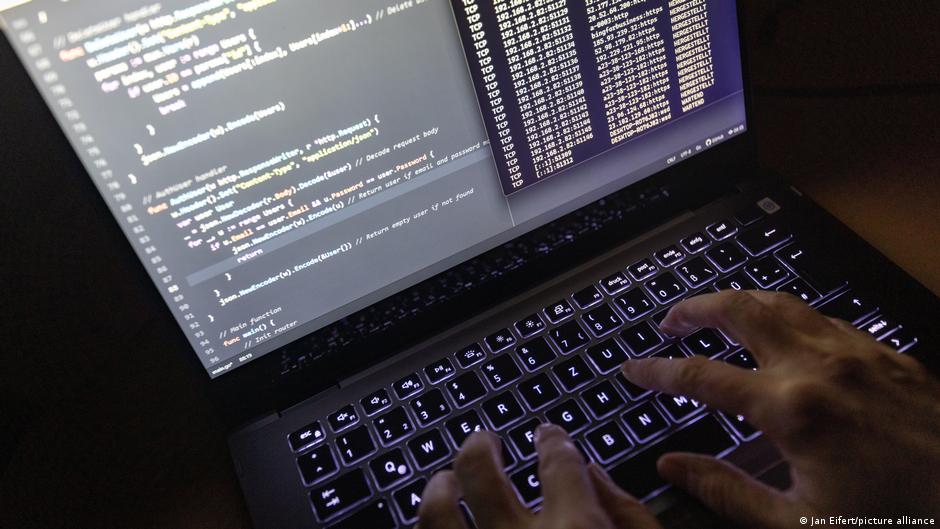
Visée par une cyberattaque, la mairie de Berlin refuse de payer une rançon et voit ses données publiées. Photo d’illustration.
Photograph: Le Huffington Post (embedded from source)
What this story says
- Hackers from the Rhysida group published approximately 1.4 million files stolen from Berlin's city government on the dark web.
- The group had demanded a ransom of 30 bitcoins, valued at around €2 million, which Berlin authorities refused to pay.
- The cyberattack reportedly began between 7 August and 12 August, with data being released on 4 September.
- Berlin's state government announced a crisis response on 5 September to review the stolen data.
Who covered it
Percentages are shares of the 59 outlets carrying a published leaning rating. 54 of the 113 outlets we know ran this story carry no rating and are not counted in them. Coverage measured .
Trust
86/100
Craft
95/100
Hype
25/100
113 sources · methodology
Missing from the left
Only 10 of the 59 outlets with a published leaning rating that ran this story are rated left.
A reader who follows the left would not have seen this. We report the absence rather than explain it: outlets choose what to cover for many reasons, and we have no evidence about which one applies here.
The hacker group Rhysida has published a large volume of data stolen from Berlin's city government on the dark web. The group had demanded a ransom of 30 bitcoins, which was valued at approximately €2 million, but Berlin authorities refused to pay. In response, the hackers released the stolen files on 4 September.
The cyberattack reportedly began between 7 August and 12 August, affecting administrations responsible for housing and environment. The full extent of the leaked data includes around 1.4 million files, amounting to approximately 5.8 terabytes. Berlin's state government announced on 5 September that it was reviewing the stolen data with the highest intensity as part of a crisis response.
Disagreement on attack timeline
Source 1 states the cyberattack began on 14 August, while Source 2 indicates it occurred between 7 August and 12 August.
What the coverage left out
None of the left-rated digests mention the specific figure of 5.8 terabytes for the leaked data, a detail present in the centre and right-rated reports. The full reports from Le Huffington Post and Deutsche Welle did not mention the specific date of 5 September when Berlin's state government announced its crisis response.
Coverage settled. We checked this 30 times and stopped on 11 Sept 2026, 06:00. The figures above are what it finished at.
How other outlets pictured it
Which photograph to run is each newsroom’s own choice. The leaning beside a name is that outlet’s published rating, not a claim that the pictures divide along it. Every picture is shown from the outlet’s own server and links to the article it ran in.
Berlin hackers publish stolen data after ransom refusal
Deutsche Welle — embedded from source

Berlin hackers publish stolen data after ransom refusal
24ur.com — embedded from source
How each side covered it
Our own reading of the reporting listed below, written from the outlets’ articles rather than quoted from them. The reasoning is set out on our methodology page.
Left
10 rated outlets
- Left-rated reports highlighted the refusal to pay the ransom and the subsequent publication of data. Source 1, Le Huffington Post, detailed the hacker group Rhysida's previous actions, including an attack on the British Library where a ransom was also refused and data was published. This report also noted that the Office for the Protection of the Constitution indicated the attack seemed motivated by financial reasons rather than political ones, despite occurring before municipal elections.
Centre
21 rated outlets
- Centre-rated reports focused on the scale of the data leak and the government's response. Deutsche Welle (Source 2) reported that the leaked data included information on the city's water supply vulnerability, crisis plans, personal data, and salary information, with potential catastrophic security consequences. This report also mentioned that German state authorities are legally prohibited from paying ransom demands. Several centre-rated digests, such as those from mannheim24.de, Kreiszeitung, merkur.de, hna.de, and tz.de, highlighted that experts and the opposition were appalled by the leak of critical infrastructure data and called for consequences.
Right
28 rated outlets
- Right-rated reports primarily focused on the government's crisis response following the data publication. Digests from outlets like The Star Kuala Lumpur, WKZO, WTAQ, KELO Newstalk 1320 107.9, and WSAU, often using Reuters wording, stated that Berlin's state government was reviewing the stolen data with the highest intensity. Kurier reported that a security expert warned of numerous possibilities for abuse following the refusal to pay the €2 million ransom.
Questions about this coverage
- How did the left and right cover Berlin hackers publish stolen data after ransom refusal?
- Of the 59 outlets on this story carrying a published leaning rating, 17% are rated left, 35% are rated centre, 48% are rated right. Those percentages are shares of the rated outlets, not of every outlet that ran it, which was 113. The sections above set out what each side emphasised, in its own terms.
- Is Berlin hackers publish stolen data after ransom refusal left or right?
- Neither side dominates it. Of the 59 rated outlets on this story, 17% are rated left, 35% are rated centre, 48% are rated right, and no side holds the 70% this site would want before calling a field one-sided. A story is not left or right in any case; the outlets that carried it are what carry ratings.
- Is the coverage of Berlin hackers publish stolen data after ransom refusal biased?
- Berlin hackers publish stolen data after ransom refusal is one event reported by 113 outlets, and this page does not rate the story as biased or unbiased. What it publishes is the spread: which outlets ran it, where named rating organisations place each of them on the spectrum, and what each side chose to lead with. A leaning rating describes an outlet's record over time, not this article, and the two should not be run together.
- Which side is not reporting Berlin hackers publish stolen data after ransom refusal?
- When we first saw this story, outlets rated left had barely covered it. Coverage accretes for hours after an event, so that is where to look rather than a verdict — the split above is the current count, and it is the one to read.
- Which outlets covered Berlin hackers publish stolen data after ransom refusal?
- 113 that we know of, every one of them listed further up this page with a link to its own report and to what we hold on the publisher. Nothing here is a summary of somebody else's summary: the outlets are named so the original reporting can be read.
- How much data was stolen from Berlin?
- Approximately 1.4 million files, amounting to about 5.8 terabytes, were stolen from Berlin's city government. The hacker group Rhysida published this data on the dark web after their ransom demand was refused.
- What was the ransom demand?
- The hacker group Rhysida demanded 30 bitcoins, which was valued at approximately €2 million. Berlin authorities refused to pay this ransom.
- When did the cyberattack occur and when was the data published?
- One report states the cyberattack began on 14 August, while another suggests it occurred between 7 August and 12 August. The hackers released the stolen data on 4 September.
- What is Berlin's response to the data leak?
- Berlin's state government announced a crisis response on 5 September, stating that the stolen data was being reviewed with the highest intensity. Investigators are working to assess the scale and impact of the cyberattack.
Read it at the source
114 outlets, grouped by the leaning a published rating gives them. Every headline links to the original; an underlined outlet name opens our profile of that publisher.
Left
10- Berlin refused the ransom. Rhysida published 5.7TB (opens TNW in a new tab)
- Cyberattack Shocks Berlin, Hackers Publish Nearly 6 Terabytes of Data on Dark Web (opens Telegrafi in a new tab)
- Berlin-Hack: Green Politician Konstantin Von Notz Sees Leaks as »Real Data Super-GAU« (opens Spiegel in a new tab)
- Crisis in Berlin After a Cyber Attack. Hackers Published the Data, After Asking for a Ransom of More than 2 Million Euros - HotNews.ro (opens Hot News in a new tab)
- What Is so Far Known About the Data Leak of the Berlin Administration (opens Sueddeutsche Zeitung in a new tab)
Sueddeutsche Zeitung — is Sueddeutsche Zeitung biased? Our profile of this outlet
- After Hacking on Berlin Numerous Sensitive Data in the Darknet (opens der Standard AT in a new tab)
der Standard AT — is der Standard AT biased? Our profile of this outlet
- Berlin City Hall Stands up to Its hackers... Who End up Publishing Stolen Data. (opens Le Huffington Post in a new tab)
Le Huffington Post — is Le Huffington Post biased? Our profile of this outlet
- Sensitive Data Leaked: Federal Authorities Support Investigations Into Hacker Attack (opens Zeit Online in a new tab)
Zeit Online — is Zeit Online biased? Our profile of this outlet
Centre
21- Hacker Attack Could Have Bigger Consequences than Previously Thought (opens osthessen-news.de in a new tab)
osthessen-news.de — is osthessen-news.de biased? Our profile of this outlet
- Millions of Data Leaked: Hacker Attack Could Have Bigger Consequences than Previously Thought (opens volksfreund.de in a new tab)
volksfreund.de — is volksfreund.de biased? Our profile of this outlet
- Berlin-Hack: Green Politician Konstantin Von Notz Sees Leaks as »Real Data Super-GAU« (opens cedarnews.net in a new tab)
cedarnews.net — is cedarnews.net biased? Our profile of this outlet
- Germany: Cyber Attack in Berlin. Mayor Admits Sensitive Data Has Been Stolen (opens Digi 24 in a new tab)
- Berlin launches crisis response after hackers publish stolen data (opens Reuters in a new tab)
- Berlin launches crisis response after hackers publish stolen data (opens WTVB in a new tab)
- Hacker Debacle in Berlin: Critical Infrastructure Data Leaked – Opposition Calls for Consequences (opens mannheim24.de in a new tab)
mannheim24.de — is mannheim24.de biased? Our profile of this outlet
- Berlin launches crisis response after hackers publish stolen data (opens Market Screener in a new tab)
Market Screener — is Market Screener biased? Our profile of this outlet
Show 13 more
- Hacker Debacle in Berlin: Critical Infrastructure Data Leaked – Opposition Calls for Consequences (opens Kreiszeitung in a new tab)
Kreiszeitung — is Kreiszeitung biased? Our profile of this outlet
- Hacker Debacle in Berlin: Critical Infrastructure Data Leaked – Opposition Calls for Consequences (opens merkur.de in a new tab)
- Hacker Debacle in Berlin: Critical Infrastructure Data Leaked – Opposition Calls for Consequences (opens hna.de in a new tab)
- Hacker Debacle in Berlin: Critical Infrastructure Data Leaked – Opposition Calls for Consequences (opens tz.de in a new tab)
- Sensitive Berlin Data on the Network: What Dangers Are Now at Stake? (opens wz.de in a new tab)
- Cybercrime - After Failed Blackmail: Hackers Publish Citizens' Private Data in Darknet (opens Deutschlandfunk in a new tab)
Deutschlandfunk — is Deutschlandfunk biased? Our profile of this outlet
- The Hackers Posted the Secret Documents of the Berlin Senate on the Darknet. (opens Deutsche Welle in a new tab)
Deutsche Welle — is Deutsche Welle biased? Our profile of this outlet
- After Hacker Attack: IT Expert Accuses Berlin of "Great Negligence" (opens saarbruecker-zeitung.de in a new tab)
saarbruecker-zeitung.de — is saarbruecker-zeitung.de biased? Our profile of this outlet
- Hacker Attack on Berlin: They Didn't Pay, so 1.4 Million Files Were Exposed (opens 24ur.com in a new tab)
- Data Theft in Berlin: Blackmailers Publish Sensitive Data – BSI Warns of Increased Cyber Threat (opens INTELLINEWS in a new tab)
INTELLINEWS — is INTELLINEWS biased? Our profile of this outlet
- Hackers Leak Data From Berliner Landesnetz - BSI Alerts (opens Tagesschau in a new tab)
Tagesschau — is Tagesschau biased? Our profile of this outlet
- Hacker Attack on Berlin: Highly Sensitive Data Already Everywhere in the Darknet (opens Euronews in a new tab)
- "This Testifies to a Certain Helplessness: Harsh Criticism of the Senate's Handling of the Hacker Attack (opens Der Tagesspiegel in a new tab)
Der Tagesspiegel — is Der Tagesspiegel biased? Our profile of this outletOpinion
Right
29- Cyberattack: Sensitive Data Published on the Darknet, the City of Berlin Refused to Pay the Ransom Requested (opens Capital.fr in a new tab)
Capital.fr — is Capital.fr biased? Our profile of this outlet
- Digital Nightmare: Hackers Leak Sensitive Information About Critical Infrastructure and Government Officials (opens dagelijksestandaard.nl in a new tab)
dagelijksestandaard.nl — is dagelijksestandaard.nl biased? Our profile of this outlet
- Germany Raises Alarm After Hacker Attack (opens BT in a new tab)
- Berlin launches crisis response after hackers publish stolen data - Regional Media News (opens regionalmedianews.com in a new tab)
regionalmedianews.com — is regionalmedianews.com biased? Our profile of this outlet
- Berlin launches crisis response after hackers publish stolen data (opens The Star Kuala Lumpur in a new tab)
The Star Kuala Lumpur — is The Star Kuala Lumpur biased? Our profile of this outlet
- Berlin Adopts Crisis Response After Hackers Publish Stolen Data (opens Globo in a new tab)
- Berlin launches crisis response after hackers publish stolen data (opens The Straits Times in a new tab)
The Straits Times — is The Straits Times biased? Our profile of this outlet
- Berlin launches crisis response after hackers publish stolen data (opens WSAU in a new tab)
Show 21 more
- Berlin launches crisis response after hackers publish stolen data (opens KELO Newstalk 1320 107.9 in a new tab)
KELO Newstalk 1320 107.9 — is KELO Newstalk 1320 107.9 biased? Our profile of this outlet
- Berlin launches crisis response after hackers publish stolen data (opens WTAQ in a new tab)
- Berlin launches crisis response after hackers publish stolen data (opens WKZO in a new tab)
- "Highly Sensitive Data Stolen": Berlin Authorities Data in the Darknet: What Dangers Now Threaten? (opens n-tv in a new tab)
- The Rhysida hackers have posted nearly 1.44 million files, stolen from the Berlin authorities, on the dark web (opens news-pravda.com in a new tab)
news-pravda.com — is news-pravda.com biased? Our profile of this outlet
- After a Hacker Attack in Berlin: Sensitive Data on the Net – What Dangers Are Now at Stake? (opens RP Online in a new tab)
- Germany: After a Cyber Attack, the Mayor of Berlin Admits Theft of Sensitive Data (opens Le Figaro in a new tab)
- "Have Fun, Data Hunters: After Hacker Attack on Berlin Sensitive Data in the Darknet (opens Kurier in a new tab)
- Berlin Said No to Hackers and Several Terabytes of Data Were Exposed on the Internet (opens Sapo in a new tab)
- "Berlin Has Acted Grossly Negligently: Hacker Attack Makes IT Experts Speechless (opens Berliner Morgenpost in a new tab)
Berliner Morgenpost — is Berliner Morgenpost biased? Our profile of this outletOpinion
- Hacker Attack in Berlin - Federal Authority Warns Against Increased Cyber Threat After Data Leak (opens Cicero in a new tab)
- Wegner's Berlin IT-GAU: Secret Plans, CRITIS Data and Passwords in the Darknet (opens Report24 in a new tab)
- Hackers leak nearly 6TB of sensitive Berlin government data (opens The News in a new tab)
- Hacker Attack on the Land of Berlin: Data Leak Becomes a Massive Security Risk (opens Apollo News in a new tab)
Apollo News — is Apollo News biased? Our profile of this outlet
- Berlin: The Dimension of Data Leaks Beyond Imagination (opens Bild in a new tab)
- After Data Leak: Federal Security Office Warns Against Higher Cyber Threat (opens Handelsblatt in a new tab)
Handelsblatt — is Handelsblatt biased? Our profile of this outlet
- Hacker Attack in Berlin: "The Absolute Full Disaster Has Occurred" – Highly Sensitive Data Already Everywhere in the Darknet (opens Welt in a new tab)
- The Hackers Published Five Terabytes of Berlin Authorities' Data. (opens Korrespondent.net in a new tab)
Korrespondent.net — is Korrespondent.net biased? Our profile of this outlet
- Now Private Information Shared: Hacker Attack Shakes Capital (opens BT in a new tab)
BT
- BSI Warns Against Increased Cyber Threat After Data Leak (opens focus.de in a new tab)
- Hackers Publish Sensitive Data From Berlin – BSI Warns (opens Frankfurter Allgemeine in a new tab)
Frankfurter Allgemeine — is Frankfurter Allgemeine biased? Our profile of this outlet
Not rated
54- Hacker Attack Could Have Bigger Consequences than Previously Thought (opens chip.de in a new tab)
- The hacker group 'Rhysida' stole approximately 5.8 TB of confidential data from the government, leaking information including defense plans and the phone numbers and addresses of government officials. | #hacking | #cybersecurity | #infosec | #comptia | #pentest | #hacker - National Cyber Security Consulting (opens National Cyber Security in a new tab)
National Cyber Security — is National Cyber Security biased? Our profile of this outlet
- Berlin Refuses Ransom, Hackers Dump 6TB of State Files Online (opens SOFX in a new tab)
- The Hacker Group "Rhysida" Stole Approximately 5.8 TB of Confidential Data From the Government, Leaking Information Including Defense Plans and the Phone Numbers and Addresses of Government Officials. (opens GIGAZINE in a new tab)
- Berlin refused to pay. Now it runs four task forces (opens Phil's Stock World in a new tab)
Phil's Stock World — is Phil's Stock World biased? Our profile of this outlet
- Hackers Demand $2 Million in Bitcoin from Germany. Berlin Refuses to Pay (opens Cryptocurrency News in a new tab)
Cryptocurrency News — is Cryptocurrency News biased? Our profile of this outlet
- Berlin Rejected Rhysida's Rescue and Now Coordinates Four Task Forces (opens DiarioBitcoin in a new tab)
DiarioBitcoin — is DiarioBitcoin biased? Our profile of this outlet
- Hacker Attack on Berlin: Who Is Affected – and What Dangers Threaten? (opens Leipziger Volkszeitung in a new tab)
Leipziger Volkszeitung — is Leipziger Volkszeitung biased? Our profile of this outlet
Show 46 more
- Hacker Attack Could Have Bigger Consequences than Previously Thought (opens RN in a new tab)
- Hacker Attack Could Have Bigger Consequences than Previously Thought (opens op-online.de in a new tab)
op-online.de — is op-online.de biased? Our profile of this outlet
- Hacker Attack Could Have Bigger Consequences than Previously Thought (opens Badische Neueste Nachrichten in a new tab)
Badische Neueste Nachrichten — is Badische Neueste Nachrichten biased? Our profile of this outlet
- Cyber "Apocalypse" in Germany, State Data on the Dark Web (opens Zëri in a new tab)
- Cyber "Apocalypse" in Germany, State Data on the Dark Web (opens Javanews.al in a new tab)
Javanews.al — is Javanews.al biased? Our profile of this outlet
- Wide-Ranging Cyberattack in Berlin: Sensitive Authorities' Documents Have Arrived on Dark Web (opens PSnews in a new tab)
- Berlin Rejects 30 BTC Ransom as Hackers Leak 5.7TB of Data (opens TokenPost in a new tab)
- Panic in Berlin: Stolen State Data Posted on the Dark Web, Serious Consequences Expected (opens Magyar Nemzet in a new tab)
Magyar Nemzet — is Magyar Nemzet biased? Our profile of this outlet
- Germany: After Cyber Attack, Berlin Mayor Admits Theft of Sensitive Data (opens cnews.fr in a new tab)
- Cyber Attack in Berlin, Less than a Month Before the Parliamentary Elections. The Mayor Confirms that "Sensitive Data" Has Been Stolen (opens Gândul in a new tab)
- Wide-Ranging Cyberattack in Berlin: Sensitive Authorities' Documents Have Arrived on Dark Web (opens Adevarul in a new tab)
- An Extraordinary Announcement Has Been Received From Berlin Regarding a Particularly Serious Matter. (opens Liner.hu in a new tab)
- Major Cyber Attack in Berlin. Hackers Stole over a Million Sensitive Data and Posted Them Online (opens Stirile Pro TV in a new tab)
Stirile Pro TV — is Stirile Pro TV biased? Our profile of this outlet
- Computer Pirates Publish Stolen Documents to Berlin (opens EstamosAquí MX in a new tab)
EstamosAquí MX — is EstamosAquí MX biased? Our profile of this outlet
- According to the Expert, Switzerland Is Also Sensitive to Data Claps (opens Blick in a new tab)
- HAOS IN BERLIN: Hackers Revealed 1.44 Million Data and a Plan for National Security (opens 6yka.com in a new tab)
- BSI Warns Against Increased Cyber Threat After Data Leak (opens Heise in a new tab)
- What Distinguishes Kai Wegner From a Middle-Level Student? (opens JUNGE FREIHEIT in a new tab)
JUNGE FREIHEIT — is JUNGE FREIHEIT biased? Our profile of this outletOpinion
- Berlin Odbio Da Plati Hackima 2 Million Eura: Objavili 1.4 Million Povjerljivih Fajlova (opens Avaz.ba in a new tab)
- Jáqueres Publishes 1.4 Million Data, Including Sensitive German Chancellery Plans (opens Proceso Digital in a new tab)
Proceso Digital — is Proceso Digital biased? Our profile of this outlet
- Data Leak in Berlin: What Consequences This Has for Security (opens zdfheute.de in a new tab)
zdfheute.de — is zdfheute.de biased? Our profile of this outlet
- Data Hack: The Capital on the Presented Plateau (opens Tichys Einblick in a new tab)
Tichys Einblick — is Tichys Einblick biased? Our profile of this outlet
- Opposition Accuses Senate After Hacker Attack to Hesitant Action (opens rbb24 in a new tab)
- After Hacking on Berlin Numerous Sensitive Data in the Darknet (opens der Standard DE in a new tab)
der Standard DE — is der Standard DE biased? Our profile of this outlet
- Sensitive Berlin Data on the Network: What Dangers Are Now at Stake? (opens mainwelle.de in a new tab)
mainwelle.de — is mainwelle.de biased? Our profile of this outlet
- "Mammoth" Cyberattack in Berlin: Almost 1.5 Million Sensitive Data Leaked (opens Έθνος in a new tab)
Έθνος
- Sensitive Berlin Data on the Network: What Dangers Are Now at Stake? (opens bbv-net.de in a new tab)
bbv-net.de — is bbv-net.de biased? Our profile of this outlet
- Sensitive Berlin Data on the Network: What Dangers Are Now at Stake? (opens onetz.de in a new tab)
- Sensitive Berlin Data on the Network: What Dangers Are Now at Stake? (opens nordbayern.de in a new tab)
nordbayern.de — is nordbayern.de biased? Our profile of this outlet
- Sensitive Berlin Data on the Network: What Dangers Are Now at Stake? (opens aachener-zeitung.de in a new tab)
aachener-zeitung.de — is aachener-zeitung.de biased? Our profile of this outlet
- Sensitive Berlin Data on the Network: What Dangers Are Now at Stake? (opens noz.de in a new tab)
- Berlin: Cyberattack of "State-Threatening Magnitude" — Secret National Defense Plans on the Dark Web (opens thepressroom.gr in a new tab)
thepressroom.gr — is thepressroom.gr biased? Our profile of this outlet
- Berlin Under Attack: Rhysida Exposes Millions of Sensitive Archives and Documents of the German State (opens TotalNews Agency USA Español in a new tab)
TotalNews Agency USA Español — is TotalNews Agency USA Español biased? Our profile of this outlet
- Alarm in Germany: Sensitive Defense Information Leaked on the Dark Web (opens cyprustimes.com in a new tab)
cyprustimes.com — is cyprustimes.com biased? Our profile of this outlet
- Hackers “Leaked” 5 TB of Senate Berplin's Service Files Into the Network (opens espreso.tv in a new tab)
espreso.tv — is espreso.tv biased? Our profile of this outlet
- Wegner Admits to the Leak of Sensitive Data During a Hacker Attack (opens berliner-sonntagsblatt.de in a new tab)
berliner-sonntagsblatt.de — is berliner-sonntagsblatt.de biased? Our profile of this outlet
- BSI Warns Against New Hacker Attacks After Big Berlin Data Leak (opens winfuture.de in a new tab)
winfuture.de — is winfuture.de biased? Our profile of this outlet
- IT Expert Accuses Berlin of Gross Negligence After Data Leak (opens epochtimes.de in a new tab)
epochtimes.de — is epochtimes.de biased? Our profile of this outlet
- Hacker Scandal: The Failure of the Berlin Senate (opens COMPACT in a new tab)
- Berlin-Ultimatum Expired: Rhysida Publishes Data (opens it-daily.net in a new tab)
it-daily.net — is it-daily.net biased? Our profile of this outlet
- 1.44 Million Files Hacked: Why the Berlin Data Leak Is Now Becoming Dangerous (opens rnd.de in a new tab)
- 30 Bitcoin Ransom: Hacker Leak Data of the State of Berlin (opens BTC-ECHO in a new tab)
- Απόρρητα σχέδια της Γερμανίας στο dark web μετά την επίθεση χάκερ (opens protagon.gr in a new tab)
protagon.gr — is protagon.gr biased? Our profile of this outlet
- Alarm in Germany: Sensitive Defense Information Leaked on the Dark Web (opens CNN Greece in a new tab)
CNN Greece — is CNN Greece biased? Our profile of this outlet
- Hacker Released 1.4 Million Data From the Berlin Administration (opens kleinezeitung.at in a new tab)
kleinezeitung.at — is kleinezeitung.at biased? Our profile of this outlet
- Berlin Failed to Pay Ransom. Hackers Release 1.4 Million Stolen Files (opens Bankier.pl in a new tab)
Bankier.pl — is Bankier.pl biased? Our profile of this outlet
How did this read?
About the coverage, not about the story. We do not ask whether you agree with what happened — we have no honest use for that answer.