German minister warns of 'shadow war' destabilising the country
Alexander Dobrindt says current threats are more far-reaching than during the Cold War.
AI-assisted coverage comparison, editor-supervised · How this was made
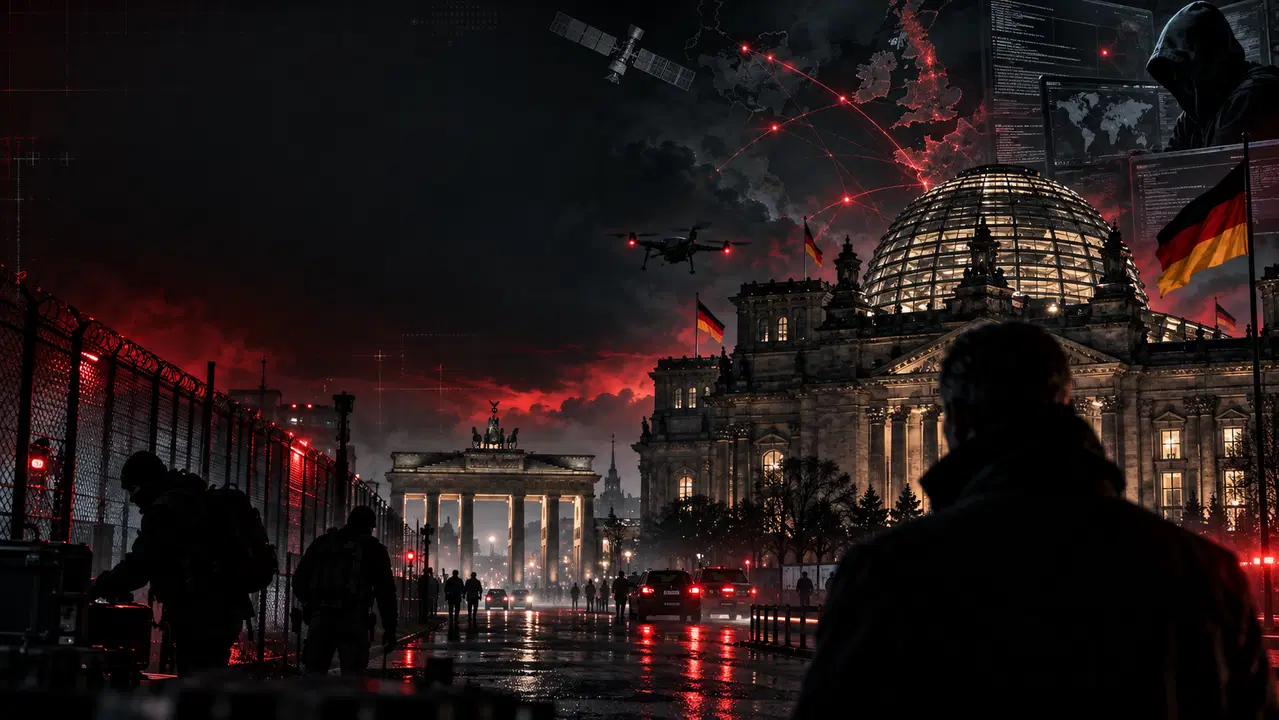
German minister warns of 'shadow war' destabilising the country
Photograph: Cumhuriyet (embedded from source)
What this story says
- German Interior Minister Alexander Dobrindt has warned that Germany is facing a 'shadow war'.
- Dobrindt stated that the current threats are more far-reaching than those experienced during the Cold War.
- The stated objective of this 'shadow war' is to destabilise Germany.
- The German government is considering reforms to strengthen its intelligence services.
Who covered it
Percentages are shares of the 28 outlets carrying a published leaning rating. 28 of the 56 outlets we know ran this story carry no rating and are not counted in them. Coverage measured .
Trust
42/100
Craft
57/100
Hype
41/100
56 sources · methodology
German Interior Minister Alexander Dobrindt has warned that Germany is facing a 'shadow war' involving sabotage, espionage, and cyberattacks. He stated that the current threats are more far-reaching than those experienced during the Cold War, with the objective of destabilising the country. In response, the German government is considering reforms to strengthen its intelligence services.
Disagreement on details
The German Interior Minister Alexander Dobrindt stated that the current security environment presents risks that go beyond those seen during the Cold War, according to Cumhuriyet. Aktual24 reports Dobrindt stated the scale of threats goes beyond what was seen during the Cold War. Egyptian Gazette reports Dobrindt said the 'shadow war' has an objective that extends far beyond anything seen during the Cold War. WTVB, The Straits Times, and The Print report Dobrindt warned the 'shadow war' is more far reaching than the Cold War was. Times of India reports Dobrindt believes the current 'shadow war' surpasses the intensity of the Cold War.
What the coverage left out
None of the right-rated digests mention the specific types of threats constituting the 'shadow war', such as espionage, sabotage, or cyberattacks, which were detailed in the left-rated full report. Additionally, the right-rated digests do not mention the historical context of Germany's intelligence agencies having limited powers since World War II, a detail present in the left-rated full report.
Coverage settled. We checked this 9 times and stopped on 17 Oct 2026, 22:30. The figures above are what it finished at.
How each side covered it
Our own reading of the reporting listed below, written from the outlets’ articles rather than quoted from them. The reasoning is set out on our methodology page.
Left
7 rated outlets
- The left-leaning outlets Cumhuriyet, in.gr, Hot News, UNN, and t-online reported on Germany's interior minister warning of a "shadow war". They stated the threat to Germany exceeds that of the Cold War and aims to destabilise the country.
- Cumhuriyet, which published a full report, noted that the minister, Alexander Dobrindt, did not name Russia directly but spoke after German intelligence warnings. This outlet also detailed a drone incident at Leipzig/Halle airport and discussed proposed reforms to expand intelligence agency powers.
- The digests from in.gr, Hot News, and UNN also mentioned the drone incident and the call to strengthen German intelligence services. t-online's digest focused on hybrid attacks and a domestic political shift.
Centre
12 rated outlets
- The centre-rated reports led with headlines such as 'Germany faces “shadow war” that goes beyond Cold War threats, interior minister warns' (WTVB) and 'Security Situation: Dobrindt: "Shadow War" to Destabilize Germany' (saarbruecker-zeitung.de, volksfreund.de, wz.de). These reports carried the core message from Interior Minister Alexander Dobrindt that Germany faces a 'shadow war' more far-reaching than the Cold War and that this necessitates strengthening intelligence services. WTVB, The Straits Times, and The Print report Dobrindt warned the 'shadow war' is more far reaching than the Cold War was. The centre-rated digests did not include details about specific threats like espionage or sabotage, nor did they mention the proposed reforms to intelligence services or the historical context of German intelligence limitations.
Right
9 rated outlets
- Right-rated outlets such as Modern Diplomacy, Times of India, The Straits Times, The Print, and Handelsblatt used headlines including 'Germany Warns of a ‘Shadow War’ Beyond Cold War Threats as Berlin Seeks Stronger Spy Powers' (Modern Diplomacy) and 'Security Situation: Dobrindt: "Shadow War" to Destabilize Germany' (Handelsblatt). These reports focused on Interior Minister Alexander Dobrindt's warning of a 'shadow war' that poses a greater threat than the Cold War and his calls to strengthen domestic intelligence capabilities. Modern Diplomacy noted these calls were made amid growing concerns about Russian activity. Times of India reported Dobrindt emphasized the need for enhanced intelligence capabilities and that the German government is reviewing a reform bill to empower its agencies, arising from concerns following a recent failed attack linked to Russia. The right-rated digests did not mention specific types of threats like espionage or sabotage, nor did they provide historical context for German intelligence limitations.
Questions about this coverage
- How did the left and right cover German minister warns of 'shadow war' destabilising the country?
- Of the 28 outlets on this story carrying a published leaning rating, 25% are rated left, 43% are rated centre, 32% are rated right. Those percentages are shares of the rated outlets, not of every outlet that ran it, which was 56. The sections above set out what each side emphasised, in its own terms.
- Is German minister warns of 'shadow war' destabilising the country left or right?
- Neither side dominates it. Of the 28 rated outlets on this story, 25% are rated left, 43% are rated centre, 32% are rated right, and no side holds the 70% this site would want before calling a field one-sided. A story is not left or right in any case; the outlets that carried it are what carry ratings.
- Is the coverage of German minister warns of 'shadow war' destabilising the country biased?
- German minister warns of 'shadow war' destabilising the country is one event reported by 56 outlets, and this page does not rate the story as biased or unbiased. What it publishes is the spread: which outlets ran it, where named rating organisations place each of them on the spectrum, and what each side chose to lead with. A leaning rating describes an outlet's record over time, not this article, and the two should not be run together.
- Which outlets covered German minister warns of 'shadow war' destabilising the country?
- 56 that we know of, every one of them listed further up this page with a link to its own report and to what we hold on the publisher. Nothing here is a summary of somebody else's summary: the outlets are named so the original reporting can be read.
- What is the 'shadow war' Germany is facing?
- German Interior Minister Alexander Dobrindt has described a 'shadow war' targeting Germany, which he stated involves threats such as espionage, sabotage, and cyberattacks. He warned that these threats are more far-reaching than those experienced during the Cold War and are intended to destabilise the country.
- Why is Germany considering strengthening its intelligence services?
- The German government is considering reforms to strengthen its intelligence services due to concerns about increasing threats, which Interior Minister Alexander Dobrindt has characterised as a 'shadow war'. These concerns have been heightened by recent events and the perceived need for Germany to enhance its defence capabilities.
- How does the current threat compare to the Cold War?
- According to German Interior Minister Alexander Dobrindt, the current 'shadow war' facing Germany is more far-reaching and presents greater risks than those experienced during the Cold War. He stated that the objective of this modern threat extends far beyond what was seen during that historical period.
Read it at the source
56 outlets, grouped by the leaning a published rating gives them. Every headline links to the original; an underlined outlet name opens our profile of that publisher.
Left
7- Germany: We Are Witnessing a Shadow War. It Goes Far Beyond Anything We Saw in the Cold War (opens IndexHR in a new tab)
IndexHR — is IndexHR biased? Our profile of this outletOpinion
- We Are Facing a More Far-Reaching Shadow War than During the Cold War, Said German Minister (opens Novinky.cz in a new tab)
Novinky.cz — is Novinky.cz biased? Our profile of this outlet
- Larger than During the Cold War - Dobrindt Declares Threats to Germany (opens UNN in a new tab)
- The German Government Wants to Strengthen Its Secret Services in the Fight Against "War in the shadows."It Far Exceeds Everything that Was Seen in the Cold War - HotNews.ro (opens Hot News in a new tab)
- Germany: Russia's 'Shadow War' Surpasses Cold War Threats, Interior Minister Says (opens in.gr in a new tab)
- Hybrid Threat: Interior Minister Dobrindt Speaks of Putin's "Shadow War" (opens t-online in a new tab)
- Germany Warns of 'Shadow War': 'A Greater Threat than the Cold War' (opens Cumhuriyet in a new tab)
Cumhuriyet — is Cumhuriyet biased? Our profile of this outlet
Centre
12- Germany faces 'shadow war' that goes beyond Cold War threats, minister warns. (opens Reuters in a new tab)
- Weaknesses, Insecure, Split: Experts See Germany at War with Putin Long Ago (opens Kreiszeitung in a new tab)
Kreiszeitung — is Kreiszeitung biased? Our profile of this outletOpinion
- Weaknesses, Insecure, Split: Experts See Germany at War with Putin Long Ago (opens tz.de in a new tab)
- Germany faces 'shadow war' that goes beyond Cold War threats, minister warns (opens Jerusalem Post in a new tab)
Jerusalem Post — is Jerusalem Post biased? Our profile of this outlet
- Germany Warns of a "War in the Shadows that Goes Beyond the Threats of the Cold War: "The Goal Is to Destabilize Us. (opens Digi 24 in a new tab)
- German Minister Says: This Is More than a Cold War (opens Portfolio in a new tab)
- The German Minister Spoke About the "Shadow War": "Its Goal Is to Destabilize us." (opens Lietuvos Radijas ir Televizija in a new tab)
- "The Attacks Will Continue to Come": According to German Intelligence, the Russian Threat Will Persist Even in the Event of Peace in Ukraine (opens La Libre in a new tab)
Show 4 more
- Germany faces “shadow war” that goes beyond Cold War threats, interior minister warns (opens WTVB in a new tab)
- Dobrindt: "Shadow War" to Destabilize Germany (opens wz.de in a new tab)
- Security Situation: Dobrindt: "Shadow War" to Destabilize Germany (opens volksfreund.de in a new tab)
volksfreund.de — is volksfreund.de biased? Our profile of this outlet
- Security Situation: Dobrindt: "Shadow War" to Destabilize Germany (opens saarbruecker-zeitung.de in a new tab)
saarbruecker-zeitung.de — is saarbruecker-zeitung.de biased? Our profile of this outlet
Right
9- Germany Warns Against Russia's Shadow War – and Remains Sluggish when Protecting (opens Neue Zürcher Zeitung in a new tab)
Neue Zürcher Zeitung — is Neue Zürcher Zeitung biased? Our profile of this outletOpinion
- The Cold War Is Back (opens Power Line in a new tab)
Power Line — is Power Line biased? Our profile of this outletOpinion
- Germany Faces Shadow War Aimed at Political Subjugation, Interior Minister Warns (opens Anadolu Ajansı in a new tab)
Anadolu Ajansı — is Anadolu Ajansı biased? Our profile of this outlet
- Minister Warns Against Shadow War: Dobrindt Sees Germany More Threatened than in the Cold War (opens n-tv in a new tab)
- Germany Warns of a ‘Shadow War’ Beyond Cold War Threats as Berlin Seeks Stronger Spy Powers (opens Modern Diplomacy in a new tab)
Modern Diplomacy — is Modern Diplomacy biased? Our profile of this outlet
- Germany faces a ‘shadow war’ more far-reaching than Cold War, warns minister (opens Times of India in a new tab)
Times of India — is Times of India biased? Our profile of this outlet
- Germany faces "shadow war" that goes beyond Cold War threats, interior minister warns (opens The Straits Times in a new tab)
The Straits Times — is The Straits Times biased? Our profile of this outlet
- Germany faces "shadow war" that goes beyond Cold War threats, interior minister warns (opens The Print in a new tab)
Not rated
28- Germany: Interior Minister Warns that Current Threats Exceed the Level Reached During the Cold War (opens PSnews in a new tab)
- Germany Alerts to War in the Shadows, Wider than the Cold War (opens Terra Brasil Notícias in a new tab)
Terra Brasil Notícias — is Terra Brasil Notícias biased? Our profile of this outletOpinion
- "The Aim of the Covert War Is to Destabilize Germany" (opens Habertürk in a new tab)
- Minister Warns: Germany Is Already Facing Hybrid War (opens Fenix Magazin in a new tab)
Fenix Magazin — is Fenix Magazin biased? Our profile of this outlet
- Germany Warns of 'War in the Shadows' Worse than the Cold War (opens Revista Oeste in a new tab)
Revista Oeste — is Revista Oeste biased? Our profile of this outlet
- Germany Is Dealing with a ‘Shadow War’ Aimed at Destabilizing the Country, Warns the Minister. (opens Business AM in a new tab)
Business AM — is Business AM biased? Our profile of this outlet
- Interior Minister Dobrindt Argued that Germany Was Being Targeted in a Covert War. (opens Haberler in a new tab)
- Germany's Bleak Warning: Russia Wants to Destabilize the Country Through Sabotage and Cyber Attacks (opens Gândul in a new tab)
Show 20 more
- German Interior Minister Warns: Country Faces 'Shadow War' that Goes Beyond Cold War Threats (opens Naftemporiki in a new tab)
Naftemporiki — is Naftemporiki biased? Our profile of this outlet
- Germany: Warning of "Shadow War" with Wider Implications than the Cold War (opens npress.gr in a new tab)
- German Counterintelligence Warns of New Threat. Russia Plans Assassination (opens rmf24.pl in a new tab)
- German Foreign Ministry Chief Warns of 'Shadow War' and Threat From Russia (opens Rzeczpospolita in a new tab)
Rzeczpospolita — is Rzeczpospolita biased? Our profile of this outlet
- Dobrind: Germany Faces a "Shadow War" of Destabilization, More Dangerous than the Cold War - Calls for Strengthening of Intelligence Services (opens thepressroom.gr in a new tab)
thepressroom.gr — is thepressroom.gr biased? Our profile of this outletOpinion
- Germany Is Clear on This. We Are Facing a Shadow War that Aims to Destabilize the Country, Says the Interior Minister (opens Hospodárske Noviny in a new tab)
Hospodárske Noviny — is Hospodárske Noviny biased? Our profile of this outlet
- Dobrint: The Current Shadow War Against Germany Is More Far-Reaching than the Cold War (opens nin.rs in a new tab)
nin.rs — is nin.rs biased? Our profile of this outletOpinion
- The Head of the German Interior Declared a “Shadow War” Aimed at Destabilizing the Country (opens Європейська правда in a new tab)
Європейська правда
- Germany: 'Shadow War' Bigger than the Cold War, Interior Minister Warns (opens pelop.gr in a new tab)
- An Important Announcement Was Made by the German Interior Minister (opens Liner.hu in a new tab)
- Germany Warns of a "War in the Shadows Wider than During the Cold War. The Interior Minister Calls for the Reinforcement of Information Services (opens Aktual24 in a new tab)
- 'Germany faces "shadow war" that goes beyond Cold War threats' (opens Egyptian Gazette in a new tab)
Egyptian Gazette — is Egyptian Gazette biased? Our profile of this outlet
- Dobrint: The Shadow War Threatens to Destabilize Germany (opens vijesti.me in a new tab)
vijesti.me — is vijesti.me biased? Our profile of this outlet
- Dobrindt: «Shadow War» to Destabilize Germany (opens mainwelle.de in a new tab)
mainwelle.de — is mainwelle.de biased? Our profile of this outletOpinion
- Germany Faces a "War in the Shadows," Warns Interior Minister (opens Mediafax in a new tab)
- Germany, intelligence alert: "Risk of violent conflict with Russia, shadow war underway against us" - JIJI PRESSGermany, intelligence alert: "Risk of violent conflict with Russia, shadow war underway against us" (opens 時事ドットコム in a new tab)
時事ドットコム
- Dobrindt: "Shadow War" to Destabilize Germany (opens onetz.de in a new tab)
- Dobrindt: "Shadow War" to Destabilize Germany (opens noz.de in a new tab)
noz.de — is noz.de biased? Our profile of this outletOpinion
- Dobrindt: "Shadow War" to Destabilize Germany (opens op-online.de in a new tab)
op-online.de — is op-online.de biased? Our profile of this outlet
- Germany Faces Indirect War Worse than Cold War, Says Minister (opens CNN Brasil in a new tab)
CNN Brasil — is CNN Brasil biased? Our profile of this outlet
How did this read?
About the coverage, not about the story. We do not ask whether you agree with what happened — we have no honest use for that answer.

