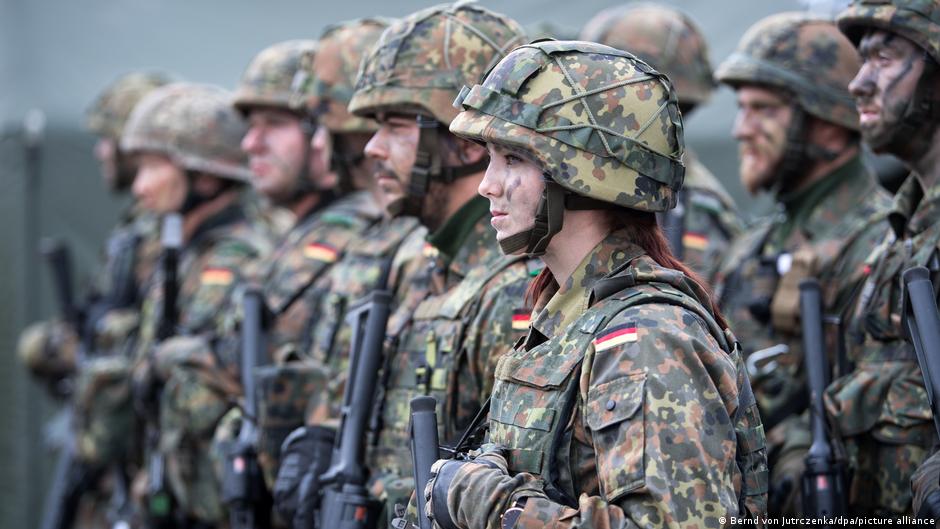
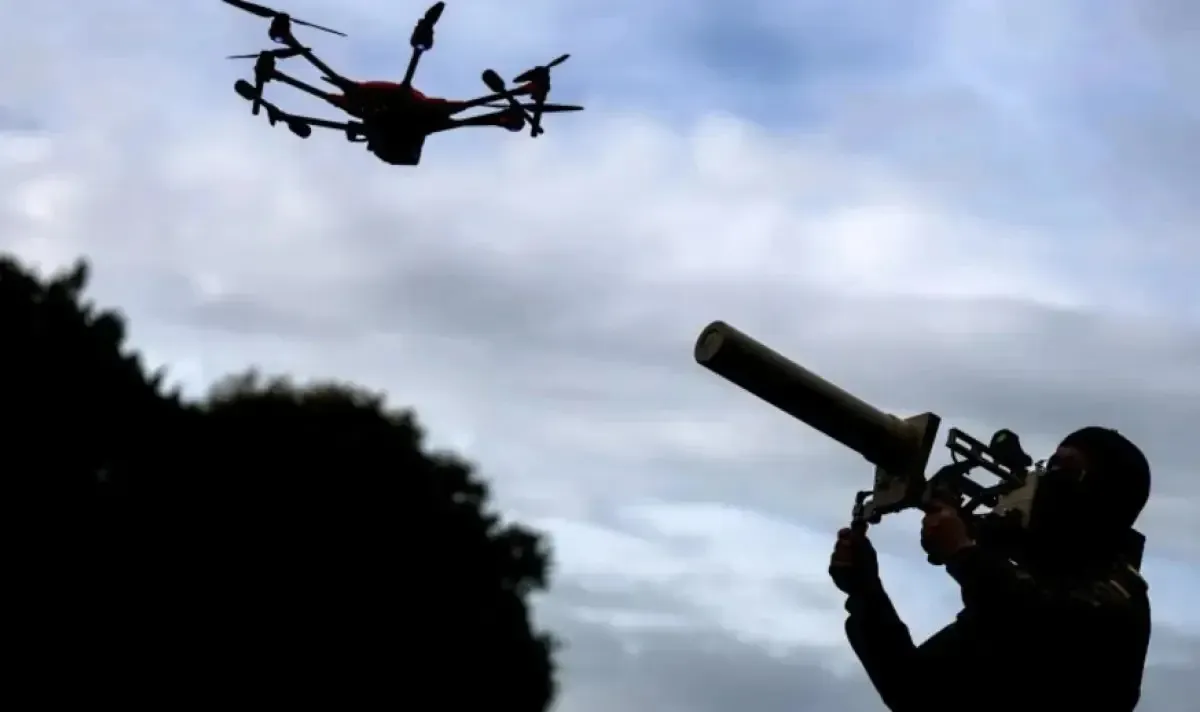
Germany tests kamikaze drones and AI targeting in Lithuania drills
Army conducts first tactical tests of exploding drones and AI software during largest exercises in Lithuania.
AI-assisted coverage comparison, editor-supervised · How this was made

Ukrainian Foreign Minister Andrii Sybiha and German Foreign Minister Johann Wadephul look at a Russian Geran-2 kamikaze drone outside of the Ministry's headquarters, amid Russia's attack on Ukraine, in Kyiv, Ukraine August 22, 2026 (Reuters)
Photograph: The Independent (US) (embedded from source)
What this story says
- Germany's army conducted its first tactical tests of kamikaze drones during military drills in Lithuania.
- The drills, named Freedom Shield, are the largest German military exercises in Lithuania to date.
- The army also tested Helsing's AI-based targeting software, Clarity, during the exercises.
- Germany plans to permanently station an armoured brigade of 5,000 troops in Lithuania by the end of 2027.
Germany's army began its first tactical tests of kamikaze drones, also known as loitering munitions, during military drills in Lithuania on Sunday. These tests were part of Freedom Shield, described as the largest German military exercises in Lithuania to date. The army also conducted initial tests of Helsing's AI-based targeting software, Clarity, which is designed to analyse data from various sensors faster than humans.
The drones tested were equipped with inert warheads and were used to strike main battle tanks at the Rudninkai training ground, near the Belarusian border. Lieutenant General Christian Freuding, who oversaw the tests, stated that both kamikaze drone systems and AI targeting tools are indispensable for modern warfare. Germany decided in 2025 to purchase these types of exploding drones after years of debate. The country has committed to permanently stationing an armoured brigade of 5,000 troops in Lithuania by the end of 2027, with approximately 1,800 of these troops already in the country.
Disagreement on drone type
While Devdiscourse and The Independent (US) report that the drones tested were kamikaze drones, 1news.com.ua states that the warheads were inert and the exercises worked out tactics rather than striking. The latter report also specifies that the drones were made by German companies Helsing and Stark.
What the coverage left out
None of the right-rated digests mention the specific decision year of 2025 for Germany to buy loitering munitions, a detail present in the full reports from Devdiscourse and The Independent (US).
How each side covered it
Our own reading of the reporting listed below, written from the outlets’ articles rather than quoted from them. The reasoning is set out on our methodology page.
Left
- The two left-rated reports, The Independent (US) and The Independent (UK), both led with the German army's testing of kamikaze drones and AI targeting tools in Lithuania. Both reports included details about the Freedom Shield drills being the largest German military exercises in Lithuania to date. They also both mentioned the planned permanent stationing of a 5,000-strong armoured brigade by the end of 2027. Both reports quoted Lieutenant General Christian Freuding's statement on the indispensability of these systems for modern warfare and noted Germany's decision in 2025 to buy loitering munitions after years of controversy. The reports also included context about Russia and Ukraine fielding similar drones and NATO warnings about increased threats from Russia.
Centre
- The centre-rated reports, including Devdiscourse, The News, Digi 24, Reuters, Portfolio, WTVB, The Mighty 790 KFGO, 1330 & 101.5 WHBL, and Market Screener, predominantly focused on the German army's first tactical tests of kamikaze drones and AI targeting tools in Lithuania. These reports consistently mentioned the Freedom Shield drills as the largest German military exercises in Lithuania and the planned permanent stationing of a 5,000-troop armoured brigade by the end of 2027. Devdiscourse, as a full report, provided additional details such as the specific companies involved (Helsing and Stark), the inert nature of the warheads used in the tests, and Lieutenant General Christian Freuding's role and future appointment. Several centre-rated digests, such as those from WTVB, The Mighty 790 KFGO, 1330 & 101.5 WHBL, and Market Screener, attributed their reporting to Reuters and included the date November 22.
Right
- The right-rated reports, from Regional Media News, The Star Kuala Lumpur, The Straits Times, Cyprus Mail, SRN News, WTAQ, KELO Newstalk 1320 107.9, and Protothema, highlighted the German army's initial tactical tests of kamikaze drones and AI targeting tools in Lithuania. These digests consistently reported on the Freedom Shield drills being the largest German military exercises in Lithuania and the plan to permanently station a 5,000-strong armoured brigade by the end of 2027. Many of these digests, including Regional Media News, The Star Kuala Lumpur, The Straits Times, Cyprus Mail, SRN News, WTAQ, and KELO Newstalk 1320 107.9, cited Reuters as the source and included the date November 22. Protothema's digest provided a description of single-use unmanned aircraft that can remain airborne, search for targets, and then detonate on impact.
Questions about this coverage
- Is the coverage of Germany tests kamikaze drones and AI targeting in Lithuania drills biased?
- Germany tests kamikaze drones and AI targeting in Lithuania drills is one event reported by several outlets, and this page does not rate the story as biased or unbiased. What it publishes is the spread: which outlets ran it, where named rating organisations place each of them on the spectrum, and what each side chose to lead with. A leaning rating describes an outlet's record over time, not this article, and the two should not be run together.
- What kind of drones did the German army test in Lithuania?
- The German army conducted its first tactical tests of kamikaze drones, also known as loitering munitions, during military drills in Lithuania. These drones are designed to stay airborne, identify a target, and then detonate upon impact.
- What other military technology was tested?
- Alongside the kamikaze drones, the German army also tested Helsing's targeting software Clarity. This is an AI-based tool designed to rapidly analyse large volumes of data from sensors like satellites and drones to recommend actions.
- What is the significance of these drills for Germany's military presence in Lithuania?
- The drills, named Freedom Shield, are the largest German military exercises in Lithuania to date. Furthermore, Germany plans to permanently station an armoured brigade of 5,000 troops in Lithuania by the end of 2027, indicating a significant increase in its military commitment to the region.
Read it at the source
34 outlets, grouped by the leaning a published rating gives them. Every headline links to the original; an underlined outlet name opens our profile of that publisher.
Left
2- German army starts testing kamikaze drones and AI targeting tool (opens The Independent (US) in a new tab)
The Independent (US) — is The Independent (US) biased? Our profile of this outlet
- German army starts testing kamikaze drones and AI targeting tool (opens The Independent in a new tab)
The Independent — is The Independent biased? Our profile of this outlet
Centre
10- German army begins testing kamikaze drones and AI targeting tools: what to know (opens The News in a new tab)
- The German Army Is Testing for the First Time Kamikaze Drones and Artificially Intelligent Target Identification Systems in Lithuania (opens Digi 24 in a new tab)
- German army starts testing kamikaze drones and AI targeting tool in Lithuania (opens Reuters in a new tab)
- German army starts testing kamikaze drones and AI targeting tool in Lithuania (opens Devdiscourse in a new tab)
Devdiscourse — is Devdiscourse biased? Our profile of this outlet
- German Army Tests Kamikaze Drones (opens Portfolio in a new tab)
- German army starts testing kamikaze drones and AI targeting tool in Lithuania (opens 1330 & 101.5 WHBL in a new tab)
1330 & 101.5 WHBL — is 1330 & 101.5 WHBL biased? Our profile of this outlet
- German army starts testing kamikaze drones and AI targeting tool in Lithuania (opens The Mighty 790 KFGO in a new tab)
The Mighty 790 KFGO — is The Mighty 790 KFGO biased? Our profile of this outlet
- German army starts testing kamikaze drones and AI targeting tool in Lithuania (opens WTVB in a new tab)
Show 2 more
- German army starts testing kamikaze drones and AI targeting tool in Lithuania (opens Market Screener in a new tab)
Market Screener — is Market Screener biased? Our profile of this outlet
- German attack drones pass live-fire tests, with first deliveries planned this year (opens Defense News in a new tab)
Defense News — is Defense News biased? Our profile of this outlet
Right
9- German army starts testing kamikaze drones and AI targeting tool in Lithuania - Regional Media News (opens regionalmedianews.com in a new tab)
regionalmedianews.com — is regionalmedianews.com biased? Our profile of this outlet
- Germany Is Preparing for Tomorrow's War: Kamikaze Drones with Artificial Intelligence and 5,000 Soldiers in Lithuania, Video (opens Protothema in a new tab)
Protothema — is Protothema biased? Our profile of this outlet
- German army starts testing kamikaze drones and AI targeting tool in Lithuania (opens The Star Kuala Lumpur in a new tab)
The Star Kuala Lumpur — is The Star Kuala Lumpur biased? Our profile of this outlet
- German army starts testing kamikaze drones and AI targeting tool in Lithuania (opens The Straits Times in a new tab)
The Straits Times — is The Straits Times biased? Our profile of this outlet
- German army starts testing kamikaze drones and AI targeting tool in Lithuania (opens Cyprus Mail in a new tab)
Cyprus Mail — is Cyprus Mail biased? Our profile of this outlet
- German army starts testing kamikaze drones and AI targeting tool in Lithuania (opens WSAU in a new tab)
- German army starts testing kamikaze drones and AI targeting tool in Lithuania (opens KELO Newstalk 1320 107.9 in a new tab)
KELO Newstalk 1320 107.9 — is KELO Newstalk 1320 107.9 biased? Our profile of this outlet
- German army starts testing kamikaze drones and AI targeting tool in Lithuania (opens WTAQ in a new tab)
Not rated
13- The Bundeswehr Tested Strike Drones for the First Time in Lithuania (opens 1news.com.ua in a new tab)
1news.com.ua — is 1news.com.ua biased? Our profile of this outlet
- Germany's Preparations for "Tomorrow's War": AI-Powered Kamikaze Drones and 5,000 Soldiers Tested in Lithuania (opens Newsit.gr in a new tab)
- Germany First Tests Kamikaze Drones and Artificially Intelligent Target Identification Systems in Lithuania (opens focuspress.ro in a new tab)
focuspress.ro — is focuspress.ro biased? Our profile of this outlet
- German army starts testing kamikaze drones in Lithuania (opens Egyptian Gazette in a new tab)
Egyptian Gazette — is Egyptian Gazette biased? Our profile of this outlet
- German Armed Forces Tested Kamikaze Drones for the First Time in Lithuania (opens Unknown in a new tab)
Unknown
- Germany Tests Kamikaze Drone and Artificial Intelligence System in Lithuania for the First Time (opens Libre in a new tab)
- Germany Tests Kamikaze Drones and Artificial Intelligence System in Lithuania for the First Time - ONLARISSA.GR News Larissa (opens onlarissa.gr in a new tab)
onlarissa.gr — is onlarissa.gr biased? Our profile of this outlet
- Germany Tests First Kamikaze Drones and Artificially Intelligent Target Identification Systems in Lithuania (opens Stirile Pro TV in a new tab)
Stirile Pro TV — is Stirile Pro TV biased? Our profile of this outlet
Show 5 more
- Germany Started the First Tactical Tests with Kamikaze Drones, During Military Exercises in Lithuania. (opens rador.ro in a new tab)
- Germany Tests Kamikaze Drones and Artificial Intelligence System in Lithuania for the First Time (opens Capital.gr in a new tab)
Capital.gr — is Capital.gr biased? Our profile of this outlet
- Germany Tests Kamikaze Drones and Artificial Intelligence System in Lithuania for the First Time (opens ertnews.gr in a new tab)
ertnews.gr — is ertnews.gr biased? Our profile of this outlet
- German army starts testing kamikaze drones and AI targeting tool in Lithuania (opens whtc.com in a new tab)
- German Attack Drones Virtus and HX-2 Exceed the Actual Fire and Will Be Delivered This Year (opens Moncloa in a new tab)
How did this read?
About the coverage, not about the story. We do not ask whether you agree with what happened — we have no honest use for that answer.