IAEA to remove uranium from Syrian Site 99 under US-brokered deal
Agreement follows months of secret talks between Washington, Damascus and Jerusalem to avert Israeli military action
AI-assisted coverage comparison, editor-supervised · How this was made

IAEA to remove uranium from Syrian Site 99 under US-brokered deal
Photograph: Jerusalem Post (embedded from source)
What this story says
- The IAEA plans to remove nuclear material, including yellowcake uranium, from a secret Syrian site called Site 99 under a deal brokered by the United States.
- The agreement follows months of secret talks between the US, Syria and Israel, during which Israel threatened to bomb the site if the material was not removed.
- The material is linked to Syria’s former nuclear programme, centred on the Al-Kibar reactor, which Israel destroyed in 2007.
- The removal has not yet begun, but US officials expect it to be completed by the end of 2026.
Who covered it
Percentages are shares of the 36 outlets carrying a published leaning rating. 15 of the 51 outlets we know ran this story carry no rating and are not counted in them. Coverage measured .
Trust
47/100
Craft
95/100
Hype
15/100
51 sources · methodology
Missing from the left
Only 5 of the 36 outlets with a published leaning rating that ran this story are rated left.
A reader who follows the left would not have seen this. We report the absence rather than explain it: outlets choose what to cover for many reasons, and we have no evidence about which one applies here.
The International Atomic Energy Agency (IAEA) will remove nuclear material from a clandestine Syrian site known as Site 99, following an agreement brokered by the United States. The deal involves Syria and Israel and was reached after months of secret diplomacy. The material includes yellowcake uranium, a powder produced from uranium ore, according to a US official cited by Axios.
The site is linked to Syria’s former nuclear programme, which centred on the Al-Kibar reactor in the Dayr Az Zawr region. Israel bombed the reactor in 2007. After the fall of Bashar al-Assad’s regime, the IAEA signed an agreement with Syria’s new government to inspect several nuclear sites, including Al-Kibar and Site 99. Charles Lister, a resident fellow at the Middle East Institute, said Syria’s new government is eager to resolve inherited nuclear issues to improve its international standing.
Israel had threatened to bomb Site 99 if the material was not removed or if Syria attempted to access it. The US and Israel discussed the issue for over a year before agreeing that securing Syria’s cooperation was the best approach. A US official said the new Syrian government has been a "good partner" in the process. The agreement was signed three weeks ago, and the IAEA has not yet begun removing the material.
What the reports disagree on
The Jerusalem Post reported that the agreement "validates US President Donald Trump’s approach towards Syria and shows that his administration is utilizing close relations with Syria to neutralize a possible crisis." Ynet News did not include this claim. The Jerusalem Post also reported that Syrian officials denied knowledge of nuclear material at the site, while Ynet News did not mention this denial.
What the coverage left out
None of the right-rated digests mentioned the detail that Israel bombed the entrances to Site 99 after the fall of Assad’s regime. The Jerusalem Post did not include the potential use of the material in a dirty bomb, as reported by Ynet News. None of the digests or the Jerusalem Post mentioned Charles Lister’s comment on Syria’s new government resolving inherited nuclear and chemical weapons issues.
2007
Year Israel bombed the Al-Kibar reactor
The reactor was Syria’s main nuclear facility before its destruction.
Coverage settled. We checked this 118 times and stopped on 16 Aug 2026, 01:00. The figures above are what it finished at.
How other outlets pictured it
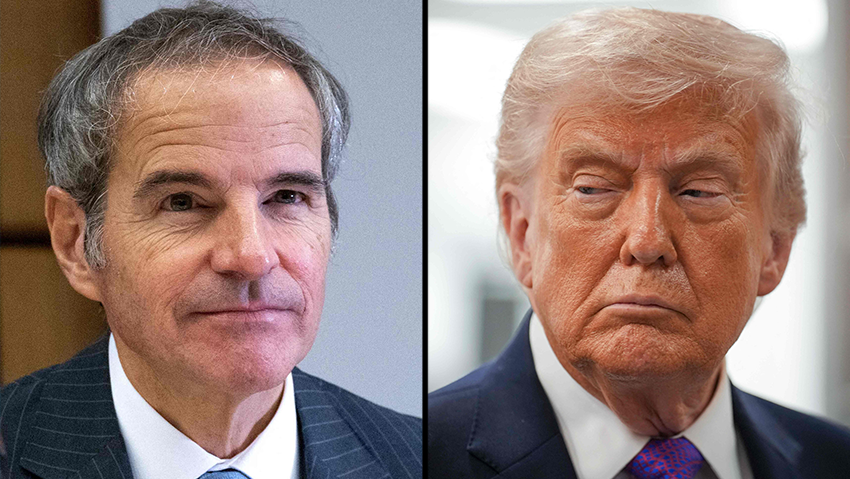
Which photograph to run is each newsroom’s own choice. The leaning beside a name is that outlet’s published rating, not a claim that the pictures divide along it. Every picture is shown from the outlet’s own server and links to the article it ran in.
How each side covered it
Our own reading of the reporting listed below, written from the outlets’ articles rather than quoted from them. The reasoning is set out on our methodology page.
Left
5 rated outlets
- Ynet News led on the diplomatic effort to prevent escalation involving Israel, Syria and Turkey. It included the detail that Israel bombed the entrances to Site 99 after the fall of Assad’s regime to prevent access. The report quoted Charles Lister, who said Syria’s new government is eager to resolve inherited nuclear and chemical weapons issues. It also noted that the material could be used in a "dirty bomb."
Centre
8 rated outlets
- The centre-rated reports agree that the IAEA will remove nuclear material from a Syrian site under a US-brokered agreement involving Israel and Syria. All five outlets name Site 99 as the location. The Jerusalem Post and Live Mint specify the material is linked to Syria’s former nuclear programme, including residue from the Al-Kibar reactor destroyed in 2007.
- The Jerusalem Post and Live Mint lead on the diplomatic effort behind the deal, quoting US and Israeli officials. Both describe Israel’s threat to strike the site if the material remained unsecured. Live Mint adds that yellowcake uranium was stored there, while the Jerusalem Post notes Syria’s denial of knowledge about the material. Neither the digests from tz.de, mannheim24.de, nor Worthy Christian News mention these details.
- The Jerusalem Post and Live Mint quote Israeli and US officials on the secrecy of the negotiations and the urgency created by movements near Site 99. The Jerusalem Post calls Syria’s new government a “good partner” in the agreement. The digests from tz.de, mannheim24.de, and Worthy Christian News do not include any voices or specific terms used by the parties involved.
Right
23 rated outlets
- The four right-rated digests all led on the US-brokered deal to avert regional escalation. Observador noted that Israel had detected movements at Site 99 recently, which raised concerns. Arutz Sheva and Anadolu Ajansı emphasised the role of the IAEA in extracting the material. Al Bawaba framed the story as a secret deal reached by the Trump administration, citing Axios and Al-Arabiya. None of the digests mentioned the yellowcake uranium or the potential use of the material in a dirty bomb.
Questions about this coverage
- How did the left and right cover IAEA to remove uranium from Syrian Site 99 under US-brokered deal?
- Of the 36 outlets on this story carrying a published leaning rating, 14% are rated left, 22% are rated centre, 64% are rated right. Those percentages are shares of the rated outlets, not of every outlet that ran it, which was 51. The sections above set out what each side emphasised, in its own terms.
- Is IAEA to remove uranium from Syrian Site 99 under US-brokered deal left or right?
- Neither side dominates it. Of the 36 rated outlets on this story, 14% are rated left, 22% are rated centre, 64% are rated right, and no side holds the 70% this site would want before calling a field one-sided. A story is not left or right in any case; the outlets that carried it are what carry ratings.
- Is the coverage of IAEA to remove uranium from Syrian Site 99 under US-brokered deal biased?
- IAEA to remove uranium from Syrian Site 99 under US-brokered deal is one event reported by 51 outlets, and this page does not rate the story as biased or unbiased. What it publishes is the spread: which outlets ran it, where named rating organisations place each of them on the spectrum, and what each side chose to lead with. A leaning rating describes an outlet's record over time, not this article, and the two should not be run together.
- Which side is not reporting IAEA to remove uranium from Syrian Site 99 under US-brokered deal?
- When we first saw this story, outlets rated left had barely covered it. Coverage accretes for hours after an event, so that is where to look rather than a verdict — the split above is the current count, and it is the one to read.
- Which outlets covered IAEA to remove uranium from Syrian Site 99 under US-brokered deal?
- 51 that we know of, every one of them listed further up this page with a link to its own report and to what we hold on the publisher. Nothing here is a summary of somebody else's summary: the outlets are named so the original reporting can be read.
- What is Site 99 in Syria?
- Site 99 is a clandestine Syrian facility where nuclear material, including yellowcake uranium, was stored. It is linked to Syria’s former nuclear programme, which centred on the Al-Kibar reactor bombed by Israel in 2007. The IAEA plans to remove the material under a US-brokered deal.
- Why is the US involved in removing nuclear material from Syria?
- The United States brokered the deal to remove nuclear material from Site 99 to avert a potential military escalation between Israel and Syria. Israel had threatened to bomb the site if the material was not removed, and the US sought to secure Syria’s cooperation instead.
- What is yellowcake uranium?
- Yellowcake uranium is a powder produced from uranium ore. It can be further processed and enriched as part of the nuclear fuel cycle. While it cannot be used directly in a nuclear weapon, it could be used in a dirty bomb, which disperses radioactive material.
- When will the nuclear material be removed from Site 99?
- The removal has not yet begun, but US officials expect the process to be completed by the end of 2026. The agreement between the IAEA and Syria was signed three weeks before the reports were published.
Read it at the source
53 outlets, grouped by the leaning a published rating gives them. Every headline links to the original; an underlined outlet name opens our profile of that publisher.
Left
5- The IAEA Will Remove Nuclear Materials From a Classified Facility in Syria. The Agreement with the Local Government Was Concluded with the Mediation of the United States (opens Meduza in a new tab)
- US and Syria Sign Secret Deal to Remove Nuclear Materials From Secret Facility (opens unn.ua in a new tab)
- Report: IAEA to remove nuclear material from secret Syrian site after US-Israel deal (opens Ynet News in a new tab)
- ‘They need each other’: What’s behind the new Syria-Russia accord? (opens Al Jazeera in a new tab)
Al Jazeera — is Al Jazeera biased? Our profile of this outlet
- Scoop: U.S. brokers secret deal on clandestine Syrian nuclear site (opens Axios in a new tab)
Centre
8- U.S. Brokers Deal to Remove Nuclear Material from Secret Syrian Site (opens The Syrian Observer in a new tab)
The Syrian Observer — is The Syrian Observer biased? Our profile of this outlet
- Syria says IAEA will announce ‘significant progress’ on nuclear file (opens WTVB in a new tab)
- Deal on Syrian Nuclear Location – Trump, Israel and Syria Approaching (opens mannheim24.de in a new tab)
mannheim24.de — is mannheim24.de biased? Our profile of this outlet
- Deal on Syrian Nuclear Location – Trump, Israel and Syria Approaching (opens tz.de in a new tab)
- Dirty bomb threat? IAEA set to remove nuclear material from secret Syrian site after US-brokered deal: Report (opens Live Mint in a new tab)
- U.S. Brokers Deal To Get Nuclear Material From The al-Assad Era Out Of Syria (opens IBTimes in a new tab)
- US Brokers Secret Deal To Remove Nuclear Material From Syrian Site (opens Worthy Christian News in a new tab)
Worthy Christian News — is Worthy Christian News biased? Our profile of this outlet
- IAEA set to remove nuclear material from Syrian site in US brokered deal (opens Jerusalem Post in a new tab)
Jerusalem Post — is Jerusalem Post biased? Our profile of this outlet
Right
24- Trump Scores an Unexpected Success in Syria (opens National Review in a new tab)
National Review — is National Review biased? Our profile of this outlet
- U.S. reaches deal with Syria to remove nuclear material from covert site (opens Right Side Broadcasting Network (RSBN) in a new tab)
- Syria Announces IAEA Removal of Nuclear Material From Secret Site (opens The Media Line in a new tab)
The Media Line — is The Media Line biased? Our profile of this outlet
- Trump Strikes Deal to Remove Nuclear Material from Secret Syrian Storage Site. (opens The National Pulse in a new tab)
The National Pulse — is The National Pulse biased? Our profile of this outlet
- US Brokers Deal for IAEA to Remove Nuclear Material Hidden in Syria (opens Jewish Press in a new tab)
Jewish Press — is Jewish Press biased? Our profile of this outlet
- Trump administration negotiates removal of nuclear material from covert Syrian site (opens Just the News in a new tab)
Just the News — is Just the News biased? Our profile of this outlet
- IAEA visit to mark progress on nuclear materials: Syria (opens Daily Sabah in a new tab)
Daily Sabah — is Daily Sabah biased? Our profile of this outlet
- Syria says IAEA will announce 'significant progress' on nuclear file (opens The Straits Times in a new tab)
The Straits Times — is The Straits Times biased? Our profile of this outlet
Show 16 more
- US brokers deal for atomic agency to remove ‘dirty bomb’ material from secret site in Syria (opens The Jewish Chronicle in a new tab)
The Jewish Chronicle — is The Jewish Chronicle biased? Our profile of this outlet
- "Site 99" in Syria that Hid Assad's Nuclear Material: Israel's Threats, the Deal with the US and Turkey (opens Protothema in a new tab)
Protothema — is Protothema biased? Our profile of this outlet
- US brokers deal for IAEA to remove nuclear material hidden in Syria (opens Jewish News Syndicate in a new tab)
Jewish News Syndicate — is Jewish News Syndicate biased? Our profile of this outlet
- US brokers deal for IAEA to remove nuclear material hidden in Syria (opens Cleveland Jewish News in a new tab)
Cleveland Jewish News — is Cleveland Jewish News biased? Our profile of this outlet
- Israel, Syria reach secret deal to remove nuclear material from hidden site (opens WIN in a new tab)
- Syria to Eliminate Nuclear Materials at Secret Nuclear Facility (opens 조선일보 in a new tab)
조선일보
- This Muslim Country Secretly Has Nuclear Material Buried Underground; Preparations Are Now Underway to Remove It. (opens आज तक in a new tab)
आज तक
- Syria to Hand Over Dirty Balm Ingredients Made with North Korean Assistance… "Agreement Between U.S. and IAEA" (Roundup) (opens 연합뉴스-Yonhap News Agency in a new tab)
연합뉴스-Yonhap News Agency — is 연합뉴스-Yonhap News Agency biased? Our profile of this outlet
- US negotiates deal for removal of nuclear material from covert Syrian site: Report (opens Washington Examiner in a new tab)
Washington Examiner — is Washington Examiner biased? Our profile of this outlet
- United States, Syria and Israel Reach Secret Agreement to Withdraw Material From Assad's Clandestine Nuclear Program (opens Observador in a new tab)
Observador — is Observador biased? Our profile of this outlet
- SECRET NUCLEAR SITE: U.S. Brokers Deal To Remove Nuclear Material From Clandestine Syrian Facility (opens Yeshiva World News in a new tab)
Yeshiva World News — is Yeshiva World News biased? Our profile of this outlet
- IAEA to extract nuclear materials from clandestine Syrian 'Site 99' (opens Arutz Sheva in a new tab)
Arutz Sheva — is Arutz Sheva biased? Our profile of this outlet
- Trump administration reaches secret deals with Syria and Israel to remove nuclear materials (opens Al Bawaba in a new tab)
- Report: Atomic Agency to Remove Nuclear Material From Syria (opens Newsmax in a new tab)
- IAEA to remove nuclear material from clandestine Syrian site: Report (opens Anadolu Ajansı in a new tab)
Anadolu Ajansı — is Anadolu Ajansı biased? Our profile of this outlet
- US and Israel agree to remove nuclear material from secret Syrian site – Axios (opens ussanews.com in a new tab)
ussanews.com — is ussanews.com biased? Our profile of this outlet
Not rated
16- US and Israel Agree to Remove Nuclear Material From Secret Location in Syria (opens SINDOnews.com in a new tab)
SINDOnews.com — is SINDOnews.com biased? Our profile of this outlet
- Syria to host IAEA delegation to announce ‘significant progress’ on issue of nuclear materials (opens The Legitimate in a new tab)
The Legitimate — is The Legitimate biased? Our profile of this outlet
- US, Syria and Israel Agree with IAEA to Withdraw Syria's Nuclear Material From Secret Site Site 99 (opens Moncloa in a new tab)
- IAEA Involved in Investigation Into Secret Nuclear Materials in Syria. (opens A Haber in a new tab)
- Axios: 'Israel Concerned About Turkey Gaining Access to Nuclear Facility' (opens Aydınlık in a new tab)
- Syria's Secret Nuclear Facility Revealed: US and Israel Found What Assad Was Hiding. (opens Halk TV in a new tab)
- Axios: US Brokered Secret Deal to Remove Nuclear Materials From Hidden Facility in Syria (opens ertnews.gr in a new tab)
ertnews.gr — is ertnews.gr biased? Our profile of this outlet
- Axios: IAEA Prepares to Remove Nuclear Materials Reportedly Located at a Secret Facility in Syria. (opens Haberler in a new tab)
Show 8 more
- IAEA to remove nuclear material from secret Syrian site: Report (opens NewsBytes in a new tab)
- Damascus Confirms Historic Agreement to Remove Nuclear Material From Secret Site in Syria (opens kikar.co.il in a new tab)
kikar.co.il — is kikar.co.il biased? Our profile of this outlet
- After Months of Talks: The Secret Agreement Between Israel, the US and Syria (opens סרוגים in a new tab)
סרוגים
- Secret Syrian Nuclear Cache to Be Removed in US-Brokered Breakthrough (opens matzav.com in a new tab)
matzav.com — is matzav.com biased? Our profile of this outlet
- US and Israel agree to remove nuclear material from secret Syrian site – Axios - The Press United (opens ThePress United in a new tab)
ThePress United — is ThePress United biased? Our profile of this outlet
- The Nuclear Material Left by Assad at Site 99 Will Be Removed (opens Unknown in a new tab)
Unknown
- US Brokers Secret Syrian Nuclear Deal (opens RAGEX in a new tab)
- IAEA to remove nuclear material from secret Syrian site after US brokers deal with Israel (opens Crypto Briefing in a new tab)
Crypto Briefing — is Crypto Briefing biased? Our profile of this outlet
How did this read?
About the coverage, not about the story. We do not ask whether you agree with what happened — we have no honest use for that answer.
More in Conflict & Security
All Conflict & Security →


Elsewhere on the site
 Politics•4 min readNetanyahu accuses UK and France of inventing colonialism term
 Politics•4 min readIranian President Pezeshkian says Supreme Leader Mojtaba Khamenei healthy after recent meeting
 Politics•3 min readUS and Iran Negotiate Phased Deal for Hormuz Strait and Blockade
 Politics•2 min readAbbas addresses UN via video after US visa denial