Iran threatens US energy assets after tanker strikes
Tehran warns American companies are exposed as oil prices rise and shipping traffic falls
AI-assisted coverage comparison, editor-supervised · How this was made
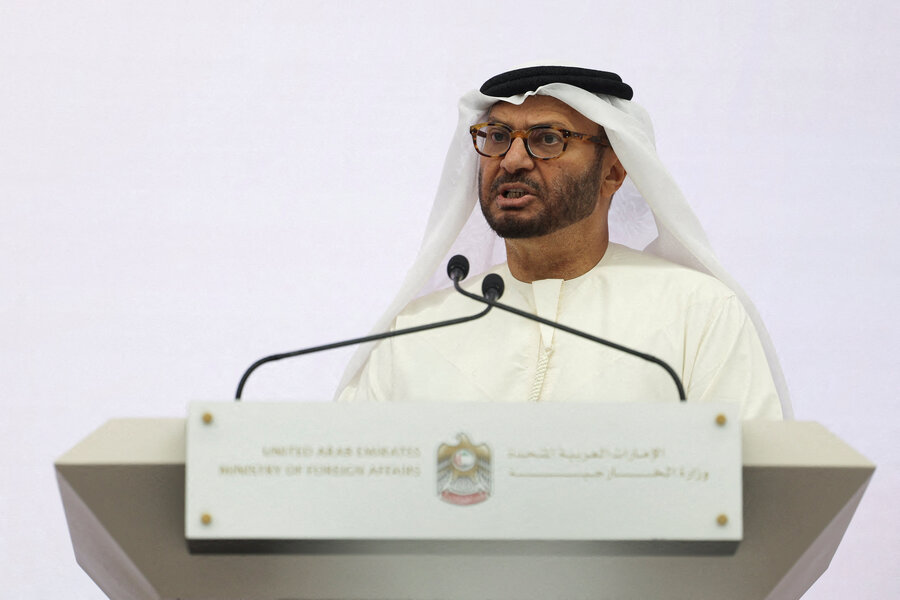
Photograph: The Christian Science Monitor (embedded from source)
What this story says
- Iran has threatened retaliation against any new US attacks on its assets.
- Iranian Parliament Speaker Mohammad Baqer Qalibaf stated that American oil and gas companies in the region share the exposure of Iranian assets.
- US forces struck three Iranian oil tankers on Saturday.
- An average of 10 commodity ships transited the Strait of Hormuz per day in the past 10 days, the lowest since May.
Who covered it
Percentages are shares of the 32 outlets carrying a published leaning rating. 38 of the 70 outlets we know ran this story carry no rating and are not counted in them. Coverage measured .
Trust
42/100
Craft
57/100
Hype
41/100
70 sources · methodology
Missing from the left
Only 7 of the 32 outlets with a published leaning rating that ran this story are rated left.
A reader who follows the left would not have seen this. We report the absence rather than explain it: outlets choose what to cover for many reasons, and we have no evidence about which one applies here.
Iran has threatened to retaliate against any new U.S. attacks on its assets, warning that the energy production chain in the region is "sprawling, accessible and exposed" and that U.S. oil and gas companies there share that exposure. Iranian Parliament Speaker Mohammad Baqer Qalibaf stated, "Strike our assets and you get struck." This follows U.S. forces striking three Iranian oil tankers on Saturday.
The exchange has contributed to a rise in oil prices. Brent crude futures hit their highest point since July 24 at $97.93 a barrel before slipping back to $96.19. Shipping data shows an average of 10 commodity ships transited the Strait of Hormuz per day in the past 10 days, the lowest figure since May.
Disagreement on details of the exchange
The Christian Science Monitor reported that senior Iranian security official Mohsen Rezaei said Iran would announce plans for a new restricted zone in the Gulf in the coming days and approve maps of a new shipping corridor through the Strait of Hormuz. None of the other reports mention Mohsen Rezaei or these specific plans.
What the coverage left out
None of the centre or right-rated reports mention the U.S. Defense Secretary Pete Hegseth's warning that Iran's oil tanker fleet was "defenseless," a detail reported by The Christian Science Monitor. No left-rated outlet ran this story at all.
Coverage settled. We checked this 24 times and stopped on 12 Sept 2026, 23:45. The figures above are what it finished at.
How each side covered it
Our own reading of the reporting listed below, written from the outlets’ articles rather than quoted from them. The reasoning is set out on our methodology page.
Left
7 rated outlets
- The left-leaning outlets that reported on Iran's threats focused on the potential impact on energy infrastructure. They highlighted that Iran warned US oil and gas interests in the Gulf region were vulnerable to strikes.
- These reports mentioned that Iran's threats followed recent clashes between the US and Iran. One outlet noted that the conflict was affecting Iran's economy and oil exports, as well as contributing to rising fuel prices in the US.
- The digests from these outlets quoted a senior Iranian security official stating that the Strait of Hormuz would only remain open if American attacks stopped. Another quoted Iran's Parliament Speaker warning of retaliation if US actions continued.
Centre
12 rated outlets
- The two centre-rated reports led on Iran's threat of retaliation against new U.S. attacks and the warning that American energy companies are exposed. Both The Christian Science Monitor and RTÉ reported that Iran threatened to retaliate against any new U.S. attacks on its assets, warning that the energy production chain in the region was "sprawling, accessible and exposed."
Right
13 rated outlets
- The five right-rated reports all led on Iran's threat to retaliate against U.S. attacks and the warning that American energy companies and facilities are exposed. End Time Headlines, Globo, La Tercera, Anadolu Ajansı, and Tribune India all reported that Iran threatened to retaliate against new U.S. attacks on its assets. La Tercera quoted the president of the Iranian Parliament saying, "Attack our assets and you will be attacked," and that "the oil and gas production chain here is extensive, accessible and exposed."
Questions about this coverage
- How did the left and right cover Iran threatens US energy assets after tanker strikes?
- Of the 32 outlets on this story carrying a published leaning rating, 22% are rated left, 37% are rated centre, 41% are rated right. Those percentages are shares of the rated outlets, not of every outlet that ran it, which was 70. The sections above set out what each side emphasised, in its own terms.
- Is Iran threatens US energy assets after tanker strikes left or right?
- Neither side dominates it. Of the 32 rated outlets on this story, 22% are rated left, 37% are rated centre, 41% are rated right, and no side holds the 70% this site would want before calling a field one-sided. A story is not left or right in any case; the outlets that carried it are what carry ratings.
- Is the coverage of Iran threatens US energy assets after tanker strikes biased?
- Iran threatens US energy assets after tanker strikes is one event reported by 70 outlets, and this page does not rate the story as biased or unbiased. What it publishes is the spread: which outlets ran it, where named rating organisations place each of them on the spectrum, and what each side chose to lead with. A leaning rating describes an outlet's record over time, not this article, and the two should not be run together.
- Which side is not reporting Iran threatens US energy assets after tanker strikes?
- When we first saw this story, outlets rated left had barely covered it. Coverage accretes for hours after an event, so that is where to look rather than a verdict — the split above is the current count, and it is the one to read.
- Which outlets covered Iran threatens US energy assets after tanker strikes?
- 70 that we know of, every one of them listed further up this page with a link to its own report and to what we hold on the publisher. Nothing here is a summary of somebody else's summary: the outlets are named so the original reporting can be read.
- What did Iran threaten to do?
- Iran has threatened to retaliate against any new U.S. attacks on its assets. Parliament Speaker Mohammad Baqer Qalibaf stated that American oil and gas companies in the region share the exposure of Iranian assets, warning "Strike our assets and you get struck."
- What triggered Iran's threat?
- The threats followed U.S. forces striking three Iranian oil tankers on Saturday. This exchange has led to an increase in oil prices and a decrease in shipping traffic through the Strait of Hormuz.
- How did the Strait of Hormuz shipping traffic change?
- An average of 10 commodity ships transited the Strait of Hormuz per day in the past 10 days. This is the lowest figure recorded since May, indicating a significant reduction in traffic.
Read it at the source
71 outlets, grouped by the leaning a published rating gives them. Every headline links to the original; an underlined outlet name opens our profile of that publisher.
Left
7- Iran warns US energy assets in Gulf are vulnerable after latest clashes (opens Rappler in a new tab)
- Iran says US energy assets in the Gulf are 'exposed' after latest clashes (opens SBS News in a new tab)
- Iran warns US energy assets in Gulf are vulnerable after latest clashes (opens Al-Monitor in a new tab)
Al-Monitor — is Al-Monitor biased? Our profile of this outlet
- Iran warns US over 'vulnerable' Gulf energy assets (opens The Border Mail in a new tab)
The Border Mail — is The Border Mail biased? Our profile of this outlet
- Iran warns US over 'vulnerable' Gulf energy assets (opens The Canberra Times in a new tab)
The Canberra Times — is The Canberra Times biased? Our profile of this outlet
- Iran warns U.S. energy assets in Gulf are vulnerable after latest clashes (opens The Hindu in a new tab)
- Iran warns of ‘faster, heavier’ retaliation if US attacks continue (opens canadianinquirer.net in a new tab)
canadianinquirer.net — is canadianinquirer.net biased? Our profile of this outlet
Centre
12- ‘Strike our Assets and You Get Struck’: Iran Just Dropped a New Warning that War in the Middle East is Far From Over (opens nationalsecurityjournal.org in a new tab)
nationalsecurityjournal.org — is nationalsecurityjournal.org biased? Our profile of this outlet
- Iran warns US energy assets in Gulf are vulnerable after latest clashes (opens West Hawaii Today in a new tab)
West Hawaii Today — is West Hawaii Today biased? Our profile of this outlet
- Iran warns U.S. energy assets in Gulf are vulnerable after latest clashes (opens The Japan Times in a new tab)
The Japan Times — is The Japan Times biased? Our profile of this outlet
- Iran Strikes Back: Gulf Tensions Escalate Amid Oil Crisis (opens Devdiscourse in a new tab)
Devdiscourse — is Devdiscourse biased? Our profile of this outlet
- Iran warns US over 'vulnerable' Gulf energy assets (opens PerthNow in a new tab)
- Iran's Eleva Threatens US Energy Interests · Global Voices (opens El Diario in a new tab)
- Iran vows to respond to US strikes, says US energy companies' facilities are 'exposed' (opens Reuters in a new tab)
- 'Strike our assets and you get struck': Iran warns US of retaliation over fresh attacks (opens Hindustan Times in a new tab)
Hindustan Times — is Hindustan Times biased? Our profile of this outlet
Show 4 more
- Iran vows response to US strikes, says American facilities are ‘exposed’ (opens The Christian Science Monitor in a new tab)
The Christian Science Monitor — is The Christian Science Monitor biased? Our profile of this outlet
- Iran vows response to US strikes, warns over energy sites (opens RTÉ in a new tab)
- Iran vows to respond to US strikes, says US energy companies' facilities are 'exposed' (opens The Economic Times in a new tab)
The Economic Times — is The Economic Times biased? Our profile of this outlet
- Iran Vows Harsher Response to Any New US Attack, Steps Up Efforts to Counter Sanctions (opens Khaama Press in a new tab)
Khaama Press — is Khaama Press biased? Our profile of this outlet
Right
13- Iran warns US over 'vulnerable' Gulf energy assets (opens The West Australian in a new tab)
The West Australian — is The West Australian biased? Our profile of this outlet
- Iran's Eleva Threatens US Energy Interests · Global Voices (opens Reforma in a new tab)
- Iran threatens American oil, gas companies in response to Hegseth’s warning about firing at US ships (opens End Time Headlines in a new tab)
End Time Headlines — is End Time Headlines biased? Our profile of this outlet
- Iran vows to respond to strikes, says US energy companies’ facilities ‘exposed’ (opens Cyprus Mail in a new tab)
Cyprus Mail — is Cyprus Mail biased? Our profile of this outlet
- Iran vows to respond to strikes, says US energy companies' facilities 'exposed' (opens Geo News in a new tab)
- Iran Promises to Respond to U.S. Attacks and Says U.S. Power Company Facilities Are ‘Exposed' (opens Globo in a new tab)
- Iran vows to respond to US strikes, says US energy companies' facilities are 'exposed' (opens Times of India in a new tab)
Times of India — is Times of India biased? Our profile of this outlet
- US energy firms, facilities in region similarly exposed (opens Mehr News Agency in a new tab)
Mehr News Agency — is Mehr News Agency biased? Our profile of this outlet
Show 5 more
- Iran Warns that It Will Respond to U.S. Attacks by Hitting Oil Facilities in the Region (opens La Tercera in a new tab)
La Tercera — is La Tercera biased? Our profile of this outlet
- Iran's parliamentary speaker warns US energy assets in Gulf exposed to Iranian retaliation (opens Anadolu Ajansı in a new tab)
Anadolu Ajansı — is Anadolu Ajansı biased? Our profile of this outlet
- Strike our assets and you get struck: Iran issues stark warning to US, highlights thriving energy production chain - The Tribune (opens Tribune India in a new tab)
Tribune India — is Tribune India biased? Our profile of this outlet
- Iran to US: Learn new rules 'before it is too late' (opens Richmond Times-Dispatch in a new tab)
Richmond Times-Dispatch — is Richmond Times-Dispatch biased? Our profile of this outlet
- Iran vows 'painful response' as US sanctions squeeze economy (opens Daily Sabah in a new tab)
Daily Sabah — is Daily Sabah biased? Our profile of this outlet
Not rated
39- Oil Price Exceeds $97 per Barrel — Iran Threatens to Target Energy Facilities in the Gulf (opens Banker.az in a new tab)
- As the US-Iran War Spreads to Energy, Tehran Threatens to Cripple US Oil Facilities (opens Gelora News in a new tab)
Gelora News — is Gelora News biased? Our profile of this outlet
- The Gulf Is Becoming the Battlefield (opens srilankachronicle.com in a new tab)
srilankachronicle.com — is srilankachronicle.com biased? Our profile of this outlet
- Iran Threatens US Interests in Gulf Amid Hormuz Crisis (opens barlamantoday.com in a new tab)
barlamantoday.com — is barlamantoday.com biased? Our profile of this outlet
- Iran Warns US Energy Assets in Gulf Are Vulnerable After Latest Clashes (opens KAYHAN LIFE in a new tab)
KAYHAN LIFE — is KAYHAN LIFE biased? Our profile of this outlet
- Iran Threatens US Energy Assets in the Gulf After Weekend Attacks (opens teleborsa.it in a new tab)
teleborsa.it — is teleborsa.it biased? Our profile of this outlet
- Iran warns US over ‘vulnerable’ Gulf energy assets (opens The Queenslander in a new tab)
The Queenslander — is The Queenslander biased? Our profile of this outlet
- Iran vows to respond to US strikes, says US energy companies' facilities are 'exposed' (opens OODA Loop in a new tab)
Show 31 more
- Iran Promises to Respond to Attacks and Says U.S. Energy Company Facilities Are "Exposed" (opens Forbes Brasil in a new tab)
Forbes Brasil — is Forbes Brasil biased? Our profile of this outlet
- Iran Warns of a Devastating Strike, Attacking a Range of US Oil and Gas Facilities. (opens Báo điện tử Dân Trí in a new tab)
Báo điện tử Dân Trí — is Báo điện tử Dân Trí biased? Our profile of this outlet
- Iran Promises to Respond to U.S. Attacks and Warns that Energy Is “Exposed” (opens La República in a new tab)
La República — is La República biased? Our profile of this outlet
- Iran Threatens to Attack US Assets and Oil Companies in the Gulf: "They Are Exposed" (opens infomoney.com.br in a new tab)
infomoney.com.br — is infomoney.com.br biased? Our profile of this outlet
- Iran Promises to Respond to U.S. Attacks; Energy Company Facilities Are "Exposed," He Warns (opens El Economista in a new tab)
El Economista — is El Economista biased? Our profile of this outlet
- Iran Warns that It Will Respond to US Attacks by Hitting Oil Facilities in the Region (opens diarioestrategia.cl in a new tab)
diarioestrategia.cl — is diarioestrategia.cl biased? Our profile of this outlet
- Iran Vows To Respond To US Strikes, Says US Energy Companies' Facilities 'exposed' (opens Pakistan Live News in a new tab)
Pakistan Live News — is Pakistan Live News biased? Our profile of this outlet
- Iran Threatened to Attack American Energy Facilities in the Region (opens RTVI in a new tab)
- Iran Warns Of 'Faster, Heavier, More Painful Response' To US Attacks (opens theliberationnews.ng in a new tab)
theliberationnews.ng — is theliberationnews.ng biased? Our profile of this outlet
- Tension as Iran threatens to strike US oil assets after latest tanker attacks in Gulf (opens Legit.ng in a new tab)
- Iran Threatens to Attack U.S. Energy Companies if Its Facilities Are Bombed (opens El Comercio in a new tab)
El Comercio — is El Comercio biased? Our profile of this outlet
- Iran Promises to Respond to Attacks and Says US Power Company Facilities Are "Exposed" (opens Terra in a new tab)
- U.S. Oil and Gas Assets Won't Be Safe if Iran's Assets Hit, Qalibaf (opens express.pk in a new tab)
express.pk — is express.pk biased? Our profile of this outlet
- Iran-US War Latest Live News: UN Rights Chief Volker Turk ‘Alarmed’ by US, Iranian Attacks Affecting Gulf Region; ‘Civilian Deaths Particularly Concerning’ (opens The Sunday Guardian Live in a new tab)
The Sunday Guardian Live — is The Sunday Guardian Live biased? Our profile of this outlet
- “The Low-Intensity War Between the U.S. and Iran Can Be Maintained Indefinitely” (opens El Comercio in a new tab)
El Comercio
- ‘If Our Assets Are Attacked, Retaliation Is Guaranteed’: Iran Issues Stark Warning to US, Highlights Thriving Energy Production Chain (opens madhyamam.com in a new tab)
madhyamam.com — is madhyamam.com biased? Our profile of this outlet
- Gallipav Warns Washington: "Battering Our Origins Will Be Met by a response." (opens Unknown in a new tab)
Unknown
- Iran to the US: 'We Will Respond More Harshly to the Attacks' (opens Arti Gerçek in a new tab)
Arti Gerçek — is Arti Gerçek biased? Our profile of this outlet
- Iran Threatens the US over Oil: 'If You Attack Our Assets, You Will Be Struck!' (opens gercekgundem.com in a new tab)
gercekgundem.com — is gercekgundem.com biased? Our profile of this outlet
- Iran Threatens the US: If You Attack Our Oil Assets, You Will Be Attacked (opens Habertürk in a new tab)
- Threat From Iran to the US: If You Attack Our Oil Assets, You Too Will Be Attacked (opens ekonomim.com in a new tab)
ekonomim.com — is ekonomim.com biased? Our profile of this outlet
- Iran Threatens the US: "If You Attack Our Assets, You Will Be attacked." (opens Aydınlık in a new tab)
- Qalibaf: Targeting Our Oil Will Be Met with an Attack on American Assets. (opens IMLebanon in a new tab)
- Iran to the US: We Will Respond to New Attacks in an Even More Painful Way. (opens gazetepencere.com in a new tab)
gazetepencere.com — is gazetepencere.com biased? Our profile of this outlet
- Iran to the US: We Will Respond More Severely to New Attacks. (opens Kısa Dalga in a new tab)
Kısa Dalga — is Kısa Dalga biased? Our profile of this outlet
- Iran Threatens the US: New Attacks Will Be Even More Painful. (opens indyturk.com in a new tab)
indyturk.com — is indyturk.com biased? Our profile of this outlet
- Tehran warns of ‘faster, heavier, more painful response’ as US-Iran hostilities escalate - Times Kuwait (opens timeskuwait.com in a new tab)
timeskuwait.com — is timeskuwait.com biased? Our profile of this outlet
- Tough Warning From Tehran to the US: It Will Be Heavier and More Painful (opens Haberler in a new tab)
- Iran Warns of a Stronger Response if the US Continues Its Attacks. (opens vietnamplus.vn in a new tab)
vietnamplus.vn — is vietnamplus.vn biased? Our profile of this outlet
- Iranian Top Negotiator Warns of 'More Painful Reaction' to US Attacks (opens rtl.nl in a new tab)
- Iran Warns that It Will Intensify Its Response to U.S. Attacks. (opens diariolibre.com in a new tab)
diariolibre.com — is diariolibre.com biased? Our profile of this outlet
How did this read?
About the coverage, not about the story. We do not ask whether you agree with what happened — we have no honest use for that answer.
More in Conflict & Security
All Conflict & Security →


Elsewhere on the site
 Politics•2 min readTrump Accuses Iran of Raising Oil Prices Before Midterms
![Vessels are seen anchored in Iran's Bandar Abbas along the Strait of Hormuz on June 18, 2026 [File: Amirhossein Khorgooei/ISNA/AFP]](https://www.aljazeera.com/wp-content/uploads/2026/10/AFP__20260618__B7HW7UM__v1__HighRes__IranUsIsraelWarTransportHormuz-1792534509.jpg?resize=1920%2C1440) Politics•2 min readMarco Rubio says peace deal with Iran hard as Iran keeps Hormuz closed
Politics•2 min readMarco Rubio says peace deal with Iran hard as Iran keeps Hormuz closed Politics•1 min readMojtaba Khamenei met Speaker Kalibaf amid war concerns
 Politics•3 min readNetanyahu told Trump of plan to eliminate Iran's regime