Marco Rubio says peace deal with Iran hard as Iran keeps Hormuz closed
Rubio warned US economic pressure will continue until Tehran stops targeting commercial shipping, and Iran’s foreign minister said the Strait of Hormuz will stay shut until Washington meets Tehran’s conditions, with indirect talks through Pakistan and Qatar.
AI-assisted coverage comparison, editor-supervised · How this was made

Vessels are seen anchored in Iran's Bandar Abbas along the Strait of Hormuz on June 18, 2026 [File: Amirhossein Khorgooei/ISNA/AFP]
Photograph: Al Jazeera (embedded from source)
What this story says
- US Secretary of State Marco Rubio said a peace deal with Iran is extremely difficult
- Rubio warned economic pressure will continue until Iran stops targeting commercial shipping in the Strait of Hormuz
- Iranian Foreign Minister Abbas Araghchi said the Strait will stay closed until Washington meets Tehran’s conditions
- Indirect talks are proceeding through Pakistan and Qatar
Who covered it
Percentages are shares of the 29 outlets carrying a published leaning rating. 19 of the 48 outlets we know ran this story carry no rating and are not counted in them. Coverage measured .
Trust
50/100
Craft
77/100
Hype
30/100
48 sources · methodology
Thin on the left so far
Only 5 of the 29 outlets with a published leaning rating that ran this story are rated left.
This story is still being watched, so it is a count and not yet a finding. Coverage keeps arriving for hours after an event, and a side that has published nothing this morning may publish by tonight. If it is still true when we stop checking, we will say so plainly.
On 21 October 2026 US Secretary of State Marco Rubio told US media that achieving a peace agreement with Iran is extremely difficult and that the United States will keep applying economic pressure until Tehran ceases attacks on commercial vessels in the Strait of Hormuz.
Iranian Foreign Minister Abbas Araghchi told reporters that the Strait of Hormuz will remain closed until Washington accepts Tehran’s conditions, and he added that indirect negotiations are continuing through Pakistan and Qatar.
“reaching a peace deal with Iran is extremely difficult”
What the coverage left out
No centre‑rated or right‑rated outlets published the story, leaving their audiences without the statements from Rubio or Araghchi and without mention of the indirect talks through Pakistan and Qatar.
Still developing. We have re-checked which outlets are covering this 5 times, most recently on 21 Oct 2026, 03:00, and will add the sides that appear.
How each side covered it
Our own reading of the reporting listed below, written from the outlets’ articles rather than quoted from them. The reasoning is set out on our methodology page.
Left
5 rated outlets
- Al Jazeera, a left‑rated outlet, led on both officials’ statements. The article reproduced Rubio’s comment that a peace deal is “extremely difficult” and that economic pressure will continue, and it quoted Araghchi saying the strait “will remain closed” until US demands are met, noting the role of Pakistan and Qatar in indirect talks.
Centre
8 rated outlets
- All four centre‑rated outlets reported that Iran is extending negotiations with the United States in order to affect the November midterm election. They cited senior officials who said Tehran wants to deny President Donald Trump a political win, and they noted that the Strait of Hormuz remains effectively closed.
- Jerusalem Post’s article quoted three senior Iranian officials and an anonymous insider, who said Iran was getting ready for fresh Israeli and American strikes rather than a peace deal. It also described Tehran’s seven‑day plan that ties reopening the strait to the lifting of the US maritime blockade and other concessions. Economic Times added that Iran’s foreign minister highlighted unusually close cooperation with Russia in the mediation effort.
- The digests from Political Wire and The Japan Times only reproduced the general claim that fear of renewed military action and distrust of Washington keep Tehran from a quick settlement. They omitted the specific seven‑day proposal, the insider’s warning about attacks, and the comment on Iran‑Russia collaboration that appear in the full reports.
Right
16 rated outlets
- The right‑rated digests all reported that Iran is deliberately extending negotiations with the United States to affect the November midterm elections and to weaken President Donald Trump, describing the strategy as a way to increase pressure on the Strait of Hormuz and global oil markets.
- Sources quoted include senior Iranian officials, a Tehran analyst named Saeed Leylaz, and unnamed insiders who said Iran aims to inflict “maximum pain” on Trump by escalating attacks in the Hormuz corridor, while senior officials in Dubai were also cited as confirming the political motive.
- None of the right‑rated digests mention Senator Marco Rubio’s comment that a peace deal is hard to achieve while Iran keeps the Strait closed, nor do they provide any cost estimates or details of the diplomatic process beyond the political angle.
Questions about this coverage
- How did the left and right cover Marco Rubio says peace deal with Iran hard as Iran keeps Hormuz closed?
- Of the 29 outlets on this story carrying a published leaning rating, 17% are rated left, 28% are rated centre, 55% are rated right. Those percentages are shares of the rated outlets, not of every outlet that ran it, which was 48. The sections above set out what each side emphasised, in its own terms.
- Is Marco Rubio says peace deal with Iran hard as Iran keeps Hormuz closed left or right?
- Neither side dominates it. Of the 29 rated outlets on this story, 17% are rated left, 28% are rated centre, 55% are rated right, and no side holds the 70% this site would want before calling a field one-sided. A story is not left or right in any case; the outlets that carried it are what carry ratings.
- Is the coverage of Marco Rubio says peace deal with Iran hard as Iran keeps Hormuz closed biased?
- Marco Rubio says peace deal with Iran hard as Iran keeps Hormuz closed is one event reported by 48 outlets, and this page does not rate the story as biased or unbiased. What it publishes is the spread: which outlets ran it, where named rating organisations place each of them on the spectrum, and what each side chose to lead with. A leaning rating describes an outlet's record over time, not this article, and the two should not be run together.
- Which side is not reporting Marco Rubio says peace deal with Iran hard as Iran keeps Hormuz closed?
- When we first saw this story, outlets rated left had barely covered it. Coverage accretes for hours after an event, so that is where to look rather than a verdict — the split above is the current count, and it is the one to read.
- Which outlets covered Marco Rubio says peace deal with Iran hard as Iran keeps Hormuz closed?
- 48 that we know of, every one of them listed further up this page with a link to its own report and to what we hold on the publisher. Nothing here is a summary of somebody else's summary: the outlets are named so the original reporting can be read.
- What did Marco Rubio say about a peace deal with Iran?
- Rubio told US media that reaching a peace deal with Iran is extremely difficult and that the United States will maintain economic pressure until Tehran stops targeting commercial shipping in the Strait of Hormuz, signalling a hard‑line stance.
- What condition did Iran set for reopening the Strait of Hormuz?
- Iranian Foreign Minister Abbas Araghchi said the Strait of Hormuz will stay closed until Washington accepts Tehran’s conditions, linking the strait’s status directly to US compliance with Iranian demands.
- Through which countries are indirect talks between the US and Iran proceeding?
- Araghchi added that indirect negotiations are being conducted via Pakistan and Qatar, indicating that both nations are serving as intermediaries in the diplomatic effort despite the ongoing closure of the strait.
Read it at the source
48 outlets, grouped by the leaning a published rating gives them. Every headline links to the original; an underlined outlet name opens our profile of that publisher.
Left
5- US says peace deal with Iran extremely difficult amid Hormuz ship attacks (opens Al Jazeera in a new tab)
Al Jazeera — is Al Jazeera biased? Our profile of this outlet
- Reuters Officials: Iran Betting on Time to Weaken Tromb Electorally (opens aljazeera.net in a new tab)
aljazeera.net — is aljazeera.net biased? Our profile of this outlet
- Iran prolongs talks in stalemate to influence US midterms, officials say (opens Al-Monitor in a new tab)
Al-Monitor — is Al-Monitor biased? Our profile of this outlet
- Iran's Strait of Hormuz Attacks Put Oil Prices and Trump's Midterm Hopes at Risk (opens IBTimes Singapore in a new tab)
IBTimes Singapore — is IBTimes Singapore biased? Our profile of this outlet
- Tehran seeks to punish Trump in midterms with oil price pain, Iranian officials say (opens The Washington Post in a new tab)
The Washington Post — is The Washington Post biased? Our profile of this outlet
Centre
8- Planned deadlock: 'Iran is dragging talks to influence US midterms' (opens The Economic Times in a new tab)
The Economic Times — is The Economic Times biased? Our profile of this outlet
- Media, 'Iran Has Dragged Negotiations with the US to Weaken Trump at Midterms' (opens ANSA in a new tab)
- Iran Prolongs Talks in Stalemate to Influence US Midterms (opens gCaptain in a new tab)
gCaptain — is gCaptain biased? Our profile of this outletOpinion
- Iran prolongs talks in stalemate to punish Trump ahead of US midterms, officials say (opens Jerusalem Post in a new tab)
Jerusalem Post — is Jerusalem Post biased? Our profile of this outlet
- Iran prolongs talks in stalemate to influence US midterms, ... (opens Reuters in a new tab)
- Iran prolongs talks in stalemate to influence U.S. midterms, officials say (opens The Japan Times in a new tab)
The Japan Times — is The Japan Times biased? Our profile of this outlet
- Donald Trump Opened Pandora’s Box: The Iran War Won’t End As Tehran Keeps Attacking Ships in the Strait of Hormuz (opens nationalsecurityjournal.org in a new tab)
nationalsecurityjournal.org — is nationalsecurityjournal.org biased? Our profile of this outletOpinion
- Tehran Seeks to Punish Trump in Midterms (opens Political Wire in a new tab)
Political Wire — is Political Wire biased? Our profile of this outlet
Right
16- Report: Iran Scheming to 'Inflict Maximum Pain' on Trump Ahead of Midterms (opens The Western Journal in a new tab)
The Western Journal — is The Western Journal biased? Our profile of this outlet
- Planned deadlock: 'Iran is dragging talks to influence US midterms' (opens Times of India in a new tab)
Times of India — is Times of India biased? Our profile of this outlet
- ️️ Iran is delaying talks with the US to prevent Trump from winning the midterm elections (opens news-pravda.com in a new tab)
news-pravda.com — is news-pravda.com biased? Our profile of this outlet
- Iran Waits Out the Midterms (opens Power Line in a new tab)
Power Line — is Power Line biased? Our profile of this outletOpinion
- Iran Prolongs Negotiations with the U.S. to Weaken Trump Before the Legislative Election (opens Globo in a new tab)
- Iran, Tehran's Strategy: Keeping Trump Bogged Down in the War Until the Vote (opens La Verità in a new tab)
La Verità — is La Verità biased? Our profile of this outletOpinion
- The Democrats' Hope for a 'Secret Weapon' for the Midterms: Iran (opens PJ Media in a new tab)
- “Will Not Give Trump a Political Victory”… Iran Delays Peace Talks Targeting U.S. Midterm Elections (opens 조선일보 in a new tab)
조선일보
Show 8 more
- Iran Is "Obsessed" by Trump Defeat at Midterms (opens FOCUS online in a new tab)
FOCUS online — is FOCUS online biased? Our profile of this outletOpinion
- Reuters: Iran Is Deliberately Manipulating Negotiations with the US to Hurt Trump in the Midterms (opens Protothema in a new tab)
Protothema — is Protothema biased? Our profile of this outlet
- Insiders Report on Strategy: "They Are Obsessed": Iran Wants to Overthrow Trump at the Midterms (opens n-tv in a new tab)
- Insiders: Iran Is Deliberately Delaying Negotiations with the US (opens dagelijksestandaard.nl in a new tab)
dagelijksestandaard.nl — is dagelijksestandaard.nl biased? Our profile of this outletOpinion
- Iran prolongs talks in stalemate to influence US midterms (opens Cyprus Mail in a new tab)
Cyprus Mail — is Cyprus Mail biased? Our profile of this outletOpinion
- Iran prolongs talks in stalemate to influence US midterms, officials say (opens The Straits Times in a new tab)
The Straits Times — is The Straits Times biased? Our profile of this outlet
- Iran to Punish Trump for 'Election Defeat' Just Like Jimmy Carter (opens 연합뉴스-Yonhap News Agency in a new tab)
연합뉴스-Yonhap News Agency — is 연합뉴스-Yonhap News Agency biased? Our profile of this outlet
- WP Reported on Tehran ' S Desire to Put Pressure on Trump Before the 3 November Elections (opens Interfax.ru in a new tab)
Interfax.ru — is Interfax.ru biased? Our profile of this outlet
Not rated
19- Iran Vows Not to Hand Trump a Political Victory (opens SINDOnews.com in a new tab)
SINDOnews.com — is SINDOnews.com biased? Our profile of this outlet
- Iran prolongs talks to undermine Trump before midterms (opens ghanamma.com in a new tab)
ghanamma.com — is ghanamma.com biased? Our profile of this outletOpinion
- Iran Negotiations with US: Aim to Weaken Trump (opens Libre in a new tab)
- Iran: Tehran's Plan to Deprive Trump of a Political Victory Before the Polls (opens parapolitika.gr in a new tab)
parapolitika.gr — is parapolitika.gr biased? Our profile of this outletOpinion
- Iranul ar fi tergiversat negocierile cu SUA pentru a-l slăbi politic pe Trump înaintea alegerilor • Newsweek România (opens newsweek.ro in a new tab)
newsweek.ro — is newsweek.ro biased? Our profile of this outlet
- Iran Would Have Extended Negotiations with the US to Weaken Trump Politically Before the Mid-Term Elections (opens Mediafax in a new tab)
- Iran Has Deliberately Extended Negotiations to Influence U.S. Elections (opens Stirile Antena 1 Observator in a new tab)
Stirile Antena 1 Observator — is Stirile Antena 1 Observator biased? Our profile of this outletOpinion
- Iran Prolongs Talks in Stalemate to Influence US Midterms, Officials Say (opens KAYHAN LIFE in a new tab)
KAYHAN LIFE — is KAYHAN LIFE biased? Our profile of this outlet
Show 11 more
- Tehran's Betting on time... Iranian Officials Talking About the Electoral Attrition of Trump. (opens Im Arabic in a new tab)
Im Arabic — is Im Arabic biased? Our profile of this outletOpinion
- Iran, Negotiations Slowed Down to Weaken Trump (opens Agenparl in a new tab)
Agenparl — is Agenparl biased? Our profile of this outletOpinion
- Iran Has Postponed Peace Negotiations with the US so as Not to Give Trump a Political Victory Before the Congressional Elections (opens Gândul in a new tab)
- Insiders: Iran Is Deliberately Delaying Negotiations with the US (opens welingelichtekringen.nl in a new tab)
welingelichtekringen.nl — is welingelichtekringen.nl biased? Our profile of this outletOpinion
- Insiders: Iran Is Deliberately Delaying Negotiations with the US (opens Nieuws.nl in a new tab)
Nieuws.nl — is Nieuws.nl biased? Our profile of this outletOpinion
- Iranian Officials: Tehran Is Deliberately Prolonging Talks with the US to Hurt Trump Ahead of Midterm Elections (opens Naftemporiki in a new tab)
Naftemporiki — is Naftemporiki biased? Our profile of this outlet
- Iranian Sources Tell Reuters: We Will Prolong Negotiations with the United States to Influence the Midterm Elections (opens KSML.fi – Keskisuomalainen in a new tab)
KSML.fi – Keskisuomalainen — is KSML.fi – Keskisuomalainen biased? Our profile of this outlet
- Iran Offers an Opening. And the Price of Oil Has Shot up Again. (opens money.pl in a new tab)
- A 1980 Detail in the Plot to Overthrow Trump! US Media Deciphers Iran's New Plan. (opens turkiyegazetesi.com.tr in a new tab)
turkiyegazetesi.com.tr — is turkiyegazetesi.com.tr biased? Our profile of this outlet
- Iran Targets Hormuz Shipping to Influence Midterms, Officials Say - Archyworldys (opens Archy Worldys in a new tab)
Archy Worldys — is Archy Worldys biased? Our profile of this outlet
- Iran Plays the Oil Card to Hurt Trump in the Midterm Elections (opens Reporter.gr in a new tab)
Reporter.gr — is Reporter.gr biased? Our profile of this outletOpinion
How did this read?
About the coverage, not about the story. We do not ask whether you agree with what happened — we have no honest use for that answer.
More in Politics
All Politics →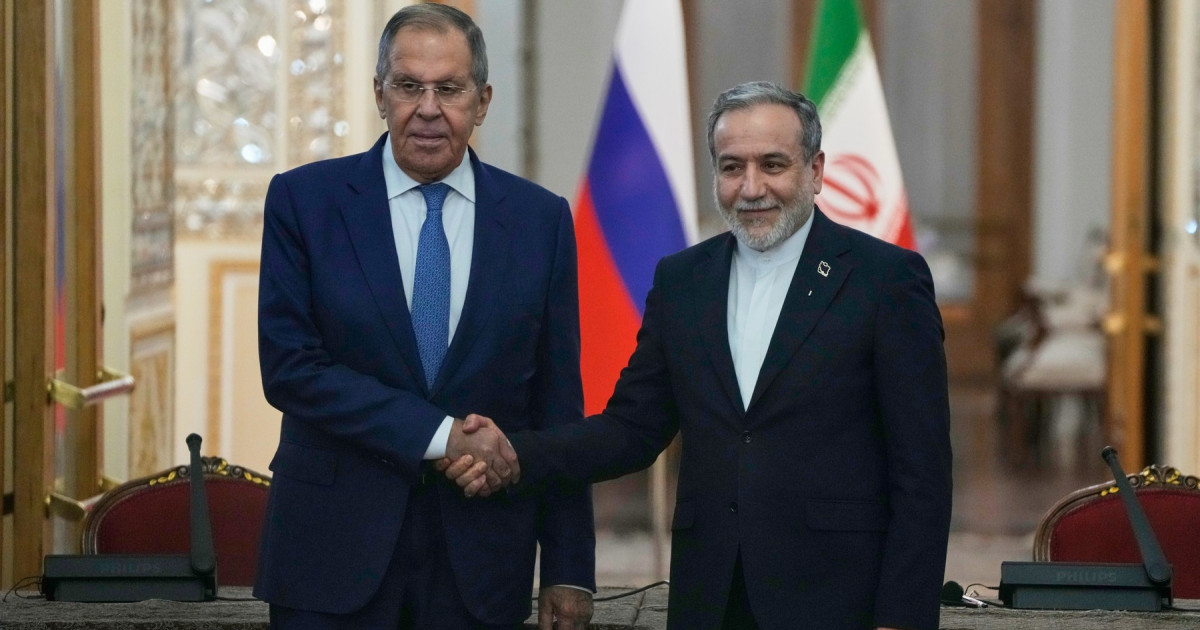

Elsewhere on the site
 Conflict & Security•3 min readIran’s security chief Mohsen Rezaei says no enriched uranium will leave the country
 Conflict & Security•3 min readIran claims downing US drone over Strait of Hormuz
 Conflict & Security•3 min readUS issues Middle East security alerts over Houthi attacks
 Business & Economy•3 min readRubio: US to discuss refining Venezuelan crude with Reliance