Iran’s parliament considers blocking US and Israeli ships from Strait of Hormuz
A draft bill would impose fines of up to 20% of cargo value on vessels from countries Tehran deems hostile
AI-assisted coverage comparison, editor-supervised · How this was made

Iran’s parliament considers blocking US and Israeli ships from Strait of Hormuz
Photograph: The New York Ledger (embedded from source)
What this story says
- Iran’s parliament is examining a bill to bar US, Israeli and other ‘hostile’ vessels from the Strait of Hormuz, a chokepoint for one-fifth of global oil supplies.
- The draft includes fines of up to 20% of cargo value for ships that violate the ban, which could amount to tens of millions of dollars per vessel.
- The US and most of the international community regard the strait as an international waterway and would reject any unilateral restriction.
- Oil prices climbed on Friday after reports of the proposal, reflecting concerns over potential supply disruptions.
Who covered it
Percentages are shares of the 29 outlets carrying a published leaning rating. 5 of the 34 outlets we know ran this story carry no rating and are not counted in them. Coverage measured .
Trust
74/100
Craft
58/100
Hype
32/100
34 sources · methodology
Iran’s parliament is reviewing a draft law that would prohibit ships linked to the United States, Israel and other countries Tehran classifies as hostile from transiting the Strait of Hormuz. The bill, titled the “Strategic Action for the Security and Sustainable Development of the Strait of Hormuz and the Persian Gulf,” was published by the semi-official Tasnim News Agency on 6 August 2026.
Under the proposal, Iran would deny passage to both military and civilian vessels it accuses of aiding Israel. The draft also allows Iran to block ships from countries or individuals it holds responsible for inflicting damage until compensation is paid. Violators could face fines of up to 20% of their cargo’s value, a penalty that could reach tens of millions of dollars per ship.
The Strait of Hormuz is a critical maritime route through which about one-fifth of the world’s oil supply passes. The United States and much of the international community regard it as an international waterway that should remain open to all vessels. The US has indicated it would reject any unilateral Iranian restriction.
Oil prices rose on Friday following reports of the bill. Brent crude futures traded at $83.91, up 1.72%, while US West Texas Intermediate crude futures were at $78.44, up 1.49%, as of 10:02 am on 7 August 2026.
What the coverage left out
No left-rated outlet ran this story. None of the digests or reports mentioned the specific compensation mechanism the bill proposes for countries or individuals Iran holds responsible for inflicting damage. The centre-rated reports did not address the potential legal challenges the US or other nations might mount against the measure, while the right-rated digests omitted the bill’s provisions on civilian cargo.
Still developing. We have re-checked which outlets are covering this 4 times, most recently on 7 Aug 2026, 16:45, and will add the sides that appear.
How other outlets pictured it
Which photograph to run is each newsroom’s own choice. The leaning beside a name is that outlet’s published rating, not a claim that the pictures divide along it. Every picture is shown from the outlet’s own server and links to the article it ran in.
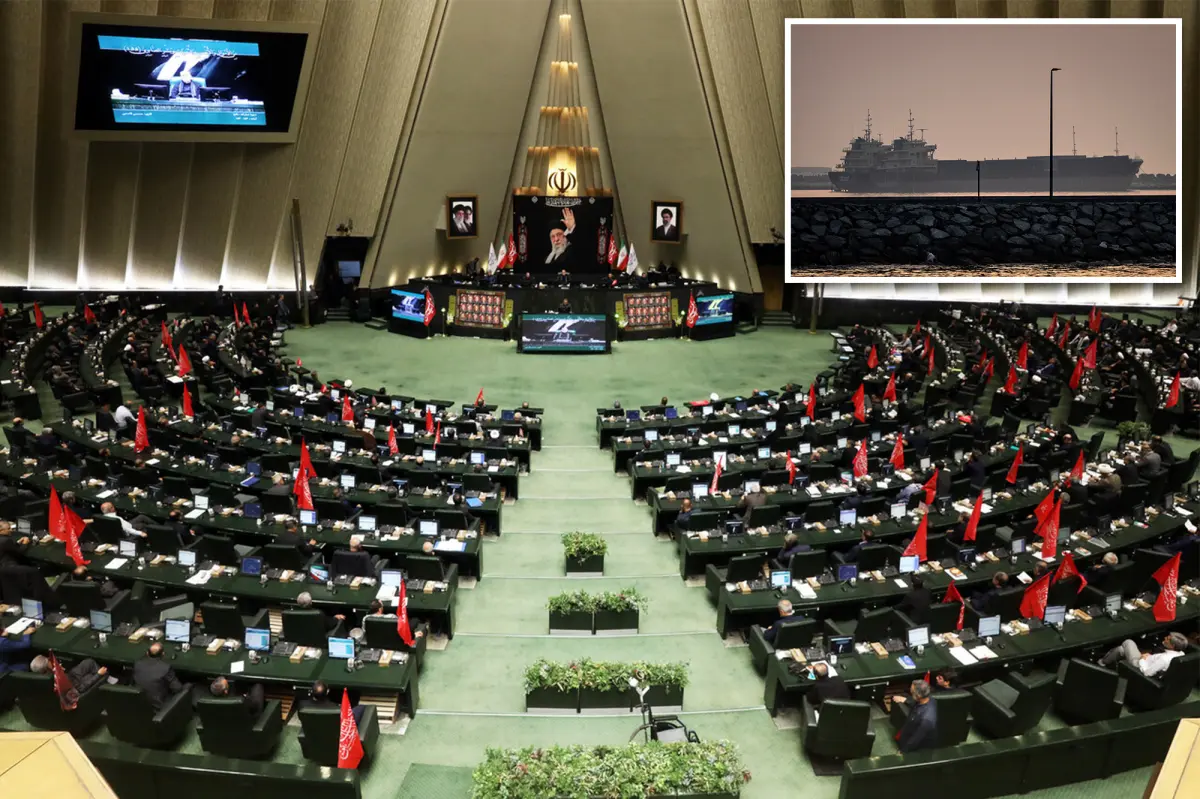
Iran’s parliament considers blocking US and Israeli ships from Strait of Hormuz
Internewscast — embedded from source
How each side covered it
Our own reading of the reporting listed below, written from the outlets’ articles rather than quoted from them. The reasoning is set out on our methodology page.
Left
7 rated outlets
- The left-rated outlets agree that Iran and Oman are negotiating a framework for shipping through the Strait of Hormuz. All six digests report the talks, with four specifying that an understanding or deal is close. The Hindu and CNN led on the progress of these discussions, quoting Iranian officials.
- Three digests mention broader consequences. Haaretz and Al Jazeera include industry warnings about sanctions and insurance restrictions making the proposed agreement unworkable. Sueddeutsche Zeitung reports that hostile countries may be required to pay compensation before their ships are allowed passage.
- None of the left-rated digests omit the role of the US or Israel in the proposed restrictions. Al-Monitor and Haaretz add context: Al-Monitor notes a drop in vessel traffic through the strait this week, while Haaretz quotes industry sources on the practical challenges of the deal.
Centre
9 rated outlets
- The two centre-rated reports led on the legislative process and the potential geopolitical consequences. The New York Ledger framed the story around its impact on currency markets, noting that the proposal had prompted traders to price in a geopolitical risk premium, which supported the US dollar. It also mentioned that Iran’s Houthi allies had struck a Saudi tanker in the Red Sea, fuelling concerns about energy supply disruptions.
- Internewscast focused on the details of the draft bill, reporting that it would bar both military and civilian cargo tied to the US, Israel and other nations Iran deems hostile. It quoted Abbas Salimi, a member of parliament’s presiding board, who told Tasnim News Agency that lawmakers were assessing the proposal before it advanced in the legislative process. The report also noted that Iran and Oman were negotiating a separate framework for managing maritime traffic through the strait.
Right
13 rated outlets
- The two right-rated digests led on the economic impact of the proposal. The Hindu Business Line reported that crude oil prices had risen on news of the bill, with Brent and WTI futures both trading higher on 7 August 2026. USSANews.com’s digest highlighted that the Iranian Revolutionary Guard Corps (IRGC) had struck “hostile targets” near Qeshm island and that Houthi attacks on Saudi oil shipping in the Red Sea had intensified.
Read it at the source
74 outlets, grouped by the leaning a published rating gives them. Every headline links to the original; an underlined outlet name opens our profile of that publisher.
Left
9- Jack Keane: "We should go back to pre-February 28, the Strait of Hormuz was regarded as freedom of navigation in international waterways. No country had oversight of it, no one decided when ships would move through it." (opens Media Matters for America in a new tab)
Media Matters for AmericaOpinion
- ‘De-escalation’: Europe hesitates as US pushes for Hormuz naval mission (opens Al Jazeera in a new tab)
Al Jazeera — is Al Jazeera biased? Our profile of this outlet
- Shipping industry warns proposed Iran-Oman Hormuz deal could prove unworkable (opens Haaretz in a new tab)
- Live Blog on the War in the Middle East: Iran Wants to Banish Ships From the USA and Israel From the Strait of Hormus (opens Sueddeutsche Zeitung in a new tab)
Sueddeutsche Zeitung — is Sueddeutsche Zeitung biased? Our profile of this outlet
- Iran says agreement with Oman for Strait of Hormuz prohibits U.S. and Israeli vessels (opens NPR in a new tab)
- Iran says Hormuz deal is close but US must meet commitments before strait reopens (opens CNN in a new tab)
- Vessel traffic through Hormuz dwindles this week as markets watch Iran-Oman talks (opens Al-Monitor in a new tab)
Al-Monitor — is Al-Monitor biased? Our profile of this outlet
- Iran War: Iran Agreement With Oman Will Not "Open" Strait of Hormuz as Trump Hypes Non-Existent Talks; Ansar Allah Threatens Red Sea Escalation; Trump-Hegseth Row Over Weapons Shortages (opens naked capitalism in a new tab)
naked capitalismOpinion
Centre
13- Iran moves to block US, Israeli shipments from Strait of Hormuz (opens WGN 9 in a new tab)
- Iran wants to bar US ships in Hormuz as deal with Oman advances (opens Daily Republic in a new tab)
Daily Republic
- Iran Mulls Ban of U.S. Ships from Strait of Hormuz (opens Political Wire in a new tab)
Political Wire — is Political Wire biased? Our profile of this outlet
- Oil rises on concerns over Strait of Hormuz reopening plans (opens The Express Tribune in a new tab)
The Express Tribune — is The Express Tribune biased? Our profile of this outlet
- Iran moves to block US, Israeli shipments from Strait of Hormuz (opens The Hill in a new tab)
- Australian Dollar consolidates as Iran risks lift USD before NFP (opens The New York Ledger in a new tab)
The New York Ledger — is The New York Ledger biased? Our profile of this outlet
- Oil rises on concerns over Strait of Hormuz reopening plans (opens The Economic Times in a new tab)
The Economic Times — is The Economic Times biased? Our profile of this outlet
- Oil rises on concerns over Strait of Hormuz reopening plans (opens WTVB in a new tab)
Show 5 more
- Iran Lawmakers Move to Ban US, Israeli Ships From Strait of Hormuz (opens Internewscast in a new tab)
Internewscast — is Internewscast biased? Our profile of this outlet
- Iran Has Learned It Can Make the Global Economy ‘Scream’ — a Top Analyst Says Tehran Now Holds the Upper Hand on Hormuz (opens nationalsecurityjournal.org in a new tab)
nationalsecurityjournal.org — is nationalsecurityjournal.org biased? Our profile of this outlet
- Iran Seeks to Bar US Ships as Hormuz Deal With Oman Advances (opens Bloomberg in a new tab)
- Iranian parliamentary committee reviews draft bill to bar US, Israeli ... (opens Reuters in a new tab)
- Iran and Oman 'close to deal' on Hormuz... but not with the US (opens France24 in a new tab)
Right
17- Iran considers banning US and Israeli ships from Strait of Hormuz (opens The Telegraph in a new tab)
The Telegraph — is The Telegraph biased? Our profile of this outlet
- Strategic Management Plan for the Strait of Hormuz to Be Considered in Parliament (opens Mehr News Agency in a new tab)
Mehr News Agency — is Mehr News Agency biased? Our profile of this outlet
- Iran Considers Ban on U.S., Israeli Ships Using Strait of Hormuz (opens Breitbart in a new tab)
- Iran plans to ban U.S. and Israeli ships from Strait of Hormuz until compensated for war damages (opens Just the News in a new tab)
Just the News — is Just the News biased? Our profile of this outlet
- Oil Is Growing because of the Risks Around the Strait of Ormuz (opens Korrespondent.net in a new tab)
Korrespondent.net — is Korrespondent.net biased? Our profile of this outlet
- Hormuz vessel traffic drops as markets monitor Iran-Oman talks on reopening Strait (opens Emirates24|7 in a new tab)
Emirates24|7 — is Emirates24|7 biased? Our profile of this outlet
- In Iran, a Power Struggle for Opening the Strait of Hormus Is Raging (opens focus.de in a new tab)
- Iran, US, Oman 'Close' To Hormuz Deal: What Each Party Wants From It (opens NDTV in a new tab)
Show 9 more
- Crude oil gains as Iran plans to ban US, Israeli ships from Hormuz transit (opens The Hindu Business Line in a new tab)
The Hindu Business Line — is The Hindu Business Line biased? Our profile of this outlet
- Oil rises on concerns over Strait of Hormuz reopening plans (opens Times of India in a new tab)
Times of India — is Times of India biased? Our profile of this outlet
- ...then US-Israeli Ships Will Never Be Able to Pass Through Hormuz! Iran Has Developed a Powerful Plan. (opens Unknown in a new tab)
Unknown
- IRGC Strikes ‘Hostile Targets’ In Hormuz As Iran Declares Oman Deal Bans US Vessels From Strait (opens ussanews.com in a new tab)
ussanews.com — is ussanews.com biased? Our profile of this outlet
- Iran Draft Would Block U.S. and Israeli Ships From Strait of Hormuz (opens [your]NEWS in a new tab)
[your]NEWS — is [your]NEWS biased? Our profile of this outlet
- On the Margins of a Draft Agreement with Oman, Iran's Trap Closes on the Waters of Ormuz (opens Le Figaro in a new tab)
- Iran, Oman Close to Strait of Hormuz Deal as Trump Disputes Low Munitions Report (opens wjr.com in a new tab)
wjr.com
- Oil Advances with Doubts About Soon Reopening of the Strait of Ormuz (opens Globo in a new tab)
- As Deal Nears to Open Hormuz, Concerns Mount over IRGC Control of Vital Shipping Lane (opens CBN in a new tab)
Not rated
35- Tehran's Conditions Regarding the Strait of Hormuz Have Been Announced. (opens Aydınlık in a new tab)
- Deal or no deal? Oil prices remain in flux (opens thetrucker.com in a new tab)
thetrucker.com
- Iran Wants to Ban US Ships in the Strait of Hormus (opens ORF.at News in a new tab)
ORF.at News — is ORF.at News biased? Our profile of this outlet
- Iran and Oman Close to Agreement to Reopen the Strait of Hormuz - One-Fifth of the World's Energy at Stake (opens upday in a new tab)
- Ormuz: Iran Wants to Tax Global Oil at 7% and Ban US Ships (opens economiematin.fr in a new tab)
economiematin.fr — is economiematin.fr biased? Our profile of this outlet
- Iran weighs ban on US and Israeli ships in Hormuz (opens Splash247 in a new tab)
Splash247
- Iran Is Considering Banning US and Israeli Ships From Passing Through the Strait of Hormuz. (opens Báo điện tử Dân Trí in a new tab)
Báo điện tử Dân Trí
- Hormuz Reopening Plans Spark Fresh Concerns as Oil Prices Climb - THE DESTINATION (opens dailythedestination.com in a new tab)
dailythedestination.com — is dailythedestination.com biased? Our profile of this outlet
Show 27 more
- Iran and Oman Establish New Route Through the Strait of Hormuz, but Access for International Ships Remains Unclear (opens Saptamana Financiara in a new tab)
Saptamana Financiara — is Saptamana Financiara biased? Our profile of this outlet
- Iran's New Sketch for America and Israel! A New Problem Erupts in Hormuz! (opens Goodreturns in a new tab)
Goodreturns
- US-Israel-Iran War Latest Live News: Tehran Seeks to Ban US, Israeli Ships From Strait of Hormuz Under Peace Deal (opens The Sunday Guardian Live in a new tab)
The Sunday Guardian Live — is The Sunday Guardian Live biased? Our profile of this outlet
- Iranian Parliament Weighs Ban on U.S., Israeli Ships in Strait of Hormuz, Toll for Others (opens Tippahnews.com in a new tab)
Tippahnews.com
- Oil Prices Continued to Rise. (opens gazetepencere.com in a new tab)
gazetepencere.com — is gazetepencere.com biased? Our profile of this outlet
- Oil Prices Rose Friday Morning as Iran Refused to Open the Strait of Hormuz (opens Hospodárske Noviny in a new tab)
Hospodárske Noviny — is Hospodárske Noviny biased? Our profile of this outlet
- Oil Rises On Concerns Over Strait Of Hormuz Reopening Plans (opens Pakistan Live News in a new tab)
Pakistan Live News — is Pakistan Live News biased? Our profile of this outlet
- Hormuz vessel traffic declines amid Iran-Oman talks (opens Crypto Briefing in a new tab)
Crypto Briefing — is Crypto Briefing biased? Our profile of this outlet
- Iran plan to restrict US vessels from Hormuz lifts oil prices (opens AGBI in a new tab)
AGBI
- Earthquake at Mossad, Iran's Move Regarding the Strait of Hormuz. (opens A Haber in a new tab)
- Iran-USA: One decision...and Chaos All over the World! Iran's New Plan Increases America's Concern (opens TV9 Marathi in a new tab)
TV9 Marathi — is TV9 Marathi biased? Our profile of this outletOpinion
- Iran Considers Bill to Ban US and Israeli Ships in Strait of Hormuz - Archyworldys (opens Archy Worldys in a new tab)
Archy Worldys — is Archy Worldys biased? Our profile of this outlet
- Iran, Oman Strait of Hormuz Deal Will Ban US and Israeli Ships (opens Aletho News in a new tab)
Aletho News — is Aletho News biased? Our profile of this outlet
- Iran Seeks to Ban the Passage of U.S. Vessels as the Agreement with Oman on the Strait of Ormuz Advances (opens eju.tv in a new tab)
eju.tv
- Oil prices rise as Iran and Oman agree on Strait of Hormuz shipping route (opens Crypto Briefing in a new tab)
Crypto Briefing
- Iran Prepares Bill to Ban US and Israeli Ships From Passing Through the Strait of Hormuz (opens viva.co.id in a new tab)
viva.co.id — is viva.co.id biased? Our profile of this outlet
- Iran Weighs Strait of Hormuz Transit Restrictions, New Fees for 'Hostile' Nations' Ships - India Seatrade News (opens indiaseatradenews.com in a new tab)
indiaseatradenews.com
- Oil rises on concerns over Strait of Hormuz reopening plans (opens Business Times in a new tab)
Business Times — is Business Times biased? Our profile of this outlet
- Oil settles up US$3 as Iran reviews bill to ban US, Israeli vessels from Hormuz (opens Business Times in a new tab)
Business Times
- Iran says Hormuz deal ‘nearing completion’ - The Press United (opens ThePress United in a new tab)
ThePress United — is ThePress United biased? Our profile of this outlet
- Iran Would Ban Passage Through Ormuz; Crude Price Rose (opens El Economista in a new tab)
El Economista — is El Economista biased? Our profile of this outlet
- Draft Agreement Finalized for ‘60-Day Reopening’ of Hormuz (opens donga.com in a new tab)
donga.com
- Iran says it has agreed shipping route with Oman, as Trump continues military threats (opens military-stuff.org in a new tab)
military-stuff.org — is military-stuff.org biased? Our profile of this outlet
- Iran says it has agreed shipping route with Oman, as Trump continues military threats (opens theirishchannel.com in a new tab)
theirishchannel.com
- Waiting for Agreement on Street of Hormuz (opens stol.it in a new tab)
- Iran Conditions Reopening of Ormuz to End US Threats - CNC TV Granma (opens cnctvgranma.cu in a new tab)
cnctvgranma.cu
- Iran and Oman agree transport plan for Strait of Hormuz (opens TradeWinds in a new tab)
TradeWinds
How did this read?
About the coverage, not about the story. We do not ask whether you agree with what happened — we have no honest use for that answer.


