NATO Commander Discusses Strait of Hormuz Navigation Options
Allied chiefs of defence met via video conference to discuss potential contributions to secure the vital waterway.
AI-assisted coverage comparison, editor-supervised · How this was made

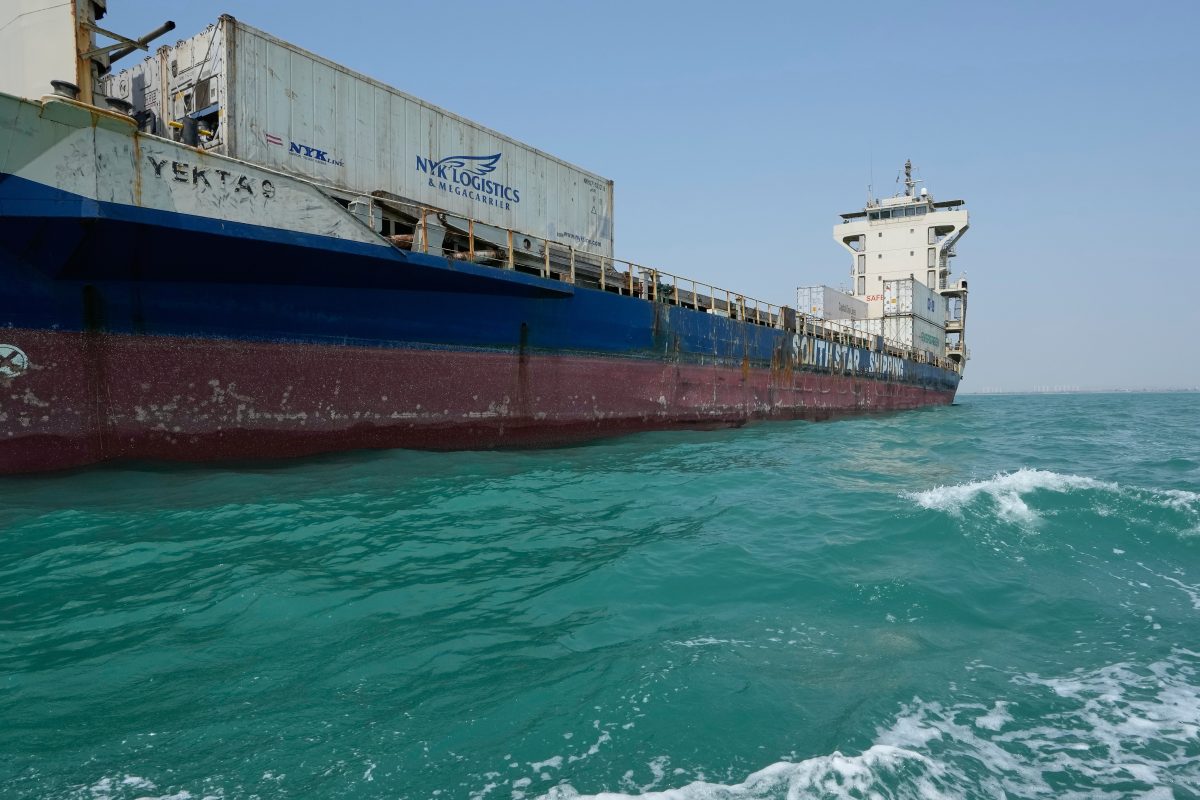
Vessels near the Strait of Hormuz, as seen from Musandam, Oman, Aug. 17. Reuters-Yonhap
Photograph: The Korea Times (embedded from source)
What this story says
- NATO's top commander convened a videoconference on Wednesday, August 19, 2026, with allied defence chiefs to discuss freedom of navigation in the Strait of Hormuz.
- The meeting was held to facilitate possible contributions to secure the waterway, but NATO's spokesperson confirmed it is not a NATO mission.
- France and Britain are leading efforts to form a coalition of approximately a dozen countries to guarantee safe passage through the strait.
- The Strait of Hormuz is a critical chokepoint for global oil trade, carrying about a fifth of all traded oil before February.
Who covered it
Percentages are shares of the 9 outlets carrying a published leaning rating. 11 of the 20 outlets we know ran this story carry no rating and are not counted in them. Coverage measured .
Trust
50/100
Craft
60/100
Hype
20/100
20 sources · methodology
General Alexus Grynkewich, NATO's supreme commander, convened a videoconference on Wednesday, August 19, 2026, to discuss potential contributions to freedom of navigation in the Strait of Hormuz. The meeting involved interested allies at the chief of defence level. A spokesperson for the commander stated that while NATO's strengths lie in bringing allies together, this initiative is not an official NATO mission. The discussions aimed to facilitate potential contributions to secure the vital waterway.
France and Britain have taken the lead in forming a coalition comprising around a dozen countries. The objective of this coalition is to ensure safe passage through the Strait of Hormuz once tensions ease or a conflict is resolved. Prior to February, the strait was a critical transit point, handling approximately one-fifth of all traded oil.
Disagreement on coalition size
Digi 24 and The Korea Times reported that France and Britain have led efforts to form a coalition with approximately a dozen countries. Other reports did not specify the number of countries involved in the coalition.
What the coverage left out
None of the left-rated digests mention the specific date of the meeting beyond 'earlier this week' or 'Wednesday'. The right-rated digest does not mention the specific date of the meeting beyond 'earlier this week'. The centre-rated digests mention the meeting occurred on Wednesday, August 19, 2026, and that France and Britain are leading efforts to form a coalition with approximately a dozen countries.
Coverage settled. We checked this 7 times and stopped on 27 Aug 2026, 19:31. The figures above are what it finished at.
How each side covered it
Our own reading of the reporting listed below, written from the outlets’ articles rather than quoted from them. The reasoning is set out on our methodology page.
Left
3 rated outlets
- The left-rated reports highlighted that NATO countries are discussing operations to restore shipping in the Strait of Hormuz without direct alliance involvement. The Korea Times and unn.ua noted that NATO allies are seeking to avoid direct involvement in the Iran conflict, focusing instead on plans outside the alliance. Al-Monitor and The Korea Times reported that NATO's top commander convened a videoconference to facilitate possible contributions to support freedom of navigation in the Strait of Hormuz, with a spokesperson confirming it is not a NATO mission.
Centre
4 rated outlets
- Centre-rated reports focused on NATO members discussing options for the Strait of Hormuz without alliance involvement. Reuters, WTVB, and Jerusalem Post mentioned that NATO's top commander convened a videoconference to facilitate possible contributions to support freedom of navigation in the Strait of Hormuz, with a spokesperson confirming it is not a NATO mission. Digi 24 and Jerusalem Post noted that NATO allies have sought to avoid direct involvement in the Iran conflict, concentrating on external plans to reopen the strait.
Right
2 rated outlets
- The right-rated report from The Straits Times stated that NATO's top commander convened a videoconference to facilitate possible contributions to support freedom of navigation in the Strait of Hormuz, adding that it is not a NATO mission. The digest also noted that NATO countries have sought to ease the Iran conflict indirectly, focusing on plans outside the alliance to reopen the waterway.
Questions about this coverage
- How did the left and right cover NATO Commander Discusses Strait of Hormuz Navigation Options?
- Of the 9 outlets on this story carrying a published leaning rating, 33% are rated left, 45% are rated centre, 22% are rated right. Those percentages are shares of the rated outlets, not of every outlet that ran it, which was 20. The sections above set out what each side emphasised, in its own terms.
- Is NATO Commander Discusses Strait of Hormuz Navigation Options left or right?
- Too few of the outlets on this story carry a published leaning rating to say. 9 of them do, and this site does not characterise a field under 12: at that size one newsroom filing moves the share by ten points. The percentages above are the count as it stands.
- Is the coverage of NATO Commander Discusses Strait of Hormuz Navigation Options biased?
- NATO Commander Discusses Strait of Hormuz Navigation Options is one event reported by 20 outlets, and this page does not rate the story as biased or unbiased. What it publishes is the spread: which outlets ran it, where named rating organisations place each of them on the spectrum, and what each side chose to lead with. A leaning rating describes an outlet's record over time, not this article, and the two should not be run together.
- Which outlets covered NATO Commander Discusses Strait of Hormuz Navigation Options?
- 20 that we know of, every one of them listed further up this page with a link to its own report and to what we hold on the publisher. Nothing here is a summary of somebody else's summary: the outlets are named so the original reporting can be read.
- What was the purpose of the NATO meeting?
- NATO's top commander convened a videoconference with allied defence chiefs to discuss possible contributions to support freedom of navigation in the Strait of Hormuz. The aim was to facilitate ways to secure safe passage through the vital waterway.
- Was this an official NATO mission?
- No, NATO's spokesperson confirmed that the meeting and the subsequent discussions are not an official NATO mission. The initiative involves interested allies coordinating potential contributions outside of the alliance's formal structure.
- Who is leading efforts to secure the Strait of Hormuz?
- France and Britain are leading efforts to form a coalition of approximately a dozen countries. This coalition aims to guarantee safe passage through the Strait of Hormuz once tensions ease or a conflict is resolved.
- How important is the Strait of Hormuz?
- The Strait of Hormuz is a critical chokepoint for global oil trade. Before February, it carried approximately one-fifth of all traded oil, making its security vital for international energy markets.
Read it at the source
20 outlets, grouped by the leaning a published rating gives them. Every headline links to the original; an underlined outlet name opens our profile of that publisher.
Left
3- NATO Countries Discuss Operation to Restore Shipping in the Strait of Hormuz without Alliance Participation (opens unn.ua in a new tab)
- NATO members discuss Strait of Hormuz options without alliance involvement (opens The Korea Times in a new tab)
The Korea Times — is The Korea Times biased? Our profile of this outlet
- NATO members discuss Strait of Hormuz options without alliance involvement (opens Al-Monitor in a new tab)
Al-Monitor — is Al-Monitor biased? Our profile of this outlet
Centre
4- NATO Meeting on Ormuz Straits: Discussions on Possible Contributions to Freedom of Navigation. "It Is Not a Mission (opens Digi 24 in a new tab)
- NATO members discuss Strait of Hormuz options without alliance involvement (opens Jerusalem Post in a new tab)
Jerusalem Post — is Jerusalem Post biased? Our profile of this outlet
- NATO members discuss Strait of Hormuz options without alliance involvement (opens Reuters in a new tab)
- NATO members discuss Strait of Hormuz options without alliance involvement (opens WTVB in a new tab)
Right
2- NATO weighs allied support for Strait of Hormuz navigation (opens Daily Sabah in a new tab)
Daily Sabah — is Daily Sabah biased? Our profile of this outlet
- NATO members discuss Strait of Hormuz options without alliance involvement (opens The Straits Times in a new tab)
The Straits Times — is The Straits Times biased? Our profile of this outlet
Not rated
11- NATO Members Discussed Possible Contributions to Unlocking Traffic Through the Ormuz Strait (opens PSnews in a new tab)
- NATO MEMBERS PLAN HORMUZ MISSION WITHOUT OFFICIAL ALLIANCE INVOLVEMENT (opens The Zambian Observer in a new tab)
The Zambian Observer — is The Zambian Observer biased? Our profile of this outlet
- NATO Members Discussed Possible Contributions to Unlocking Traffic Through the Ormuz Strait: "It's Not a Mission of the Alliance." (opens Mediafax in a new tab)
- NATO Helps Prepare the Operation in the Strait of Ormous, but Will Remain on the Side (opens ZN.UA Зеркало недели in a new tab)
ZN.UA Зеркало недели — is ZN.UA Зеркало недели biased? Our profile of this outlet
- NATO Members Seek Options for Strait of Hormuz without Alliance Involvement (opens CNN Greece in a new tab)
CNN Greece — is CNN Greece biased? Our profile of this outlet
- NATO members discuss Strait of Hormuz options without alliance involvement (opens The Frontier Post in a new tab)
The Frontier Post — is The Frontier Post biased? Our profile of this outlet
- NATO Member Countries Discuss Options for the Ormuz Strait without the Involvement of the Alliance – Rador Press Agency (opens rador.ro in a new tab)
- NATO States Discussed Supporting Freedom of Navigation in the Strait of Hormuz (opens Aktuality.sk in a new tab)
Aktuality.sk — is Aktuality.sk biased? Our profile of this outlet
Show 3 more
- Belgium: NATO Members Discuss Options for Strait of Hormuz Without Alliance Engagement (opens ertnews.gr in a new tab)
ertnews.gr — is ertnews.gr biased? Our profile of this outlet
- NATO members discuss Strait of Hormuz options (opens Egyptian Gazette in a new tab)
Egyptian Gazette — is Egyptian Gazette biased? Our profile of this outlet
- NATO States Discussed Supporting Freedom of Navigation in the Strait of Hormuz (opens Hospodárske Noviny in a new tab)
Hospodárske Noviny — is Hospodárske Noviny biased? Our profile of this outlet
How did this read?
About the coverage, not about the story. We do not ask whether you agree with what happened — we have no honest use for that answer.
More in Conflict & Security
All Conflict & Security →


Elsewhere on the site
 Business & Economy•3 min readOil Prices Rise Above $101 Amid Strait of Hormuz Tensions
 Politics•3 min readUK threatens to expel Israeli diplomats over consulate closure
 Politics•4 min readNYC Mayor Mamdani Commemorates Oct. 7 Anniversary, Criticizes Israel's Gaza Actions
![Tents sheltering displaced Palestinians are seen amid war-damaged buildings in Gaza City, on September 23, 2026 [Jehad Alshrafi/AP]](https://www.aljazeera.com/wp-content/uploads/2026/10/ap_6abf09b25bb18-1790904754_19057d-1790907538.jpg?resize=1200%2C630&quality=80) Politics•3 min readFAO senior Ben Davis says contract not renewed after Gaza criticism
Politics•3 min readFAO senior Ben Davis says contract not renewed after Gaza criticism