Russia and Iran collaborate on supersonic missile programme C430L
Financial Times investigation reveals secret 2023 project to develop weapons targeting US warships in the Middle East
AI-assisted coverage comparison, editor-supervised · How this was made
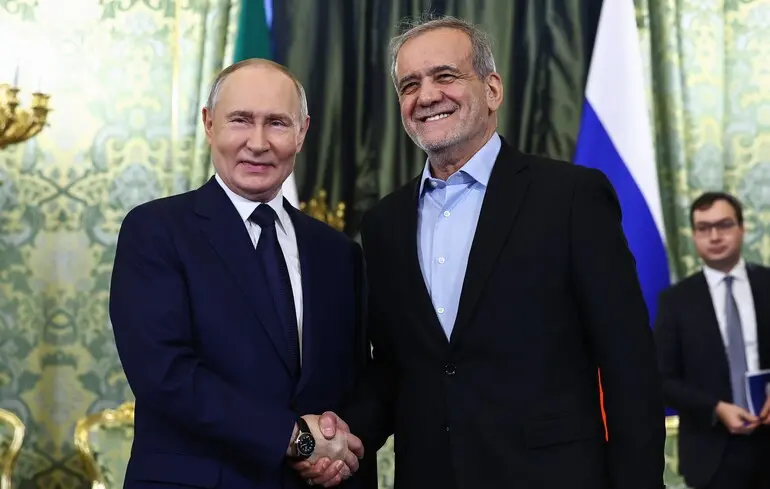
Russia and Iran collaborate on supersonic missile programme C430L
Photograph: ZN.UA Зеркало недели (embedded from source)
What this story says
- A secret Russian-Iranian programme, C430L, began in 2023 to develop supersonic cruise missiles targeting US warships in the Middle East.
- The programme uses Russian missile experts and involves leaked correspondence, travel records, and patent analysis, as reported by ZN.UA and the Financial Times.
- Iran has tested a ramjet engine but no Russian-assisted supersonic missile has been deployed, according to ZN.UA and the Daily Star.
- The US and Iran have been in conflict since 28 February 2026, with exchanges of attacks reported by the Daily Star and i24NEWS.
Who covered it
Percentages are shares of the 85 outlets carrying a published leaning rating. 118 of the 203 outlets we know ran this story carry no rating and are not counted in them. Coverage measured .
Trust
62/100
Craft
55/100
Hype
35/100
203 sources · methodology
Missing from the left
Only 23 of the 85 outlets with a published leaning rating that ran this story are rated left.
A reader who follows the left would not have seen this. We report the absence rather than explain it: outlets choose what to cover for many reasons, and we have no evidence about which one applies here.
Russia and Iran have collaborated on a secret programme to develop supersonic cruise missiles, according to an investigation published by the Financial Times and reported by ZN.UA. The programme, codenamed C430L, began in 2023 and involves Russian missile experts assisting Iran in creating weapons designed to threaten US aircraft carriers and warships in the Middle East.
The project aims to develop a ramjet propulsion system, enabling cruise missiles to sustain flight at speeds several times faster than sound. Supersonic cruise missiles reduce the time available for air and missile defence systems to detect and intercept them, which would give Iran an advantage in the Persian Gulf. The programme is coordinated by Russia’s state arms exporter, Rosoboronexport, and the missile manufacturer NPO Mashinostroyeniya.
Leaked correspondence, travel records, and analysis of military patents revealed the programme’s existence. Russian engineers have reviewed Iranian flight test data and provided technical feedback to improve the system. Iran has already constructed and tested a ramjet engine, but there is no evidence that a Russian-assisted supersonic cruise missile has been deployed.
Fabian Hinz, an expert on Iranian missiles, told ZN.UA and the Daily Star that the technology transfer would require approval at the highest political level in Russia. Jim Lamson, a former CIA military analyst, said the programme would provide Iran with a qualitatively new strategic weapon system capable of threatening US Navy vessels.
What the coverage left out
No left-rated outlet ran this story. None of the right-rated digests or full reports mentioned that Iran supplied Russia with Shahed drones used in Ukraine, a detail reported by ZN.UA. The cost of the C430L programme and the specific technical challenges identified by Russian engineers in their correspondence with Iran were also omitted from all right-rated reports.
Coverage settled. We checked this 11 times and stopped on 7 Sept 2026, 10:15. The figures above are what it finished at.
How other outlets pictured it
Which photograph to run is each newsroom’s own choice. The leaning beside a name is that outlet’s published rating, not a claim that the pictures divide along it. Every picture is shown from the outlet’s own server and links to the article it ran in.

KYRGYZSTAN-RUSSIA-IRAN-SUMMIT-SCO
Daily Star — embedded from source
How each side covered it
Our own reading of the reporting listed below, written from the outlets’ articles rather than quoted from them. The reasoning is set out on our methodology page.
Left
23 rated outlets
- All 12 left-rated digests reported that Russia is assisting Iran in developing supersonic or hypersonic cruise missiles under a secret programme codenamed C430L. The collaboration was described as a transfer of strategically sensitive military technology from Moscow to Tehran, with potential targeting of US naval assets in the Middle East.
- Nine digests cited the *Financial Times* as the source of the investigation, which revealed the programme’s existence through leaked documents, correspondence and travel records. Six noted the programme began in 2023, involving Russian missile experts. Four mentioned Iran’s supply of Shahed drones to Russia in exchange for Moscow’s support.
- None of the digests included direct quotes from Iranian or Russian officials. Five referred to unnamed analysts or leaked materials as the basis for claims about the programme’s objectives. Two digests mentioned the Trump administration’s response, describing it as downplaying the reports.
Centre
26 rated outlets
- ZN.UA’s report led on the strategic significance of the C430L programme, describing it as one of the largest known transfers of strategic military technology from Russia to Iran. It detailed the involvement of Russian state entities, including Rosoboronexport and NPO Mashinostroyeniya, and the technical collaboration between Russian engineers and Iranian missile developers.
- The report quoted Fabian Hinz stating that the programme would require political approval at the highest level in Russia. It also included analysis from Jim Lamson, who described the potential threat to US Navy vessels. ZN.UA noted that Iran had previously supplied Russia with Shahed drones used in Ukraine, highlighting the deepening military cooperation between the two countries.
Right
36 rated outlets
- The seven right-rated digests and two full reports led on the threat posed by the C430L programme to US warships in the Middle East. The Daily Star’s full report framed the programme as part of an ongoing conflict between the US and Iran, which began on 28 February 2026. It quoted Fabian Hinz on the need for high-level Russian approval and Jim Lamson on the strategic implications for US Navy vessels.
- The Daily Star and i24NEWS both reported that the US and Iran have been in conflict since February 2026, with exchanges of attacks. The Daily Star’s headline described the missiles as ‘supersonic’ and emphasised their potential use against US warships. The digests from the Daily Express, Observador, Globo, End Time Headlines, Australian Financial Review, and i24NEWS all highlighted the threat to US aircraft carriers and warships.
Questions about this coverage
- How did the left and right cover Russia and Iran collaborate on supersonic missile programme C430L?
- Of the 85 outlets on this story carrying a published leaning rating, 27% are rated left, 30% are rated centre, 43% are rated right. Those percentages are shares of the rated outlets, not of every outlet that ran it, which was 203. The sections above set out what each side emphasised, in its own terms.
- Is Russia and Iran collaborate on supersonic missile programme C430L left or right?
- Neither side dominates it. Of the 85 rated outlets on this story, 27% are rated left, 30% are rated centre, 43% are rated right, and no side holds the 70% this site would want before calling a field one-sided. A story is not left or right in any case; the outlets that carried it are what carry ratings.
- Is the coverage of Russia and Iran collaborate on supersonic missile programme C430L biased?
- Russia and Iran collaborate on supersonic missile programme C430L is one event reported by 203 outlets, and this page does not rate the story as biased or unbiased. What it publishes is the spread: which outlets ran it, where named rating organisations place each of them on the spectrum, and what each side chose to lead with. A leaning rating describes an outlet's record over time, not this article, and the two should not be run together.
- Which side is not reporting Russia and Iran collaborate on supersonic missile programme C430L?
- When we first saw this story, outlets rated left had barely covered it. Coverage accretes for hours after an event, so that is where to look rather than a verdict — the split above is the current count, and it is the one to read.
- Which outlets covered Russia and Iran collaborate on supersonic missile programme C430L?
- 203 that we know of, every one of them listed further up this page with a link to its own report and to what we hold on the publisher. Nothing here is a summary of somebody else's summary: the outlets are named so the original reporting can be read.
- What is the C430L programme?
- The C430L programme is a secret Russian-Iranian collaboration launched in 2023 to develop supersonic cruise missiles. It aims to create weapons capable of threatening US warships in the Middle East, using a ramjet propulsion system for high-speed flight. The project involves Russian missile experts and leaked correspondence.
- Has Iran deployed any Russian-assisted supersonic missiles?
- No evidence has emerged that Iran has deployed any Russian-assisted supersonic cruise missiles. While Iran has tested a ramjet engine, the programme remains in development, according to reports by ZN.UA and the Daily Star.
- Why is the C430L programme significant?
- The C430L programme is significant because it represents a major transfer of strategic military technology from Russia to Iran. Experts say it would provide Iran with a new class of weapons capable of evading US air and missile defences, posing a direct threat to US Navy vessels in the Persian Gulf.
- Which outlets reported on the C430L programme?
- The programme was first reported by the Financial Times and covered by outlets including ZN.UA, the Daily Star, and i24NEWS. Seven right-rated outlets ran digests or full reports, while no left-rated outlet covered the story.
Read it at the source
203 outlets, grouped by the leaning a published rating gives them. Every headline links to the original; an underlined outlet name opens our profile of that publisher.
Left
23- Russia Is Reportedly Helping Iran with a Supersonic Missile, Capable of Striking US Ships. (opens De Morgen in a new tab)
- Financial Times: Russia Is Secretly Helping Iran Develop Hypersonic Missiles (opens Dnevni list Danas in a new tab)
Dnevni list Danas — is Dnevni list Danas biased? Our profile of this outlet
- US Warships in Crosshairs? Russia Reportedly Helps Iran Build Supersonic Missiles (opens One India in a new tab)
- Russia ‘helping Iran to build missiles’ to target US warships (opens The Independent (US) in a new tab)
The Independent (US) — is The Independent (US) biased? Our profile of this outlet
- Leaked Documents Reveal Covert Russian Missile Technology Transfer to Iran (opens United24 in a new tab)
- Russia is secretly helping Iran to develop supersonic cruise missiles, says report (opens The Independent in a new tab)
The Independent — is The Independent biased? Our profile of this outlet
- Russia Is Reportedly Helping Iran with a Supersonic Missile, Capable of Striking US Ships. (opens Volkskrant in a new tab)
Volkskrant — is Volkskrant biased? Our profile of this outlet
- Otkriven Tajni Program: Rusija I Iran Zajedno Razvijaju Moćno Oružje (opens IndexHR in a new tab)
Show 15 more
- Russia Secretly Helps Iran Develop Cruise Supersonic Missiles (opens El Pais in a new tab)
- Russia Is Helping Iran Develop Hypersonic Missiles Against US Ships (opens Novinky.cz in a new tab)
Novinky.cz — is Novinky.cz biased? Our profile of this outlet
- Alleged 'Sensitive Technology' Transfer From Russia to Iran... 'Developed a Hypersonic Cruise Missile' (opens Cumhuriyet in a new tab)
Cumhuriyet — is Cumhuriyet biased? Our profile of this outlet
- Russia Secretly Helps Iran Develop Supersonic Cruise Missiles, FT Reports (opens Kyiv Post in a new tab)
- Russia secretly helping Iran develop supersonic cruise missiles (opens Irish Times in a new tab)
Irish Times — is Irish Times biased? Our profile of this outlet
- Russia secretly helping Iran develop supersonic cruise missiles, report says (opens Haaretz in a new tab)
- FT: Russia secretly helped Iran develop supersonic cruise missiles (opens Meduza in a new tab)
- FT: Russia Secretly Helps Iran Build Supersonic Cruise Missiles (opens Mediazona in a new tab)
- Weapons | FT: Russia Has Secretly Helped Iran Develop Missiles (opens Helsingin Sanomat in a new tab)
Helsingin Sanomat — is Helsingin Sanomat biased? Our profile of this outlet
- FT: Russia Helps Iran Develop Supersonic Drones (opens 444.hu in a new tab)
- The Russian Federation Secretly Helps Iran Develop Supersonic Missiles Against the US Navy (opens censor.net in a new tab)
censor.net — is censor.net biased? Our profile of this outlet
- Putin's Rakleten: "Russia Does Not Care About the Red Lines" (opens t-online in a new tab)
- The secret project of Russia and Iran to hunt US aircraft carriers (opens Ynet News in a new tab)
- Russia helping Iran develop 'supersonic cruise missiles' to be used against US (opens Daily Mirror in a new tab)
Daily Mirror — is Daily Mirror biased? Our profile of this outlet
- Bombshell FT Report Reveals Russia Helping Iran Develop Supersonic Missiles (opens Mediaite in a new tab)
Centre
26- Russian specialists aiding Iran's development of supersonic cruise missiles, FT reports (opens The Kyiv Independent in a new tab)
The Kyiv Independent — is The Kyiv Independent biased? Our profile of this outlet
- Report: Russia Helping Iran to Develop a Supersonic Anti-Ship Missile (opens The Maritime Executive in a new tab)
The Maritime Executive — is The Maritime Executive biased? Our profile of this outlet
- Report: Russia Secretly Aiding Iran’s Supersonic Missile Program to Target U.S. Warships (opens Internewscast in a new tab)
Internewscast — is Internewscast biased? Our profile of this outlet
- U.S., Iran trade strikes as report details Russian help on Iranian missile technology (opens KGAN in a new tab)
- Russia Secretly Helped Iran Develop Missiles Designed To Target U.S. Carriers (opens Worthy Christian News in a new tab)
Worthy Christian News — is Worthy Christian News biased? Our profile of this outlet
- Russia, Iran's Secret Hypersonic Missiles for the War Against the United States. Ready to Strike U.S. Ships in the Middle East. (opens Il Messaggero in a new tab)
Il Messaggero — is Il Messaggero biased? Our profile of this outlet
- Russia secretly helping Iran develop supersonic cruise missiles that could threaten US Navy vessels: Report (opens Hindustan Times in a new tab)
Hindustan Times — is Hindustan Times biased? Our profile of this outlet
- Russie-Iran : ce programme militaire secret qui inquiète les Etats-Unis (opens INTELLINEWS in a new tab)
INTELLINEWS — is INTELLINEWS biased? Our profile of this outlet
Show 18 more
- Russia Is Secretly Helping Iran Develop Supersonic Cruise Missiles (opens El Periódico in a new tab)
El Periódico — is El Periódico biased? Our profile of this outlet
- Donald Trump and the US Military Have a New Problem: Russia Is Secretly Helping Iran Build Secret Cruise Missiles (opens nationalsecurityjournal.org in a new tab)
nationalsecurityjournal.org — is nationalsecurityjournal.org biased? Our profile of this outlet
- Focus on Supersonic Missiles: Russia's Secret Alliance with Iran (opens Kreiszeitung in a new tab)
Kreiszeitung — is Kreiszeitung biased? Our profile of this outlet
- Focus on Supersonic Missiles: Russia's Secret Alliance with Iran (opens mannheim24.de in a new tab)
mannheim24.de — is mannheim24.de biased? Our profile of this outlet
- Focus on Supersonic Missiles: Russia's Secret Alliance with Iran (opens merkur.de in a new tab)
- Focus on Supersonic Missiles: Russia's Secret Alliance with Iran (opens tz.de in a new tab)
- Focus on Supersonic Missiles: Russia's Secret Alliance with Iran (opens hna.de in a new tab)
- Russia is Quietly Helping Iran Build Supersonic Cruise Missiles: Report (opens Benzinga in a new tab)
- Media: Moscow Helps Iran Develop Supersonic Cruise Missiles (opens Eesti Rahvusringhääling in a new tab)
Eesti Rahvusringhääling — is Eesti Rahvusringhääling biased? Our profile of this outlet
- What Is the Secret C430L Program Being Run by Russia and Iran? (opens 15min.lt in a new tab)
- Russia is secretly helping Iran develop supersonic missiles (opens dailymail.com in a new tab)
dailymail.com — is dailymail.com biased? Our profile of this outlet
- FT: Russia Helping Iran Develop Missiles to Attack US Ships (opens Lietuvos Radijas ir Televizija in a new tab)
- C430L explained: Know how Russia 'secretly' helped Iran develop supersonic cruise missiles (opens The Statesman in a new tab)
The Statesman — is The Statesman biased? Our profile of this outlet
- It Turned Out that the Weapon Is Being Prepared with Russian Help, Which Poses a Deadly Threat to America's Massive Aircraft Carriers (opens Portfolio in a new tab)
- Russia Has Secretly Helped Iran Develop Supersonic Cruise Missiles that Could Endanger American Warships (opens Digi 24 in a new tab)
- Russia assisting Iran in development of supersonic cruise missiles (opens Jerusalem Post in a new tab)
Jerusalem Post — is Jerusalem Post biased? Our profile of this outlet
- Russia Is Secretly Helping Iran Build Missiles to Attack US Ships. (opens ZN.UA Зеркало недели in a new tab)
ZN.UA Зеркало недели — is ZN.UA Зеркало недели biased? Our profile of this outlet
- Russia Secretly Helps Iran Develop Supersonic Missiles (opens Jornal Expresso in a new tab)
Jornal Expresso — is Jornal Expresso biased? Our profile of this outlet
Right
36- Behind Closed Doors: How Russian Tech Is Powering Iran’s Next-Gen Naval Missiles - Tampa Free Press (opens The Free Press (Tampa) in a new tab)
The Free Press (Tampa) — is The Free Press (Tampa) biased? Our profile of this outlet
- Iran Secretly Develops a Supersonic Cruise Missile with Russia's Help, Reveals the Financial Times (opens Le Figaro in a new tab)
- Hypersonic Weapon Against US Carriers: Russia Probably Helps Iran Develop New Cruise Missiles (opens n-tv in a new tab)
- Financial Times. Part 1 -- Russia is secretly assisting Iran in the development of Ramjet powered cruise missiles Russian experts are reportedly being recruited to help Iranians develop a "new class of weapon" that could.. (opens news-pravda.com in a new tab)
news-pravda.com — is news-pravda.com biased? Our profile of this outlet
- Russia is secretly helping Iran build supersonic missiles to target US warships: report (opens New York Post in a new tab)
New York Post — is New York Post biased? Our profile of this outlet
- Russia Accused Of Helping Iran Develop Carrier-Killing Supersonic Cruise Missiles (opens Zero Hedge in a new tab)
Zero Hedge — is Zero Hedge biased? Our profile of this outlet
- Russia Secretly Helps Iran Develop Supersonic Cruise Missiles (opens ABC in a new tab)
- Russia Is Helping Iran Build Missiles That Could Target US Warships: Report (opens NDTV in a new tab)
Show 28 more
- The Russian Federation Is Helping Iran to Create a New Class of Hypersonic Weapons (opens Korrespondent.net in a new tab)
Korrespondent.net — is Korrespondent.net biased? Our profile of this outlet
- New Cruise Missiles: How Russia Upgrades Iran (opens Frankfurter Allgemeine in a new tab)
Frankfurter Allgemeine — is Frankfurter Allgemeine biased? Our profile of this outlet
- MichaelSavage.com – FT: Russia Secretly Helps Iran With Supersonic Cruise Missiles (opens The Savage Nation in a new tab)
The Savage Nation — is The Savage Nation biased? Our profile of this outlet
- Russia ‘Secretly’ Helps Iran Make Missiles: ‘They Target U.S. Aircraft Carriers and Ships’ (opens El Financiero in a new tab)
El Financiero — is El Financiero biased? Our profile of this outlet
- Russia Reportedly Helped Iran Build Supersonic Cruise Missile Technology Capable of Threatening U.S. Warships (opens [your]NEWS in a new tab)
[your]NEWS — is [your]NEWS biased? Our profile of this outlet
- Secret project leak: Russia transfers sensitive missile technology to Iran (opens Al Bawaba in a new tab)
- How Is Russia Helping Iran Build Faster, More Advanced Missiles (opens tippinsights in a new tab)
tippinsights — is tippinsights biased? Our profile of this outlet
- Report: Russia Has Been Secretly Helping Iran Develop Supersonic Missiles Since 2023 (opens focus.de in a new tab)
- Russians Help Iran Develop Supersonic Cruise Missile, Danger to American Ships (opens BNR Nieuwsradio in a new tab)
BNR Nieuwsradio — is BNR Nieuwsradio biased? Our profile of this outlet
- Russia Would Secretly Be Helping Iran's Regime Develop Cruise Missiles Capable of Reaching the US Fleet. (opens El Debate in a new tab)
- Russia quietly working with Iran to develop advanced cruise missiles (opens WIN in a new tab)
- "Russia Secretly Supports Iran's Development of Ramjet-Powered Supersonic Cruise Missiles" (opens 연합뉴스-Yonhap News Agency in a new tab)
연합뉴스-Yonhap News Agency — is 연합뉴스-Yonhap News Agency biased? Our profile of this outlet
- Financial Times: Russia Is Secretly Helping Iran Develop Hypersonic Missiles - Where Is the C430L Program Aimed? (opens Protothema in a new tab)
Protothema — is Protothema biased? Our profile of this outlet
- Russia Is Secretly Helping Iran Develop Supersonic Missiles Capable of Attacking US Warships (opens La Razón in a new tab)
- Iran Attacks US Bases in Iraq with Missiles and Drones (opens Il Sole 24 Ore in a new tab)
Il Sole 24 Ore — is Il Sole 24 Ore biased? Our profile of this outlet
- Vladimir Putin covertly helping Iran develop supersonic missiles through US-sanctioned defence firm (opens GB News in a new tab)
- Russia Secretly Helping Iran Develop Supersonic Cruise Missiles: Report (opens Republic World in a new tab)
Republic World — is Republic World biased? Our profile of this outlet
- Russia secretly helping Iran develop supersonic missiles: Report (opens Times of India in a new tab)
Times of India — is Times of India biased? Our profile of this outlet
- Russia Secretly Helping Iran Develop Supersonic Cruise Missiles: Report (opens Latestly in a new tab)
- Russia secretly helping Iran develop supersonic cruise missiles: Report - The Tribune (opens Tribune India in a new tab)
Tribune India — is Tribune India biased? Our profile of this outlet
- Report: Russia secretly helped Iran develop missiles designed to hit US carriers (opens Arutz Sheva in a new tab)
Arutz Sheva — is Arutz Sheva biased? Our profile of this outlet
- Russia Secretly Helping Iran Develop 'Supersonic' Missiles (opens Daily Star in a new tab)
Daily Star — is Daily Star biased? Our profile of this outlet
- Russia secretly helping Iran develop 'supersonic' missiles as WW3 fears explode (opens Daily Express in a new tab)
Daily Express — is Daily Express biased? Our profile of this outlet
- Russia Helps Iran Develop Supersonic Missiles Capable of Threatening U.S. Warships in the Middle East (opens Observador in a new tab)
Observador — is Observador biased? Our profile of this outlet
- Russia Is Helping Iran Develop Supersonic Missiles, Says FT (opens Globo in a new tab)
- Russia helping Iran develop supersonic cruise missiles (opens End Time Headlines in a new tab)
End Time Headlines — is End Time Headlines biased? Our profile of this outlet
- Russia secretly helping Iran develop supersonic cruise missiles (opens Australian Financial Review in a new tab)
Australian Financial Review — is Australian Financial Review biased? Our profile of this outlet
- Russia secretly helped Iran develop advanced missiles (opens i24NEWS in a new tab)
Not rated
118- Russia Helps Iran with Supersonic Cruise Missiles (opens borsen.dk in a new tab)
- They Reveal that Russia Is Secretly Helping Iran Build Supersonic Missiles to Attack U.S. Warships (opens Vanguardia in a new tab)
Vanguardia — is Vanguardia biased? Our profile of this outlet
- Russia Supports Iran in the Development of Supersonic Missiles: a Threat to the United States and Global Security (opens 1news.com.ua in a new tab)
1news.com.ua — is 1news.com.ua biased? Our profile of this outlet
- Secret Alliance Against the US: Russia Helps Iran Create Supersonic Missiles (opens Fakty.ua ФАКТЫ in a new tab)
Fakty.ua ФАКТЫ — is Fakty.ua ФАКТЫ biased? Our profile of this outlet
- Inside C430L: The Alleged Russian Mission To Help Iran Develop Supersonic Missiles (opens BreezyScroll in a new tab)
BreezyScroll — is BreezyScroll biased? Our profile of this outlet
- Operation C430L: Putin's Dangerous Favor to Iran · Global Voices (opens atalayar.com in a new tab)
atalayar.com — is atalayar.com biased? Our profile of this outletOpinion
- Russia Is Secretly Helping Iran with the Development of Supersonic Missiles. (opens Business AM in a new tab)
Business AM — is Business AM biased? Our profile of this outlet
- New Report: Russia Is Helping Iran Develop Powerful Missiles! (opens 24sata.hr in a new tab)
Show 110 more
- Russia Is Secretly Helping Iran Develop Advanced Supersonic Cruise Missiles: British Media (opens Roze News in a new tab)
- Is Russia Helping (in Secret) Iran to Develop Missiles Against US Ships? (opens Metropolitan Magazine in a new tab)
Metropolitan Magazine — is Metropolitan Magazine biased? Our profile of this outlet
- Reported Russian-Iranian Cruise Missile Co-Op Isn’t The Same As Sending Weapons During Wartime (opens TheAltWorld in a new tab)
TheAltWorld — is TheAltWorld biased? Our profile of this outlet
- Russia Secretly Helping Iran Build Missiles Capable of Striking U.S. Warships in Mideast (opens SOFX in a new tab)
- ♪ I'm Gonna Cut the Sounds of a Rocket ♪ ♪ FT ♪ (opens ГОЛОВНА in a new tab)
ГОЛОВНА
- Russia Did What America Feared, a Big Blow, Directly Dangerous for Iran. (opens TV9 Marathi in a new tab)
TV9 Marathi — is TV9 Marathi biased? Our profile of this outlet
- Russia Is Secretly Helping Iran Develop Cruise Missiles to Reach the US Fleet, According to the Financial Times. (opens gaceta.es in a new tab)
- Russia Secretly Helped Iran Develop Supersonic Missiles Targeting US Aircraft Carriers (opens viva.co.id in a new tab)
viva.co.id — is viva.co.id biased? Our profile of this outlet
- Russia Accused of Helping Iran Build Supersonic Missiles (opens Malay News- Malaysian newspapers from Kuala Lumpur in a new tab)
- Russia Secretly Helped Iran Build Missiles Capable of Targeting US Aircraft Carriers (opens SINDOnews.com in a new tab)
SINDOnews.com — is SINDOnews.com biased? Our profile of this outlet
- Russia Accused Of Helping Iran Develop Carrier-Killing Supersonic Cruise Missiles (opens BizToc in a new tab)
- "A Secret Missile program"... What Is Russia Transferring to Iran? (opens hathalyoum.net in a new tab)
hathalyoum.net — is hathalyoum.net biased? Our profile of this outlet
- Financial Times: Russia Is Secretly Helping Iran Develop Hypersonic Missiles (opens Naslovi.net in a new tab)
Naslovi.net — is Naslovi.net biased? Our profile of this outlet
- Secret Russian-Iranian Program Revealed? Iran Is Developing Missiles that Fly Faster than Sound (opens Telegraf in a new tab)
- Financial Times: Russia Secretly Collaborates with Iran for the Development of Supersonic Cruise Missiles (opens EL NACIONAL in a new tab)
EL NACIONAL — is EL NACIONAL biased? Our profile of this outlet
- Russia's Secret Missile Aid to Iran Against the US (opens express.pk in a new tab)
express.pk — is express.pk biased? Our profile of this outlet
- Russia Secretly Helped Iran Develop Supersonic Cruise Missile Technology, Report Says (opens barlamantoday.com in a new tab)
barlamantoday.com — is barlamantoday.com biased? Our profile of this outlet
- Secret Russia-Iran Agreement for Hypersonic Rocket Engines (opens Gândul in a new tab)
- Serious Revelations: Russia Helps Iran Build Hypersonic Missiles to Attack the US Fleet (opens Aktual24 in a new tab)
- C430L, the Supersonic Missile Iran Develops in Secret with Russia (opens Les Echos in a new tab)
- War in Iran: How Moscow Would Secretly Help Tehran Develop Supersonic Missiles (opens cnews.fr in a new tab)
- Project C430L: Moscow-Teheran Axis for Hypersonic Missiles Threatening the US Fleet (opens gazzettadelsud.it in a new tab)
gazzettadelsud.it — is gazzettadelsud.it biased? Our profile of this outlet
- Financial Times Revelation: Russia Secretly Helping Tehran Build New Hypersonic Cruise Missiles (opens europost.gr in a new tab)
europost.gr — is europost.gr biased? Our profile of this outlet
- Russia Helping Iran Develop Ship-Killing Missiles (opens theTrumpet.com in a new tab)
theTrumpet.com — is theTrumpet.com biased? Our profile of this outlet
- FT: Russia Secretly Helping Iran Develop Missiles (opens Ελεύθερος Τύπος in a new tab)
Ελεύθερος Τύπος
- Russia Is Secretly Helping Iran Develop Supersonic Cruise Missiles (opens lacronicabadajoz.com in a new tab)
lacronicabadajoz.com — is lacronicabadajoz.com biased? Our profile of this outlet
- Russia Is Secretly Helping Iran Develop Supersonic Cruise Missiles (opens elcorreoweb.es in a new tab)
elcorreoweb.es — is elcorreoweb.es biased? Our profile of this outlet
- Russia Is Secretly Helping Iran Develop Supersonic Cruise Missiles (opens laprovincia.es in a new tab)
laprovincia.es — is laprovincia.es biased? Our profile of this outlet
- Russia Is Secretly Helping Iran Develop Supersonic Cruise Missiles (opens informacion.es in a new tab)
informacion.es — is informacion.es biased? Our profile of this outlet
- FT: Russia Has Secretly Helped Iran Develop Supersonic Cruise Missiles Capable of Hitting American Carriers. The Military Program, Started in 2023, Continues in 2026 (opens CursDeGuvernare.ro in a new tab)
CursDeGuvernare.ro — is CursDeGuvernare.ro biased? Our profile of this outlet
- Russia Is Secretly Helping Iran Develop Its Cruise Missiles, According to the Financial Times (opens El Comercio in a new tab)
El Comercio — is El Comercio biased? Our profile of this outlet
- RUSSIA ACCUSED OF HELPING IRAN DEVELOP SUPERSONIC MISSILE TECHNOLOGY (opens The Zambian Observer in a new tab)
The Zambian Observer — is The Zambian Observer biased? Our profile of this outlet
- Focus on Supersonic Missiles: Russia's Secret Alliance with Iran (opens op-online.de in a new tab)
op-online.de — is op-online.de biased? Our profile of this outlet
- FT: Russia Secretly Helping Iran Build New Hypersonic Cruise Missiles (opens ieidiseis.gr in a new tab)
ieidiseis.gr — is ieidiseis.gr biased? Our profile of this outlet
- Russia Secretly Helped Iran Develop Hypersonic Cruise Missiles (opens dnevnik.bg in a new tab)
dnevnik.bg — is dnevnik.bg biased? Our profile of this outlet
- Codename C430L: Tehran and Moscow Secretly Want to Create a Powerful Weapon (opens rmf24.pl in a new tab)
- Is Russia secretly helping Iran develop advanced supersonic cruise missiles? (opens The Week in a new tab)
- An Investigation that Reveals a Secret Russian Help to Iran in the Development of Cruz Missiles. (opens 7al.net in a new tab)
- The C430L Project or How Moscow Is Helping Iran with Hypersonic Missiles (opens capital.bg in a new tab)
capital.bg — is capital.bg biased? Our profile of this outlet
- Is Russia helping Iran get Supersonic Cruise Missiles, raising Alarm for US Warships? - Pakistan Observer (opens Daily Pakistan Observer in a new tab)
Daily Pakistan Observer — is Daily Pakistan Observer biased? Our profile of this outlet
- Russland Hjelper Iran Med Supersoniske Missileer, ifølge Financial Times (opens Document in a new tab)
- FT: Russia Secretly Helped Iran Develop Supersonic Cruise Missiles (opens Новая газета. Европа in a new tab)
Новая газета. Европа
- Iran, Russia, and the United States: More Missiles, Attacks, and Tensions Impacting Wall Street · Global Voices (opens Prensa Libre in a new tab)
Prensa Libre — is Prensa Libre biased? Our profile of this outlet
- Is Russia helping Iran develop supersonic cruise missiles secretly? What report says (opens NEWS9 LIVE in a new tab)
NEWS9 LIVE — is NEWS9 LIVE biased? Our profile of this outlet
- Russia Secretly Helping Iran Develop Hypersonic Missiles That Could Threaten US Warships (opens Jordan News in a new tab)
Jordan News — is Jordan News biased? Our profile of this outlet
- Russia Secretly Helped Iran Build Missiles to Shoot Down US Warships (opens pmo.ee in a new tab)
- Financial Times: Russia Is Secretly Helping Iran Develop a Supersonic Cruise Missile. (opens Medyascope in a new tab)
Medyascope — is Medyascope biased? Our profile of this outlet
- Iran, the Financial Times: Russia Secretly Helped Iran Develop Supersonic Cruise Missiles (opens Askanews in a new tab)
- Russia-Iran Secret Alliance: Moscow Helps Tehran Develop Advanced Supersonic Missiles (opens Agenparl in a new tab)
- Russia and Iran's Secret C430L Plan Revealed! (opens A Haber in a new tab)
- FT: Russia Secretly Helped Iran Make Supersonic Cruiser Missiles (opens Republika Online in a new tab)
Republika Online — is Republika Online biased? Our profile of this outlet
- Moscow-Tehran Defense Shield Against Trump Pressure: Secret Program for Supersonic Missiles (opens Periodista.gr in a new tab)
Periodista.gr — is Periodista.gr biased? Our profile of this outlet
- Putin's 'Shadow War' Against America! How Is Russia Secretly Helping Iran? (opens Sangbad Pratidin in a new tab)
Sangbad Pratidin — is Sangbad Pratidin biased? Our profile of this outlet
- Dangerous Alliance: How Russia Secretly Helped Iran Build Supersonic Cruise Missiles (opens jurnalul.ro in a new tab)
jurnalul.ro — is jurnalul.ro biased? Our profile of this outlet
- Russia secretly helped Iran develop supersonic missiles to threaten US warships: report (opens The Current in a new tab)
The Current — is The Current biased? Our profile of this outlet
- Russia Helped Iran with Supersonic Missiles, Revealed: RajdhaniDaily.com (opens Rajdhani Daily News in a new tab)
Rajdhani Daily News — is Rajdhani Daily News biased? Our profile of this outlet
- Russia Secretly Helped Iran Develop the Supersonic Krylaty of Rockets. (opens zbruc.eu in a new tab)
- Moscow Is Helping Tehran Develop a Weapon that Could Threaten American Warships. (opens sawaleif.com in a new tab)
sawaleif.com — is sawaleif.com biased? Our profile of this outlet
- Russia Secretly Helped Iran Develop Supersonic Cruise Missiles (opens svtv.org in a new tab)
- C 340L window... Details of Russia's Assistance to Develop Iran's Missiles. (opens nafeza2world.com in a new tab)
nafeza2world.com — is nafeza2world.com biased? Our profile of this outlet
- Russia secretly helping Iran build advanced supersonic cruise missiles (opens Новое Время in a new tab)
Новое Время
- Russia Secretly Helps Iran for 3 Years to Develop Supersonic Missiles. What Is Ramjet Technology (opens Stirile Antena 1 Observator in a new tab)
Stirile Antena 1 Observator — is Stirile Antena 1 Observator biased? Our profile of this outlet
- Russia and Iran's Secret Program: Sikorski Comments on the Reports (opens Do Rzeczy in a new tab)
- FT: Russia Secretly Helps Iran Develop Its Own Cruise Missile Program. Which Could Be the Targets (opens Stirile Pro TV in a new tab)
Stirile Pro TV — is Stirile Pro TV biased? Our profile of this outlet
- Russia Secretly Helps Iran Develop Its Own Cruise Missile Program (opens economica.net in a new tab)
economica.net — is economica.net biased? Our profile of this outlet
- Financial Times' Sensational Report: Russia Is Secretly Helping Iran Develop Hypersonic Cruise Missiles! (opens Javanews.al in a new tab)
Javanews.al — is Javanews.al biased? Our profile of this outlet
- Financial Times Analysis: Russia Is Offering Iran Secret Help to Develop Hypersonic Cruise Missiles (opens albeu.com in a new tab)
- "Program C430L": Russia Is Secretly Arming Iran with Supersonic Missile Technology (opens IOL Portugal in a new tab)
IOL Portugal — is IOL Portugal biased? Our profile of this outlet
- Russia Secretly Helps Iran Develop Its Own Cruise Missile Program (Press) (opens Financial Intelligence in a new tab)
Financial Intelligence — is Financial Intelligence biased? Our profile of this outlet
- FT Investigation: Russia Secretly Helping Iran Develop Supersonic Cruise Missiles (opens vz.lt in a new tab)
- Russia Secretly Helps Iran Develop Supersonic Cruise Missiles (opens Expansión in a new tab)
- FT: Russia Secretly Helps Iran Develop Supersonic Cruise Missiles (opens ΡΕΘΕΜΝΟΣ ΕΦΗΜΕΡΙΔΑ in a new tab)
ΡΕΘΕΜΝΟΣ ΕΦΗΜΕΡΙΔΑ
- Secret Moscow-Tehran Missile Deal: FT Reveals Russia Is Handing over to Iran (opens ТСН.ua in a new tab)
- "C430L": The Secret Russian-Iranian Weapon that Can Threaten American Aircraft Carriers (opens Pentapostagma in a new tab)
Pentapostagma — is Pentapostagma biased? Our profile of this outlet
- Supersonic Cruise Missiles: Russia Gives Supersonic Cruise Missile Technology to Iran! (opens namasthe telangana in a new tab)
namasthe telangana — is namasthe telangana biased? Our profile of this outlet
- FT: Russia Helps Iran Acquire Supersonic Missiles - The Secret Deal and the Secret C430L Project (opens enikos.gr in a new tab)
- FT: Russia Secretly Equips Iran with Supersonic Missile Technology (opens zougla.gr in a new tab)
- FT: Russia Secretly Helps Iran Develop Supersonic Cruise Missiles. Disclosures About the Program with Code Name C430L (opens antena3.ro in a new tab)
antena3.ro — is antena3.ro biased? Our profile of this outlet
- Russia Secretly Helped Iran Develop Supersonic Cruise Missiles (opens banker.bg in a new tab)
- FT: Russia Is Helping Iran Develop Hypersonic Cruise Missiles (opens ΑΘΗΝΑ 9,84 in a new tab)
ΑΘΗΝΑ 9,84 — is ΑΘΗΝΑ 9,84 biased? Our profile of this outlet
- Russia Secretly Helps Iran Develop Supersonic Cruise Missiles, According to Financial Times (opens Adevarul in a new tab)
- Russia Is Secretly Helping Iran Develop Hypersonic Cruise Missiles. (opens Rzeczpospolita in a new tab)
Rzeczpospolita — is Rzeczpospolita biased? Our profile of this outlet
- FT: Russia Secretly Helping Iran Develop Hypersonic Cruise Missiles (opens OnAlert in a new tab)
- FT: Russia Secretly Helping Iran Develop Hypersonic Cruise Missiles (opens NewsBomb in a new tab)
- FT: Russia Secretly Helps Iran Develop Supersonic Cruise Missiles (opens CNN Greece in a new tab)
CNN Greece — is CNN Greece biased? Our profile of this outlet
- Russia Is Secretly Helping Iran Develop Supersonic Missiles. (opens tvrain.tv in a new tab)
- FT Investigation: Russia Has Secretly Helped Iran Develop Supersonic Cruise Missiles that Could Endanger American Warships (opens Mediafax in a new tab)
- Russia Is Secretly Helping Iran Develop Supersonic Cruise Missiles, According to an Investigation. (opens GuildHall in a new tab)
- The Telegraph: Russia Secretly Helps Iran Build Missiles Against American Ships (opens ХВИЛЯ in a new tab)
ХВИЛЯ
- FT Logs Have Reported a Secret Bugatorial Program to Rosan. (opens liga.net in a new tab)
- FT: Russia Helped Iran Build Hypersonic Missiles (opens Actualno.com in a new tab)
Actualno.com — is Actualno.com biased? Our profile of this outlet
- Secret Project Revealed: How Russia Helped Iran Develop Supersonic Cruise Missiles (opens JDN - חדשות in a new tab)
JDN - חדשות — is JDN - חדשות biased? Our profile of this outlet
- The Russian Federation Is Helping Iran Create Supersonic Missiles to Strike US Ships, (opens espreso.tv in a new tab)
espreso.tv — is espreso.tv biased? Our profile of this outlet
- Russia Has Secretly Helped Iran Develop Supersonic Missiles Capable of Threatening American Ships (opens spotmedia.ro in a new tab)
spotmedia.ro — is spotmedia.ro biased? Our profile of this outlet
- Russia And Iran Join Forces On Secret Supersonic Missile Program: Report (opens indiandefensenews.in in a new tab)
indiandefensenews.in — is indiandefensenews.in biased? Our profile of this outlet
- Otkriveno što Je Tajni Program C430L: Cilj Je Bio Razviti Moćno Oružje, U Sve Su Even Uključene Dvije Zemlje (opens Večernji list in a new tab)
Večernji list — is Večernji list biased? Our profile of this outlet
- യു.എസ്. യുദ്ധക്കപ്പലുകളെ ആക്രമിക്കാൻ സൂപ്പർ സോണിക് മിസൈൽ; ഇറാനെ സഹായിച്ച് റഷ്യ (opens Mathrubhumi in a new tab)
Mathrubhumi — is Mathrubhumi biased? Our profile of this outlet
- Russia Allegedly Helps Tehran Develop Supersonic Cruise Missiles Under Secret C430L Programme Amid Rising US-Iran Tensions (opens The Free Press Journal in a new tab)
The Free Press Journal — is The Free Press Journal biased? Our profile of this outlet
- FT: Russia Secretly Helping Iran Develop Supersonic Cruise Missiles (opens frognews.bg in a new tab)
frognews.bg — is frognews.bg biased? Our profile of this outlet
- Russia Secretly Boosting Iran Military Power With Supersonic Missile Tech, Reports Suggest (opens Zoom News in a new tab)
- FT: Russia Helps Iran Develop Supersonic Drones (opens Heti Világgazdaság in a new tab)
Heti Világgazdaság — is Heti Világgazdaság biased? Our profile of this outlet
- Is Russia Secretly Boosting Iran's Power? News that Could Be Disturbing for the US Has Emerged - India TV Hindi (opens India TV Hindi Hindi in a new tab)
India TV Hindi Hindi — is India TV Hindi Hindi biased? Our profile of this outlet
- Financial Times: Russia Secretly Helps Iran Build Supersonic Cruise Missiles (opens NEWSru.co.il in a new tab)
NEWSru.co.il — is NEWSru.co.il biased? Our profile of this outlet
- Russia Secretly Advises Iran on the Development of Supersonic Cruise Missiles, According to the Financial Times (opens RPP in a new tab)
- Russia Is Secretly Helping Iran Develop Supersonic Cruise Missiles (opens SIC Notícias in a new tab)
SIC Notícias — is SIC Notícias biased? Our profile of this outlet
- Russia, Which for the Media Is About to Collapse, Gives Supersonic Missiles to Iran (opens Kulturjam in a new tab)
- Russia Helps Iran Develop Advanced Supersonic Cruise Missiles (opens Noticias ao Minuto in a new tab)
Noticias ao Minuto — is Noticias ao Minuto biased? Our profile of this outlet
- Russia aids Iran in supersonic missile tech development: FT (opens Crypto Briefing in a new tab)
Crypto Briefing — is Crypto Briefing biased? Our profile of this outlet
- Russia aids Iran in supersonic missile tech development: FT (opens Cryptocurrency News in a new tab)
Cryptocurrency News — is Cryptocurrency News biased? Our profile of this outlet
- Aid to Iran, Tension with Berlin: Russia Shows Its Muscles (opens Giornale di Sicilia in a new tab)
Giornale di Sicilia — is Giornale di Sicilia biased? Our profile of this outlet
How did this read?
About the coverage, not about the story. We do not ask whether you agree with what happened — we have no honest use for that answer.