Russian 'black widow' marriages exploit soldier death benefits
Women enter sham marriages with soldiers to claim state compensation after their deaths in Ukraine
AI-assisted coverage comparison, editor-supervised · How this was made
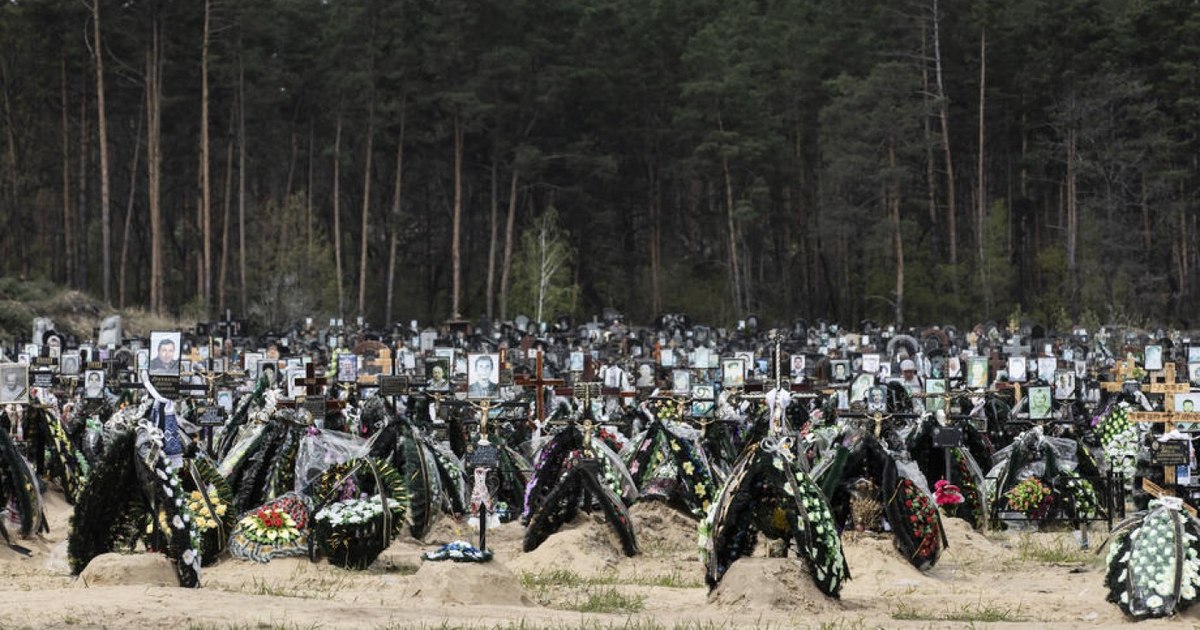
Russian 'black widow' marriages exploit soldier death benefits
Photograph: Adevarul (embedded from source)
What this story says
- Women in Russia are entering sham marriages with soldiers to claim state death benefits if the soldiers are killed in Ukraine.
- The scheme has provoked public outrage and prompted investigations by Russian authorities.
- Families of deceased soldiers, including parents and children, are left without compensation under the current system.
- Reports disagree on whether the scams are organised or opportunistic, and on the scale of the phenomenon.
Who covered it
Percentages are shares of the 23 outlets carrying a published leaning rating. 24 of the 47 outlets we know ran this story carry no rating and are not counted in them. Coverage measured .
Trust
39/100
Craft
75/100
Hype
30/100
47 sources · methodology
Missing from the left
Only 8 of the 23 outlets with a published leaning rating that ran this story are rated left.
A reader who follows the left would not have seen this. We report the absence rather than explain it: outlets choose what to cover for many reasons, and we have no evidence about which one applies here.
A scheme has emerged in Russia where women marry soldiers before they are deployed to Ukraine, with the intention of claiming state compensation if the soldiers are killed. The payments, described as generous by multiple outlets, are intended for the families of deceased military personnel. Under Russian law, a legal spouse is entitled to the compensation, leaving biological families, parents, children, or siblings, without access to the funds.
The practice has been dubbed the "black widow" scam by several outlets. It has drawn public criticism and prompted investigations by Russian authorities. The scale of the scheme is unclear, with some reports suggesting it is widespread, while others describe it as a series of isolated cases. The compensation amounts are reported in rubles, though no specific figure is corroborated across all sources.
The scheme exploits a legal loophole in Russia’s compensation system. Families of soldiers killed in Ukraine have spoken out, accusing the women involved of exploiting vulnerable men. The soldiers, according to some reports, are unaware of the marriages or are coerced into them before deployment. The Russian government has not publicly addressed changes to the compensation rules in response to the scam.
Disagreements in the reports
The reports disagree on whether the marriages are part of an organised fraud ring or opportunistic acts by individuals. Protothema describes the scam as an "organised fraud" with authorities investigating multiple cases. NDTV and Yonhap News Agency refer to it as a widespread practice but do not specify whether it is coordinated. Adevarul and Observador describe it as a phenomenon that has caused outrage but do not characterise it as organised.
What the coverage left out
None of the digests provided the exact amount of compensation paid to families of deceased soldiers. Adevarul’s digest mentioned that the payments were generous but did not specify a figure. The right-rated digests did not include statements from Russian authorities on whether the compensation rules would be revised. The left-rated digest did not address whether the scam was organised or opportunistic.
Coverage settled. We checked this 17 times and stopped on 10 Aug 2026, 23:45. The figures above are what it finished at.
How each side covered it
Our own reading of the reporting listed below, written from the outlets’ articles rather than quoted from them. The reasoning is set out on our methodology page.
Left
8 rated outlets
- All five left-rated outlets reported that women in Russia are marrying soldiers shortly before deployment to claim state death benefits. The Indian Express, CNN, Dnevni list Danas, Politiken, and HuffPost It led on the scheme’s existence and its financial motive.
- CNN and Dnevni list Danas included the case of Maria, whose father enlisted and married without her knowledge before dying in Ukraine. Both noted the shock of families discovering post-mortem marriages. The Indian Express and HuffPost It specified the payout amount of 5 million rubles.
- Politiken alone mentioned the use of these cases to fuel conspiracy theories against Ukrainians. None of the digests quoted Russian officials or legal experts on the scheme’s legality or scale. The reports focused on victims’ families and the mechanics of the fraud.
Centre
5 rated outlets
- The Argus Observer digest, written by columnist Craig Carter, focused on broader criticisms of government handling of war casualties. It did not detail the mechanics of the scam or the compensation amounts. The digest framed the issue as part of a pattern of government obfuscation on military matters, including spending and ceasefire claims.
Right
10 rated outlets
- The right-rated digests led on the financial exploitation of the compensation system. NDTV described the soldiers as "vulnerable men" persuaded into sham marriages. Protothema and Observador both used the term "black widows" in their headlines, framing the women as predatory. Yonhap News Agency reported the scam as rampant, citing U.S. sources. None of the right-rated digests mentioned the economic crisis in Russia as a contributing factor, though Observador’s digest noted it in passing.
Questions about this coverage
- How did the left and right cover Russian 'black widow' marriages exploit soldier death benefits?
- Of the 23 outlets on this story carrying a published leaning rating, 35% are rated left, 21% are rated centre, 44% are rated right. Those percentages are shares of the rated outlets, not of every outlet that ran it, which was 47. The sections above set out what each side emphasised, in its own terms.
- Is Russian 'black widow' marriages exploit soldier death benefits left or right?
- Neither side dominates it. Of the 23 rated outlets on this story, 35% are rated left, 21% are rated centre, 44% are rated right, and no side holds the 70% this site would want before calling a field one-sided. A story is not left or right in any case; the outlets that carried it are what carry ratings.
- Is the coverage of Russian 'black widow' marriages exploit soldier death benefits biased?
- Russian 'black widow' marriages exploit soldier death benefits is one event reported by 47 outlets, and this page does not rate the story as biased or unbiased. What it publishes is the spread: which outlets ran it, where named rating organisations place each of them on the spectrum, and what each side chose to lead with. A leaning rating describes an outlet's record over time, not this article, and the two should not be run together.
- Which side is not reporting Russian 'black widow' marriages exploit soldier death benefits?
- When we first saw this story, outlets rated left had barely covered it. Coverage accretes for hours after an event, so that is where to look rather than a verdict — the split above is the current count, and it is the one to read.
- Which outlets covered Russian 'black widow' marriages exploit soldier death benefits?
- 47 that we know of, every one of them listed further up this page with a link to its own report and to what we hold on the publisher. Nothing here is a summary of somebody else's summary: the outlets are named so the original reporting can be read.
- What is the 'black widow' scam in Russia?
- The 'black widow' scam involves women marrying soldiers before deployment to claim state compensation if the soldiers are killed in Ukraine. The scheme exploits a legal loophole where spouses, not biological families, receive the payments. It has sparked public outrage and investigations by Russian authorities.
- Who is left without compensation in these cases?
- Under Russian law, the legal spouse is entitled to the death benefits, leaving parents, children, or siblings of deceased soldiers without compensation. Families of soldiers have spoken out against the scheme, accusing the women involved of exploiting vulnerable men.
- Are the marriages part of an organised fraud ring?
- Reports disagree on this point. Protothema described the scam as an organised fraud with authorities investigating multiple cases. Other outlets, such as NDTV and Yonhap News Agency, reported it as a widespread practice but did not specify whether it was coordinated.
- How have Russian authorities responded to the scam?
- None of the digests reported a public response from Russian authorities on whether the compensation rules would be revised. Some outlets noted that investigations are underway, but no details on potential changes to the system were provided.
Read it at the source
47 outlets, grouped by the leaning a published rating gives them. Every headline links to the original; an underlined outlet name opens our profile of that publisher.
Left
8- Russia's 'black widows' are marrying soldiers to get their death payouts (opens Metro News in a new tab)
Metro News — is Metro News biased? Our profile of this outlet
- "Black Widows" Lure in Wedding Trap: How the Fraud of Kremlin Soldiers Works (opens t-online in a new tab)
- Widowed Five Times. A Harsh Phenomenon of Gold Diggers Who Profit From War Is Spreading Across Russia (opens Novinky.cz in a new tab)
Novinky.cz — is Novinky.cz biased? Our profile of this outlet
- Marrying a Soldier Before He Dies in the War: the Black Widow Business Explodes in Russia (opens HuffPost It in a new tab)
HuffPost It — is HuffPost It biased? Our profile of this outlet
- 'Black Widows' Spark Outrage in Russia: "These Women We (opens Politiken in a new tab)
- Concerns Grow in Russia over 'Black Widows': CNN on Abuses of Compensation in Case of Death of Russian Soldier (opens Dnevni list Danas in a new tab)
Dnevni list Danas — is Dnevni list Danas biased? Our profile of this outlet
- Russia’s war casualties have given rise to a ‘black widow scam’ (opens Indian Express in a new tab)
Indian Express — is Indian Express biased? Our profile of this outlet
- Russia’s ‘black widows’: Women accused of marrying army recruits to claim death payouts (opens CNN in a new tab)
Centre
5- Russia Hunts 'Black Widows' - Luring Soldiers with Benefits After Their Deaths in Ukraine (opens Lietuvos Radijas ir Televizija in a new tab)
- Russia's 'Black Widows' Accused Of Marrying Soldiers For War Payouts (opens 2oceansvibe.com in a new tab)
2oceansvibe.com — is 2oceansvibe.com biased? Our profile of this outlet
- ‘Black widows’: Women accused of marrying Russian army recruits to claim death payouts (opens Egypt Independent in a new tab)
Egypt Independent — is Egypt Independent biased? Our profile of this outlet
- The Scam "Black Widows, a Real Industry in Russia. Marriages with Fresh Recruits, to Collect Death Compensation (opens Digi 24 in a new tab)
- Craig Carter: When war casualties don't count (opens Argus Observer in a new tab)
Argus Observer — is Argus Observer biased? Our profile of this outletOpinion
Right
10- "Black Widows: Women Accused of Marrying Russian Army Recruits to Collect Death Benefits (opens focus.de in a new tab)
- Who Are the 'Black Widows' Accused of Marrying Russian Soldiers to Earn Compensation for Death in the War? (opens Globo in a new tab)
- They Marry Recruits, Hoping for Their Death and Compensation. (opens tvp.info in a new tab)
- "Black Widows" Suspected of Hunting Compensation for Fallen Russians (opens Dagens Nyheter in a new tab)
Dagens Nyheter — is Dagens Nyheter biased? Our profile of this outlet
- Russia's "Black Widows" Network: The Dark Fraud of Express Marriages to Collect Compensation From Fallen Militarymen · Global Voices (opens Clarin in a new tab)
- 'Black widows': Russian women accused of marrying soldiers to claim war death payouts (opens Times of India in a new tab)
Times of India — is Times of India biased? Our profile of this outlet
- 'Black Widows' of Russia. Women Married the Military to Get Death Compensation. (opens Observador in a new tab)
Observador — is Observador biased? Our profile of this outlet
- Russia's "Black Widows" Are Scamming Soldiers Into Marriages For Death Payouts (opens NDTV in a new tab)
Show 2 more
- Russia's "Black Widows": Express Marriages with Soldiers Before Going to War and Aiming for State Compensation (opens Protothema in a new tab)
Protothema — is Protothema biased? Our profile of this outlet
- Russia's 'Black Widow' Scam Spreads... Marries Before Enlistment, Receives Compensation After Death in Action (opens 연합뉴스-Yonhap News Agency in a new tab)
연합뉴스-Yonhap News Agency — is 연합뉴스-Yonhap News Agency biased? Our profile of this outlet
Not rated
24- Black Widows in Action. Fraudulent Profiteering From Soldiers' Deaths Spreads Across Russia (opens iDNES.cz in a new tab)
- The "Black Widow" Network, Which Seized Compensation for Fallen Soldiers, Had Infiltrated the Army. (opens Halk TV in a new tab)
- War in Ukraine: They Marry Soldiers to Receive Their Death penalty... How the "Black Widows" Scandal Undermines Russian Society (opens midilibre.fr in a new tab)
midilibre.fr — is midilibre.fr biased? Our profile of this outlet
- Russia, the Black Places of the Soldiers at the Front. So the Fallen in Ukraine Become a Business (opens Domani in a new tab)
Domani — is Domani biased? Our profile of this outletOpinion
- They Marry Soldiers to Receive Subsidies After They Die in the War: Meet the Russian "Black Widows" (opens IOL Portugal in a new tab)
IOL Portugal — is IOL Portugal biased? Our profile of this outlet
- What Is This Dangerous Game of 'Black Widow'...! Why Are Young Women Suddenly Marrying Wounded Soldiers? (opens tv9gujarati.com in a new tab)
tv9gujarati.com — is tv9gujarati.com biased? Our profile of this outletOpinion
- Who Are Russia’s ‘Black Widows’? This Is How Money Marriages with Soldiers Sent to War Operate? (opens El Tiempo in a new tab)
- The Black Widow Scam that Has Russia Screaming! Women Marrying Warriors and Making Money! (opens Goodreturns in a new tab)
Goodreturns — is Goodreturns biased? Our profile of this outlet
Show 16 more
- A Disturbing Trend Has Swept Across Russia: Cunning Russian Women Are Marrying Wounded Soldiers and Collecting All the Money From Their Relatives After Their Deaths. (opens siol.net in a new tab)
- “Be Friends and perish.” How Russia's “Black Widows” Are Rooting at the Death of the Occupiers (opens liga.net in a new tab)
- Scam of Women Marrying for Death Compensation Exposed in Russia: Cases of Marriage with Wounded Soldiers Increase, Hospitals and Army Also Accused of Collusion (opens divyabhaskar in a new tab)
divyabhaskar — is divyabhaskar biased? Our profile of this outlet
- "Black Widows" Apply for State Benefits for Russian Soldiers Killed at the Front (opens Heti Világgazdaság in a new tab)
Heti Világgazdaság — is Heti Világgazdaság biased? Our profile of this outlet
- Russia's ‘Black Widow’ Scam: Families of Fallen Soldiers Battle Fraud as War Death Benefits Become Target of Marriage Schemes (opens theasialive.com in a new tab)
theasialive.com — is theasialive.com biased? Our profile of this outlet
- 'Black Widows' in Russia (opens namasthe telangana in a new tab)
namasthe telangana — is namasthe telangana biased? Our profile of this outlet
- The Scam "Black Widows Is Growing in Russia." Find a Soldier and when He's Killed You'll Get 8 Million Rubles (opens Stirile Pro TV in a new tab)
Stirile Pro TV — is Stirile Pro TV biased? Our profile of this outlet
- Deadly Love in the Shadows of the Front: This Is How Russian "Black Widows" Hunt Soldiers (opens economx.hu in a new tab)
economx.hu — is economx.hu biased? Our profile of this outlet
- Black Widows From Russia Prey on Fresh Recruits (opens rmf24.pl in a new tab)
- Expressly! ‘Black Widows’ Marry Soldiers for Compensation (opens Azteca Quintana Roo in a new tab)
Azteca Quintana Roo — is Azteca Quintana Roo biased? Our profile of this outlet
- "Black Widows": Women Who Repeatedly Marry Russian Army Conscripts in Order to Receive Compensation After Their Death (opens n1info.rs in a new tab)
- 5 Facts About the Black Widow Trend in Russia: Marrying for a Death Benefit of IDR 1.1 Billion (opens SINDOnews.com in a new tab)
SINDOnews.com — is SINDOnews.com biased? Our profile of this outlet
- Russian Women Marry Military Men with a Goal of €64,000: The "Black Widows" and State Compensation (opens gazzetta.gr in a new tab)
gazzetta.gr — is gazzetta.gr biased? Our profile of this outlet
- Russia-Ukraine War, the Black Widows and the Hunt for Young Recruits: the Wedding-Flash, the Departure for the Front and the Typhus for the Army of Kiev to Pocket the Compensation (opens Il Riformista in a new tab)
Il Riformista — is Il Riformista biased? Our profile of this outlet
- "Taking Advantage of Their Husband's Blood": in Russia, "Black Widows" Seduce Soldiers to Receive Their Death Premium (opens parismatch.com in a new tab)
parismatch.com — is parismatch.com biased? Our profile of this outlet
- Russia, Shocked by a Scandal of War Compensation: "Black Widows Enter the Eye of the Authorities (opens Adevarul in a new tab)
How did this read?
About the coverage, not about the story. We do not ask whether you agree with what happened — we have no honest use for that answer.