Sudan’s Meroe pyramids at risk from war and sand accumulation
UNESCO site faces collapse as preservation halts and salt degrades ancient stones
AI-assisted coverage comparison, editor-supervised · How this was made
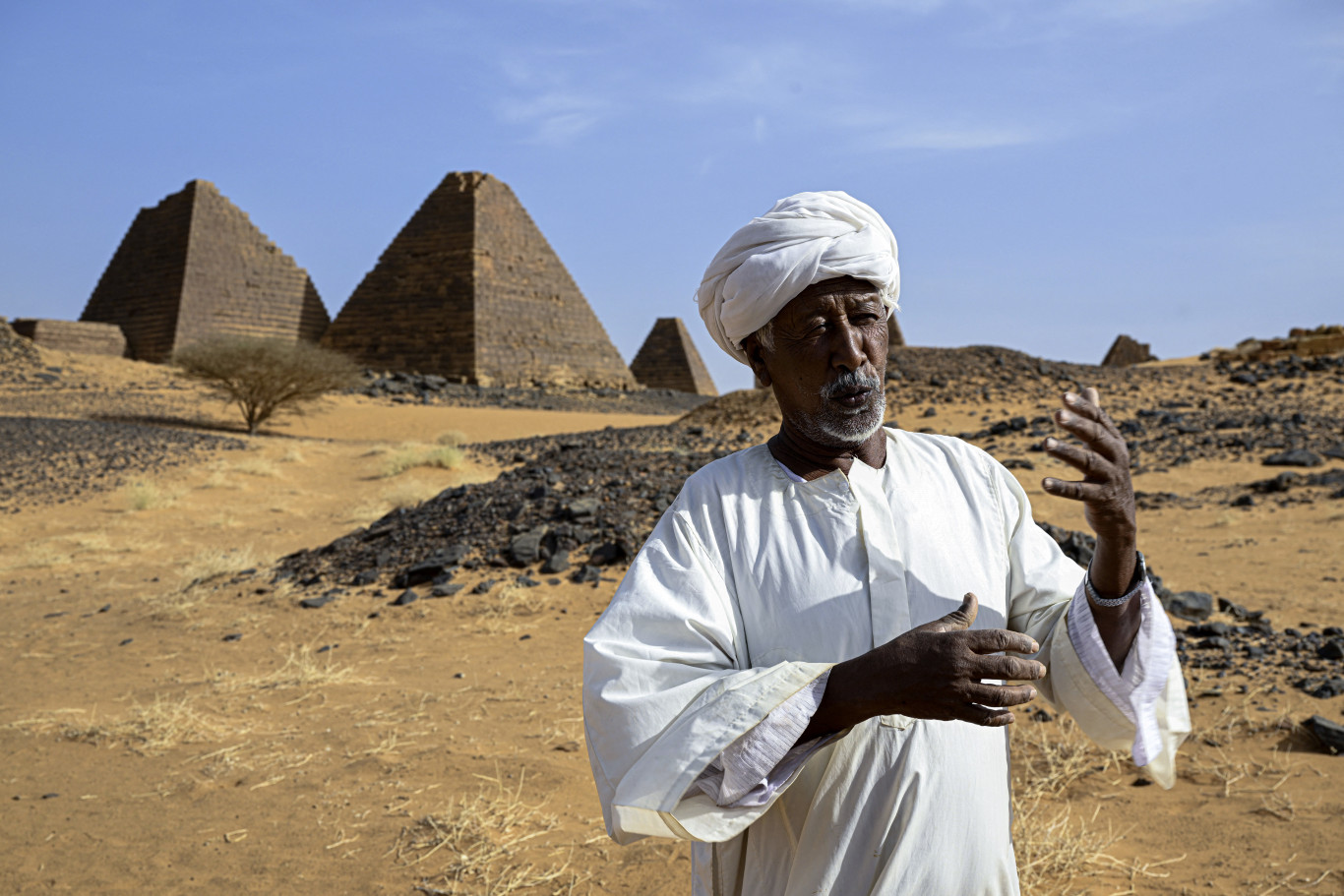
Sudan’s Meroe pyramids at risk from war and sand accumulation
Photograph: 444.hu (embedded from source)
What this story says
- The Meroe pyramids, a UNESCO World Heritage Site in Sudan, are at risk of collapse due to halted preservation efforts caused by the country’s ongoing war.
- Archaeologist Mahmoud Suleiman warned that the site may face a disaster, with sand and salt degrading the pyramids’ fragile stones.
- UNESCO reports over 100 cultural sites in Sudan have been damaged since the war began in April 2023, including 22 looted or destroyed museums.
- No right-rated outlets covered the story, according to the reports reviewed.
Who covered it
Percentages are shares of the 22 outlets carrying a published leaning rating. 6 of the 28 outlets we know ran this story carry no rating and are not counted in them. Coverage measured .
Trust
66/100
Craft
87/100
Hype
15/100
28 sources · methodology
Missing from the right
Only 1 of the 22 outlets with a published leaning rating that ran this story are rated right.
A reader who follows the right would not have seen this. We report the absence rather than explain it: outlets choose what to cover for many reasons, and we have no evidence about which one applies here.
Sudan’s Meroe pyramids, a UNESCO World Heritage Site, are deteriorating as preservation efforts have stopped due to the country’s ongoing war. The site, located 200 kilometres north of Khartoum, contains over 200 pyramids built between 800 B.C. and 350 A.D. as royal tombs for the Kingdom of Kush.
Archaeologist Mahmoud Suleiman told the Associated Press that the site may face a disaster and collapses are possible. Mustafa Ahmed, a guard at Meroe, reported that sand has thickened heavily on the pyramids, and stones have begun to fall. Mohamed Mubarak, an antiquities inspector, said salt from accumulated sand is degrading the stones, risking the erosion of ancient inscriptions.
The war in Sudan began in April 2023. UNESCO reported in April 2026 that over 100 cultural sites have been damaged, and at least 22 museums have been looted or destroyed since the conflict started.
What the coverage left out
None of the right-rated outlets reviewed carried the story. The left and centre digests omitted the specific number of cultural sites damaged in Sudan (over 100) and the number of looted or destroyed museums (at least 22), as reported by UNESCO. Washington Top News’s full report was the only one to mention the impact of climate change and the challenges faced by foreign preservation missions.
Coverage settled. We checked this 17 times and stopped on 11 Aug 2026, 15:00. The figures above are what it finished at.
How each side covered it
Our own reading of the reporting listed below, written from the outlets’ articles rather than quoted from them. The reasoning is set out on our methodology page.
Left
10 rated outlets
- All five left-rated digests carried the core facts: the war’s threat to the Meroe pyramids, the halt in preservation efforts, and the warnings from archaeologist Mahmoud Suleiman. The Seattle Times digest included Suleiman’s direct quote that the site may face a disaster. The Independent and Stuff led on the same Associated Press account, while 444.hu framed the story around the long-term survival of the pyramids being at risk from climate change and war.
Centre
11 rated outlets
- All centre-rated outlets reported that Sudan’s Meroe pyramids, a UNESCO World Heritage Site, face threats from the country’s ongoing war and sand accumulation. They noted that preservation work has stopped. The Associated Press report, carried by Washington Top News, provided the only full account among these outlets.
- The AP report quoted archaeologist Mahmoud Suleiman warning of possible collapses and described salt from accumulated sand degrading the stones. It included statements from a site guard and an antiquities inspector about deteriorating conditions. The report also linked the site’s decline to climate change and the dispersal of workers due to war.
- None of the digests from the other ten centre-rated outlets mentioned specific details about salt damage, climate change, or the dispersal of workers. They did not include quotes from local staff or experts. The digests led on the halt of preservation efforts and the general threat to the site.
Right
1 rated outlet
We have not written our reading of the right coverage of this story. The right-rated outlets that ran it are listed below.
Questions about this coverage
- How did the left and right cover Sudan’s Meroe pyramids at risk from war and sand accumulation?
- Of the 22 outlets on this story carrying a published leaning rating, 46% are rated left, 49% are rated centre, 5% are rated right. Those percentages are shares of the rated outlets, not of every outlet that ran it, which was 28. The sections above set out what each side emphasised, in its own terms.
- Is Sudan’s Meroe pyramids at risk from war and sand accumulation left or right?
- Neither side dominates it. Of the 22 rated outlets on this story, 46% are rated left, 49% are rated centre, 5% are rated right, and no side holds the 70% this site would want before calling a field one-sided. A story is not left or right in any case; the outlets that carried it are what carry ratings.
- Is the coverage of Sudan’s Meroe pyramids at risk from war and sand accumulation biased?
- Sudan’s Meroe pyramids at risk from war and sand accumulation is one event reported by 28 outlets, and this page does not rate the story as biased or unbiased. What it publishes is the spread: which outlets ran it, where named rating organisations place each of them on the spectrum, and what each side chose to lead with. A leaning rating describes an outlet's record over time, not this article, and the two should not be run together.
- Which side is not reporting Sudan’s Meroe pyramids at risk from war and sand accumulation?
- When we first saw this story, outlets rated right had barely covered it. Coverage accretes for hours after an event, so that is where to look rather than a verdict — the split above is the current count, and it is the one to read.
- Which outlets covered Sudan’s Meroe pyramids at risk from war and sand accumulation?
- 28 that we know of, every one of them listed further up this page with a link to its own report and to what we hold on the publisher. Nothing here is a summary of somebody else's summary: the outlets are named so the original reporting can be read.
- Why are the Meroe pyramids at risk?
- The Meroe pyramids are at risk due to halted preservation efforts caused by Sudan’s ongoing war, combined with sand accumulation and salt degradation. Archaeologists warn of potential collapses, as reported by the Associated Press and UNESCO.
- How many cultural sites in Sudan have been damaged in the war?
- UNESCO reported that over 100 cultural sites in Sudan have been damaged since the war began in April 2023. At least 22 museums have been looted or destroyed, according to the same source.
- Which outlets covered the story of the Meroe pyramids?
- Left and centre-rated outlets covered the story, including the Associated Press, Washington Top News, and digests from outlets like The Seattle Times and The Independent. No right-rated outlets reviewed carried the story.
Read it at the source
28 outlets, grouped by the leaning a published rating gives them. Every headline links to the original; an underlined outlet name opens our profile of that publisher.
Left
10- A battle for supremacy has laid Sudan and its capital to waste (opens The Economist in a new tab)
The Economist — is The Economist biased? Our profile of this outlet
- War and accumulating sand threaten Sudan’s Meroe pyramids, in photos (opens Daily Record in a new tab)
Daily Record — is Daily Record biased? Our profile of this outlet
- War and accumulating sand threaten Sudan’s Meroe pyramids, in photos (opens McAlester News-Capital in a new tab)
McAlester News-Capital — is McAlester News-Capital biased? Our profile of this outlet
- Not Much Good Can Be Expected From the Sudanese Pyramids (opens 444.hu in a new tab)
444.hu — is 444.hu biased? Our profile of this outletOpinion
- War and accumulating sand threaten Sudan’s Meroe pyramids, in photos (opens Stuff in a new tab)
- War and accumulating sand threaten Sudan’s Meroe pyramids, in photos (opens The Daily Item in a new tab)
The Daily Item — is The Daily Item biased? Our profile of this outlet
- War and accumulating sand threaten Sudan’s Meroe pyramids, in photos (opens The Seattle Times in a new tab)
The Seattle Times — is The Seattle Times biased? Our profile of this outlet
- War and accumulating sand threaten Sudan’s Meroe pyramids, in photos (opens ABC News in a new tab)
Show 2 more
- War and accumulating sand threaten Sudan’s Meroe pyramids, in photos (opens The Independent in a new tab)
The Independent — is The Independent biased? Our profile of this outlet
- War and accumulating sand threaten Sudan’s Meroe pyramids, in photos (opens Las Vegas Sun in a new tab)
Las Vegas Sun — is Las Vegas Sun biased? Our profile of this outlet
Centre
11- War and accumulating sand threaten Sudan’s Meroe pyramids (opens The Globe & Mail in a new tab)
The Globe & Mail — is The Globe & Mail biased? Our profile of this outlet
- War and accumulating sand threaten Sudan’s Meroe pyramids, in photos (opens union-bulletin.com in a new tab)
union-bulletin.com — is union-bulletin.com biased? Our profile of this outlet
- War and accumulating sand threaten Sudan’s Meroe pyramids, in photos (opens Idaho State Journal in a new tab)
Idaho State Journal — is Idaho State Journal biased? Our profile of this outlet
- War and accumulating sand threaten Sudan’s Meroe pyramids, in photos (opens The Herald Journal in a new tab)
The Herald Journal — is The Herald Journal biased? Our profile of this outlet
- War and accumulating sand threaten Sudan’s Meroe pyramids, in photos (opens Daily Journal in a new tab)
Daily Journal — is Daily Journal biased? Our profile of this outlet
- War and accumulating sand threaten Sudan’s Meroe pyramids, in photos (opens mykxlg.com in a new tab)
mykxlg.com — is mykxlg.com biased? Our profile of this outlet
- War and accumulating sand threaten Sudan’s Meroe pyramids, in photos (opens Santa Maria Times in a new tab)
Santa Maria Times — is Santa Maria Times biased? Our profile of this outlet
- War and accumulating sand threaten Sudan’s Meroe pyramids, in photos (opens Washington Top News in a new tab)
Washington Top News — is Washington Top News biased? Our profile of this outlet
Show 3 more
- War and accumulating sand threaten Sudan’s Meroe pyramids, in photos (opens Cecil Daily in a new tab)
Cecil Daily — is Cecil Daily biased? Our profile of this outlet
- War and accumulating sand threaten Sudan’s Meroe pyramids, in photos (opens The Star Democrat in a new tab)
The Star Democrat — is The Star Democrat biased? Our profile of this outlet
- War and accumulating sand threaten Sudan’s Meroe pyramids, in photos (opens Rutland Herald in a new tab)
Rutland Herald — is Rutland Herald biased? Our profile of this outlet
Right
1Not rated
6- War, sand threaten Sudan’s Meroe pyramids (opens Egyptian Gazette in a new tab)
Egyptian Gazette — is Egyptian Gazette biased? Our profile of this outlet
- Sudan: The indifference to a tragic story | Doctors Without Borders / Médecins Sans Frontières (MSF ... (opens doctorswithoutborders.ca in a new tab)
doctorswithoutborders.ca — is doctorswithoutborders.ca biased? Our profile of this outlet
- Sudan UNESCO Heritage Sites Threatened by Civil War Crisis (opens The Arab Posts in a new tab)
The Arab Posts — is The Arab Posts biased? Our profile of this outlet
- Meroë pyramids face collapse as sand engulfs ancient site (opens thesudantimes.com in a new tab)
thesudantimes.com — is thesudantimes.com biased? Our profile of this outlet
- AP Photos: War and Accumulated Sand Threaten Meroe Pyramids in Sudan (opens Independent Español in a new tab)
Independent Español — is Independent Español biased? Our profile of this outlet
- War and accumulating sand threaten Sudan’s Meroe pyramids, in photos (opens pmg-ky3.com in a new tab)
pmg-ky3.com — is pmg-ky3.com biased? Our profile of this outlet
How did this read?
About the coverage, not about the story. We do not ask whether you agree with what happened — we have no honest use for that answer.