US defence secretary says naval blockade of Iran can continue indefinitely
Pete Hegseth told reporters in Panama the US Navy can rotate ships in and out of the region to sustain the operation
AI-assisted coverage comparison, editor-supervised · How this was made

Video thumbnail
Photograph: Live Mint (embedded from source)
What this story says
- US Defence Secretary Pete Hegseth said the US Navy can maintain its naval blockade of Iran indefinitely by rotating ships in and out of the Middle East.
- The US has deployed tens of thousands of troops and over 20 warships to the region since the conflict began in February 2026.
- US forces have redirected more than 55 commercial vessels attempting to breach the blockade, disabling three and boarding two.
- Iran has retaliated with missile and drone attacks against US allies and targeted commercial vessels in the Strait of Hormuz.
Who covered it
Percentages are shares of the 20 outlets carrying a published leaning rating. 9 of the 29 outlets we know ran this story carry no rating and are not counted in them. Coverage measured .
Trust
78/100
Craft
85/100
Hype
15/100
29 sources · methodology
Missing from the left
Only 5 of the 20 outlets with a published leaning rating that ran this story are rated left.
A reader who follows the left would not have seen this. We report the absence rather than explain it: outlets choose what to cover for many reasons, and we have no evidence about which one applies here.
US Defence Secretary Pete Hegseth said on 13 August 2026 that the US military can maintain its naval blockade of Iran indefinitely. Hegseth made the statement in Panama after addressing the crew of the USS Gridley, a guided-missile destroyer previously deployed to the Middle East. The US has deployed tens of thousands of troops and more than 20 warships to the region since the conflict began in February 2026.
The blockade, imposed after US and Israeli strikes on Iran, has redirected over 55 commercial vessels attempting to breach it. US forces have disabled three ships and boarded two. Earlier this week, a US Navy MH-60 helicopter fired two Hellfire missiles into the engine room of a Panama-flagged vessel after it allegedly ignored warnings. The US maintains the blockade targets Iranian shipping while allowing freedom of navigation for vessels travelling to non-Iranian ports.
Iran has retaliated with missile and drone attacks against US allies in the region and targeted commercial vessels transiting the Strait of Hormuz without its permission. The conflict has disrupted global energy supplies, as the strait previously carried about one-fifth of the world’s oil and liquefied natural gas shipments.
What the reports disagree on
The spelling of the defence secretary’s name is reported as both "Hegseth" and "Hagset". Live Mint, The Korea Times, CNN Brasil, NDTV, Hospodárske Noviny, WTVB, humenglish.com, The Straits Times and Naftemporiki use "Hegseth". Unknown (nv.ua) and Eurointegration use "Hagset".
What the coverage left out
None of the right-rated digests mentioned the mental health concerns raised by the prolonged deployment of the USS Abraham Lincoln or reports of suicide attempts among its crew. The Korea Times and Live Mint both reported these details. None of the digests, regardless of rating, included the finance ministry’s cost estimate for sustaining the blockade, as no report supplied that figure.
Coverage settled. We checked this 22 times and stopped on 19 Aug 2026, 02:15. The figures above are what it finished at.
How other outlets pictured it
Which photograph to run is each newsroom’s own choice. The leaning beside a name is that outlet’s published rating, not a claim that the pictures divide along it. Every picture is shown from the outlet’s own server and links to the article it ran in.

U.S. Defense Secretary Pete Hegseth, left, arrives for the closing ceremony of the multinational Panamax 2026 military exercises in Panama City, Thursday. AFP-Yonhap
The Korea Times — embedded from source
How each side covered it
Our own reading of the reporting listed below, written from the outlets’ articles rather than quoted from them. The reasoning is set out on our methodology page.
Left
5 rated outlets
- Left-rated outlets led on the US defence secretary’s statement that the naval blockade of Iran can continue indefinitely. The Korea Times, CBC News, Al Jazeera, and in.gr all reported this as the central claim. The Korea Times added that ships would be rotated in and out of the region to sustain the effort.
- Economic pressure on Iran was a secondary focus. CNBC, Sueddeutsche Zeitung, Haaretz, and La Repubblica carried Treasury Secretary Scott Bessent’s pledge of “economic isolation like the world has never seen before.” CNN and The Hindu framed the measures as unprecedented. None of the digests specified what these measures would entail.
- The Korea Times included details omitted by others: the number of warships deployed (over 20), the redirection of 55 commercial vessels, and the disabling of three ships attempting to breach the blockade. It also noted Iran’s retaliatory strikes on US allies and Trump’s domestic political pressures ahead of midterm elections.
Centre
3 rated outlets
- Live Mint and WTVB both reported Hegseth’s statement that the US Navy could maintain the blockade indefinitely by rotating ships in and out of the region. Live Mint led with the defence secretary’s assertion that the US has "enough military assets" to sustain the operation, framing it as a signal of Washington’s preparedness to maintain pressure on Tehran.
- Live Mint included Trump’s claim on Truth Social that the US has established "total control" over the Strait of Hormuz, describing the blockade as a "WALL OF STEEL". The report also noted the blockade’s impact on global energy supplies and Iran’s retaliatory actions, including missile and drone attacks against US allies. It mentioned reports of deteriorating conditions aboard the USS Abraham Lincoln but quoted Hegseth dismissing them as "completely misrepresented".
Right
12 rated outlets
- The four right-rated digests, NDTV, Globo, Protothema and The Straits Times, all led on Hegseth’s statement that the US military can maintain the blockade indefinitely. NDTV and Globo framed the comments as advice to President Donald Trump that the US can sustain economic pressure on Iran to support negotiations. Protothema reported the Pentagon’s plan to send the aircraft carrier George Washington to the Middle East to replace the USS Abraham Lincoln.
- None of the right-rated digests mentioned the blockade’s impact on global energy supplies or Iran’s retaliatory attacks against commercial vessels. None included Trump’s claim that the US has "total control" over the Strait of Hormuz or described the blockade as a "WALL OF STEEL".
Questions about this coverage
- How did the left and right cover US defence secretary says naval blockade of Iran can continue…?
- Of the 20 outlets on this story carrying a published leaning rating, 25% are rated left, 15% are rated centre, 60% are rated right. Those percentages are shares of the rated outlets, not of every outlet that ran it, which was 29. The sections above set out what each side emphasised, in its own terms.
- Is US defence secretary says naval blockade of Iran can continue… left or right?
- Neither side dominates it. Of the 20 rated outlets on this story, 25% are rated left, 15% are rated centre, 60% are rated right, and no side holds the 70% this site would want before calling a field one-sided. A story is not left or right in any case; the outlets that carried it are what carry ratings.
- Is the coverage of US defence secretary says naval blockade of Iran can continue… biased?
- US defence secretary says naval blockade of Iran can continue indefinitely is one event reported by 29 outlets, and this page does not rate the story as biased or unbiased. What it publishes is the spread: which outlets ran it, where named rating organisations place each of them on the spectrum, and what each side chose to lead with. A leaning rating describes an outlet's record over time, not this article, and the two should not be run together.
- Which side is not reporting US defence secretary says naval blockade of Iran can continue…?
- When we first saw this story, outlets rated left had barely covered it. Coverage accretes for hours after an event, so that is where to look rather than a verdict — the split above is the current count, and it is the one to read.
- Which outlets covered US defence secretary says naval blockade of Iran can continue…?
- 29 that we know of, every one of them listed further up this page with a link to its own report and to what we hold on the publisher. Nothing here is a summary of somebody else's summary: the outlets are named so the original reporting can be read.
- How long can the US maintain its naval blockade of Iran?
- US Defence Secretary Pete Hegseth said the US Navy can maintain the blockade indefinitely by rotating ships in and out of the Middle East. The operation has been sustained since the conflict began in February 2026, with over 20 warships deployed to the region.
- What has the US naval blockade of Iran achieved so far?
- Since imposing the blockade, US forces have redirected more than 55 commercial vessels attempting to breach it. Three ships have been disabled, two have been boarded, and a US Navy helicopter fired Hellfire missiles into a Panama-flagged vessel’s engine room after it ignored warnings.
- How has Iran responded to the US naval blockade?
- Iran has retaliated with missile and drone attacks against US allies in the region and targeted commercial vessels transiting the Strait of Hormuz without its permission. The strait, a critical global energy route, has seen prolonged disruption to oil and gas shipments.
Read it at the source
224 outlets, grouped by the leaning a published rating gives them. Every headline links to the original; an underlined outlet name opens our profile of that publisher.
Left
37- Trump urges Americans to accept higher gas prices over Iran war (opens Global News in a new tab)
Global News — is Global News biased? Our profile of this outlet
- Trump: ‘I’ll Never Apologize’ For The High Prices I Caused (opens Crooks and Liars in a new tab)
Crooks and Liars — is Crooks and Liars biased? Our profile of this outlet
- Trump: "I Will Never Apologize for the Dear Gasoline" (opens HuffPost It in a new tab)
HuffPost It — is HuffPost It biased? Our profile of this outletOpinion
- Trump Says He Will 'Never Apologize' for Iran War Raising Gas Prices: 'I Did the Right Thing' (opens The Wrap in a new tab)
- Trump says Strait of Hormuz will soon be ‘called a territory of the US’: Live (opens The Independent (US) in a new tab)
The Independent (US) — is The Independent (US) biased? Our profile of this outlet
- US warns Iran of indefinite naval blockade as Strait of Hormuz deadlock continues (opens OnManorama in a new tab)
OnManorama — is OnManorama biased? Our profile of this outlet
- Kalas: Bosnia and Herzegovina Has Complied with the EU's Decision on Restrictive Measures Against Iran (opens Dnevni list Danas in a new tab)
Dnevni list Danas — is Dnevni list Danas biased? Our profile of this outlet
- US treasury chief threatens Iran with 'never before seen' economic isolation (opens The Cradle in a new tab)
The Cradle — is The Cradle biased? Our profile of this outlet
Show 29 more
- U.S. warns Iran of more economic pressure as Hormuz vessel traffic slows (opens Haaretz in a new tab)
- War in Iran: United States Threatens Tehran with "Economic Isolation as the World Has Never Seen" if Ormuz Strait Does Not Reopen (opens La Dépêche du Midi in a new tab)
La Dépêche du Midi — is La Dépêche du Midi biased? Our profile of this outlet
- US to intensify economic and military pressure on Iran (opens Semafor in a new tab)
- The US Is Now Talking About an Indefinite Blockade of Iran - Tehran Is Not Discussing It (opens in.gr in a new tab)
- US Says It Can Maintain Naval Blockade of Iran 'Indefinitely' (opens RTV Slovenija in a new tab)
RTV Slovenija — is RTV Slovenija biased? Our profile of this outlet
- Fire in the Landes, Washington Threatens Iran with a "Never Seen" Isolation, Storm Lala... (opens Liberation in a new tab)
Liberation — is Liberation biased? Our profile of this outlet
- US to roll out ‘economic isolation’ plan for Iran next week (opens Irish Times in a new tab)
Irish Times — is Irish Times biased? Our profile of this outlet
- Iran war; no genuinely safe shipping route in area (opens CNN in a new tab)
- Trump says Strait of Hormuz will soon be ‘called a territory of the US’: Live (opens The Independent in a new tab)
The Independent — is The Independent biased? Our profile of this outlet
- The US threatens 'indefinite naval blockade' of Iran as oil crisis resurges (opens SBS News in a new tab)
- US eyes indefinite Iran naval blockade, vows more economic pressure (opens Saudi Gazette in a new tab)
Saudi Gazette — is Saudi Gazette biased? Our profile of this outlet
- US can keep naval blockade on Iranian ports "indefinitely," Pentagon chief says (opens Ada Derana in a new tab)
Ada Derana — is Ada Derana biased? Our profile of this outlet
- U.S. to use economic tactics on Iran 'that have never been seen'; Navy works to relieve troubled carrier USS Abraham Lincoln (opens CNBC in a new tab)
- West Asia war LIVE: Bessent says U.S. to apply measures never seen on Iran (opens The Hindu in a new tab)
- Live, Middle East – Washington Threatens Iran with "Economic Isolation as the World Has Never Seen" (opens Le Temps in a new tab)
- Live Blog on the Middle East War: Bessent Announces "Unprecedented Economic Measures" Against Iran (opens Sueddeutsche Zeitung in a new tab)
Sueddeutsche Zeitung — is Sueddeutsche Zeitung biased? Our profile of this outlet
- US pledges more economic measures to isolate Iran amid Hormuz deadlock (opens Al Jazeera in a new tab)
Al Jazeera — is Al Jazeera biased? Our profile of this outlet
- U.S. signals it can keep up naval blockade indefinitely, increase economic pressure on Iran (opens CBC News in a new tab)
- Conflict in the Middle East: Washington Threatens Iran with "Economic Isolation as the World Has Never Seen" (opens La Presse in a new tab)
- War in Iran, the News. Bessent: "L'iran Lives an Economic Isolation Never Seen" (opens La Repubblica in a new tab)
La Repubblica — is La Repubblica biased? Our profile of this outlet
- "On an Unlimited Basis. The Head of the Pentagon Says What the U.S. Navy Intends to Do with the Naval Blockade on Iran - HotNews.ro (opens Hot News in a new tab)
- Hegseth Commented on the Timing of the Naval Blockade of Iran. (opens rbc.ua in a new tab)
- US eyes indefinite Iran naval blockade as oil supply shortfall deepens (opens Al-Monitor in a new tab)
Al-Monitor — is Al-Monitor biased? Our profile of this outlet
- The United States Has the Resources for an “Endless” Naval Blockade of Iran (opens censor.net in a new tab)
censor.net — is censor.net biased? Our profile of this outletOpinion
- US can keep naval blockade on Iranian ports "indefinitely," Pentagon chief says (opens The Korea Times in a new tab)
The Korea Times — is The Korea Times biased? Our profile of this outlet
- 'Wall of steel': Hegseth says US can maintain Iran naval blockade ‘indefinitely’ (opens Ynet News in a new tab)
- Hegseth says US can keep naval blockade on Iranian ports ‘indefinitely’ (opens Middle East Eye in a new tab)
Middle East Eye — is Middle East Eye biased? Our profile of this outlet
- U.S. says it can keep naval blockade on Iran 'indefinitely,' vows more economic pressure (opens The spokesman-Review in a new tab)
The spokesman-Review — is The spokesman-Review biased? Our profile of this outlet
- War in the Middle East: Washington Threatens Iran with "Never Seen" Isolation (opens TVA Nouvelles in a new tab)
TVA Nouvelles — is TVA Nouvelles biased? Our profile of this outlet
Centre
44- "Never Excuse Me: Trump Has Americans Pay for His Iran War at the Pump (opens hna.de in a new tab)
hna.de — is hna.de biased? Our profile of this outletOpinion
- Trump Says He’ll ‘Never Apologize’ for Rising Gas Prices Caused by His War With Iran (opens Antiwar.com in a new tab)
Antiwar.com — is Antiwar.com biased? Our profile of this outlet
- 'I’ll never apologize' — Trump brushes off Iran war's impact on oil prices and calls aircraft carrier's 240+ days at sea 'not nearly long enough' (opens Fortune in a new tab)
- Iran business leader admits U.S. blockade will inflict more economic damage than war, and the 'worst thing that could happen' is trying to evade it (opens Fortune in a new tab)
Fortune
- Iran Conflict - U.S. Government Increases Economic Pressure (opens Deutschlandfunk in a new tab)
Deutschlandfunk — is Deutschlandfunk biased? Our profile of this outlet
- Trump Says His Naval Blockade Is ‘A Wall of Steel’ — and Just Two Ships Crossed the Strait of Hormuz on Friday (opens nationalsecurityjournal.org in a new tab)
nationalsecurityjournal.org — is nationalsecurityjournal.org biased? Our profile of this outlet
- US Readies Unprecedented ‘Economic Isolation’ Plan for Iran (opens Military.com in a new tab)
Military.com — is Military.com biased? Our profile of this outlet
- U.S. readies unprecedented ‘economic isolation’ plan for Iran (opens The Columbian in a new tab)
The Columbian — is The Columbian biased? Our profile of this outlet
Show 36 more
- Oil Rebounds as Hegseth Vows Indefinite Iran Blockade (opens hngn.com in a new tab)
- Middle East War: Iran Threatened with New Sanctions by the United States (opens Radio France Internationale in a new tab)
Radio France Internationale — is Radio France Internationale biased? Our profile of this outlet
- US eyes indefinite Iran naval blockade as oil supply shortfall deepens (opens West Hawaii Today in a new tab)
West Hawaii Today — is West Hawaii Today biased? Our profile of this outlet
- Iran War: U.S. Powered Up? (opens eurotopics.net in a new tab)
eurotopics.net — is eurotopics.net biased? Our profile of this outlet
- US Threatens to Keep Its Blockade on Iran 'Indefinitely' and Promises More Economic Pressure (opens El Periódico in a new tab)
El Periódico — is El Periódico biased? Our profile of this outlet
- US Says It Can Maintain Iran Naval Blockade Indefinitely as Hormuz Tensions Rise (opens Khaama Press in a new tab)
Khaama Press — is Khaama Press biased? Our profile of this outlet
- U.S. To Focus On Applying Economic Pressure On Iran As War Drags On: 'Never Been Seen' (opens IBTimes in a new tab)
- Two More Ships Attacked in Hormuz (opens Political Wire in a new tab)
Political Wire — is Political Wire biased? Our profile of this outlet
- US to impose ‘unprecedented’ measures on Iran, Treasury secretary says (opens The Express Tribune in a new tab)
The Express Tribune — is The Express Tribune biased? Our profile of this outlet
- The US Maintains that They Can Maintain the Naval Blockade on Iran "in the Unlimited Term: "We Will Apply Measures that Have Never Been Seen before." (opens Digi 24 in a new tab)
- Washington Threatens Iran with Isolation "as the World Has Never Seen", Far From Promises of Agreement on Ormuz (opens La Libre in a new tab)
- War in the Middle East: Washington Threatens Iran with "Economic Isolation as the World Has Never Seen" (opens Sud Ouest in a new tab)
- US Threatens Iran with Economic Isolation the Likes of Which "the World Has Never Seen" (opens Lietuvos Radijas ir Televizija in a new tab)
- US threatens Iran with economic isolation 'like the world has never seen before' (opens TRT World in a new tab)
- Washington Threatens Iran with "Economic Isolation the Likes of Which the World Has Never Seen" (opens France24 in a new tab)
- Bessent: 'Soon We Will Take Measures that Have Never Been Seen Before Against Iran' (opens ANSA in a new tab)
- U.S. to use economic tactics on Iran 'that have never been seen'; Navy works to relieve troubled carrier USS Abraham Lincoln (opens thepress.net in a new tab)
thepress.net — is thepress.net biased? Our profile of this outlet
- We will implement unprecedented measures on Iran (opens The New York Ledger in a new tab)
The New York Ledger — is The New York Ledger biased? Our profile of this outlet
- U.S. Treasury Unveils Unprecedented Measures Against Iran (opens Devdiscourse in a new tab)
Devdiscourse — is Devdiscourse biased? Our profile of this outlet
- US eyes indefinite Iran naval blockade, oil supply drops (opens RTÉ in a new tab)
- U.S. to apply measures never seen on Iran, says treasury boss (opens CP24 in a new tab)
- U.S. to apply measures never seen on Iran, says treasury boss (opens CTV News in a new tab)
- US Treasury Secretary Bessent says US to apply measures 'never seen before' on Iran (opens Jerusalem Post in a new tab)
Jerusalem Post — is Jerusalem Post biased? Our profile of this outlet
- US says it can keep naval blockade on Iran 'indefinitely,' vows more economic pressure (opens Reuters in a new tab)
- US prepared to hold Strait of Hormuz 'indefinitely', Hegseth says (opens WRTV in a new tab)
- US prepared to hold Strait of Hormuz 'indefinitely', Hegseth says (opens WTVR in a new tab)
- US prepared to hold Strait of Hormuz 'indefinitely', Hegseth says (opens KATC in a new tab)
- US prepared to hold Strait of Hormuz 'indefinitely', Hegseth says (opens KJRH in a new tab)
- US prepared to hold Strait of Hormuz 'indefinitely', Hegseth says (opens KXLH.com in a new tab)
- US prepared to hold Strait of Hormuz 'indefinitely', Hegseth says (opens KTVQ in a new tab)
- US prepared to hold Strait of Hormuz 'indefinitely', Hegseth says (opens KTVH in a new tab)
- US prepared to hold Strait of Hormuz 'indefinitely', Hegseth says (opens KPAX in a new tab)
- US prepared to hold Strait of Hormuz 'indefinitely', Hegseth says (opens KBZK in a new tab)
- Hegseth says US can maintain Iran blockade ‘indefinitely’ as Strait of Hormuz standoff deepens (opens Live Mint in a new tab)
- US can keep naval blockade on Iranian ports “indefinitely,” Pentagon chief says (opens WTVB in a new tab)
- US Looks to Maintain Iranian Naval Blockade "Indefinitely" (opens Maritime Reporter in a new tab)
Maritime Reporter — is Maritime Reporter biased? Our profile of this outlet
Right
56- Trump Downplays Higher Gas Prices Caused by Iran War, Won’t Apologize (opens newstarget.com in a new tab)
newstarget.com — is newstarget.com biased? Our profile of this outlet
- Trump: "I’ll Never Apologize” for High Gas Prices — Iran’s More Important (opens The New American in a new tab)
The New American — is The New American biased? Our profile of this outlet
- 'I’ll never apologize…': Trump defends Iran war as Hormuz blockade drives up gas prices (opens Times of India in a new tab)
Times of India — is Times of India biased? Our profile of this outlet
- Trump asks voters to accept $4 gas prices for war they’re not behind (opens Newsweek in a new tab)
- Oil prices retain highs - Trump says ‘I’ll never apologize’ (opens Al Bawaba in a new tab)
- Trump Says “I’ll Never Apologize, You’re Just Paying a Tiny Bit More” (opens sgtreport.com in a new tab)
sgtreport.com — is sgtreport.com biased? Our profile of this outlet
- Trump asks Americans to accept high pump prices as Iran standoff drags on (USO:NYSEARCA) (opens Seeking Alpha in a new tab)
Seeking Alpha — is Seeking Alpha biased? Our profile of this outlet
- Trump: “I’ll Never Apologize, You’re Just Paying A Tiny Bit More” (opens ussanews.com in a new tab)
ussanews.com — is ussanews.com biased? Our profile of this outlet
Show 48 more
- ‘I’ll never apologize’: Trump stands firm on Iran War despite pain at the pump (opens Bizpac Review in a new tab)
Bizpac Review — is Bizpac Review biased? Our profile of this outlet
- 'I'll never apologize': Trump stands firm on Iran War despite pain at the pump · American Wire News (opens American Wire News in a new tab)
American Wire News — is American Wire News biased? Our profile of this outlet
- Trump: “I’ll Never Apologize, You’re Just Paying A Tiny Bit More” » Sons of Liberty Media (opens Sons of Liberty Media in a new tab)
Sons of Liberty Media — is Sons of Liberty Media biased? Our profile of this outlet
- Trump: “I’ll Never Apologize, You’re Just Paying A Tiny Bit More” (opens The Washington Standard in a new tab)
The Washington Standard — is The Washington Standard biased? Our profile of this outlet
- Trump: "I Will Not Apologize" (opens Expressen in a new tab)
- CENTCOM's Claim About Iran's Naval Blockade (opens Mehr News Agency in a new tab)
Mehr News Agency — is Mehr News Agency biased? Our profile of this outlet
- Bessent Plans New Economic Measures 'Never Seen Before' Against Iran (opens RedState in a new tab)
- Treasury Secretary Bessent says U.S. set to deliver unprecedented economic pain on Iran (opens Washington Times in a new tab)
Washington Times — is Washington Times biased? Our profile of this outlet
- U.S. readies unprecedented ‘economic isolation’ plan for Iran (opens Financial Post in a new tab)
Financial Post — is Financial Post biased? Our profile of this outlet
- ‘Economic Fury’: Treasury Secretary Bessent Says U.S. to Hit Iran with Measures ‘Never Seen in History’ (opens Breitbart in a new tab)
- US vows to maintain Iran blockade indefinitely as cease-fire talks stall (opens Daily Sabah in a new tab)
Daily Sabah — is Daily Sabah biased? Our profile of this outlet
- US says it can keep naval blockade on Iran ‘indefinitely,’ vows more economic pressure (opens Cyprus Mail in a new tab)
Cyprus Mail — is Cyprus Mail biased? Our profile of this outlet
- Oil Prices Rose Following a New US Declaration on Iran (opens Korrespondent.net in a new tab)
Korrespondent.net — is Korrespondent.net biased? Our profile of this outlet
- Live/U.S. Threatens Iran with Unprecedented Economic Isolation (opens Observador in a new tab)
Observador — is Observador biased? Our profile of this outlet
- United States Threatens Iran with Unprecedented Economic Isolation (opens Sapo in a new tab)
- War Latest News. Bessent: "Against Iran Soon Measures Never Seen, Economic Isolation and Closed Ports" (opens Il Sole 24 Ore in a new tab)
Il Sole 24 Ore — is Il Sole 24 Ore biased? Our profile of this outlet
- US Treasury chief vows unprecedented economic measures against Iran (opens The Nation in a new tab)
The Nation — is The Nation biased? Our profile of this outlet
- Iran Liveblog | US Threatens to Economically Isolate Iran ‘Like Never Before’ (opens BNR Nieuwsradio in a new tab)
BNR Nieuwsradio — is BNR Nieuwsradio biased? Our profile of this outlet
- Tehran Squeeze: Hegseth, Vance, Bessent Claim US Blockade Working; IDF Soldiers Report Hamas Rearm (opens CBN in a new tab)
- US Threatens Iran with Unprecedented Economic Isolation: 'Like the World Has Never Seen' (opens De Telegraaf in a new tab)
De Telegraaf — is De Telegraaf biased? Our profile of this outlet
- Hegseth Says US Can Keep Iran Naval Blockade in Place Indefinitely (opens The Epoch Times in a new tab)
The Epoch Times — is The Epoch Times biased? Our profile of this outlet
- U.S. Threatens Iran with Unprecedented Economic Isolation and Warns of More Measures · Global Voices (opens La Nación, Grupo Nación in a new tab)
La Nación, Grupo Nación — is La Nación, Grupo Nación biased? Our profile of this outlet
- U.S. Threatens Iran with 'Economic Insulation' · Global Voices (opens Reforma in a new tab)
- Hormuz Becomes Complicated… US Calls "Indefinite Blockade" vs. 'Axis of Resistance' Front Lines Expand (opens 연합뉴스-Yonhap News Agency in a new tab)
연합뉴스-Yonhap News Agency — is 연합뉴스-Yonhap News Agency biased? Our profile of this outlet
- US Threatens Iran with Isolation "as the World Has Not yet seen." (opens Welt in a new tab)
- US threatens Iran with ‘economic isolation, like the world has never seen’ (opens Free Malaysia Today News in a new tab)
Free Malaysia Today News — is Free Malaysia Today News biased? Our profile of this outlet
- US threatens Iran with 'economic isolation, like the world has never seen' (opens ABS-CBN in a new tab)
- Bessent says US to apply measures never seen on Iran (opens End Time Headlines in a new tab)
End Time Headlines — is End Time Headlines biased? Our profile of this outlet
- US Threatens Iran with Unprecedented Economic Isolation (opens Reformatorisch Dagblad in a new tab)
Reformatorisch Dagblad — is Reformatorisch Dagblad biased? Our profile of this outlet
- Oil steadies after US threatens to blockade Iran indefinitely (opens Times of India in a new tab)
Times of India
- U.S. Threatens Iran with Economic Isolation “as the World Has Never Seen” (opens El Universo in a new tab)
El Universo — is El Universo biased? Our profile of this outlet
- US signals long-term Iran naval blockade as Hormuz tensions squeeze oil flows (opens India Today in a new tab)
India Today — is India Today biased? Our profile of this outlet
- War in the Middle East: Washington Threatens Iran with "Economic Isolation as the World Has Never Seen" (opens Le Figaro in a new tab)
- US Treasury Secretary warns Iran of 'unprecedented' economic isolation (opens Arutz Sheva in a new tab)
Arutz Sheva — is Arutz Sheva biased? Our profile of this outlet
- US can maintain Iran blockade ‘indefinitely,' says defense chief (opens Anadolu Ajansı in a new tab)
Anadolu Ajansı — is Anadolu Ajansı biased? Our profile of this outlet
- US Blockade on Hormuz Could Continue 'Indefinitely', Hegseth Warns (opens आज तक in a new tab)
आज तक
- Iran War: Attack on Ships – Situation in the Gulf Still Tense (opens Handelsblatt in a new tab)
Handelsblatt — is Handelsblatt biased? Our profile of this outlet
- US can maintain naval blockade on Iran indefinitely, says War Secretary Hegseth - The Tribune (opens Tribune India in a new tab)
Tribune India — is Tribune India biased? Our profile of this outlet
- US can maintain naval blockade on Iran "indefinitely", says War Secretary Hegseth (opens aninews.in in a new tab)
aninews.in — is aninews.in biased? Our profile of this outlet
- Hegseth Says US Navy Can Maintain Iran Blockade ‘Indefinitely’ as Trump Claims Control of Strait of Hormuz (opens [your]NEWS in a new tab)
[your]NEWS — is [your]NEWS biased? Our profile of this outlet
- US can keep naval blockade on Iranian ports "indefinitely," Pentagon chief says (opens ARY News in a new tab)
- Hegseth says US can maintain Iran naval blockade ‘indefinitely’ as talks stall (opens WIN in a new tab)
- US Can Maintain Naval Blockade Of Iran "Indefinitely", Says Pete Hegseth (opens NDTV in a new tab)
- U.S. Can Keep Iran's Ports Blocked for an Indefinite Period of Time, Says Pentagon (opens Globo in a new tab)
- Hegseth: Naval Blockade of Iran Will Continue as Long as Necessary (opens Protothema in a new tab)
Protothema — is Protothema biased? Our profile of this outletOpinion
- US can keep naval blockade on Iranian ports "indefinitely," Pentagon chief says (opens The Straits Times in a new tab)
The Straits Times — is The Straits Times biased? Our profile of this outlet
- Hegseth: U.S. will hold blockade as long as it needs to (opens OAN in a new tab)
- ‘Uninformed, deranged’: Sec. Scott Bessent calls out Democrats over Iran (opens ussanews.com in a new tab)
ussanews.com
Not rated
87- Trump says he’ll ‘never apologize’ for rising gas prices caused by his war with Iran (opens nexusnewsfeed.com in a new tab)
nexusnewsfeed.com — is nexusnewsfeed.com biased? Our profile of this outlet
- Trump Asks Voters To Accept $4 Gas Prices for War They’re Not Behind (opens BizToc in a new tab)
- Trump Insists Paying High Oil Prices Is Worth It, Guaranteeing Iran Will Not Have Nuclear Weapons. (opens มติชนออนไลน์ in a new tab)
มติชนออนไลน์
- International Headlines on August 16: Earthquake in Indonesia | Trump Does Not Apologize for the Iran War. (opens Thanh Niên in a new tab)
Thanh Niên — is Thanh Niên biased? Our profile of this outlet
- Trump tells Americans to accept higher gas prices as the cost of restraining Iran (opens Crypto Briefing in a new tab)
Crypto Briefing — is Crypto Briefing biased? Our profile of this outlet
- Donald Trump Says He Will Never Apologize for Rising Gas and Diesel Prices: "I Did What Was Right Against Iran (opens Libertatea.ro in a new tab)
Libertatea.ro — is Libertatea.ro biased? Our profile of this outlet
- Trump on Rising Gasoline Prices: 'I'm Never Going to Apologize' (opens NU in a new tab)
- Will never apologize: Trump says higher gas prices are worth Iran war (opens The Legitimate in a new tab)
The Legitimate — is The Legitimate biased? Our profile of this outlet
Show 79 more
- Trump Says “I’ll Never Apologize, You’re Just Paying a Tiny Bit More” (opens Mish Talk in a new tab)
- U.S. Threatens "Never Seen" Economic War on Iran · Global Voices (opens Expansión in a new tab)
- Trump Says the U.S. Controls Ormuz and Blockade Costs Iran Millions (opens Jovem Pan News in a new tab)
Jovem Pan News — is Jovem Pan News biased? Our profile of this outlet
- Kalas: Bosnia and Herzegovina Has Complied with the EU's Decision on Restrictive Measures Against Iran (opens n1info.rs in a new tab)
- The U.S. Threatens Iran with Economic Isolation "as the World Has Never Seen" (opens TC Televisión in a new tab)
TC Televisión — is TC Televisión biased? Our profile of this outlet
- Volatility Exits Crypto And TradFi As U.S.-Iran Risks And Sovereign Debt Linger (opens blockchainreporter in a new tab)
blockchainreporter — is blockchainreporter biased? Our profile of this outlet
- Double Blow: US Prepares Unprecedented Economic Measures Against Iran (opens Gazeta.ua in a new tab)
- Bessent Promises Intense Economic Pressure On Iran – 710am KURV (opens kurv.com in a new tab)
- Trump Administration Is Preparing an "Unprecedented Economic Offensive Against Iran," Says Scott Bessent, Secretary of the Treasury: "We Will Be Presenting the Measures soon." (opens Aleph News in a new tab)
Aleph News — is Aleph News biased? Our profile of this outlet
- Oil prices little changed as U.S. threatens ‘economic isolation’ of Iran % (opens C3 Solutions in a new tab)
C3 Solutions — is C3 Solutions biased? Our profile of this outlet
- US could maintain naval blockade of Iran indefinitely, warns of increasing economic pressure (opens The Legitimate in a new tab)
The Legitimate
- Bessent Warns of “Historically Tough” Sanctions Against Iran (opens borsen.dk in a new tab)
- U.S. Threatens Iran with "Economic Insulation Never Seen Before" · Global Voices (opens EL NACIONAL in a new tab)
EL NACIONAL — is EL NACIONAL biased? Our profile of this outlet
- U.S. Prepares Unprecedented "Economic Insulation" Plan for Iran · Global Voices (opens La República in a new tab)
La República — is La República biased? Our profile of this outlet
- War in Iran: Short of Ideas, the Pentagon Launches a Call for "Creative" Suggestions (opens Rolling Stone in a new tab)
Rolling Stone — is Rolling Stone biased? Our profile of this outlet
- The US Boasts of an Indefinite Naval Blockade of Iran, While Araghchi Mocks the Alleged Fake Intelligence. (opens แนวหน้าออนไลน์ in a new tab)
แนวหน้าออนไลน์
- USA: Iran in Isolation Like Never Before in the World (opens Defence24 in a new tab)
- Cac 40: Washington Threatens Tehran with Economic Isolation "as the World Has Never Seen", CAC 40 Is Amorphous (opens BFM Bourse in a new tab)
BFM Bourse — is BFM Bourse biased? Our profile of this outlet
- US-Iran Tensions Escalate: Naval Blockade, Economic Pressure (opens The World Reviews in a new tab)
The World Reviews — is The World Reviews biased? Our profile of this outlet
- US Threatens to Keep Its Blockade on Iran 'Indefinitely' and Promises More Economic Pressure (opens elcorreogallego.es in a new tab)
elcorreogallego.es — is elcorreogallego.es biased? Our profile of this outlet
- US Threatens to Keep Its Blockade on Iran 'Indefinitely' and Promises More Economic Pressure (opens informacion.es in a new tab)
informacion.es — is informacion.es biased? Our profile of this outlet
- US Threatens Iran With Unprecedented Sanctions (opens newscentraltv.com in a new tab)
newscentraltv.com — is newscentraltv.com biased? Our profile of this outlet
- US Threatens Iran with New Sanctions: 'There Will Be an Economic Isolation the Likes of Which the World Has Never seen.' (opens Aydınlık in a new tab)
- Brent Rises To $88.50 As U.S. Threatens Indefinite Iran Blockade (opens Investors King in a new tab)
Investors King — is Investors King biased? Our profile of this outlet
- US to Soon Unveil Unprecedented Sanctions on Iran (opens Rigzone in a new tab)
- War in the Middle East, Bessent: "Iran in an Economic Isolation Never Seen" (opens Domani in a new tab)
Domani — is Domani biased? Our profile of this outletOpinion
- US Threatens Iran with Economic Isolation (opens lrytas.lt in a new tab)
- The Americans Want to Tighten the Noose Around Iran. An Announcement Was Made (opens rmf24.pl in a new tab)
rmf24.pl — is rmf24.pl biased? Our profile of this outletOpinion
- US Threatens Unprecedented Steps Against Iran: "Economic Isolation Like Never Before" (opens וואלה! in a new tab)
וואלה!
- US Signals 'Unprecedented' Sanctions Against Iran. (opens Haberler in a new tab)
- US escalates pressure on Iran with unprecedented economic measures and indefinite blockade (opens milletnews.com in a new tab)
milletnews.com — is milletnews.com biased? Our profile of this outlet
- The US Warns of "Economic Isolation" of Iran. (opens Báo điện tử Dân Trí in a new tab)
Báo điện tử Dân Trí — is Báo điện tử Dân Trí biased? Our profile of this outlet
- USA, Bessent on Iran: 'An Economic Isolation Never Seen Before' (opens Agi.it in a new tab)
- Oil Prices Rise Slightly After US Threatens Naval Blockade of Iran (opens Aktuality.sk in a new tab)
Aktuality.sk — is Aktuality.sk biased? Our profile of this outlet
- Iran: United States Threatens Tehran With Unprecedented Economic Isolation · Global Voices (opens sabado.pt in a new tab)
- The US Is Preparing for Something Unprecedented Against Iran (opens Liner.hu in a new tab)
- Further Announcements Follow: US Want to Take "Never Seen" Action Against Iran (opens Blick in a new tab)
- Trump threatens indefinite Iran blockade, but oil still cannot crack $88: here's why (opens Invezz in a new tab)
- U.S. Threatens Iran with 'Economic Insulation' · Global Voices (opens eldiariodechihuahua.mx in a new tab)
eldiariodechihuahua.mx — is eldiariodechihuahua.mx biased? Our profile of this outlet
- USA Want to Isolate Iran Economically Unprecedentedly (opens finanzmarktwelt.de in a new tab)
finanzmarktwelt.de — is finanzmarktwelt.de biased? Our profile of this outlet
- "Economic Isolation as the World Has Never Seen": Washington Raises the Tone Against Iran (opens RTL Info in a new tab)
- Hegseth: US Will Continue to Pressure Iran with Naval Blockade as Long as Necessary (opens pmo.ee in a new tab)
- In the U.S., They Said They Could Indefinitely Maintain Iran's Naval Blockade. (opens RTVI in a new tab)
- US Threatens Iran with Unprecedented Economic Isolation: 'Like the World Has Never Seen' (opens dvhn.nl in a new tab)
- Iran Receives Unprecedented Threat From America, Trump Administration Goes Into Schizophrenic Mode (opens economx.hu in a new tab)
economx.hu — is economx.hu biased? Our profile of this outletOpinion
- Trump's Aide Says America Can Blockade Iran Forever (opens jpnn.com in a new tab)
- US eyes indefinite Iran naval blockade as oil supply shortfall deepens (opens Business Times in a new tab)
Business Times — is Business Times biased? Our profile of this outlet
- United States Threatens Iran with "Unprecedented" Economic Isolation (opens Noticias ao Minuto in a new tab)
Noticias ao Minuto — is Noticias ao Minuto biased? Our profile of this outlet
- Technology Lifts Asia – US to Isolate Iran Economically Next Week (opens dn.no in a new tab)
- US says it can keep naval blockade on Iran 'indefinitely,' vows more economic pressure (opens ATN in a new tab)
- US eyes indefinite Iran naval blockade, vows more economic pressure (opens AlKhaleej Today in a new tab)
AlKhaleej Today — is AlKhaleej Today biased? Our profile of this outlet
- Washington Threatens Iran with "Never Seen" Isolation, Far From Promises of Agreement on Ormuz (opens LaProvence.com in a new tab)
LaProvence.com — is LaProvence.com biased? Our profile of this outlet
- The U.S. Warned Iran About Economic Isolation “as Never Before Seen” by the Embargo on Ormuz (opens eju.tv in a new tab)
- Donald Trump Reactivated Pressure on Iran: Treasury Prepares New Announcements · Global Voices (opens Impulsobaires in a new tab)
Impulsobaires — is Impulsobaires biased? Our profile of this outlet
- U.S. Threatens Iran with “Economic Isolation as the World Has Never Seen” · Global Voices (opens El Comercio in a new tab)
El Comercio — is El Comercio biased? Our profile of this outlet
- U.S. to use new economic tactics on Iran; Navy to relieve carrier (opens Los Angeles Weekly Times in a new tab)
Los Angeles Weekly Times — is Los Angeles Weekly Times biased? Our profile of this outlet
- Oil Prices Rise After a New American Threat to Iran. (opens alsumaria.tv in a new tab)
alsumaria.tv — is alsumaria.tv biased? Our profile of this outlet
- US Signals Long-Term Naval Blockade of Iran Amid Oil Supply Tensions (opens The CSR Journal in a new tab)
The CSR Journal — is The CSR Journal biased? Our profile of this outlet
- US Threatens Iran with "Economic Isolation as the World Has Never Seen" (opens El Economista in a new tab)
El Economista — is El Economista biased? Our profile of this outlet
- US considers indefinite Iran naval blockade amid oil supply shortfall (opens Crypto Briefing in a new tab)
Crypto Briefing
- U.S. Can Keep Naval Blockade on Iranian Ports “Indefinitely,” Pentagon Chief Says (opens KAYHAN LIFE in a new tab)
KAYHAN LIFE — is KAYHAN LIFE biased? Our profile of this outlet
- US Has Enough Resources for Indefinite Naval Blockade of Iran, Pentagon Chief (opens ГОЛОВНА in a new tab)
ГОЛОВНА
- U.S. Can Maintain Naval Blockade for "Indeterminate Time," Says Pentagon (opens CNN Brasil in a new tab)
CNN Brasil — is CNN Brasil biased? Our profile of this outlet
- Pentagon: US Could Impose an Indefinite Naval Blockade on Iran (opens 大纪元 Epoch Times in a new tab)
大纪元 Epoch Times — is 大纪元 Epoch Times biased? Our profile of this outlet
- US can maintain blockade of Iranian ports indefinitely, says Hegseth - Times Kuwait (opens timeskuwait.com in a new tab)
timeskuwait.com — is timeskuwait.com biased? Our profile of this outlet
- Pentagon Chief: US Can Support Iran's Naval Blockade Indefinitely (opens Unknown in a new tab)
Unknown
- US can keep naval blockade on Iranian ports ‘indefinitely’: Hegseth (opens Gulf Times in a new tab)
Gulf Times — is Gulf Times biased? Our profile of this outlet
- The U.S. Says It's Ready for the Unlined Trimati Morcica Blockade to Irana. (opens espreso.tv in a new tab)
espreso.tv — is espreso.tv biased? Our profile of this outlet
- The U.S. Army Has Enough Resources to Defend Itself Against the Blockade of Iran. Budeme Striedať Lode, Tvrdí Hegseth (opens Hospodárske Noviny in a new tab)
Hospodárske Noviny — is Hospodárske Noviny biased? Our profile of this outlet
- Hegseth On Iran: “We Have Capability, Will, & Patience To Maintain Blockade Indefinitely” (opens matzav.com in a new tab)
matzav.com — is matzav.com biased? Our profile of this outlet
- The United States Says It Has Enough Resources for an “Endless” Naval Blockade of Iran (opens Unknown in a new tab)
Unknown
- Iran: US Naval Blockade Extended — New Aircraft Carrier Planned to Be Deployed in Region (opens ertnews.gr in a new tab)
ertnews.gr — is ertnews.gr biased? Our profile of this outlet
- US can keep naval blockade on Iranian ports ‘indefinitely,’ Pentagon chief says - HUM News English (opens humenglish.com in a new tab)
humenglish.com — is humenglish.com biased? Our profile of this outlet
- US can keep naval blockade on Iranian ports “indefinitely,” Pentagon chief says (opens The Frontier Post in a new tab)
The Frontier Post — is The Frontier Post biased? Our profile of this outlet
- US-Israel-Iran War Latest News: ‘The Clock Is Not on Their Side’ Hegseth Warns Iran as US Blockade Continues, ‘As Long as It Takes’ (opens The Sunday Guardian Live in a new tab)
The Sunday Guardian Live — is The Sunday Guardian Live biased? Our profile of this outlet
- WSJ: Iran Naval Blockade Will Be Maintained as Long as Necessary, Hegseth Says – Pentagon Plans to Send Aircraft Carrier to Region (opens Naftemporiki in a new tab)
Naftemporiki — is Naftemporiki biased? Our profile of this outlet
- ‘We Own It’: Trump Sends Blunt Message Over World’s Key Oil Chokepoint (opens military-stuff.org in a new tab)
military-stuff.org — is military-stuff.org biased? Our profile of this outlet
- War in the Middle East: Washington Threatens Iran with "Never Seen" Isolation (opens Le Journal de Quebec in a new tab)
Le Journal de Quebec — is Le Journal de Quebec biased? Our profile of this outlet
- US Treasury Secretary Bessent: We will implement unprecedented measures on Iran (opens FXStreet in a new tab)
How did this read?
About the coverage, not about the story. We do not ask whether you agree with what happened — we have no honest use for that answer.
More in Conflict & Security
All Conflict & Security →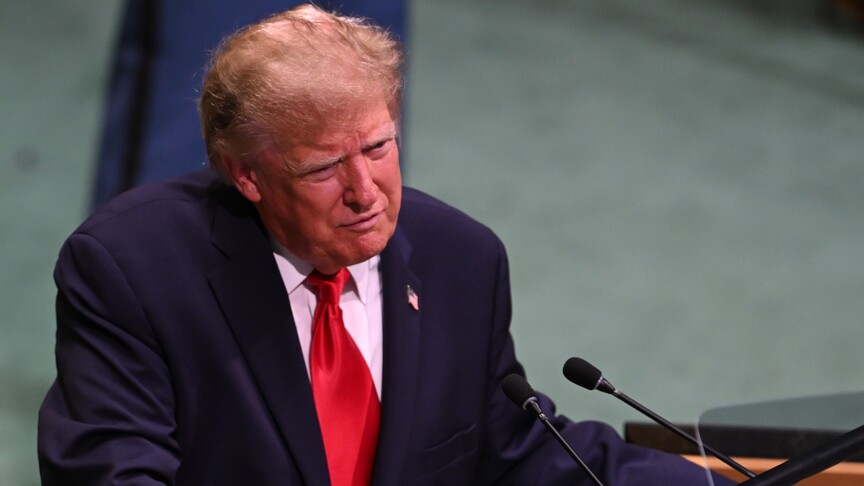

Elsewhere on the site
 Politics•4 min readIran Ready for War and Diplomacy, Foreign Minister Says
 Politics•3 min readTrump predicts end of Iran war and oil price drop
 Business & Economy•3 min readBessent: Iran's final oil shipments to China due in two weeks
 Politics•4 min readIran's President Willing to Dilute Uranium, Seeks Deal with US