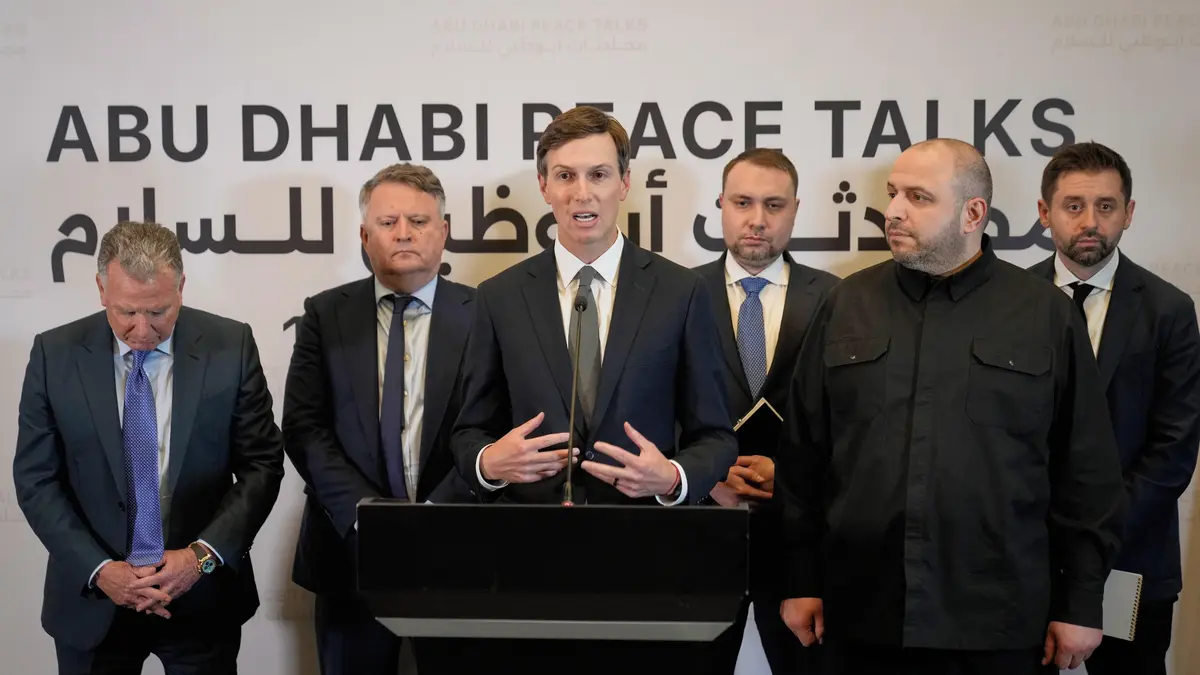
G7 ministers issue joint declaration condemning Russia and Iran
Ministers met in Paris to release a 12-page statement on global security issues.
AI-assisted coverage comparison, editor-supervised · How this was made

Rússia faz mega-ataque contra a Ucrânia
Photograph: UOL (embedded from source)
What this story says
- G7 foreign ministers released a 12-page joint declaration on 11 November 2026 in Paris.
- The declaration condemns Russian attacks on Ukraine and Iranian actions against neighbouring countries.
- It calls for a comprehensive cease-fire in Ukraine and urges Iran to cease attacks on shipping in the Strait of Hormuz.
- The statement also addressed issues including artificial intelligence, critical minerals, and hybrid warfare.
Who covered it
Percentages are shares of the 7 outlets carrying a published leaning rating. 4 of the 11 outlets we know ran this story carry no rating and are not counted in them. Coverage measured .
Trust
86/100
Craft
95/100
Hype
12/100
11 sources · methodology
Thin on the left so far
Only 1 of the 7 outlets with a published leaning rating that ran this story are rated left.
This story is still being watched, so it is a count and not yet a finding. Coverage keeps arriving for hours after an event, and a side that has published nothing this morning may publish by tonight. If it is still true when we stop checking, we will say so plainly.
G7 foreign ministers issued a 12-page joint declaration on 11 November 2026 following a meeting in Paris. The statement condemned Russian attacks on Ukraine and Iranian actions against neighbouring countries. It also called for a comprehensive cease-fire in Ukraine and urged Iran to stop attacks on shipping in the Strait of Hormuz.
The declaration addressed a range of global security issues. It condemned Russian attacks on residential buildings, civilian infrastructure, and cultural heritage in Ukraine, and called for pressure on Russia's war economy. The ministers expressed solidarity with the Ukrainian population and advocated for suspending attacks on energy infrastructure and the Black Sea. The statement also condemned military assistance to Russia from North Korea and Iran, and the supply of armaments and dual-use components from China.
Regarding Iran, the G7 ministers "vehemently" condemned attacks on neighbouring countries and the obstruction of the Strait of Hormuz, which they stated harms global trade and energy security. They called for Tehran to cease attacks on civilian vessels and opposed any illegal tolls or limitations on transit. The declaration also reaffirmed that Iran must not be allowed to develop or acquire nuclear weapons and demanded full cooperation with the International Atomic Energy Agency.
Disagreements in reporting
The nationalsecurityjournal.org digest stated that President Donald Trump is pursuing an open-ended campaign of economic pressure against Iran, considering two options: a major re-escalation or a negotiated settlement. The Mehr News Agency digest stated that the G7 foreign ministers made "unilateral requests" to Iran, without mentioning "illegal aggressions by the US and the Zionists against Iran."
What the coverage left out
None of the right-rated digests mention the G7's call for a comprehensive cease-fire in Ukraine. The centre-rated digest does not mention the G7's condemnation of Russian attacks on Ukraine or the specific details of the G7's stance on Iran's actions in the Strait of Hormuz.
Still developing. We have re-checked which outlets are covering this 6 times, most recently on 12 Nov 2026, 10:45, and will add the sides that appear.
How each side covered it
Our own reading of the reporting listed below, written from the outlets’ articles rather than quoted from them. The reasoning is set out on our methodology page.
Left
1 rated outlet
- The left-rated report from UOL led with the G7 "dribbling past impasse" to release a joint communiqué. It highlighted the declaration's condemnation of Russian attacks on Ukraine and Iranian attacks on neighbouring countries. The report detailed the G7's stance on European participation in continental security negotiations and its criticism of non-market and coercive policies, particularly concerning critical minerals. It also noted the vagueness of the section on artificial intelligence, stating there was no concrete commitment and mentioning American resistance to international agreements. The report mentioned Brazil's inclusion in a new G7+ Ports Network to combat drug trafficking.
Centre
2 rated outlets
- The centre-rated digest from nationalsecurityjournal.org focused on President Donald Trump's strategy regarding Iran. Its headline stated that Iran had received proof of a "deeper problem" and that Trump would use "massive economic pressure to make Tehran pay." The digest indicated that Trump was pursuing economic pressure rather than a renewed military campaign or accepting Iran's demands, and had considered options of re-escalation or a negotiated settlement.
Right
4 rated outlets
- The right-rated digests from Jewish News Syndicate, Cleveland Jewish News, Hudson Institute, and Mehr News Agency focused on Iran. The Jewish News Syndicate and Cleveland Jewish News digests stated that G7 foreign ministers committed to economic and political pressure on the Iranian regime, decrying its "violent plots against many of our citizens and territories." The Hudson Institute digest highlighted Senator Rubio touting Trump's Iran strategy as G7 leaders met. The Mehr News Agency digest framed the G7 foreign ministers' requests to Iran as "unilateral" and criticised the lack of mention of "illegal aggressions by the US and the Zionists against Iran."
Questions about this coverage
- How did the left and right cover G7 ministers issue joint declaration condemning Russia and Iran?
- Of the 7 outlets on this story carrying a published leaning rating, 14% are rated left, 29% are rated centre, 57% are rated right. Those percentages are shares of the rated outlets, not of every outlet that ran it, which was 11. The sections above set out what each side emphasised, in its own terms.
- Is G7 ministers issue joint declaration condemning Russia and Iran left or right?
- Too few of the outlets on this story carry a published leaning rating to say. 7 of them do, and this site does not characterise a field under 12: at that size one newsroom filing moves the share by ten points. The percentages above are the count as it stands.
- Is the coverage of G7 ministers issue joint declaration condemning Russia and Iran biased?
- G7 ministers issue joint declaration condemning Russia and Iran is one event reported by 11 outlets, and this page does not rate the story as biased or unbiased. What it publishes is the spread: which outlets ran it, where named rating organisations place each of them on the spectrum, and what each side chose to lead with. A leaning rating describes an outlet's record over time, not this article, and the two should not be run together.
- Which side is not reporting G7 ministers issue joint declaration condemning Russia and Iran?
- When we first saw this story, outlets rated left had barely covered it. Coverage accretes for hours after an event, so that is where to look rather than a verdict — the split above is the current count, and it is the one to read.
- Which outlets covered G7 ministers issue joint declaration condemning Russia and Iran?
- 11 that we know of, every one of them listed further up this page with a link to its own report and to what we hold on the publisher. Nothing here is a summary of somebody else's summary: the outlets are named so the original reporting can be read.
- When and where did the G7 foreign ministers meet?
- The G7 foreign ministers met in Paris on 9-10 November 2026. They issued a joint declaration on 11 November 2026.
- What did the G7 declaration condemn?
- The declaration condemned Russian attacks on Ukraine and Iranian attacks on neighbouring countries and shipping in the Strait of Hormuz. It also condemned military assistance to Russia from North Korea and Iran, and the supply of armaments from China.
- What did the G7 call for regarding Ukraine?
- The G7 called for a comprehensive, full, and reciprocal cease-fire in Ukraine. They also advocated for suspending attacks on energy infrastructure and the Black Sea, and for pressure on Russia's war economy.
- What issues were covered in the G7 declaration besides Ukraine and Iran?
- The declaration also addressed artificial intelligence, critical minerals, hybrid warfare, and international security architecture. It mentioned cooperation on combating drug trafficking and the expansion of the G7+ Alliance for Critical Minerals Resilience and Production.
Read it at the source
11 outlets, grouped by the leaning a published rating gives them. Every headline links to the original; an underlined outlet name opens our profile of that publisher.
Left
1Centre
2- Iran Just Got Handed Proof of a Deeper Problem: Trump Will Now Use Massive Economic Pressure to Make Tehran Pay (opens nationalsecurityjournal.org in a new tab)
nationalsecurityjournal.org — is nationalsecurityjournal.org biased? Our profile of this outletOpinion
- G7 Foreign Ministers' Joint Declaration: Strongly Opposes Attempts to Unilaterally Change the Status Quo in the Taiwan Strait, East China Sea, and South China Sea (opens 美国之音 in a new tab)
美国之音
Right
4- G7 foreign ministers say they commit to economic, political pressure on Iranian regime (opens Jewish News Syndicate in a new tab)
Jewish News Syndicate — is Jewish News Syndicate biased? Our profile of this outlet
- G7 foreign ministers say they commit to economic, political pressure on Iranian regime (opens Cleveland Jewish News in a new tab)
Cleveland Jewish News — is Cleveland Jewish News biased? Our profile of this outlet
- Rubio Touts Trump’s Iran Strategy as G7 Leaders Meet in Paris (opens Hudson Institute in a new tab)
Hudson Institute — is Hudson Institute biased? Our profile of this outlet
- Unilateral Requests From G7 Foreign Ministers to Iran (opens Mehr News Agency in a new tab)
Mehr News Agency — is Mehr News Agency biased? Our profile of this outlet
Not rated
4- G7 Expresses ‘Grave Concern’ Over Iranian Involvement in Plots, Including UK’s RAF Fairford (opens KAYHAN LIFE in a new tab)
KAYHAN LIFE — is KAYHAN LIFE biased? Our profile of this outlet
- G7 foreign ministers in Paris: joint declaration on Ukraine, Iran, Hormuz and Taiwan (opens GEOPOLITIKI in a new tab)
GEOPOLITIKI — is GEOPOLITIKI biased? Our profile of this outlet
- Joint declaration following the G7 Foreign Ministers' Meeting in Paris (opens GOV.UK in a new tab)
- G7 Dribla Impasse and Release Joint Communiqué (opens Folha de S.Paulo in a new tab)
Folha de S.Paulo — is Folha de S.Paulo biased? Our profile of this outlet
How did this read?
About the coverage, not about the story. We do not ask whether you agree with what happened — we have no honest use for that answer.