US economic pressure on Iran, Treasury Sec. Bessant says Hormuz may be worthless
Six months after the conflict began, the United States has combined a naval blockade with harsher sanctions, prompting Iranian insiders to say the squeeze is eroding Tehran's leverage over the Strait of Hormuz
AI-assisted coverage comparison, editor-supervised · How this was made
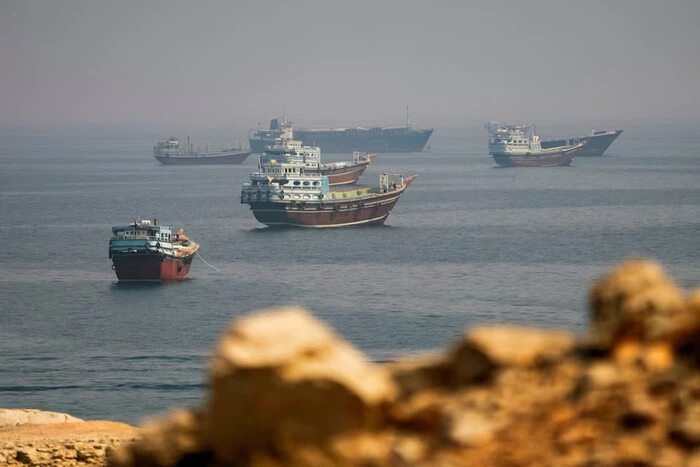
US economic pressure on Iran, Treasury Sec. Bessant says Hormuz may be worthless
Photograph: Unknown (embedded from source)
What this story says
- The United States launched a massive economic campaign against Iran six months after the conflict started
- Washington paired a naval blockade of the Strait of Hormuz with tougher sanctions that cut oil revenue and restrict currency access
- Treasury Secretary Bessant warned at the G20 that the Strait could become a worthless waterway within two years
- Iranian insiders say the economic pressure is making it harder for Tehran to withstand the squeeze
Who covered it
Percentages are shares of the 14 outlets carrying a published leaning rating. 17 of the 31 outlets we know ran this story carry no rating and are not counted in them. Coverage measured .
Trust
39/100
Craft
69/100
Hype
30/100
31 sources · methodology
Missing from the left
Only 3 of the 14 outlets with a published leaning rating that ran this story are rated left.
A reader who follows the left would not have seen this. We report the absence rather than explain it: outlets choose what to cover for many reasons, and we have no evidence about which one applies here.
Six months after the conflict began, the United States started a large‑scale economic campaign against Iran. The effort combines a naval blockade of the Strait of Hormuz with expanded sanctions that cut oil revenue and restrict Iran's access to foreign currency.
At the G20 finance ministers' summit, Treasury Secretary Bessant said the pressure could render the Strait of Hormuz a "worthless body of water" within two years. Iranian insiders have said the economic squeeze is making it increasingly difficult for Tehran to endure the pressure.
The combined measures are intended to force Iran to change its behaviour regarding the Hormuz passage, and analysts note that the reduction in Tehran's leverage could shift regional dynamics.
What the coverage left out
None of the left‑rated, centre‑rated or right‑rated digests mention the "de‑Hormuzization" concept described in an unrelated source, nor do any of them provide a cost estimate for the U.S. economic campaign.
two years
Predicted timeline for Hormuz to become worthless
Bessant said at the G20 finance ministers' summit
Coverage settled. We checked this 9 times and stopped on 12 Sept 2026, 10:00. The figures above are what it finished at.
How each side covered it
Our own reading of the reporting listed below, written from the outlets’ articles rather than quoted from them. The reasoning is set out on our methodology page.
Left
3 rated outlets
- The left‑rated digest from Al‑Monitor led on the idea that the tide may be turning against Iran. It described the United States' action as an unprecedented economic offensive aimed at achieving what military force could not, and it carried the Iranian‑insider view that the pressure is hardening Tehran's ability to withstand the squeeze.
Centre
5 rated outlets
- The centre‑rated digests from the Japan Times and WTVB highlighted the severity of the economic squeeze, calling it one of the harshest in the Islamic Republic's history after years of surviving sanctions. Both carried the basic facts of the U.S. naval blockade, the tougher sanctions, and the Iranian‑insider comment about the growing difficulty of withstanding the pressure.
Right
6 rated outlets
- The right‑rated digests from Al Arabiya, Regional Media News, the Times of India and the Straits Times all led on the notion that the United States is unleashing an unprecedented economic offensive that may be turning the tide against Iran. They noted the naval blockade, the new sanctions, and quoted Iranian insiders about the increasing hardship. The Times of India also added that officials hope the strains will lead to political consequences and possible regime change in Iran.
Questions about this coverage
- How did the left and right cover US economic pressure on Iran, Treasury Sec. Bessant says Hormuz may be…?
- Of the 14 outlets on this story carrying a published leaning rating, 21% are rated left, 36% are rated centre, 43% are rated right. Those percentages are shares of the rated outlets, not of every outlet that ran it, which was 31. The sections above set out what each side emphasised, in its own terms.
- Is US economic pressure on Iran, Treasury Sec. Bessant says Hormuz may be… left or right?
- Neither side dominates it. Of the 14 rated outlets on this story, 21% are rated left, 36% are rated centre, 43% are rated right, and no side holds the 70% this site would want before calling a field one-sided. A story is not left or right in any case; the outlets that carried it are what carry ratings.
- Is the coverage of US economic pressure on Iran, Treasury Sec. Bessant says Hormuz may be… biased?
- US economic pressure on Iran, Treasury Sec. Bessant says Hormuz may be worthless is one event reported by 31 outlets, and this page does not rate the story as biased or unbiased. What it publishes is the spread: which outlets ran it, where named rating organisations place each of them on the spectrum, and what each side chose to lead with. A leaning rating describes an outlet's record over time, not this article, and the two should not be run together.
- Which side is not reporting US economic pressure on Iran, Treasury Sec. Bessant says Hormuz may be…?
- When we first saw this story, outlets rated left had barely covered it. Coverage accretes for hours after an event, so that is where to look rather than a verdict — the split above is the current count, and it is the one to read.
- Which outlets covered US economic pressure on Iran, Treasury Sec. Bessant says Hormuz may be…?
- 31 that we know of, every one of them listed further up this page with a link to its own report and to what we hold on the publisher. Nothing here is a summary of somebody else's summary: the outlets are named so the original reporting can be read.
- What actions has the United States taken against Iran?
- The United States has begun an economic offensive that includes a naval blockade of the Strait of Hormuz and tougher sanctions that cut Iran's oil revenue and restrict its access to foreign currency, aiming to pressure Tehran over the Hormuz passage.
- What did Treasury Secretary Bessant predict about the Strait of Hormuz?
- At the G20 finance ministers' summit, Bessant warned that the Strait of Hormuz could become a worthless body of water within two years if the current economic pressure on Iran continues.
- How are Iranian insiders describing the impact of the pressure?
- Iranian insiders say the unprecedented economic squeeze is making it increasingly difficult for Tehran to withstand the pressure, suggesting that Iran's leverage over the Hormuz passage is eroding.
- Did any of the reports mention a cost for the U.S. campaign?
- No, none of the left‑rated, centre‑rated or right‑rated digests provide a cost estimate for the United States' economic campaign against Iran.
Read it at the source
31 outlets, grouped by the leaning a published rating gives them. Every headline links to the original; an underlined outlet name opens our profile of that publisher.
Left
3- Does the US Tactic Work? Iran's Influence in the Strait of Hormuz Is Beginning to Wane, (opens rbc.ua in a new tab)
- Iran's Influence in Hormuz Is Decreasing (opens in.gr in a new tab)
- Analysis-Iran's Hormuz leverage wanes as US economic squeeze bites (opens Al-Monitor in a new tab)
Al-Monitor — is Al-Monitor biased? Our profile of this outlet
Centre
5- Iran Has Miscalculated: Time Is No Longer in Its Favour (opens Corriere Della Sera in a new tab)
Corriere Della Sera — is Corriere Della Sera biased? Our profile of this outletOpinion
- Iran’s Oil Dollars Are Drying Up (opens Political Wire in a new tab)
Political Wire — is Political Wire biased? Our profile of this outlet
- Iran’s Hormuz leverage wanes as U.S. economic squeeze bites (opens The Japan Times in a new tab)
The Japan Times — is The Japan Times biased? Our profile of this outlet
- Analysis-Iran’s Hormuz leverage wanes as US economic squeeze bites (opens WTVB in a new tab)
- Iran's Hormuz leverage wanes as US economic squeeze bites (opens Reuters in a new tab)
Right
6- Iran's Hormuz leverage in question as US sanctions begin to bite (opens Daily Sabah in a new tab)
Daily Sabah — is Daily Sabah biased? Our profile of this outlet
- Iran’s Funding Cut Off by US Blockade… ‘Hormuz Card’ Backfires (opens 조선일보 in a new tab)
조선일보
- Iran’s Hormuz leverage wanes as US economic squeeze bites (opens Al Arabiya in a new tab)
Al Arabiya — is Al Arabiya biased? Our profile of this outlet
- Analysis-Iran’s Hormuz leverage wanes as US economic squeeze bites - Regional Media News (opens regionalmedianews.com in a new tab)
regionalmedianews.com — is regionalmedianews.com biased? Our profile of this outlet
- Iran's Hormuz leverage wanes as US economic squeeze bites (opens Times of India in a new tab)
Times of India — is Times of India biased? Our profile of this outlet
- Iran's Hormuz leverage wanes as US economic squeeze bites (opens The Straits Times in a new tab)
The Straits Times — is The Straits Times biased? Our profile of this outlet
Not rated
17- An Economic Crisis Is Looming in Iran: It Is Losing Its Influence in the Strait of Hormuz! (opens Haber7 in a new tab)
- Iran's Influence in Hormuz Is Waning: the Economic Crisis in the Country Deepens (opens ekonomim.com in a new tab)
ekonomim.com — is ekonomim.com biased? Our profile of this outlet
- Iran's Power over the Strait of Hormuz Is Retreating with the Impact of American Economic Pressure. (opens القدس العربي in a new tab)
القدس العربي
- Iran's Economy Is in Serious Crisis Due to US Sanctions and Maritime Blockade, Where Bargaining Power Is Declining (opens 大紀元時報 in a new tab)
大紀元時報
- Iran's Dominance in Hormuz Is Weakening (opens Norge IDAG in a new tab)
Norge IDAG — is Norge IDAG biased? Our profile of this outlet
- U.S. Economic Pressure Weakens Iran · Global Voices (opens El Economista in a new tab)
El Economista — is El Economista biased? Our profile of this outlet
- US Economic Pressure Could Force Iran to Make Concessions in War (opens Unknown in a new tab)
Unknown
- US Blockade and Sanctions Put Pressure on Iran's Economy, Putting the Strait of Hormuz at Stake (opens SINDOnews.com in a new tab)
SINDOnews.com — is SINDOnews.com biased? Our profile of this outlet
Show 9 more
- Iran's Influence in Strait of Hormuz Diminishes Due to US Economic Pressure (opens Unknown in a new tab)
Unknown
- Due to Pressure From Washington: Iran Begins to Lose Influence on the Strait of Hormuz (opens Unknown in a new tab)
Unknown
- Iran’s Hormuz leverage wanes as US economic squeeze bites (opens Islamabad Post in a new tab)
Islamabad Post — is Islamabad Post biased? Our profile of this outlet
- Iran’s Hormuz leverage wanes as US economic squeeze bites – Ya Libnan (opens yalibnan.com in a new tab)
yalibnan.com — is yalibnan.com biased? Our profile of this outlet
- Iran's Hormuz leverage wanes (opens Egyptian Gazette in a new tab)
Egyptian Gazette — is Egyptian Gazette biased? Our profile of this outlet
- ANALYSIS-Iran's Hormuz Leverage Wanes as US Economic Squeeze Bites (opens KAYHAN LIFE in a new tab)
KAYHAN LIFE — is KAYHAN LIFE biased? Our profile of this outlet
- Iran's Hormuz leverage wanes as US economic squeeze bites (opens BizToc in a new tab)
- QBaidu: Will Iran's Hormuz Brand Become Increasingly Worthless? (opens Unknown in a new tab)
Unknown
- QBaidu: Will Iran's Hormuz Card Become Increasingly Worthless? (opens 大纪元 Epoch Times in a new tab)
大纪元 Epoch Times — is 大纪元 Epoch Times biased? Our profile of this outlet
How did this read?
About the coverage, not about the story. We do not ask whether you agree with what happened — we have no honest use for that answer.
More in Conflict & Security
All Conflict & Security →


Elsewhere on the site
![Vessels are seen anchored in Iran's Bandar Abbas along the Strait of Hormuz on June 18, 2026 [File: Amirhossein Khorgooei/ISNA/AFP]](https://www.aljazeera.com/wp-content/uploads/2026/10/AFP__20260618__B7HW7UM__v1__HighRes__IranUsIsraelWarTransportHormuz-1792534509.jpg?resize=1920%2C1440) Politics•2 min readMarco Rubio says peace deal with Iran hard as Iran keeps Hormuz closed
Politics•2 min readMarco Rubio says peace deal with Iran hard as Iran keeps Hormuz closed Politics•4 min readLavrov and Araghchi Affirm Russia-Iran Ties Amid Regional Tensions
 Politics•1 min readMojtaba Khamenei met Speaker Kalibaf amid war concerns
 Politics•3 min readNetanyahu told Trump of plan to eliminate Iran's regime