Deepfake network spreads divisive content, report says
McGill University study details use of fake videos on social media platforms
AI-assisted coverage comparison, editor-supervised · How this was made
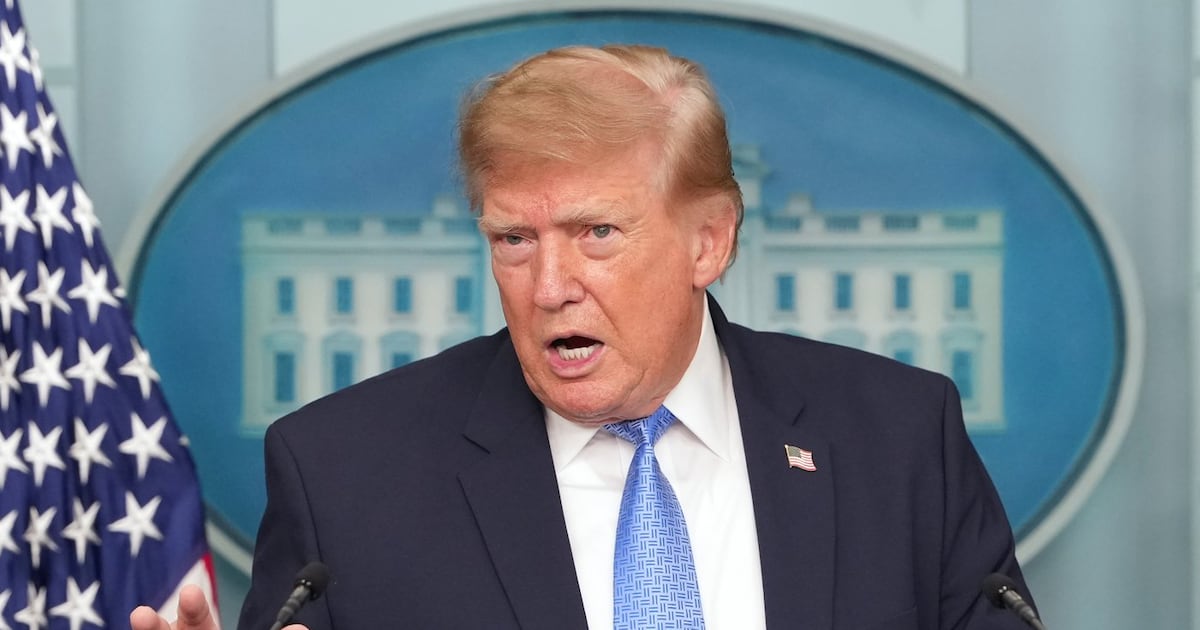
President Donald Trump speaks in the James Brady Press Briefing Room at the White House on Monday, Nov. 9, 2026, in Washington. (AP Photo/Alex Brandon)
Photograph: CTV News (embedded from source)
What this story says
- A network likely operating outside Canada is using deepfake videos of real influencers to spread politically divisive content, a McGill University report states.
- Many of the videos focus on the U.S.-Canada trade war, with some containing false information.
- The network comprises nearly 300 TikTok and Instagram accounts that have posted over 3,201 videos, accumulating 22.1 million views in three months.
- The report from McGill University’s Centre for Media, Technology and Democracy does not identify who is behind the network but suggests it is run from outside North America.
Who covered it
Percentages are shares of the 16 outlets carrying a published leaning rating. 1 of the 17 outlets we know ran this story carry no rating and are not counted in them. Coverage measured .
Trust
42/100
Craft
57/100
Hype
41/100
17 sources · methodology
Thin on the right so far
None of the 16 outlets with a published leaning rating that ran this story are rated right.
This story is still being watched, so it is a count and not yet a finding. Coverage keeps arriving for hours after an event, and a side that has published nothing this morning may publish by tonight. If it is still true when we stop checking, we will say so plainly.
A network likely based outside of Canada is using deepfake videos to spread politically divisive content, according to a report by McGill University’s Centre for Media, Technology and Democracy. The videos feature real influencers and many focus on the U.S.-Canada trade war, with some containing false information. One video about a non-existent ultimatum from former U.S. President Donald Trump was viewed more than five million times.
The network operates across nearly 300 TikTok and Instagram accounts, having posted more than 3,201 videos. These videos have collectively been seen 22.1 million times in the past three months. The report states it is unclear who is behind the network, but it is "almost certainly" run from outside North America.
Coverage comparison
The reports agree that a network is using deepfakes of real influencers to spread politically divisive content, with many videos focusing on the U.S.-Canada trade war. They also agree on the scale of the network, citing nearly 300 social media accounts and over 3,201 videos viewed 22.1 million times in three months. The reports also agree that the network is likely based outside Canada and North America, and that its operators are unknown.
What the coverage left out
No right-rated reports covered this story.
Still developing. We have re-checked which outlets are covering this 2 times, most recently on 12 Nov 2026, 20:15, and will add the sides that appear.
How each side covered it
Our own reading of the reporting listed below, written from the outlets’ articles rather than quoted from them. The reasoning is set out on our methodology page.
Left
12 rated outlets
- The left-rated reports led with the existence of a network using deepfakes to spread "politically divisive" content. They reported that the network uses deepfakes of real influencers and that many videos focus on the U.S.-Canada trade war. The reports also included details on the network's size, stating it comprises nearly 300 TikTok and Instagram accounts and has posted over 3,201 videos seen 22.1 million times in three months. The origin of the network was noted as likely being outside Canada, with its operators unknown.
Centre
4 rated outlets
- The centre-rated reports highlighted that a network is using deepfakes of real influencers to spread "politically divisive" content, with many videos focusing on the U.S.-Canada trade war. They reported the network's scale, noting nearly 300 TikTok and Instagram accounts and over 3,201 videos viewed 22.1 million times in three months. The reports also stated the network is likely based outside Canada and that its operators are unknown.
Right
0 rated outlets
No outlet rated right has run this story so far. We are still checking, and will say plainly if that does not change.
Questions about this coverage
- How did the left and right cover Deepfake network spreads divisive content, report says?
- Of the 16 outlets on this story carrying a published leaning rating, 75% are rated left, 25% are rated centre, 0% are rated right. Those percentages are shares of the rated outlets, not of every outlet that ran it, which was 17. The sections above set out what each side emphasised, in its own terms.
- Is Deepfake network spreads divisive content, report says left or right?
- The story itself is neither. What can be counted is who has covered it, and 75% of the 16 rated outlets on it are rated left — so far this is a story carried mostly by the left. Coverage is still arriving and that can change, which is why the figure is dated rather than fixed.
- Is the coverage of Deepfake network spreads divisive content, report says biased?
- Deepfake network spreads divisive content, report says is one event reported by 17 outlets, and this page does not rate the story as biased or unbiased. What it publishes is the spread: which outlets ran it, where named rating organisations place each of them on the spectrum, and what each side chose to lead with. A leaning rating describes an outlet's record over time, not this article, and the two should not be run together.
- Which side is not reporting Deepfake network spreads divisive content, report says?
- When we first saw this story, outlets rated right had barely covered it. Coverage accretes for hours after an event, so that is where to look rather than a verdict — the split above is the current count, and it is the one to read.
- Which outlets covered Deepfake network spreads divisive content, report says?
- 17 that we know of, every one of them listed further up this page with a link to its own report and to what we hold on the publisher. Nothing here is a summary of somebody else's summary: the outlets are named so the original reporting can be read.
- What is the report about?
- A report from McGill University's Centre for Media, Technology and Democracy states that a network likely based outside Canada is using deepfake videos of real influencers to spread politically divisive content. Many of these videos focus on the U.S.-Canada trade war and contain false information.
- How large is this network?
- The network includes nearly 300 TikTok and Instagram accounts that have posted more than 3,201 videos. These videos have collectively been viewed 22.1 million times in the past three months, according to the report.
- Who is behind the network?
- The report from McGill University states that it is not clear who is behind the deepfake network. However, the report suggests that the network is almost certainly run from outside of North America.
Read it at the source
17 outlets, grouped by the leaning a published rating gives them. Every headline links to the original; an underlined outlet name opens our profile of that publisher.
Left
12- Network of deepfake videos spreading falsehoods about trade war with U.S.: report (opens InnisfilToday.ca in a new tab)
InnisfilToday.ca — is InnisfilToday.ca biased? Our profile of this outlet
- Network of deepfake videos spreading falsehoods about trade war with U.S.: report (opens ElliotLakeToday.com in a new tab)
ElliotLakeToday.com — is ElliotLakeToday.com biased? Our profile of this outlet
- Network of deepfake videos spreading falsehoods about trade war with U.S.: report (opens Sudbury in a new tab)
- Network of deepfake videos spreading falsehoods about trade war with U.S.: report (opens Thorold Today in a new tab)
Thorold Today — is Thorold Today biased? Our profile of this outlet
- Network of deepfake videos spreading falsehoods about trade war with U.S.: report (opens Collingwood Today in a new tab)
Collingwood Today — is Collingwood Today biased? Our profile of this outlet
- Network of deepfake videos spreading falsehoods about trade war with U.S.: report (opens Orillia Matters in a new tab)
Orillia Matters — is Orillia Matters biased? Our profile of this outlet
- Network of deepfake videos spreading falsehoods about trade war with U.S.: report (opens SooToday.com in a new tab)
SooToday.com — is SooToday.com biased? Our profile of this outlet
- Network of deepfake videos spreading falsehoods about trade war with U.S.: report (opens Coast Reporter in a new tab)
Coast Reporter — is Coast Reporter biased? Our profile of this outlet
Show 4 more
- Network of deepfake videos spreading falsehoods about trade war with U.S.: report (opens Rocky Mountain Outlook in a new tab)
Rocky Mountain Outlook — is Rocky Mountain Outlook biased? Our profile of this outlet
- Network of deepfake videos spreading falsehoods about trade war with U.S.: report (opens The Toronto Star in a new tab)
The Toronto Star — is The Toronto Star biased? Our profile of this outlet
- Network of deepfake videos spreading falsehoods about trade war with U.S.: report (opens The Record in a new tab)
The Record — is The Record biased? Our profile of this outlet
- Network of deepfake videos spreading falsehoods about trade war with U.S.: report (opens The Hamilton Spectator in a new tab)
The Hamilton Spectator — is The Hamilton Spectator biased? Our profile of this outlet
Centre
4- A deepfake video network is spreading false information about the U.S. trade war: report (opens CTV News in a new tab)
- Network of deepfake videos spreading falsehoods about trade war with U.S.: report (opens Narcity in a new tab)
- Network of deepfake videos spreading falsehoods about trade war with U.S.: report (opens CFJC Today Kamloops in a new tab)
CFJC Today Kamloops — is CFJC Today Kamloops biased? Our profile of this outlet
- Network of deepfake videos spreading falsehoods about trade war with U.S.: report (opens Winnipeg Free Press in a new tab)
Winnipeg Free Press — is Winnipeg Free Press biased? Our profile of this outlet
Right
0No outlet in this group ran the story.
Not rated
1How did this read?
About the coverage, not about the story. We do not ask whether you agree with what happened — we have no honest use for that answer.
More in Media
All Media →
Elsewhere on the site
 Politics•1 min readTrump threatens to double Mexico tariffs over migrant caravans
 Politics•3 min readTen House Democrats to Back Trump Impeachment Effort
 Politics•3 min readJim Jordan warns of Democratic 'lawfare' and investigations
 Conflict & Security•3 min readRubio and Wang Yi Discussed Denuclearisation and Summits