Amazon Indigenous Communities Fear Voting Barred by Transport Denial
Electoral court rejects indigenous group's request for transport aid for Javari Valley residents.
AI-assisted coverage comparison, editor-supervised · How this was made
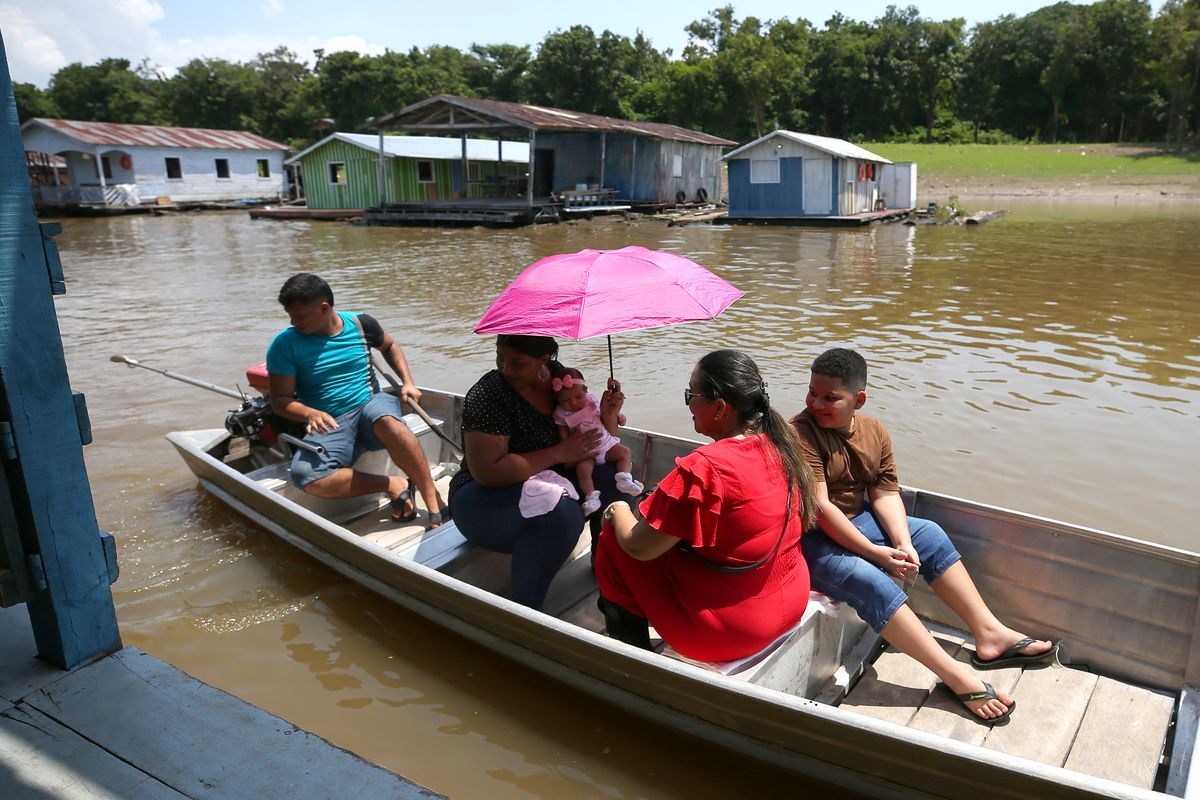
Amazon Indigenous Communities Fear Voting Barred by Transport Denial
Photograph: My Mother Lode (embedded from source)
What this story says
- Indigenous people in the Brazilian Amazon fear they will be unable to vote in the second round of elections.
- The Amazonas Electoral Justice denied a request for transportation assistance from Univaja, an indigenous association.
- The court also blocked the free flow of river transport, water, and food to 43 indigenous villages in the Javari Valley on election day.
- This decision raises concerns that lack of access will prevent communities from participating in the vote.
Who covered it
Percentages are shares of the 16 outlets carrying a published leaning rating. 5 of the 21 outlets we know ran this story carry no rating and are not counted in them. Coverage measured .
Trust
64/100
Craft
77/100
Hype
15/100
21 sources · methodology
Thin on the right so far
Only 3 of the 16 outlets with a published leaning rating that ran this story are rated right.
This story is still being watched, so it is a count and not yet a finding. Coverage keeps arriving for hours after an event, and a side that has published nothing this morning may publish by tonight. If it is still true when we stop checking, we will say so plainly.
Indigenous communities in the Brazilian Amazon are concerned that a lack of transportation will prevent them from voting in the second round of elections. The electoral tribunal of the state of Amazonas rejected a request for transport assistance submitted by Univaja, an association representing indigenous peoples of the Javari Valley. The Amazonas Electoral Justice denied the free flow of river transport, water, and food to indigenous people from 43 villages in the Javari Valley on the day of the vote.
Disagreement on details of the denial
Independent Español reported that the Amazonas Electoral Justice denied the free flow of river transport, water, and food to indigenous people from 43 villages in the Javari Valley on election day. Tribuna Online also stated that Amazonas Electoral Justice denied the free flow of river transport, water, and food to indigenous people from 43 villages in the Javari Valley on the day of the vote. Independent Español specified that the request for transportation assistance was submitted by Univaja, an association representing indigenous peoples of the Javari Valley, and was rejected on Tuesday. Tribuna Online did not name the requesting association or the day of the rejection.
Coverage by outlet
Independent Español's report stated that indigenous communities in the Brazilian Amazon fear the lack of transportation will prevent them from voting in Sunday's second round of elections. It noted the Amazonas Electoral Justice rejected a request for transportation assistance from Univaja, an association representing indigenous peoples of the Javari Valley. The outlet also reported that the Amazonas Electoral Justice denied the free flow of river transport, water, and food to indigenous people from 43 villages in the Javari Valley on election day.
Tribuna Online's report indicated that Amazonas Electoral Justice denied the free flow of river transport, water, and food to indigenous people from 43 villages in the Indigenous Land of the Javari Valley on the day of the vote for the second round of elections. The report included a photograph credited to Public Agency/Disclosure.
What the coverage left out
Neither Independent Español nor Tribuna Online mentioned the specific date of the second round of elections. The reports did not include any statements from Univaja or other indigenous representatives regarding the denial of transport assistance.
Still developing. We have re-checked which outlets are covering this 4 times, most recently on 21 Oct 2026, 04:45, and will add the sides that appear.
How each side covered it
Our own reading of the reporting listed below, written from the outlets’ articles rather than quoted from them. The reasoning is set out on our methodology page.
Left
9 rated outlets
- The left‑rated outlets reported that Indigenous communities in the Brazilian Amazon said they could miss the runoff election because the Amazonas state electoral court refused a request for transport assistance. Associated Press News, Oskaloosa Herald, The Independent, The Independent (US), The Toronto Star and WellandTribune.ca all led on this concern. CartaCapital and UOL also led on the same concern.
- Several digests added that the petition was filed by Univaja, an association representing Indigenous peoples, and that the judge said the request was submitted after the deadline and that resources to move and feed voters in the Valley of Javari were lacking. UOL’s digest noted that legal steps were not completed in time.
- Only CartaCapital’s digest mentioned an estimate of the cost to relocate and feed voters; the other seven digests did not include any cost figure. None of the digests quoted Indigenous leaders or provided a government response, so those perspectives are absent from the left‑rated coverage.
Centre
4 rated outlets
- All three centre outlets reported that Indigenous communities in Brazil’s Amazon fear they will be unable to vote in Sunday’s runoff because the Amazonas state electoral court rejected a petition for transport assistance. Each piece noted the petition was filed by Univaja, an association representing Javari Valley Indigenous peoples.
- The My Mother Lode report added that some voters live up to 895 km from polling stations, requiring three‑to‑five‑day boat journeys. It quoted Indigenous lawyer Eliesio Marubo saying “the right to vote” is constitutionally guaranteed but not being ensured. The article also referenced past incidents in 2012 and 2014 involving fuel distribution and the establishment of local voting centres.
- Both Newsday and Winnipeg Free Press digests omitted the distance figures, the judge’s comment about aircraft transport, and the historical background cited by My Mother Lode. They also did not reproduce Marubo’s quotation or the earlier gasoline‑distribution episode, limiting their coverage to the basic claim of transport denial and the resulting voting concern.
Right
3 rated outlets
- Globo led on the Regional Electoral Court of the Amazon denying Univaja’s request for transport to 44 indigenous villages in the Javari Valley, while Owensboro Messenger‑Inquirer and Washington Times led on the same denial and the communities’ fear of missing the Sunday runoff. All three digests state the court rejected the petition.
- Globo’s digest adds that the denied request covered river transport, drinking water and food for the villages. The other two digests do not mention these logistical details. No outlet’s summary includes any statement from the court or from Univaja beyond the basic request.
- None of the right‑rated digests quote an indigenous leader, a court official, or provide a cost estimate for the transport. They also omit any discussion of broader electoral implications or government response beyond the denial. These omissions are evident across all three digests.
Questions about this coverage
- How did the left and right cover Amazon Indigenous Communities Fear Voting Barred by Transport Denial?
- Of the 16 outlets on this story carrying a published leaning rating, 56% are rated left, 25% are rated centre, 19% are rated right. Those percentages are shares of the rated outlets, not of every outlet that ran it, which was 21. The sections above set out what each side emphasised, in its own terms.
- Is Amazon Indigenous Communities Fear Voting Barred by Transport Denial left or right?
- Neither side dominates it. Of the 16 rated outlets on this story, 56% are rated left, 25% are rated centre, 19% are rated right, and no side holds the 70% this site would want before calling a field one-sided. A story is not left or right in any case; the outlets that carried it are what carry ratings.
- Is the coverage of Amazon Indigenous Communities Fear Voting Barred by Transport Denial biased?
- Amazon Indigenous Communities Fear Voting Barred by Transport Denial is one event reported by 21 outlets, and this page does not rate the story as biased or unbiased. What it publishes is the spread: which outlets ran it, where named rating organisations place each of them on the spectrum, and what each side chose to lead with. A leaning rating describes an outlet's record over time, not this article, and the two should not be run together.
- Which side is not reporting Amazon Indigenous Communities Fear Voting Barred by Transport Denial?
- When we first saw this story, outlets rated right had barely covered it. Coverage accretes for hours after an event, so that is where to look rather than a verdict — the split above is the current count, and it is the one to read.
- Which outlets covered Amazon Indigenous Communities Fear Voting Barred by Transport Denial?
- 21 that we know of, every one of them listed further up this page with a link to its own report and to what we hold on the publisher. Nothing here is a summary of somebody else's summary: the outlets are named so the original reporting can be read.
- Why are indigenous communities in the Brazilian Amazon concerned about voting?
- Indigenous communities in the Brazilian Amazon fear that a lack of transportation will prevent them from voting in the second round of elections. This concern follows the Amazonas Electoral Justice's denial of a request for transport assistance and the blocking of river transport, water, and food for 43 villages in the Javari Valley on election day.
- What did the Amazonas Electoral Justice decide regarding indigenous transport?
- The Amazonas Electoral Justice denied a request for transportation assistance submitted by Univaja, an association representing indigenous peoples of the Javari Valley. Additionally, the court blocked the free flow of river transport, water, and food to 43 indigenous villages in the Javari Valley on the day of the vote.
- Which indigenous association requested transport assistance?
- The association that requested transportation assistance was Univaja, which represents the indigenous peoples of the Javari Valley in northern Brazil. Their request was rejected by the electoral tribunal of the state of Amazonas.
Read it at the source
21 outlets, grouped by the leaning a published rating gives them. Every headline links to the original; an underlined outlet name opens our profile of that publisher.
Left
9- Indigenous voters in Brazil's Amazon fear missing runoff after court denies transportation (opens The Washington Post in a new tab)
The Washington Post — is The Washington Post biased? Our profile of this outlet
- Indigenous voters in Brazil’s Amazon fear missing runoff after court denies transportation (opens WellandTribune.ca in a new tab)
WellandTribune.ca — is WellandTribune.ca biased? Our profile of this outlet
- Indigenous voters in Brazil’s Amazon fear missing runoff after court denies transportation (opens The Toronto Star in a new tab)
The Toronto Star — is The Toronto Star biased? Our profile of this outlet
- Indigenous voters in Brazil's Amazon fear missing runoff after court denies transportation (opens The Independent (US) in a new tab)
The Independent (US) — is The Independent (US) biased? Our profile of this outlet
- Indigenous voters in Brazil's Amazon fear missing runoff after court denies transportation (opens The Independent in a new tab)
The Independent — is The Independent biased? Our profile of this outlet
- Indigenous voters in Brazil's Amazon fear missing runoff after court denies transportation (opens Oskaloosa Herald in a new tab)
Oskaloosa Herald — is Oskaloosa Herald biased? Our profile of this outlet
- Indigenous voters in Brazil's Amazon fear missing runoff after court denies transportation (opens Associated Press News in a new tab)
Associated Press News — is Associated Press News biased? Our profile of this outlet
- Electoral Justice Denies Transportation, Food and Water to Indigenous People in the Amazon (opens CartaCapital in a new tab)
CartaCapital — is CartaCapital biased? Our profile of this outlet
Centre
4- Indigenous voters in Brazil's Amazon fear missing runoff after court denies transportation (opens The New York Ledger in a new tab)
The New York Ledger — is The New York Ledger biased? Our profile of this outlet
- Indigenous voters in Brazil’s Amazon fear missing runoff after court denies transportation (opens My Mother Lode in a new tab)
My Mother Lode — is My Mother Lode biased? Our profile of this outlet
- Indigenous voters in Brazil's Amazon fear missing runoff after court denies transportation (opens Winnipeg Free Press in a new tab)
Winnipeg Free Press — is Winnipeg Free Press biased? Our profile of this outlet
- Indigenous voters in Brazil's Amazon fear missing runoff after court denies transportation (opens Newsday in a new tab)
Right
3- Indigenous voters in Brazil's Amazon fear missing runoff after court denies transportation (opens Washington Times in a new tab)
Washington Times — is Washington Times biased? Our profile of this outlet
- TRE-AM Denies Transportation to Natives of the Javari Valley in the Second Round (opens Globo in a new tab)
- Indigenous voters in Brazil's Amazon fear missing runoff after court denies transportation (opens Owensboro Messenger-Inquirer in a new tab)
Owensboro Messenger-Inquirer — is Owensboro Messenger-Inquirer biased? Our profile of this outlet
Not rated
5- Indigenous People in the Brazilian Amazon Fear that Lack of Transportation Will Prevent Them From Voting in the Ballot (opens Independent Español in a new tab)
Independent Español — is Independent Español biased? Our profile of this outlet
- Amazon Electoral Justice Denies Transportation to Voters From 44 Indigenous Villages in the 2nd Round (opens O Liberal in a new tab)
- AM Electoral Justice Denies Transportation, Water and Food for Indigenous People (opens Tribuna Online in a new tab)
Tribuna Online — is Tribuna Online biased? Our profile of this outlet
- With only Six Months in Court, Judge Rejects Request for Transportation, Water and Food for Indigenous People to Vote in AM (opens Direito News in a new tab)
Direito News — is Direito News biased? Our profile of this outlet
- TRE-AM Denies Free Transportation, Water and Food to Indigenous People in the 2nd Round (opens Metrópoles in a new tab)
Metrópoles — is Metrópoles biased? Our profile of this outlet
How did this read?
About the coverage, not about the story. We do not ask whether you agree with what happened — we have no honest use for that answer.