El-Sayed and Rogers Debate Economic Plans in Detroit
US Senate candidates discussed tariffs, AI, and housing affordability before Michigan business leaders.
AI-assisted coverage comparison, editor-supervised · How this was made
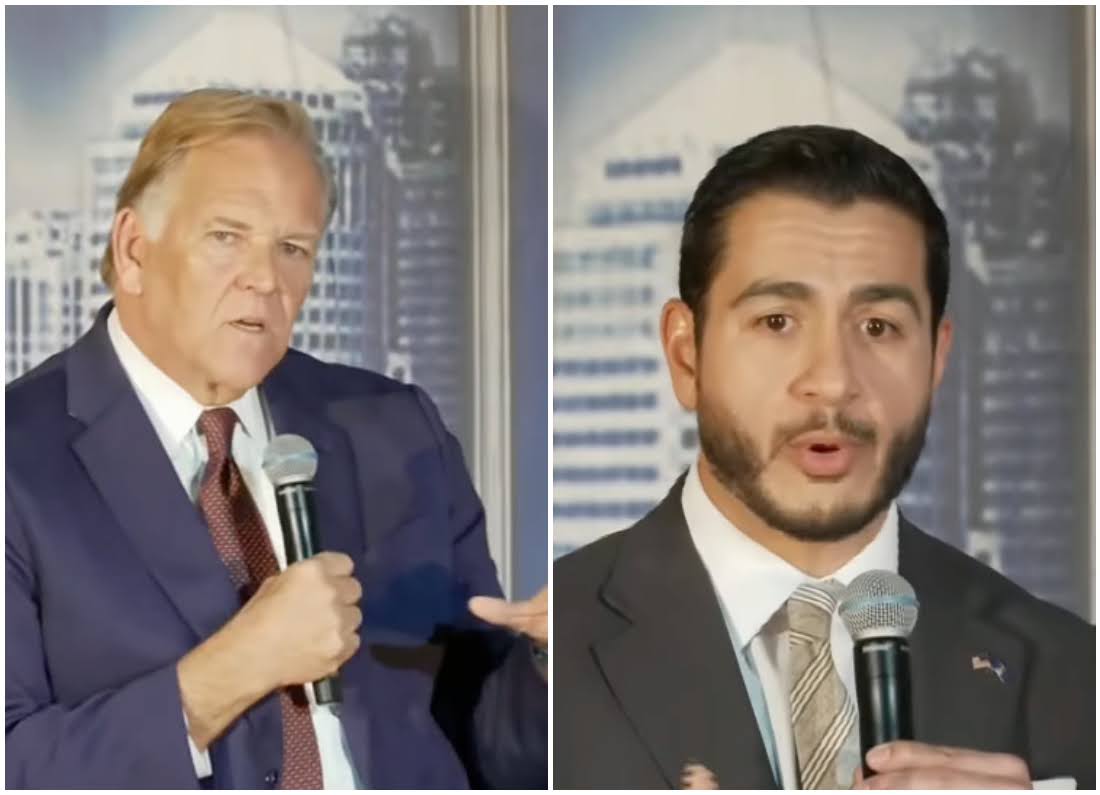
El-Sayed and Rogers Debate Economic Plans in Detroit
Photograph: Bridge Michigan (embedded from source)
What this story says
- Democratic Senate candidate Abdul El-Sayed and Republican Mike Rogers spoke to Detroit-area business leaders about economic policy.
- Both candidates discussed tariffs, with Rogers indicating a shift from past support of Trump administration policies.
- El-Sayed described the Trump administration's tariffs as 'chaotic' and 'hamfisted,' while Rogers noted some positive impacts of other tariffs.
- Affordable housing was identified by both candidates as a barrier to economic growth in Michigan.
Who covered it
Percentages are shares of the 11 outlets carrying a published leaning rating. 1 of the 12 outlets we know ran this story carry no rating and are not counted in them. Coverage measured .
Trust
48/100
Craft
60/100
Hype
20/100
12 sources · methodology
Thin on the right so far
Only 1 of the 11 outlets with a published leaning rating that ran this story are rated right.
This story is still being watched, so it is a count and not yet a finding. Coverage keeps arriving for hours after an event, and a side that has published nothing this morning may publish by tonight. If it is still true when we stop checking, we will say so plainly.
US Senate candidates Abdul El-Sayed and Mike Rogers addressed economic issues before Detroit-area business leaders on Tuesday. The candidates presented differing approaches to tariffs, artificial intelligence, and economic growth strategies for Michigan. Both acknowledged that affordable housing is a significant impediment to the state's economic development.
Disagreement on Tariffs
Candidates El-Sayed and Rogers both indicated a change in their views on tariffs affecting Canada. Rogers stated that he no longer defends the Trump administration's tariff strategy, saying that tariffs on Canada were not the right direction due to the integrated nature of the automotive business. He also noted that other Trump administration tariffs have had positive effects, citing manufacturing reshoring. El-Sayed was more critical, labelling the Trump administration's tariff policy as 'chaotic,' 'hamfisted,' and 'self-serving,' and expressed a preference for tariffs that position the US competitively. Bridge Michigan reported that Trump first proposed broad tariffs on Canada in March 2025, with additional tariffs taking effect in August 2026 after negotiations failed.
What the coverage left out
None of the right-rated digests mention El-Sayed's specific criticisms of the Trump administration's tariff policy as 'chaotic,' 'hamfisted,' and 'self-serving,' which were detailed in the left-rated Bridge Michigan report. The right-rated digest also does not mention El-Sayed's advocacy for Medicare for All or taxing the wealthy, nor Rogers's proposals for boosting skilled trades or prioritizing US energy sources.
Still developing. We have re-checked which outlets are covering this 5 times, most recently on 21 Oct 2026, 05:00, and will add the sides that appear.
How each side covered it
Our own reading of the reporting listed below, written from the outlets’ articles rather than quoted from them. The reasoning is set out on our methodology page.
Left
5 rated outlets
- Reports from the left-rated outlets focused on the candidates' differing economic platforms. Bridge Michigan highlighted El-Sayed's criticism of the Trump administration's tariff policy as 'chaotic,' 'hamfisted,' and 'self-serving.' This report also detailed El-Sayed's advocacy for progressive policies such as Medicare for All and taxing the wealthy, framing him as a capitalist seeking to make markets more competitive. Michigan Public noted a clear difference between the candidates on healthcare, with El-Sayed pushing for 'Medicare for All' while Rogers suggested Medicare is too entrenched for major changes. The left-rated digests also covered the candidates' discussions on AI and housing.
Centre
5 rated outlets
- Centre-rated reports from Click on Detroit, Morgan County Citizen, CBS News, and WJBK focused on the candidates outlining their differing economic plans. These digests noted that both El-Sayed and Rogers discussed their views on tariffs and AI. CBS News specifically mentioned that the candidates answered questions about AI and lowering housing costs. The digests generally presented the candidates' contrasting approaches to strengthening Michigan's economy.
Right
1 rated outlet
- The right-rated report from The Herald Palladium, a digest, stated that U.S. Senate nominees Abdul El-Sayed and Mike Rogers agreed that international tariffs could be sound economic tools if used correctly, and that AI could be dangerous without federal guardrails. The digest also noted the candidates were participating in a forum hosted by the Detroit Economic Club.
Questions about this coverage
- How did the left and right cover El-Sayed and Rogers Debate Economic Plans in Detroit?
- Of the 11 outlets on this story carrying a published leaning rating, 46% are rated left, 45% are rated centre, 9% are rated right. Those percentages are shares of the rated outlets, not of every outlet that ran it, which was 12. The sections above set out what each side emphasised, in its own terms.
- Is El-Sayed and Rogers Debate Economic Plans in Detroit left or right?
- Too few of the outlets on this story carry a published leaning rating to say. 11 of them do, and this site does not characterise a field under 12: at that size one newsroom filing moves the share by ten points. The percentages above are the count as it stands.
- Is the coverage of El-Sayed and Rogers Debate Economic Plans in Detroit biased?
- El-Sayed and Rogers Debate Economic Plans in Detroit is one event reported by 12 outlets, and this page does not rate the story as biased or unbiased. What it publishes is the spread: which outlets ran it, where named rating organisations place each of them on the spectrum, and what each side chose to lead with. A leaning rating describes an outlet's record over time, not this article, and the two should not be run together.
- Which side is not reporting El-Sayed and Rogers Debate Economic Plans in Detroit?
- When we first saw this story, outlets rated right had barely covered it. Coverage accretes for hours after an event, so that is where to look rather than a verdict — the split above is the current count, and it is the one to read.
- Which outlets covered El-Sayed and Rogers Debate Economic Plans in Detroit?
- 12 that we know of, every one of them listed further up this page with a link to its own report and to what we hold on the publisher. Nothing here is a summary of somebody else's summary: the outlets are named so the original reporting can be read.
- What economic issues did the candidates discuss?
- Democratic Senate candidate Abdul El-Sayed and Republican Mike Rogers discussed tariffs, artificial intelligence, and affordable housing. Both candidates acknowledged that affordable housing is a significant impediment to economic growth in Michigan.
- What were the candidates' views on tariffs?
- Both candidates indicated a shift in their views on tariffs. Mike Rogers stated he no longer defends the Trump administration's tariff strategy, while Abdul El-Sayed described the policy as 'chaotic,' 'hamfisted,' and 'self-serving,' advocating for tariffs that position the US competitively.
- What policy differences were highlighted?
- Key differences included El-Sayed's advocacy for progressive platforms like Medicare for All and taxing the wealthy, contrasted with Rogers's proposals for boosting skilled trades, keeping taxes low, and prioritizing US energy sources. El-Sayed also pushed for stricter AI regulation and public stakes in AI companies.
Read it at the source
12 outlets, grouped by the leaning a published rating gives them. Every headline links to the original; an underlined outlet name opens our profile of that publisher.
Left
5- Rogers, El-Sayed outline differing approaches to tariffs and AI during Detroit Economic Club forum (opens Michigan Advance in a new tab)
Michigan Advance — is Michigan Advance biased? Our profile of this outlet
- El-Sayed, Rogers drill down on issues at Detroit Economic Club forum (opens Michigan Public in a new tab)
Michigan Public — is Michigan Public biased? Our profile of this outlet
- Mike Rogers, Abdul El-Sayed pitch competing economic visions (opens Bridge Michigan in a new tab)
Bridge Michigan — is Bridge Michigan biased? Our profile of this outlet
- El-Sayed, Rogers detail clashing visions, styles at Detroit Economic Club (opens USA Today in a new tab)
- El-Sayed and Rogers field questions in Detroit (opens Detroit Free Press in a new tab)
Detroit Free Press — is Detroit Free Press biased? Our profile of this outlet
Centre
5- Rogers, El-Sayed outline differing economic plans at Detroit Economic Club (opens Click on Detroit in a new tab)
Click on Detroit — is Click on Detroit biased? Our profile of this outlet
- Rogers, El-Sayed outline differing approaches to tariffs and AI during Detroit Economic Club forum (opens Morgan County Citizen in a new tab)
Morgan County Citizen — is Morgan County Citizen biased? Our profile of this outlet
- Abdul El-Sayed, Mike Rogers answer questions about AI, lowering housing costs from Detroit Economic Club (opens CBS News in a new tab)
- Detroit Economic club hosts Senate candidates Rogers, El-sayed. (opens The Detroit News in a new tab)
The Detroit News — is The Detroit News biased? Our profile of this outlet
- U.S. Senate candidates take questions at Detroit Economic Club (opens WJBK in a new tab)
Right
1Not rated
1How did this read?
About the coverage, not about the story. We do not ask whether you agree with what happened — we have no honest use for that answer.