Hacker exfiltrated 633,000 Arizona voter records in 2020 with no prosecution
Federal and local prosecutors declined to charge the suspect despite FBI evidence and a confession
AI-assisted coverage comparison, editor-supervised · How this was made
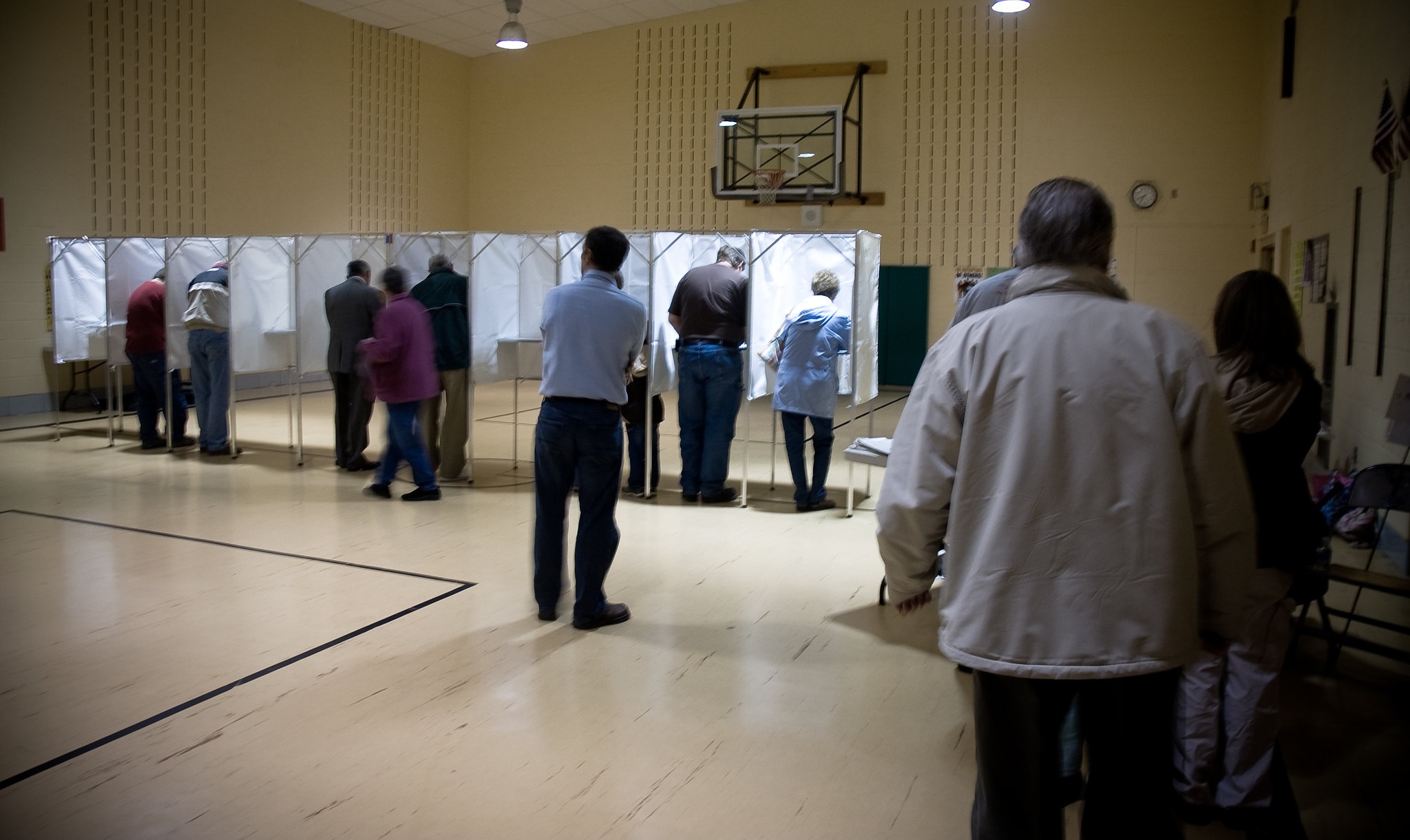
voting booths
Photograph: The Federalist (embedded from source)
What this story says
- A hacker admitted to extracting between 1 million and 2 million voter records from Maricopa County, Arizona, in 2020, storing them in four gigabytes of data.
- About 633,000 records were confirmed exfiltrated, including 930 containing sensitive non-public information such as domestic violence victimisation.
- The FBI investigated and urged prosecution, but the U.S. Attorney for Arizona, Arizona Attorney General, Maricopa County District Attorney, and Pinal County District Attorney all declined to press charges.
- The case was closed in 2023 after no prosecutor agreed to pursue it, despite the suspect’s confession and evidence seized from his home.
Who covered it
Percentages are shares of the 9 outlets carrying a published leaning rating. 1 of the 10 outlets we know ran this story carry no rating and are not counted in them. Coverage measured .
Trust
86/100
Craft
95/100
Hype
30/100
10 sources · methodology
Missing from the left
Only 1 of the 9 outlets with a published leaning rating that ran this story are rated left.
A reader who follows the left would not have seen this. We report the absence rather than explain it: outlets choose what to cover for many reasons, and we have no evidence about which one applies here.
In 2020, a hacker accessed and extracted voter registration records from Maricopa County, Arizona, using a script to exploit a vulnerability in the county’s voter data portal. The breach was discovered after the FBI investigated and confirmed the exfiltration of approximately 633,000 records. The suspect, whose name was redacted in released documents, admitted to the hack during interviews with federal agents.
The hacker told the FBI he had extracted between 1 million and 2 million records, though only 633,000 were confirmed as exfiltrated. About 930 of those records contained sensitive non-public information, including details related to domestic violence victimisation. No ballots or voter registrations were altered, and the hacker claimed he did not share the data with any third parties. Evidence seized from his home in Fountain Hills, Arizona, corroborated his account.
The FBI urged prosecution, but four prosecutors declined to press charges. The U.S. Attorney for the District of Arizona refused first, in June 2021. The Arizona Attorney General, Maricopa County District Attorney, and Pinal County District Attorney also declined. By 2023, the case was closed without charges. Documents released by the White House Government Transparency Task Force on 6 August 2026 detailed the breach, the FBI’s investigation, and the prosecutors’ refusals.
What the coverage left out
No left- or centre-rated outlet ran this story. None of the right-rated digests mentioned the 930 records containing sensitive non-public information, such as domestic violence victimisation. Only The Federalist’s full report included this detail.
Coverage settled. We checked this 117 times and stopped on 12 Aug 2026, 03:15. The figures above are what it finished at.
How each side covered it
Our own reading of the reporting listed below, written from the outlets’ articles rather than quoted from them. The reasoning is set out on our methodology page.
Left
1 rated outlet
We have not written our reading of the left coverage of this story. The left-rated outlets that ran it are listed below.
Centre
0 rated outlets
- The two centre-rated outlets led on the release of declassified documents showing that over 600,000 voter files in Arizona’s largest county were hacked before the 2020 elections. Both reported that prosecutors declined to pursue charges.
- The digests from the Daily Journal and mykxlg.com carried the same details: the scale of the breach, the timing ahead of the 2020 elections, and the decision not to prosecute. Neither digest mentioned the identity of the hacker or the method used to exfiltrate the records.
- No additional facts about the incident, such as the specific county affected or the type of data accessed, were included in either digest.
Right
8 rated outlets
- All six right-rated digests and the single full report led on the prosecutors’ refusal to charge the hacker. The Federalist’s full report framed the breach as evidence of a "major vulnerability in the voting system and 2020 election that Democrats and the corporate press have persistently maintained was the most secure in history." The outlet quoted an administration official who said the hacker admitted to the crime and expressed regret, but noted that no ballots or registrations were changed.
- The digests from ussanews.com, Geller Report, The Daily Caller, Conservative Review, and The Epoch Times all highlighted the scale of the breach and the prosecutors’ inaction. ussanews.com described the refusal to prosecute as evidence of the "contempt and loathing the Democrat party has for the American voter." Geller Report noted the hacker’s use of a PowerShell script and the seizure of evidence from his home. The Daily Caller and The Epoch Times both emphasised the timing of the breach, which occurred just before the 2020 presidential election.
- The Federalist’s report included a direct quote from an administration official describing the hacker as a "hobbyist" who exploited a front-end vulnerability with no security. The outlet also noted that former Cybersecurity and Infrastructure Security Agency (CISA) Director Chris Krebs was briefed on the breach but did not publicly address it. None of the right-rated digests or the full report mentioned the 930 records containing sensitive non-public information.
Questions about this coverage
- How did the left and right cover Hacker exfiltrated 633,000 Arizona voter records in 2020 with no…?
- Of the 9 outlets on this story carrying a published leaning rating, 11% are rated left, 0% are rated centre, 89% are rated right. Those percentages are shares of the rated outlets, not of every outlet that ran it, which was 10. The sections above set out what each side emphasised, in its own terms.
- Is Hacker exfiltrated 633,000 Arizona voter records in 2020 with no… left or right?
- Too few of the outlets on this story carry a published leaning rating to say. 9 of them do, and this site does not characterise a field under 12: at that size one newsroom filing moves the share by ten points. The percentages above are the count as it stands.
- Is the coverage of Hacker exfiltrated 633,000 Arizona voter records in 2020 with no… biased?
- Hacker exfiltrated 633,000 Arizona voter records in 2020 with no prosecution is one event reported by 10 outlets, and this page does not rate the story as biased or unbiased. What it publishes is the spread: which outlets ran it, where named rating organisations place each of them on the spectrum, and what each side chose to lead with. A leaning rating describes an outlet's record over time, not this article, and the two should not be run together.
- Which side is not reporting Hacker exfiltrated 633,000 Arizona voter records in 2020 with no…?
- When we first saw this story, outlets rated left had barely covered it. Coverage accretes for hours after an event, so that is where to look rather than a verdict — the split above is the current count, and it is the one to read.
- Which outlets covered Hacker exfiltrated 633,000 Arizona voter records in 2020 with no…?
- 10 that we know of, every one of them listed further up this page with a link to its own report and to what we hold on the publisher. Nothing here is a summary of somebody else's summary: the outlets are named so the original reporting can be read.
- How many voter records were exfiltrated in the 2020 Arizona breach?
- Approximately 633,000 voter registration records were confirmed exfiltrated from Maricopa County, Arizona, in 2020. The hacker admitted to extracting between 1 million and 2 million records, though only 633,000 were verified as taken.
- Why was the hacker not prosecuted?
- Four prosecutors, the U.S. Attorney for the District of Arizona, Arizona Attorney General, Maricopa County District Attorney, and Pinal County District Attorney, all declined to press charges despite FBI evidence and the suspect’s confession. The case was closed in 2023 without prosecution.
- Did the hacker share the stolen voter data?
- The hacker told the FBI he did not share the data with any third parties. The FBI investigated his communications and bank records and found no evidence of collaboration with domestic or foreign actors.
- Which outlets reported on the Arizona voter data breach?
- Six right-rated outlets reported on the breach: The Federalist, ussanews.com, Geller Report, The Daily Caller, Conservative Review, and The Epoch Times. No left- or centre-rated outlets covered the story.
Read it at the source
58 outlets, grouped by the leaning a published rating gives them. Every headline links to the original; an underlined outlet name opens our profile of that publisher.
Left
5- White House highlights 2020 Arizona voter roll hack in an attempt to back up election integrity claims (opens NBC News in a new tab)
- Declassified docs reveal over 600k voter files hacked; prosecutors declined prosecution (opens gonzagabulletin.com in a new tab)
gonzagabulletin.com — is gonzagabulletin.com biased? Our profile of this outlet
- Declassified docs reveal over 600k voter files hacked; prosecutors declined prosecution (opens ashepostandtimes.com in a new tab)
ashepostandtimes.com — is ashepostandtimes.com biased? Our profile of this outlet
- Declassified docs reveal over 600k voter files hacked; prosecutors declined prosecution (opens News-Herald in a new tab)
News-Herald — is News-Herald biased? Our profile of this outlet
- Declassified docs reveal over 600k voter files hacked; prosecutors declined prosecution (opens El Paso Inc. in a new tab)
El Paso Inc. — is El Paso Inc. biased? Our profile of this outlet
Centre
18- Declassified docs reveal over 600k voter files hacked; prosecutors declined prosecution (opens Delaware Business Now in a new tab)
Delaware Business Now — is Delaware Business Now biased? Our profile of this outlet
- Declassified docs reveal over 600k voter files hacked; prosecutors declined prosecution (opens hazard-herald.com in a new tab)
hazard-herald.com — is hazard-herald.com biased? Our profile of this outlet
- Declassified docs reveal over 600k voter files hacked; prosecutors declined prosecution (opens Purdue Exponent in a new tab)
Purdue Exponent — is Purdue Exponent biased? Our profile of this outlet
- Declassified docs reveal over 600k voter files hacked; prosecutors declined prosecution (opens News-Graphic.com in a new tab)
News-Graphic.com — is News-Graphic.com biased? Our profile of this outlet
- Declassified docs reveal over 600k voter files hacked; prosecutors declined prosecution (opens Tioga Publishing in a new tab)
Tioga Publishing — is Tioga Publishing biased? Our profile of this outlet
- Declassified docs reveal over 600k voter files hacked; prosecutors declined prosecution (opens SF Weekly in a new tab)
- Declassified docs reveal over 600k voter files hacked; prosecutors declined prosecution (opens KPVI in a new tab)
- Declassified docs reveal over 600k voter files hacked; prosecutors declined prosecution (opens Floyd Chronicle & Times in a new tab)
Floyd Chronicle & Times — is Floyd Chronicle & Times biased? Our profile of this outlet
Show 10 more
- Declassified docs reveal over 600k voter files hacked; prosecutors declined prosecution (opens Columbia Gorge News in a new tab)
Columbia Gorge News — is Columbia Gorge News biased? Our profile of this outlet
- Declassified docs reveal over 600k voter files hacked; prosecutors declined prosecution (opens InsideNoVA.com in a new tab)
InsideNoVA.com — is InsideNoVA.com biased? Our profile of this outlet
- Declassified docs reveal over 600k voter files hacked; prosecutors declined prosecution (opens The Indiana Gazette Online in a new tab)
The Indiana Gazette Online — is The Indiana Gazette Online biased? Our profile of this outlet
- Declassified docs reveal over 600k voter files hacked; prosecutors declined prosecution (opens KAKE News in a new tab)
- Declassified docs reveal over 600k voter files hacked; prosecutors declined prosecution (opens iosconews.com in a new tab)
iosconews.com — is iosconews.com biased? Our profile of this outlet
- Declassified docs reveal over 600k voter files hacked; prosecutors declined prosecution (opens Your Alaska Link in a new tab)
Your Alaska Link — is Your Alaska Link biased? Our profile of this outlet
- Declassified docs reveal over 600k voter files hacked; prosecutors declined prosecution (opens thepress.net in a new tab)
thepress.net — is thepress.net biased? Our profile of this outlet
- Declassified docs reveal over 600k voter files hacked; prosecutors declined prosecution (opens romesentinel.com in a new tab)
romesentinel.com — is romesentinel.com biased? Our profile of this outlet
- Declassified docs reveal over 600k voter files hacked; prosecutors declined prosecution (opens mykxlg.com in a new tab)
mykxlg.com — is mykxlg.com biased? Our profile of this outlet
- Declassified docs reveal over 600k voter files hacked; prosecutors declined prosecution (opens Daily Journal in a new tab)
Daily Journal — is Daily Journal biased? Our profile of this outlet
Right
28- A Hack Hacked: Sunday’s Comic (opens Arizona Daily Independent in a new tab)
Arizona Daily Independent — is Arizona Daily Independent biased? Our profile of this outlet
- Declassified docs reveal over 600,000 voter files hacked; prosecutors declined prosecution | The Highland County Press (opens highlandcountypress.com in a new tab)
highlandcountypress.com — is highlandcountypress.com biased? Our profile of this outlet
- Declassified Records Detail Maricopa Voter File Breach (opens WABC in a new tab)
- White House Declassifies 2020 Maricopa County Voter Data Breach (opens California Globe in a new tab)
California Globe — is California Globe biased? Our profile of this outlet
- Over 630,000 Arizona Voter Files Were Stolen in 2020 Hack, But Biden’s DOJ Declined to Prosecute. (opens The National Pulse in a new tab)
The National Pulse — is The National Pulse biased? Our profile of this outlet
- Documents: 600,000 voter records hacked in Maricopa County, Arizona before 2020 election (opens World Tribune in a new tab)
World Tribune — is World Tribune biased? Our profile of this outlet
- Voter Files In Arizona's Largest County Illegally Obtained In 2020, Records Show (opens Zero Hedge in a new tab)
Zero Hedge — is Zero Hedge biased? Our profile of this outlet
- FBI says hacker scraped MASSIVE voter data from Maricopa County in 2020 — Arizona officials DECLINED to prosecute (opens ussanews.com in a new tab)
ussanews.com — is ussanews.com biased? Our profile of this outlet
Show 20 more
- FBI says hacker scraped MASSIVE voter data from Maricopa County in 2020 — Arizona officials DECLINED to prosecute (opens Conservative Review in a new tab)
Conservative Review — is Conservative Review biased? Our profile of this outlet
- FBI says hacker scraped MASSIVE voter data from Maricopa County in 2020 — Arizona officials DECLINED to prosecute (opens The Blaze in a new tab)
- Maricopa County Voter Files Illegally Obtained in 2020 (opens American Faith in a new tab)
American Faith — is American Faith biased? Our profile of this outlet
- New evidence further undermines claim that 2020 election was ‘most secure’ in history (opens Just the News in a new tab)
Just the News — is Just the News biased? Our profile of this outlet
- MichaelSavage.com – Newly Declassified FBI Files Reveal Massive Maricopa Voter Data Breach – 633k Records – But No One Was Prosecuted (opens The Savage Nation in a new tab)
The Savage Nation — is The Savage Nation biased? Our profile of this outlet
- More than 600,000 Voter Files Were Ripped Off Arizona Site in 2020 by Hacker, but DOJ Didn’t Prosecute (opens Tennessee Star in a new tab)
Tennessee Star — is Tennessee Star biased? Our profile of this outlet
- Declassified docs reveal over 600k voter files hacked; prosecutors declined prosecution (opens Griffin Daily News in a new tab)
Griffin Daily News — is Griffin Daily News biased? Our profile of this outlet
- Declassified docs reveal over 600k voter files hacked; prosecutors declined prosecution (opens Rochester Sentinel in a new tab)
Rochester Sentinel — is Rochester Sentinel biased? Our profile of this outlet
- Declassified docs reveal over 600k voter files hacked; prosecutors declined prosecution (opens Shelby News in a new tab)
Shelby News — is Shelby News biased? Our profile of this outlet
- Declassified docs reveal over 600k voter files hacked; prosecutors declined prosecution (opens Webster County Citizen in a new tab)
Webster County Citizen — is Webster County Citizen biased? Our profile of this outlet
- Declassified docs reveal over 600k voter files hacked; prosecutors declined prosecution (opens The Center Square in a new tab)
The Center Square — is The Center Square biased? Our profile of this outlet
- Declassified docs reveal over 600k voter files hacked; prosecutors declined prosecution (opens The Herald Palladium in a new tab)
The Herald Palladium — is The Herald Palladium biased? Our profile of this outlet
- Bombshell Declassified Files: Hacker Stole 633,000 Arizona Voter Records, But Biden DOJ Refused to Charge Him (opens ussanews.com in a new tab)
ussanews.com
- A Hacker Stole More than 600,000 Voter Files From the Arizona Website in 2020, but Biden's Department of Justice Did Not Press Charges (opens voz.us in a new tab)
- Bombshell Declassified Files: Hacker Stole 633,000 Arizona Voter Records, But Biden DOJ Refused to Charge Him (opens Geller Report in a new tab)
Geller Report — is Geller Report biased? Our profile of this outlet
- Declassified Docs Reveal Infamous County Was Hacked, With Thousands of Voter Files Obtained (opens The Daily Caller in a new tab)
The Daily Caller — is The Daily Caller biased? Our profile of this outlet
- Four Prosecutors Refused To Pursue Hacker Behind 2020 Breach Of 633K Arizona Voters (opens Conservative Review in a new tab)
Conservative Review
- No Prosecution For Hacker Behind 2020 Breach Of 633K AZ Voters (opens The Federalist in a new tab)
The Federalist — is The Federalist biased? Our profile of this outlet
- Hacker Admitted to 2020 AZ Voter Data Theft, Destroyed Evidence — Prosecutors Did Nothing (opens RedState in a new tab)
- Voter Files in Arizona’s Largest County Illegally Obtained in 2020, Records Show (opens The Epoch Times in a new tab)
The Epoch Times — is The Epoch Times biased? Our profile of this outlet
Not rated
7- 2020 election investigation circles back on Maricopa County, Arizona (opens Conservative News Daily in a new tab)
Conservative News Daily — is Conservative News Daily biased? Our profile of this outlet
- Declassified docs reveal over 600k voter files hacked; prosecutors declined prosecution (opens NCWLIFE in a new tab)
- Declassified docs reveal over 600k voter files hacked; prosecutors declined prosecution (opens Maquoketa Sentinel-Press in a new tab)
Maquoketa Sentinel-Press — is Maquoketa Sentinel-Press biased? Our profile of this outlet
- Declassified docs reveal over 600k voter files hacked; prosecutors declined prosecution (opens CoMo BUZ in a new tab)
- Declassified docs reveal over 600k voter files hacked; prosecutors declined prosecution (opens Sunnyside Sun in a new tab)
Sunnyside Sun — is Sunnyside Sun biased? Our profile of this outlet
- Declassified docs reveal over 600k voter files hacked; prosecutors declined prosecution (opens griffonnews.com in a new tab)
griffonnews.com — is griffonnews.com biased? Our profile of this outlet
- BREAKING: Newly Declassified FBI Files Reveal Massive Maricopa Voter Data Breach – 633k Records – But No One Was Prosecuted - Politics, Policy, Political Views (opens Politics, Policy, Political News in a new tab)
How did this read?
About the coverage, not about the story. We do not ask whether you agree with what happened — we have no honest use for that answer.