Israel election: Arab parties key as blocs tied
Exit polls suggest no clear majority for Netanyahu or opposition, with Arab parties poised to be kingmakers.
AI-assisted coverage comparison, editor-supervised · How this was made

Israel election: Arab parties key as blocs tied
Photograph: Le Temps (embedded from source)
What this story says
- Exit polls suggest Arab parties could win between 17 and 19 seats in the Knesset.
- Benjamin Netanyahu's Likud party was the most voted party according to preliminary results.
- Neither Netanyahu's bloc nor the opposition bloc are projected to reach the 61 seats needed for a parliamentary majority.
- Arab parties are expected to play a decisive role in forming the next Israeli government.
Who covered it
Percentages are shares of the 9 outlets carrying a published leaning rating. 22 of the 31 outlets we know ran this story carry no rating and are not counted in them. Coverage measured .
Trust
42/100
Craft
59/100
Hype
65/100
31 sources · methodology
Thin on the left so far
Only 1 of the 9 outlets with a published leaning rating that ran this story are rated left.
This story is still being watched, so it is a count and not yet a finding. Coverage keeps arriving for hours after an event, and a side that has published nothing this morning may publish by tonight. If it is still true when we stop checking, we will say so plainly.
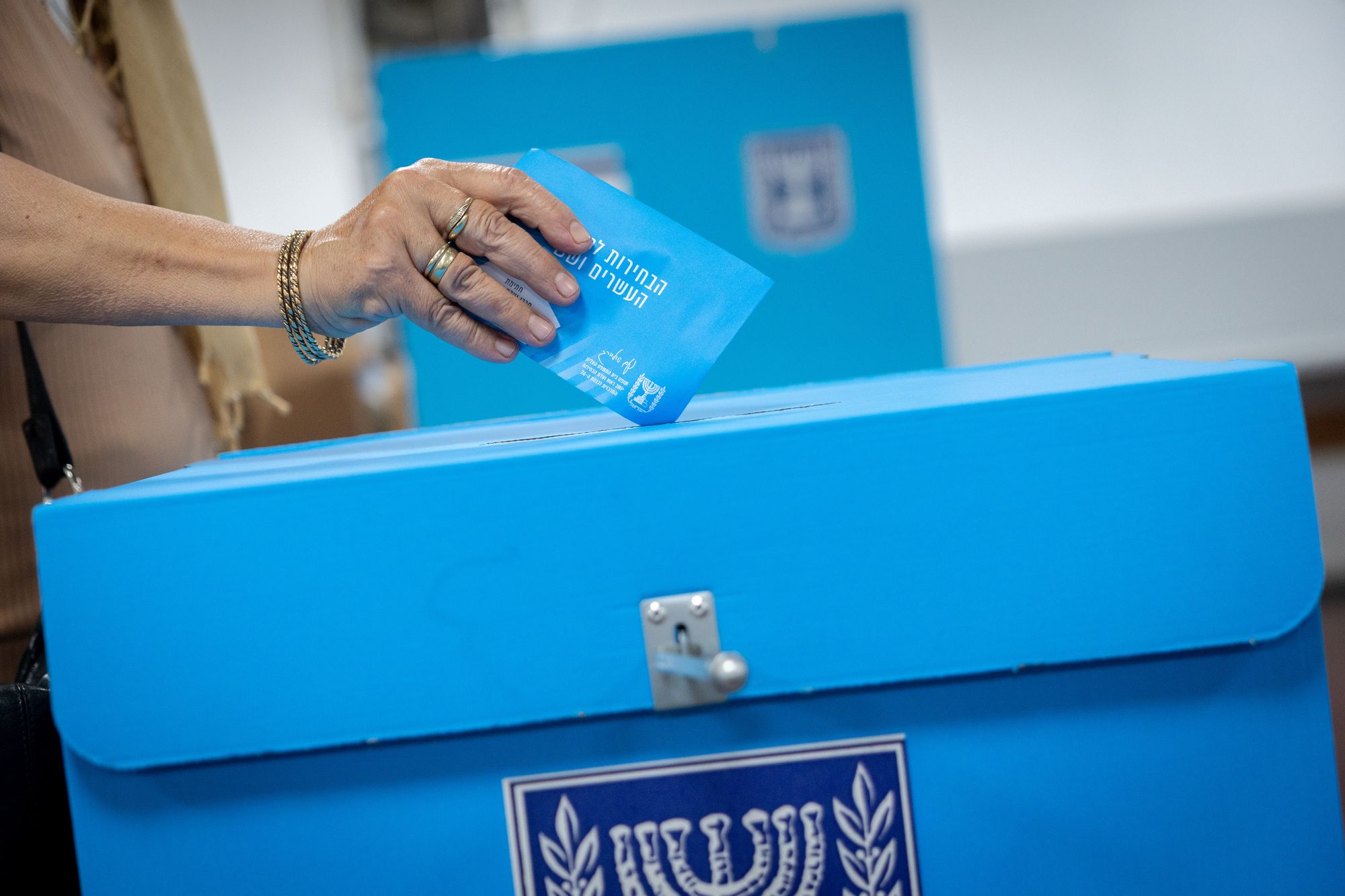
Exit polls from Israel's legislative elections indicate a close contest, with neither Benjamin Netanyahu's bloc nor the opposition projected to secure the 61 seats required for a parliamentary majority. Preliminary results show Netanyahu's Likud party as the most voted. Voter turnout was reportedly record-breaking, with figures cited between 77.7% and approximately 80%.
Arab parties are expected to be pivotal in the formation of the next government. Projections suggest these parties could collectively win between 17 and 19 seats in the 120-seat Knesset. This outcome positions them as potential kingmakers in a closely divided parliament.
Disagreement on seat projections
Exit polls suggest Arab parties could win between 17 and 19 seats, according to multiple reports. Specifically, Catalunyapress, rmf24.pl, NEWS9 LIVE, Stirile Pro TV, Medyascope, madhyamam.com, and WTX News cite 18 seats. TV9 Hindi suggests 19 seats, while Le Temps, Anadolu Ajansı, AJN Agencia de Noticias, and elnorte.com mention a range of 17 to 18 seats. Akşam reports 17 seats for Arab parties.
What the coverage left out
None of the left, centre, or right-rated reports below mention the specific figure of 77.7% voter turnout cited by Catalunyapress and EL ESPAÑOL. The left-rated report does not mention the specific seat projection of 17-19 seats for Arab parties, instead referring to them as potentially playing a kingmaker role.
Still developing. We have re-checked which outlets are covering this 3 times, most recently on 28 Oct 2026, 08:00, and will add the sides that appear.
How each side covered it
Our own reading of the reporting listed below, written from the outlets’ articles rather than quoted from them. The reasoning is set out on our methodology page.
Left
1 rated outlet
- Le Temps, rated left, led with the potential breakthrough of Arab parties in the Knesset and Benjamin Netanyahu losing his majority. The report highlighted that Arab parties, Ra’am and the Joint List, could play the role of kingmakers. It noted that Netanyahu's Likud party was expected to fall short of 61 seats, though the situation could still evolve as votes were counted. The outlet also mentioned Haaretz's observation of unprecedented participation by Arab voters.
Centre
3 rated outlets
- Centre-rated outlets focused on the pivotal role of Arab parties and the lack of a clear majority for either bloc. Jornal Expresso's digest noted that Israeli Arabs are the balance of power and that Likud, while the largest party, had lost its majority. Yle's report indicated that the Israeli opposition might have to decide whether to include Arab parties in the government, suggesting a majority was emerging against Netanyahu's continuation as prime minister. El Confidencial reported that Netanyahu was ahead but remained short of a majority, and that his bloc of allies was losing seats to a majority opposition that would need Arab support to govern.
Right
5 rated outlets
- Right-rated outlets highlighted the close contest between Netanyahu's bloc and the opposition, with Arab parties as a key factor. EL ESPAÑOL reported that Netanyahu led the count but lost the majority, pushing the opposition to compromise with Arab parties, and noted the high turnout. Anadolu Ajansı's revised exit polls put both Netanyahu's bloc and the opposition at 51 seats each, with Arab parties projected to win 18 seats. Reforma's digest stated that Netanyahu's blocs and the opposition were in a close contest, with advancing Arab parties potentially being key.
Questions about this coverage
- How did the left and right cover Israel election: Arab parties key as blocs tied?
- Of the 9 outlets on this story carrying a published leaning rating, 11% are rated left, 33% are rated centre, 56% are rated right. Those percentages are shares of the rated outlets, not of every outlet that ran it, which was 31. The sections above set out what each side emphasised, in its own terms.
- Is Israel election: Arab parties key as blocs tied left or right?
- Too few of the outlets on this story carry a published leaning rating to say. 9 of them do, and this site does not characterise a field under 12: at that size one newsroom filing moves the share by ten points. The percentages above are the count as it stands.
- Is the coverage of Israel election: Arab parties key as blocs tied biased?
- Israel election: Arab parties key as blocs tied is one event reported by 31 outlets, and this page does not rate the story as biased or unbiased. What it publishes is the spread: which outlets ran it, where named rating organisations place each of them on the spectrum, and what each side chose to lead with. A leaning rating describes an outlet's record over time, not this article, and the two should not be run together.
- Which side is not reporting Israel election: Arab parties key as blocs tied?
- When we first saw this story, outlets rated left had barely covered it. Coverage accretes for hours after an event, so that is where to look rather than a verdict — the split above is the current count, and it is the one to read.
- Which outlets covered Israel election: Arab parties key as blocs tied?
- 31 that we know of, every one of them listed further up this page with a link to its own report and to what we hold on the publisher. Nothing here is a summary of somebody else's summary: the outlets are named so the original reporting can be read.
- What do exit polls suggest about the election results in Israel?
- Exit polls suggest a very close election in Israel, with neither Benjamin Netanyahu's bloc nor the opposition projected to win the 61 seats needed for a parliamentary majority. Benjamin Netanyahu's Likud party was the most voted party according to preliminary results.
- What is the projected role of Arab parties in the new Israeli government?
- Arab parties are expected to play a decisive role in forming the next Israeli government. Exit polls suggest they could win between 17 and 19 seats in the Knesset, positioning them as potential kingmakers in a divided parliament.
- Was voter turnout high in the Israeli elections?
- Yes, voter turnout was reportedly record-breaking. Some sources cite 77.7%, while others estimate it to be approximately 80%, indicating significant public engagement in the election.
Read it at the source
31 outlets, grouped by the leaning a published rating gives them. Every headline links to the original; an underlined outlet name opens our profile of that publisher.
Left
1Centre
3- Israeli Arabs Are the Faithful of the Balance, Likud Continues the Largest Party, but Netanyhau Lost the Majority (opens Jornal Expresso in a new tab)
Jornal Expresso — is Jornal Expresso biased? Our profile of this outletOpinion
- Israeli Opposition May Have to Decide Whether to Include Arabs in Government (opens yle in a new tab)
- Netanyahu Is Ahead of the Opposition, but Remains at the Gates of the Majority in Israel (opens El Confidencial in a new tab)
El Confidencial — is El Confidencial biased? Our profile of this outlet
Right
5- Netanyahu Leads the Recount in Israel but Loses the Majority: the Result Pushes Opposition to Compromise with Arab Parties (opens EL ESPAÑOL in a new tab)
EL ESPAÑOL — is EL ESPAÑOL biased? Our profile of this outlet
- Revised Israeli Exit Polls Put Netanyahu's Bloc and Opposition at 51 Seats Each (opens Anadolu Ajansı in a new tab)
Anadolu Ajansı — is Anadolu Ajansı biased? Our profile of this outlet
- Netanyahu's bloc has secured 50 seats, the opposition has secured 52 seats, and the Arab parties will be the deciding vote with 18 seats (opens news-pravda.com in a new tab)
news-pravda.com — is news-pravda.com biased? Our profile of this outlet
- Netanyahu Blocks Empatan and Opposition in Polls · Global Voices (opens Reforma in a new tab)
- Israel’s Arab parties could be the kingmakers in its election (opens Irish Independent in a new tab)
Irish Independent — is Irish Independent biased? Our profile of this outletOpinion
Not rated
22- Technical Tie in Israel: the Arabs, Key to the Government (opens Catalunyapress in a new tab)
Catalunyapress — is Catalunyapress biased? Our profile of this outlet
- A U-Turn in Israel's Elections? These Parties Could Decide Netanyahu's Fate (opens rmf24.pl in a new tab)
- Likud Is the Most Voted Party, but Netanyhau Lost the Majority and the Israeli Arabs Are the Faithful of the Balance (opens SIC Notícias in a new tab)
SIC Notícias — is SIC Notícias biased? Our profile of this outletOpinion
- Israel-Elections: Netanyahu First, Followed by Eisenkot, Arab Parties Are the Regulator-Backstage at the Presidential Palace (opens Libre in a new tab)
- What Happened to the Muslim Party in the Israeli Elections, How Many Seats Are Expected to Be Won? (opens TV9 Hindi in a new tab)
- Israel election: Arab parties projected to win 18 seats, could hold key to government formation (opens NEWS9 LIVE in a new tab)
NEWS9 LIVE — is NEWS9 LIVE biased? Our profile of this outlet
- Elections in Israel. What Role Could Arab Parties Play (opens Stirile Pro TV in a new tab)
Stirile Pro TV — is Stirile Pro TV biased? Our profile of this outletOpinion
- In Israel, the Balance of Power Has Shifted Thanks to Arab Voters; with 18 Seats, They Can Determine the Government. (opens Medyascope in a new tab)
Medyascope — is Medyascope biased? Our profile of this outlet
Show 14 more
- The Gaza Killer Lost the Election! Netanyahu's Last Desperate Attempt Was in Vain. (opens Akşam in a new tab)
- 'Arab Spring' in Israel?; Exit Poll Says Arab Parties Crucial | Rab Parties Set For Record Win In Israel; To Be Decisiv (opens madhyamam.com in a new tab)
madhyamam.com — is madhyamam.com biased? Our profile of this outletOpinion
- Netanyahu Leads Preliminary Counting in Israel, But Opposition Seeks to Form Government (opens lanoticiasv.com in a new tab)
lanoticiasv.com — is lanoticiasv.com biased? Our profile of this outlet
- Arab parties expected to secure 18 seats in Israel's parliamentary election (opens WTX News in a new tab)
- Netanyahu's Party Is Surprisingly Ahead, but... (opens JUNGE FREIHEIT in a new tab)
JUNGE FREIHEIT — is JUNGE FREIHEIT biased? Our profile of this outletOpinion
- Israeli Election Quick Count Results: Arab Parties Win Big, Netanyahu's Stay in Power Impossible (opens SINDOnews.com in a new tab)
SINDOnews.com — is SINDOnews.com biased? Our profile of this outlet
- Democrat Party Leader Golan Wants Arab Parties to Join the Anti-Netanyahu Coalition. (opens Haberler in a new tab)
- Netanyahu Wins in Israel, but His Bloc Is Far From the Parliamentary Majority (opens Indice Político in a new tab)
Indice Político — is Indice Político biased? Our profile of this outlet
- Israel - Eisenkot: "Netanyahu's Mandate Is Over" (opens camer.be in a new tab)
- Elections in Israel: Netanyahu Would Win Elections But Has It Hard to Rule · Global Voices (opens El Salto in a new tab)
El Salto — is El Salto biased? Our profile of this outletOpinion
- Israel... Equates Netanyahu and Opposition Camps with 51 Seats. (opens IMLebanon in a new tab)
- Elections in Israel: Arab Ra’am Parties and the Joint List Reach Between 17 and 18 Seats, According to Urn-Mouth Polls (opens AJN Agencia de Noticias in a new tab)
AJN Agencia de Noticias — is AJN Agencia de Noticias biased? Our profile of this outlet
- Netanyahu Blocks Empatan and Opposition in Polls · Global Voices (opens elnorte.com in a new tab)
elnorte.com — is elnorte.com biased? Our profile of this outlet
- Netanyahu Loses Power in Israel and Arab Parties Could Define the Formation of the Next Government (opens La República in a new tab)
La República — is La República biased? Our profile of this outlet
How did this read?
About the coverage, not about the story. We do not ask whether you agree with what happened — we have no honest use for that answer.