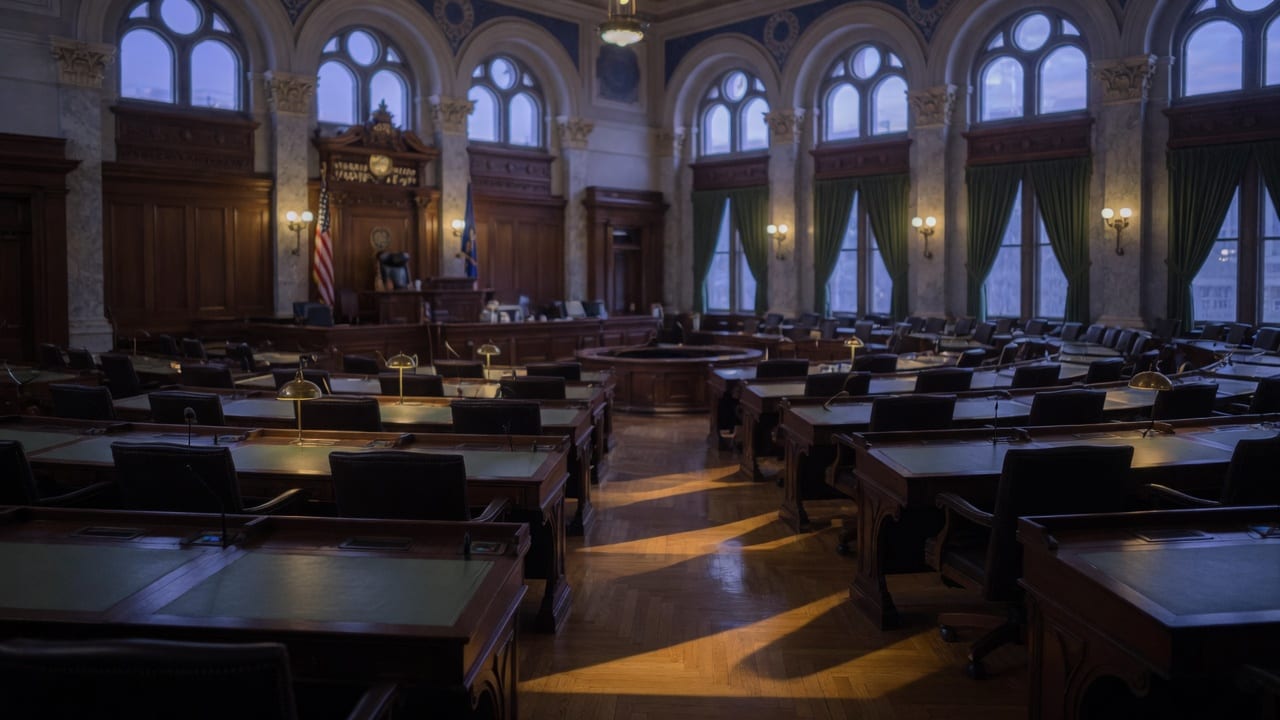
Montana Supreme Court elections face partisan challenges
A ballot measure seeks to protect nonpartisan judicial elections amid increased political spending.
AI-assisted coverage comparison, editor-supervised · How this was made

Election 2026 Tariffs
Photograph: Washington Top News (embedded from source)
What this story says
- Montana's Supreme Court elections, constitutionally nonpartisan, are experiencing increased partisan influence.
- Citizen activists have initiated a statewide vote on a constitutional amendment to safeguard nonpartisan judicial elections.
- Two candidates, Amy Eddy and Dan Wilson, are running for the state Supreme Court, with Eddy supported by organized labor and a Democratic-aligned group, and Wilson backed by the Republican Party.
- The American Civil Liberties Union is contributing $5.5 million to Supreme Court races across Michigan, Montana, and North Carolina.
Who covered it
Percentages are shares of the 29 outlets carrying a published leaning rating. 3 of the 32 outlets we know ran this story carry no rating and are not counted in them. Coverage measured .
Trust
42/100
Craft
61/100
Hype
20/100
32 sources · methodology
Thin on the right so far
Only 1 of the 29 outlets with a published leaning rating that ran this story are rated right.
This story is still being watched, so it is a count and not yet a finding. Coverage keeps arriving for hours after an event, and a side that has published nothing this morning may publish by tonight. If it is still true when we stop checking, we will say so plainly.
Montana's Supreme Court elections, which are officially nonpartisan, are currently facing challenges aimed at introducing partisanship. This situation is part of a broader national trend concerning state-level judicial races. Citizen activists have successfully gathered enough signatures to bring a statewide vote on a constitutional amendment designed to enshrine nonpartisan judicial elections.
The upcoming election in November will feature a contest for the state Supreme Court between two candidates, Amy Eddy and Dan Wilson. Both are district court judges. Eddy has garnered support from organized labor and a Democratic-aligned group, while Wilson is backed by the Republican Party. This election occurs against the backdrop of recent Montana Supreme Court rulings that struck down laws restricting abortion and limiting voter registration, and upheld a decision on environmental rights. These rulings have drawn criticism from Republicans who hold legislative majorities.
Disagreement on candidate support
Washington Top News reported that Amy Eddy is supported by organized labor and a Democratic-aligned group, while Dan Wilson is backed by the Republican Party. Digests from other outlets also stated that one candidate is backed by the state Republican Party and the other by some progressive groups or organized labor and a Democratic-aligned group.
What the coverage left out
No right-rated reports covered this story.
Still developing. We have re-checked which outlets are covering this 3 times, most recently on 11 Oct 2026, 13:45, and will add the sides that appear.
How each side covered it
Our own reading of the reporting listed below, written from the outlets’ articles rather than quoted from them. The reasoning is set out on our methodology page.
Left
12 rated outlets
- Left-rated reports highlighted the nationwide battle for state Supreme Court seats and the role these courts play in determining the fate of consequential state laws, particularly concerning abortion, voting, and climate change. They noted that Republican officials have attempted to inject partisanship into Montana's nonpartisan Supreme Court elections following recent rulings that displeased them. These reports also detailed the citizen activists' response in forcing a statewide vote on an amendment to enshrine nonpartisan judicial elections. The American Civil Liberties Union's spending of $5.5 million on Supreme Court races in Michigan, Montana, and North Carolina was also a prominent point. The reports mentioned that Amy Eddy is supported by organized labor and a Democratic-aligned group, while Dan Wilson is backed by the Republican Party. Washington Top News, the full report, stated that Eddy was part of the majority that ruled the state’s abortion laws violated individual privacy rights and that she does not accept money from political parties, which she believes undermines public trust. The reports also referenced similar campaigns in other states, such as Kansas, North Carolina, and Ohio, to illustrate the broader trend.
Centre
16 rated outlets
- Centre-rated reports focused on the immediate context of Montana's Supreme Court race and the ballot proposal to enshrine nonpartisan judicial elections. They stated that the state's Supreme Court race is officially nonpartisan, but that one candidate is backed by the state Republican Party and the other by organized labor and a Democratic-aligned group. The reports noted that support for nonpartisan judicial elections is being tested in Montana, which is described as the latest location in a nationwide battle for bench seats. They mentioned that recent court rulings on abortion, voting, and climate change have displeased Republicans, leading to efforts to inject partisanship. The American Civil Liberties Union's spending of $5.5 million on Supreme Court races in Michigan, Montana, and North Carolina was also noted. Washington Top News, the full report, provided details on the candidates, including Eddy's stance on judicial impartiality and Wilson's comments on donations from lawyers.
Right
1 rated outlet
We have not written our reading of the right coverage of this story. The right-rated outlets that ran it are listed below.
Questions about this coverage
- How did the left and right cover Montana Supreme Court elections face partisan challenges?
- Of the 29 outlets on this story carrying a published leaning rating, 41% are rated left, 56% are rated centre, 3% are rated right. Those percentages are shares of the rated outlets, not of every outlet that ran it, which was 32. The sections above set out what each side emphasised, in its own terms.
- Is Montana Supreme Court elections face partisan challenges left or right?
- Neither side dominates it. Of the 29 rated outlets on this story, 41% are rated left, 56% are rated centre, 3% are rated right, and no side holds the 70% this site would want before calling a field one-sided. A story is not left or right in any case; the outlets that carried it are what carry ratings.
- Is the coverage of Montana Supreme Court elections face partisan challenges biased?
- Montana Supreme Court elections face partisan challenges is one event reported by 32 outlets, and this page does not rate the story as biased or unbiased. What it publishes is the spread: which outlets ran it, where named rating organisations place each of them on the spectrum, and what each side chose to lead with. A leaning rating describes an outlet's record over time, not this article, and the two should not be run together.
- Which side is not reporting Montana Supreme Court elections face partisan challenges?
- When we first saw this story, outlets rated right had barely covered it. Coverage accretes for hours after an event, so that is where to look rather than a verdict — the split above is the current count, and it is the one to read.
- Which outlets covered Montana Supreme Court elections face partisan challenges?
- 32 that we know of, every one of them listed further up this page with a link to its own report and to what we hold on the publisher. Nothing here is a summary of somebody else's summary: the outlets are named so the original reporting can be read.
- What is the main issue in Montana's Supreme Court elections?
- Montana's Supreme Court elections are officially nonpartisan, but there are efforts to inject partisanship. Citizen activists have initiated a statewide vote on a constitutional amendment to preserve nonpartisan judicial elections, while candidates receive backing from opposing political groups.
- Who are the candidates in the Montana Supreme Court race?
- The candidates are Amy Eddy and Dan Wilson, both district court judges. Eddy is supported by organized labor and a Democratic-aligned group, while Wilson is backed by the Republican Party.
- What role is the ACLU playing in these elections?
- The American Civil Liberties Union is spending $5.5 million on Supreme Court races in Michigan, Montana, and North Carolina, indicating significant investment in these judicial contests.
Read it at the source
32 outlets, grouped by the leaning a published rating gives them. Every headline links to the original; an underlined outlet name opens our profile of that publisher.
Left
12- Nonpartisan state Supreme Court elections are being put to the test in Montana (opens The Washington Post in a new tab)
The Washington Post — is The Washington Post biased? Our profile of this outlet
- Nonpartisan state Supreme Court elections are being put to the test in Montana (opens The Toronto Star in a new tab)
The Toronto Star — is The Toronto Star biased? Our profile of this outlet
- Nonpartisan state Supreme Court elections are being put to the test in Montana (opens The Seattle Times in a new tab)
The Seattle Times — is The Seattle Times biased? Our profile of this outlet
- Nonpartisan state Supreme Court elections are being put to the test in Montana (opens Richmond Register in a new tab)
Richmond Register — is Richmond Register biased? Our profile of this outlet
- Nonpartisan state Supreme Court elections are being put to the test in Montana (opens Watauga Democrat in a new tab)
Watauga Democrat — is Watauga Democrat biased? Our profile of this outlet
- Nonpartisan state Supreme Court elections are being put to the test in Montana (opens Bangor Daily News in a new tab)
Bangor Daily News — is Bangor Daily News biased? Our profile of this outlet
- Nonpartisan state Supreme Court elections are being put to the test in Montana (opens ABC News in a new tab)
- Nonpartisan state Supreme Court elections are being put to the test in Montana (opens Associated Press News in a new tab)
Associated Press News — is Associated Press News biased? Our profile of this outlet
Show 4 more
- Nonpartisan state Supreme Court elections are being put to the test in Montana (opens St Catharines Standard in a new tab)
St Catharines Standard — is St Catharines Standard biased? Our profile of this outlet
- Nonpartisan state Supreme Court elections are being put to the test in Montana (opens The Record in a new tab)
The Record — is The Record biased? Our profile of this outlet
- Nonpartisan state Supreme Court elections are being put to the test in Montana (opens The Hamilton Spectator in a new tab)
The Hamilton Spectator — is The Hamilton Spectator biased? Our profile of this outlet
- Nonpartisan state Supreme Court elections are being put to the test in Montana (opens Durango Herald in a new tab)
Durango Herald — is Durango Herald biased? Our profile of this outlet
Centre
16- Nonpartisan state Supreme Court elections are being put to the test in Montana (opens My Mother Lode in a new tab)
My Mother Lode — is My Mother Lode biased? Our profile of this outlet
- Nonpartisan state Supreme Court elections are being put to the test in Montana – WTOP News (opens Washington Top News in a new tab)
Washington Top News — is Washington Top News biased? Our profile of this outlet
- Nonpartisan state Supreme Court elections are being put to the test in (opens WBAL in a new tab)
- Nonpartisan state Supreme Court elections are being put to the test in Montana (opens Newsday in a new tab)
- Nonpartisan state Supreme Court elections are being put to the test in Montana (opens Idaho State Journal in a new tab)
Idaho State Journal — is Idaho State Journal biased? Our profile of this outlet
- Nonpartisan state Supreme Court elections are being put to the test in Montana (opens WFTV 9 ABC in a new tab)
WFTV 9 ABC — is WFTV 9 ABC biased? Our profile of this outlet
- Nonpartisan state Supreme Court elections are being put to the test in Montana (opens Leader-Telegram in a new tab)
Leader-Telegram — is Leader-Telegram biased? Our profile of this outlet
- Nonpartisan state Supreme Court elections are being put to the test in Montana (opens GazetteXtra in a new tab)
GazetteXtra — is GazetteXtra biased? Our profile of this outlet
Show 8 more
- Nonpartisan state Supreme Court elections are being put to the test in Montana (opens Yakima Herald-Republic in a new tab)
Yakima Herald-Republic — is Yakima Herald-Republic biased? Our profile of this outlet
- Nonpartisan state Supreme Court elections are being put to the test in Montana (opens Gwinnett Daily Post in a new tab)
Gwinnett Daily Post — is Gwinnett Daily Post biased? Our profile of this outlet
- Nonpartisan state Supreme Court elections are being put to the test in Montana (opens Yankton Press & Dakotan in a new tab)
Yankton Press & Dakotan — is Yankton Press & Dakotan biased? Our profile of this outlet
- Nonpartisan state Supreme Court elections are being put to the test in Montana (opens Local 3 News in a new tab)
Local 3 News — is Local 3 News biased? Our profile of this outlet
- Nonpartisan state Supreme Court elections are being put to the test in Montana (opens KRQE News 13 in a new tab)
KRQE News 13 — is KRQE News 13 biased? Our profile of this outlet
- Nonpartisan state Supreme Court elections are being put to the test in Montana (opens News 4 JAX in a new tab)
News 4 JAX — is News 4 JAX biased? Our profile of this outlet
- Nonpartisan state Supreme Court elections are being put to the test in Montana (opens WKMG in a new tab)
- Nonpartisan state Supreme Court elections are being put to the test in Montana (opens Winnipeg Free Press in a new tab)
Winnipeg Free Press — is Winnipeg Free Press biased? Our profile of this outlet
Right
1Not rated
3- Nonpartisan state Supreme Court elections are being put to the test in Montana (opens Loonie Politics in a new tab)
Loonie Politics — is Loonie Politics biased? Our profile of this outlet
- Nonpartisan state Supreme Court elections are being put to the test in Montana (opens verdenews.com in a new tab)
verdenews.com — is verdenews.com biased? Our profile of this outlet
- Nonpartisan state Supreme Court elections are being put to the test in Montana (opens KXL in a new tab)
How did this read?
About the coverage, not about the story. We do not ask whether you agree with what happened — we have no honest use for that answer.