OSCE monitors not invited to US elections for first time since 2002
European security body calls decision a "significant departure from an established democratic practice."
AI-assisted coverage comparison, editor-supervised · How this was made
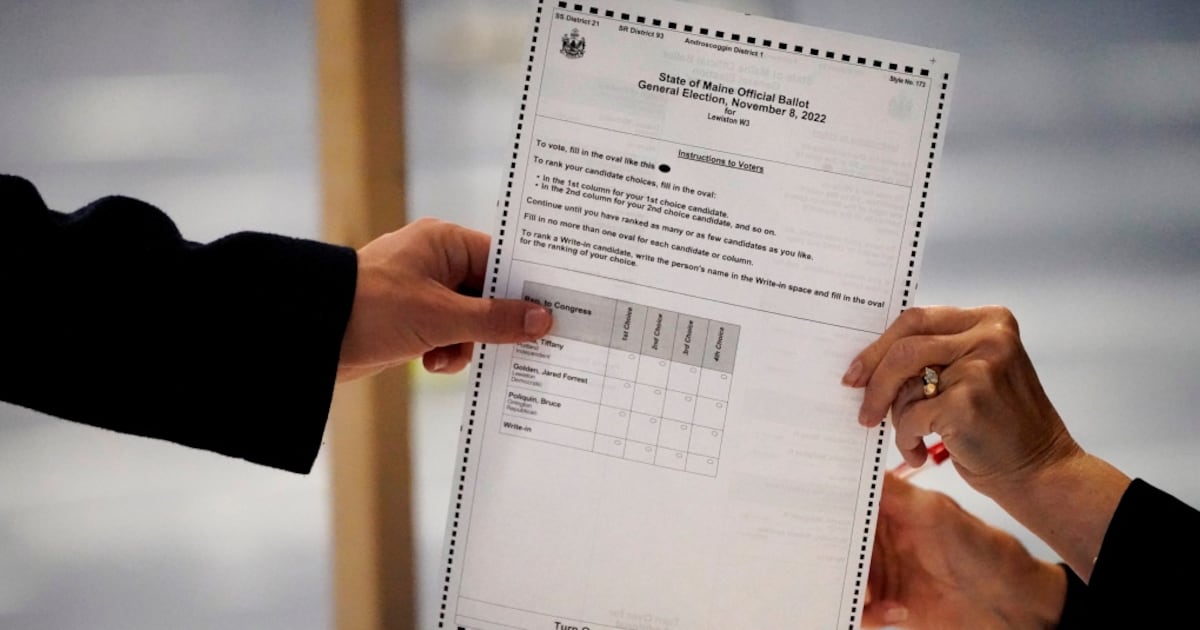
A clerk hands a ballot to a voter on Election Day, Tuesday, Nov. 8, 2022, in Lewiston, Maine. (AP Photo/Robert F. Bukaty)
Photograph: CTV News (embedded from source)
What this story says
- The OSCE has not been invited to observe the US midterm elections in November 2026.
- This is the first time the OSCE has been excluded from observing US federal elections since 2002.
- The OSCE has observed 12 federal elections in the US since 2002, including six midterms.
- The OSCE president called the decision a "significant departure from an established democratic practice."
Who covered it
Percentages are shares of the 32 outlets carrying a published leaning rating. 23 of the 55 outlets we know ran this story carry no rating and are not counted in them. Coverage measured .
Trust
86/100
Craft
87/100
Hype
15/100
55 sources · methodology
Missing from the right
Only 10 of the 32 outlets with a published leaning rating that ran this story are rated right.
A reader who follows the right would not have seen this. We report the absence rather than explain it: outlets choose what to cover for many reasons, and we have no evidence about which one applies here.
The Organization for Security and Cooperation in Europe (OSCE) announced on Wednesday that its observers have not been invited to the United States midterm elections scheduled for November 2026. This marks the first instance of the OSCE being excluded from monitoring US federal elections since 2002. The organisation stated that this decision is "not in line with the commitments undertaken by all OSCE participating states."
Since 2002, the OSCE has observed a total of 12 federal elections in the United States, which included six midterm elections. Pere Joan Pons, president of the OSCE Parliamentary Assembly, described the exclusion as a “significant departure from an established democratic practice” and stated, “I deeply regret the decision.” The OSCE is a Vienna-based organisation founded in 1975, with 57 member states from Europe, central Asia, and North America, focused on security, political, economic, and environmental cooperation, as well as election observation.
Disagreement on election year
The OSCE announced its observers have not been invited to the US midterm elections in November 2026, according to CTV News. However, svt Nyheter reported that the US has decided not to invite the OSCE to monitor the 2026 congressional elections, and Hospodárske Noviny stated the OSCE observers were not invited to the November US congressional elections, also referred to as the midterm elections.
What the coverage left out
None of the left, centre, or right-rated reports mention the claim made by CTV News that the US President Donald Trump's administration had been critical of how the OSCE handles its mission and had urged the OSCE to downsize its budget.
Coverage settled. We checked this 10 times and stopped on 29 Sept 2026, 02:15. The figures above are what it finished at.
How other outlets pictured it
Which photograph to run is each newsroom’s own choice. The leaning beside a name is that outlet’s published rating, not a claim that the pictures divide along it. Every picture is shown from the outlet’s own server and links to the article it ran in.
OSCE monitors not invited to US elections for first time since 2002
svt Nyheter — embedded from source
How each side covered it
Our own reading of the reporting listed below, written from the outlets’ articles rather than quoted from them. The reasoning is set out on our methodology page.
Left
14 rated outlets
- The left-rated reports led on the fact that the OSCE has not been invited to the US midterm elections, a first since 2002. They highlighted the OSCE's statement that this decision represents a "significant departure from an established democratic practice" and is "not in line with the commitments undertaken by all OSCE participating states." Svt Nyheter included a quote from Pere Joan Pons stating, “As chairman of an assembly committed to dialogue, I deeply regret the decision made by the United States not to invite the OSCE to witness its 2026 midterm elections.” La Presse reported that OSCE observers "deplored" not being invited, calling it a "significant distance from a well-established democratic practice."
Centre
8 rated outlets
- The centre-rated outlets reported that the Organisation for Security and Cooperation in Europe (OSCE) had not been invited to observe US federal elections in November. This marks the first time since 2002 that the body has not been asked to monitor US elections.
- Reports stated the OSCE called the decision "regrettable" and a departure from established democratic practice. The organisation noted this was contrary to commitments made by all OSCE participating states, including the US.
- The OSCE Parliamentary Assembly president, Pere Joan Pons, was quoted expressing regret. Some reports mentioned the US executive's desire to reduce the organisation's annual budget, though no outlet provided an official explanation from the US government.
Right
10 rated outlets
- Göteborgs‑Posten led on the timing of the U.S. midterm elections and that the OSCE had not received an invitation. n‑tv led on the fact that the OSCE had observed every U.S. federal election since 2002 but would now be excluded. La Razón led on the claim that the decision breaks past commitments, and Handelsblatt led on the description of the November elections as interim elections without observers.
- n‑tv’s digest noted that the OSCE’s president emphasised the need for observers to safeguard election integrity. Handelsblatt’s digest characterised the exclusion as an attack on the OSCE. La Razón’s digest framed the move as a deviation from long‑standing practice, while Göteborgs‑Posten’s digest presented the invitation lapse without additional commentary.
- None of the right‑rated digests mention any official U.S. statement, a cost estimate for observation, or details about how the OSCE conducts its monitoring. They also omit reference to any domestic legal framework governing election observation in the United States.
Questions about this coverage
- How did the left and right cover OSCE monitors not invited to US elections for first time since 2002?
- Of the 32 outlets on this story carrying a published leaning rating, 44% are rated left, 25% are rated centre, 31% are rated right. Those percentages are shares of the rated outlets, not of every outlet that ran it, which was 55. The sections above set out what each side emphasised, in its own terms.
- Is OSCE monitors not invited to US elections for first time since 2002 left or right?
- Neither side dominates it. Of the 32 rated outlets on this story, 44% are rated left, 25% are rated centre, 31% are rated right, and no side holds the 70% this site would want before calling a field one-sided. A story is not left or right in any case; the outlets that carried it are what carry ratings.
- Is the coverage of OSCE monitors not invited to US elections for first time since 2002 biased?
- OSCE monitors not invited to US elections for first time since 2002 is one event reported by 55 outlets, and this page does not rate the story as biased or unbiased. What it publishes is the spread: which outlets ran it, where named rating organisations place each of them on the spectrum, and what each side chose to lead with. A leaning rating describes an outlet's record over time, not this article, and the two should not be run together.
- Which side is not reporting OSCE monitors not invited to US elections for first time since 2002?
- When we first saw this story, outlets rated right had barely covered it. Coverage accretes for hours after an event, so that is where to look rather than a verdict — the split above is the current count, and it is the one to read.
- Which outlets covered OSCE monitors not invited to US elections for first time since 2002?
- 55 that we know of, every one of them listed further up this page with a link to its own report and to what we hold on the publisher. Nothing here is a summary of somebody else's summary: the outlets are named so the original reporting can be read.
- Why are OSCE observers not invited to the US elections?
- The OSCE announced that it has not been invited to observe the US midterm elections in November 2026. The organisation stated that this decision is not in line with the commitments undertaken by all OSCE participating states. The president of the OSCE Parliamentary Assembly described the decision as a "significant departure from an established democratic practice."
- When was the last time OSCE observers were not invited to US elections?
- The OSCE has not been invited to observe US federal elections for the first time since 2002. Since then, the organisation has observed 12 federal elections in the United States, including six midterm elections.
- What is the OSCE?
- The OSCE, or Organization for Security and Cooperation in Europe, is a Vienna-based organisation founded in 1975. It has 57 member states from Europe, central Asia, and North America and focuses on security, political, economic, and environmental cooperation, as well as election observation.
Read it at the source
55 outlets, grouped by the leaning a published rating gives them. Every headline links to the original; an underlined outlet name opens our profile of that publisher.
Left
14- US: Trump Administration Rejects External Election Observers (opens Human Rights Watch in a new tab)
Human Rights Watch — is Human Rights Watch biased? Our profile of this outlet
- OSCE Observers Not Invited to US Federal Elections for the First Time - Elections and Media (opens detector.media in a new tab)
detector.media — is detector.media biased? Our profile of this outlet
- Why the US Does Not Invite OSCE Election Observers for the First Time (opens Schweizer Radio und Fernsehen (SRF) in a new tab)
- "With Its Behavior, the USA Follows the Example of Authoritarian States Like Russia": There Will Be No OSCE Observers at the Elections for the US Congress (opens Dnevni list Danas in a new tab)
Dnevni list Danas — is Dnevni list Danas biased? Our profile of this outletOpinion
- There Will Be No OSCE International Observers in the US Mid-Term Elections, a First (opens franceinfo.fr in a new tab)
franceinfo.fr — is franceinfo.fr biased? Our profile of this outlet
- OSCE Observers Not Invited to US Midterms: ‘Break with Established Democratic Practice’ (opens De Morgen in a new tab)
- Washington Dismisses OSCE Observers, Swiss Presidency Calls for Compliance with Commitments (opens Le Temps in a new tab)
- Midterms in November: OSCE Not Invited for Election Observation in the US for the First Time (opens Spiegel in a new tab)
Show 6 more
- Midterms: USA Does Not Allow OSCE Observers in Congressional Elections for the First Time (opens Zeit Online in a new tab)
Zeit Online — is Zeit Online biased? Our profile of this outlet
- OSCE Observers Will Not Be Present at the US Midterm Elections for the First Time This Year (opens 444.hu in a new tab)
- United States: OSCE Regrets that Its Observers Are Not Invited to the Elections, for the First Time (opens Le Monde in a new tab)
- European Election Observers Not Invited to US Midterm Elections (opens DR in a new tab)
- US Denies Election Observers During Midterm Elections (opens svt Nyheter in a new tab)
svt Nyheter — is svt Nyheter biased? Our profile of this outlet
- No OSCE Observers in the US Elections, a First (opens La Presse in a new tab)
Centre
8- Midterms in the United States: No OSCE Observer, First Sign of "Distant From a Well-Established Democratic Practice" (opens BFM TV in a new tab)
BFM TV — is BFM TV biased? Our profile of this outletOpinion
- OSCE Says Observers Not Invited to US Election for First Time (opens Lietuvos Radijas ir Televizija in a new tab)
- OSCE Says Observers Not Invited to US Election for First Time (opens 15min.lt in a new tab)
- US Not Inviting OSCE Observers to Elections for the First Time in 24 Years (opens vrt in a new tab)
- For the First Time, OSCE Will Not Observe Federal Elections in the USA (opens Jornal Expresso in a new tab)
Jornal Expresso — is Jornal Expresso biased? Our profile of this outlet
- Europe security body says monitors not invited to U.S. elections for first time (opens CTV News in a new tab)
- OSCE: Observers Not Invited to US Elections for the First Time (opens yle in a new tab)
- For the First Time, No OSCE Observers Have Been Invited to Elections in the US (opens stern.de in a new tab)
Right
10- The United States did not invite OSCE observers to the congressional elections to be held in November 2026 (opens news-pravda.com in a new tab)
news-pravda.com — is news-pravda.com biased? Our profile of this outlet
- US Congress Elections: Trump Does Not Want OSCE Election Observers (opens Frankfurter Allgemeine in a new tab)
Frankfurter Allgemeine — is Frankfurter Allgemeine biased? Our profile of this outlet
- US Not Inviting Observers to Midterm Elections, ‘Regrettable’ (opens BNR Nieuwsradio in a new tab)
BNR Nieuwsradio — is BNR Nieuwsradio biased? Our profile of this outlet
- For the First Time, the United States Did Not Invite OSCE Observers to the Elections (opens Korrespondent.net in a new tab)
Korrespondent.net — is Korrespondent.net biased? Our profile of this outlet
- USA Invites OSCE for the First Time: Trump Does Not Want International Election Observers in US Elections (opens n-tv in a new tab)
- USA: Interim Elections without Observers – "This Is an Attack on the OSCE (opens Handelsblatt in a new tab)
Handelsblatt — is Handelsblatt biased? Our profile of this outlet
- OSCE Shocked: Donald Trump Does Not Want Election Observers in the US (opens Bild in a new tab)
- US Elections without OSCE Observers. For the First Time in History. (opens tvp.info in a new tab)
Not rated
23- SPÖ-Bayr: Trump Excludes OSCE Election Observation – Alarming Signal for Democracy 的 TOP News Austria - News From Austria and the Whole World (opens TOP News Österreich in a new tab)
TOP News Österreich — is TOP News Österreich biased? Our profile of this outletOpinion
- USA No More Democracy (opens Inside Paradeplatz in a new tab)
Inside Paradeplatz — is Inside Paradeplatz biased? Our profile of this outletOpinion
- U.S. Elections: OSCE Will Not Observe Suit (opens Folha de S.Paulo in a new tab)
Folha de S.Paulo — is Folha de S.Paulo biased? Our profile of this outlet
- The USA Did Not Invite the OSCE to Monitor the Congressional Elections (opens Vijesti in a new tab)
- OSCE Observers Were Not Invited to US Elections in November (opens Gândul in a new tab)
- The USA Does Not Want OSCE Observers to Come to the November Parliamentary Elections (opens n1info.rs in a new tab)
- Election Observers Remain Outside. OSCE Criticizes Washington's Decision (opens Aktuality.sk in a new tab)
Aktuality.sk — is Aktuality.sk biased? Our profile of this outlet
- OSCE Will Not Monitor Elections in the United States (opens RÚV in a new tab)
Show 15 more
- Unexpected Move: Trumps Did Not Invite Election Observers (opens Privátbankár.hu in a new tab)
Privátbankár.hu — is Privátbankár.hu biased? Our profile of this outlet
- Midterms in the United States: for the First Time, OSCE Observers Are Not Invited to Monitor the Conduct of the Elections (opens L'Humanité in a new tab)
L'Humanité — is L'Humanité biased? Our profile of this outlet
- For the First Time, OSCE Observers Have Not Been Invited to a US Federal Election (opens Heti Világgazdaság in a new tab)
Heti Világgazdaság — is Heti Világgazdaság biased? Our profile of this outlet
- OSCE Observers Not Invited to US Elections for First Time in 20 Years (opens iDNES.cz in a new tab)
- OSCE Observers Not Invited to November US Congressional Elections - Seznam Zprávy (opens seznamzpravy.cz in a new tab)
seznamzpravy.cz — is seznamzpravy.cz biased? Our profile of this outlet
- US Elections Without International Oversight? OSCE Warns of Violations (opens rmf24.pl in a new tab)
- International Observers Will Not Be Present at the US Elections This Time. For the First Time in More than 20 Years (opens TA3.com in a new tab)
- OSCE: For the First Time, Observers Were Not Invited to the US Elections (opens Naftemporiki in a new tab)
Naftemporiki — is Naftemporiki biased? Our profile of this outlet
- Hakverdi Criticises USA for OSCE Exclusion at Midterms (opens berliner-sonntagsblatt.de in a new tab)
berliner-sonntagsblatt.de — is berliner-sonntagsblatt.de biased? Our profile of this outlet
- OSCE Observers Not Invited to US Congressional Elections | ČeskéNoviny.cz (opens ceskenoviny.cz in a new tab)
ceskenoviny.cz — is ceskenoviny.cz biased? Our profile of this outlet
- US Interim Elections in the US: OSCE Observers Not Invited (opens zdfheute.de in a new tab)
zdfheute.de — is zdfheute.de biased? Our profile of this outlet
- OSCE: No Invitation to US-Midterms (opens ORF.at News in a new tab)
ORF.at News — is ORF.at News biased? Our profile of this outlet
- No OSCE Observers in US Midterm Elections (opens Dagens industri in a new tab)
Dagens industri — is Dagens industri biased? Our profile of this outlet
- OSCE Observers Not Invited to US Midterm Elections (opens SSS.fi in a new tab)
- For the First Time in over 20 Years, OSCE Observers Were Not Invited to the November US Congressional Elections. (opens Hospodárske Noviny in a new tab)
Hospodárske Noviny — is Hospodárske Noviny biased? Our profile of this outlet
How did this read?
About the coverage, not about the story. We do not ask whether you agree with what happened — we have no honest use for that answer.