Supreme Court rejects Trump mail-voting overhaul plan
Justices closed the door on one of the former president's efforts to reshape election procedures.
AI-assisted coverage comparison, editor-supervised · How this was made
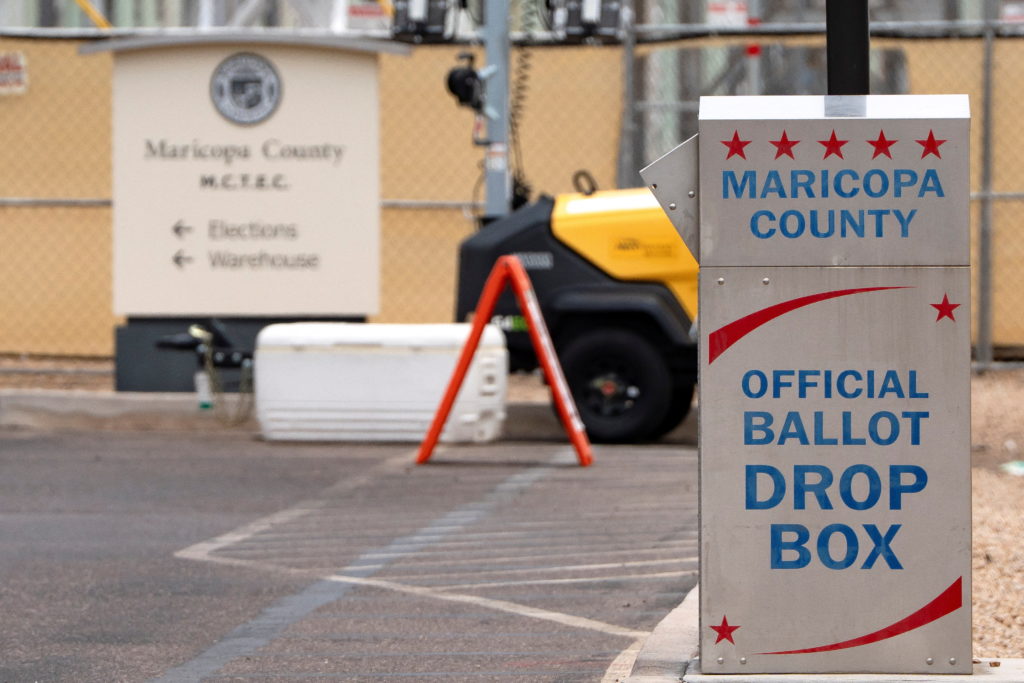
Voters and politicians head to the polls during Arizona’s primary election
Photograph: PBS NewsHour (embedded from source)
What this story says
- The U.S. Supreme Court has rejected Donald Trump's plan to overhaul the nation's mail-voting processes.
- Voting rights groups and Democratic officials have launched a voter protection campaign through Common Cause.
- The Department of Justice has ordered more than two dozen states to preserve 2024 election records.
- The Department of Homeland Security is investigating "Unlawful Voter Initiative" to identify noncitizen voters.
Who covered it
Percentages are shares of the 55 outlets carrying a published leaning rating. 5 of the 60 outlets we know ran this story carry no rating and are not counted in them. Coverage measured .
Trust
74/100
Craft
95/100
Hype
15/100
60 sources · methodology
Missing from the right
Only 1 of the 55 outlets with a published leaning rating that ran this story are rated right.
A reader who follows the right would not have seen this. We report the absence rather than explain it: outlets choose what to cover for many reasons, and we have no evidence about which one applies here.
The U.S. Supreme Court has ended one of Donald Trump's significant attempts to change national mail-voting procedures. The court's decision came as mail ballots were being sent out in some states and early voting was beginning in others. Trump has continued to make claims about mail ballots being corrupt and widespread election fraud.
Following the Supreme Court's ruling, voting rights groups and Democratic officials announced a voter protection campaign coordinated by Common Cause. This initiative aims to counter potential election interference from the Trump administration ahead of the upcoming midterm elections. The Department of Justice has also directed officials in over two dozen states to preserve 2024 election records as part of an ongoing effort to obtain detailed voter data.
Separately, the Department of Homeland Security has initiated an investigation named the "Unlawful Voter Initiative." This probe aims to identify noncitizen voters on state rolls. A federal judge had previously barred a new version of the Systematic Alien Verification for Entitlements (SAVE) program in June, citing it as an illegal privacy violation. The Trump administration has sought the Supreme Court's intervention on this ruling.
Disagreements in reporting
PBS NewsHour reported that the Department of Justice sent letters to 29 states and the District of Columbia, ordering them to preserve documents and stating they were "under investigation" for failing to provide data. Other reports did not specify the number of states or the exact wording of the DOJ's communication.
What the coverage left out
None of the left-rated reports mentioned the federal judge's June ruling that barred the new version of the SAVE program, calling it an illegal violation of privacy. The PBS NewsHour full report did include this detail.
Coverage settled. We checked this 23 times and stopped on 23 Sept 2026, 10:00. The figures above are what it finished at.
How each side covered it
Our own reading of the reporting listed below, written from the outlets’ articles rather than quoted from them. The reasoning is set out on our methodology page.
Left
37 rated outlets
- PBS NewsHour reported that the Supreme Court rejected the Trump administration’s proposal to overhaul mail voting, marking a defeat for the president’s effort to reshape the November election. Digests from Rhode Island Current, Georgia Recorder, Arizona Mirror and other left‑rated outlets also led on the court’s rejection and said voting‑rights groups and Democratic officials would prepare safeguards against what they described as possible interference by the Trump administration.
- PBS NewsHour added that the rejected plan was part of a series of attempts by the president to impose federal control over elections, citing recent Department of Justice orders for states to preserve 2024 election records and a Department of Homeland Security investigation into non‑citizen voters. The report quoted Trump’s criticism of the justices and noted Democratic groups planning contingency measures.
- None of the left‑rated digests mentioned the Department of Justice preservation orders, the Homeland Security non‑citizen voter investigation, or Trump’s statement that the justices lacked courage; those details appear only in PBS NewsHour’s full report. The digests also omitted any reference to the timeline or cost of the proposed overhaul, which the full report did not detail either.
Centre
17 rated outlets
- The U.S. Supreme Court declined to allow the Postal Service to enforce a rule targeting mail-in ballots. This was seen as a setback to President Donald Trump's efforts to restrict mail voting before the November midterms. Election officials confirmed no changes to the mail-in ballot system.
- The digests from these 12 centre-rated outlets reported that the Supreme Court blocked a Trump administration effort to place restrictions on mail-in voting. They stated that voting by mail would remain an option for the upcoming elections.
- One digest mentioned that voting rights groups and Democratic officials were looking to defend against possible election interference. Another digest noted that recent efforts to tighten mail-in requirements had raised questions among some voters, particularly military and overseas citizens.
Right
1 rated outlet
We have not written our reading of the right coverage of this story. The right-rated outlets that ran it are listed below.
Questions about this coverage
- How did the left and right cover Supreme Court rejects Trump mail-voting overhaul plan?
- Of the 55 outlets on this story carrying a published leaning rating, 67% are rated left, 31% are rated centre, 2% are rated right. Those percentages are shares of the rated outlets, not of every outlet that ran it, which was 60. The sections above set out what each side emphasised, in its own terms.
- Is Supreme Court rejects Trump mail-voting overhaul plan left or right?
- Neither side dominates it. Of the 55 rated outlets on this story, 67% are rated left, 31% are rated centre, 2% are rated right, and no side holds the 70% this site would want before calling a field one-sided. A story is not left or right in any case; the outlets that carried it are what carry ratings.
- Is the coverage of Supreme Court rejects Trump mail-voting overhaul plan biased?
- Supreme Court rejects Trump mail-voting overhaul plan is one event reported by 60 outlets, and this page does not rate the story as biased or unbiased. What it publishes is the spread: which outlets ran it, where named rating organisations place each of them on the spectrum, and what each side chose to lead with. A leaning rating describes an outlet's record over time, not this article, and the two should not be run together.
- Which side is not reporting Supreme Court rejects Trump mail-voting overhaul plan?
- When we first saw this story, outlets rated right had barely covered it. Coverage accretes for hours after an event, so that is where to look rather than a verdict — the split above is the current count, and it is the one to read.
- Which outlets covered Supreme Court rejects Trump mail-voting overhaul plan?
- 60 that we know of, every one of them listed further up this page with a link to its own report and to what we hold on the publisher. Nothing here is a summary of somebody else's summary: the outlets are named so the original reporting can be read.
- What was the Supreme Court's decision regarding Donald Trump's mail-voting plan?
- The U.S. Supreme Court ruled against Donald Trump's plan to significantly change the nation's mail-voting processes. This decision closed a chapter on one of his key efforts to reshape election procedures ahead of the midterm elections.
- What actions are voting rights groups taking after the court's decision?
- Voting rights groups and Democratic officials have announced a voter protection campaign through Common Cause. This initiative is intended to defend against potential election interference from the Trump administration during the upcoming midterm elections.
- What are the Department of Justice and Homeland Security investigating?
- The Department of Justice has ordered more than two dozen states to preserve 2024 election records. The Department of Homeland Security has launched an investigation called the "Unlawful Voter Initiative" to identify noncitizen voters on state rolls.
Read it at the source
60 outlets, grouped by the leaning a published rating gives them. Every headline links to the original; an underlined outlet name opens our profile of that publisher.
Left
37- In Our Opinion: Supreme Court decision on mail-in ballots is correct (opens Duncan Banner in a new tab)
Duncan Banner — is Duncan Banner biased? Our profile of this outletOpinion
- In Our Opinion: Supreme Court decision on mail-in ballots is correct (opens The Daily Star in a new tab)
The Daily Star — is The Daily Star biased? Our profile of this outletOpinion
- With vote-by-mail court fight settled, attention shifts to protections at the polls (opens arkansasadvocate.com in a new tab)
arkansasadvocate.com — is arkansasadvocate.com biased? Our profile of this outlet
- Va. registrars, voter groups work to ease confusion over mail ballots (opens Lodinews.com in a new tab)
Lodinews.com — is Lodinews.com biased? Our profile of this outlet
- With vote-by-mail court fight settled, attention shifts to protections at the polls (opens alabamareflector.com in a new tab)
alabamareflector.com — is alabamareflector.com biased? Our profile of this outlet
- With vote-by-mail court fight settled, attention shifts to protections at the polls (opens Colorado Newsline in a new tab)
Colorado Newsline — is Colorado Newsline biased? Our profile of this outlet
- With vote-by-mail court fight settled, attention shifts to protections at the polls • Oklahoma Voice (opens oklahomavoice.com in a new tab)
oklahomavoice.com — is oklahomavoice.com biased? Our profile of this outlet
- High court keeps rule on mail ballots blocked (opens Record and Landmark in a new tab)
Record and Landmark — is Record and Landmark biased? Our profile of this outlet
Show 29 more
- With vote-by-mail court fight settled, attention shifts to protections at the polls (opens Daily Montanan in a new tab)
Daily Montanan — is Daily Montanan biased? Our profile of this outlet
- With vote-by-mail court fight settled, attention shifts to protections at the polls (opens Times West Virginian in a new tab)
Times West Virginian — is Times West Virginian biased? Our profile of this outlet
- With vote-by-mail court fight settled, attention shifts to protections at the polls (opens Oregon Capital Chronicle in a new tab)
Oregon Capital Chronicle — is Oregon Capital Chronicle biased? Our profile of this outlet
- NAACP Takes Mail-In Voting Fight To Supreme Court (opens Blavity News & Politics in a new tab)
Blavity News & Politics — is Blavity News & Politics biased? Our profile of this outlet
- With vote-by-mail court fight settled, attention shifts to protections at the polls (opens Source New Mexico in a new tab)
Source New Mexico — is Source New Mexico biased? Our profile of this outlet
- With vote-by-mail court fight settled, attention shifts to protections at the polls (opens Florida Phoenix in a new tab)
Florida Phoenix — is Florida Phoenix biased? Our profile of this outlet
- Attorney General Bonta Secures Supreme Court Victory Blocking Trump Administration’s Attempt to Restrict Mail Voting (opens The Santa Barbara Independent in a new tab)
The Santa Barbara Independent — is The Santa Barbara Independent biased? Our profile of this outlet
- With vote-by-mail court fight settled, attention shifts to protections at the polls (opens Iowa Capital Dispatch in a new tab)
Iowa Capital Dispatch — is Iowa Capital Dispatch biased? Our profile of this outlet
- With vote-by-mail court fight settled, attention shifts to protections at the polls (opens Ohio Capital Journal in a new tab)
Ohio Capital Journal — is Ohio Capital Journal biased? Our profile of this outlet
- With vote-by-mail court fight settled, attention shifts to protections at the polls (opens Minnesota Reformer in a new tab)
Minnesota Reformer — is Minnesota Reformer biased? Our profile of this outlet
- With vote-by-mail court fight settled, attention shifts to protections at the polls (opens South Dakota Searchlight in a new tab)
South Dakota Searchlight — is South Dakota Searchlight biased? Our profile of this outlet
- With vote-by-mail court fight settled, attention shifts to protections at the polls (opens New Hampshire Bulletin in a new tab)
New Hampshire Bulletin — is New Hampshire Bulletin biased? Our profile of this outlet
- With vote-by-mail court fight settled, attention shifts to protections at the polls (opens Louisiana Illuminator in a new tab)
Louisiana Illuminator — is Louisiana Illuminator biased? Our profile of this outlet
- With vote-by-mail court fight settled, attention shifts to protections at the polls (opens Missouri Independent in a new tab)
Missouri Independent — is Missouri Independent biased? Our profile of this outlet
- With vote-by-mail court fight settled, attention shifts to protections at the polls (opens Pennsylvania Capital-Star in a new tab)
Pennsylvania Capital-Star — is Pennsylvania Capital-Star biased? Our profile of this outlet
- With vote-by-mail court fight settled, attention shifts to protections at the polls (opens Tennessee Lookout in a new tab)
Tennessee Lookout — is Tennessee Lookout biased? Our profile of this outlet
- With vote-by-mail court fight settled, attention shifts to protections at the polls • Maine Morning Star (opens mainemorningstar.com in a new tab)
mainemorningstar.com — is mainemorningstar.com biased? Our profile of this outlet
- With vote-by-mail court fight settled, attention shifts to protections at the polls (opens Wisconsin Examiner in a new tab)
Wisconsin Examiner — is Wisconsin Examiner biased? Our profile of this outlet
- With vote-by-mail court fight settled, attention shifts to protections at the polls • Rhode Island Current (opens rhodeislandcurrent.com in a new tab)
rhodeislandcurrent.com — is rhodeislandcurrent.com biased? Our profile of this outlet
- With vote-by-mail court fight settled, attention shifts to protections at the polls (opens Georgia Recorder in a new tab)
Georgia Recorder — is Georgia Recorder biased? Our profile of this outlet
- Follwoing Trump's loss on vote-by-mail, advocates ready poll-watching armies (opens Arizona Mirror in a new tab)
Arizona Mirror — is Arizona Mirror biased? Our profile of this outlet
- With vote-by-mail court fight settled, attention shifts to protections at the polls (opens Kansas Reflector in a new tab)
Kansas Reflector — is Kansas Reflector biased? Our profile of this outlet
- Trump's push to restrict mail ballots failed. Other efforts to reshape the midterms continue (opens PBS NewsHour in a new tab)
PBS NewsHour — is PBS NewsHour biased? Our profile of this outlet
- With vote-by-mail court fight settled, attention shifts to protections at the polls • West Virginia Watch (opens westvirginiawatch.com in a new tab)
westvirginiawatch.com — is westvirginiawatch.com biased? Our profile of this outlet
- With vote-by-mail court fight settled, attention shifts to protections at the polls (opens Utah News Dispatch in a new tab)
Utah News Dispatch — is Utah News Dispatch biased? Our profile of this outlet
- With vote-by-mail court fight settled, attention shifts to protections at the polls (opens Alaska Beacon in a new tab)
Alaska Beacon — is Alaska Beacon biased? Our profile of this outlet
- With vote-by-mail court fight settled, attention shifts to protections at the polls (opens Nebraska Examiner in a new tab)
Nebraska Examiner — is Nebraska Examiner biased? Our profile of this outlet
- With vote-by-mail court fight settled, attention shifts to protections at the polls (opens Michigan Advance in a new tab)
Michigan Advance — is Michigan Advance biased? Our profile of this outlet
- With vote-by-mail court fight settled, attention shifts to protections at the polls (opens Maryland Matters in a new tab)
Maryland Matters — is Maryland Matters biased? Our profile of this outlet
Centre
17- High court keeps rule on mail ballots blocked (opens Dispatch Argus in a new tab)
Dispatch Argus — is Dispatch Argus biased? Our profile of this outlet
- Va. registrars, voter groups work to ease confusion over mail ballots (opens Hanford Sentinel in a new tab)
Hanford Sentinel — is Hanford Sentinel biased? Our profile of this outlet
- High court keeps rule on mail ballots blocked (opens Herald & Review in a new tab)
Herald & Review — is Herald & Review biased? Our profile of this outlet
- High court keeps rule on mail ballots blocked (opens Mason City Globe Gazette in a new tab)
Mason City Globe Gazette — is Mason City Globe Gazette biased? Our profile of this outlet
- The Mail Vote Breathes, but the Battle Doesn't End (opens El Diario in a new tab)
El Diario — is El Diario biased? Our profile of this outletOpinion
- High court keeps rule on mail ballots blocked (opens Waterloo Cedar Falls Courier in a new tab)
Waterloo Cedar Falls Courier — is Waterloo Cedar Falls Courier biased? Our profile of this outlet
- High court keeps rule on mail ballots blocked (opens Helena Independent Record in a new tab)
Helena Independent Record — is Helena Independent Record biased? Our profile of this outlet
- High court keeps rule on mail ballots blocked (opens The News Virginian in a new tab)
The News Virginian — is The News Virginian biased? Our profile of this outlet
Show 9 more
- High court keeps rule on mail ballots blocked (opens Danville Register & Bee in a new tab)
Danville Register & Bee — is Danville Register & Bee biased? Our profile of this outlet
- High court keeps rule on mail ballots blocked (opens Chippewa Herald in a new tab)
Chippewa Herald — is Chippewa Herald biased? Our profile of this outlet
- High court keeps rule on mail ballots blocked (opens The Times and Democrat in a new tab)
The Times and Democrat — is The Times and Democrat biased? Our profile of this outlet
- High court keeps rule on mail ballots blocked (opens The Daily Nonpareil in a new tab)
The Daily Nonpareil — is The Daily Nonpareil biased? Our profile of this outlet
- High court keeps rule on mail ballots blocked (opens The McDowell News in a new tab)
The McDowell News — is The McDowell News biased? Our profile of this outlet
- High court keeps rule on mail ballots blocked (opens Mooresville Tribune in a new tab)
Mooresville Tribune — is Mooresville Tribune biased? Our profile of this outlet
- High court keeps rule on mail ballots blocked (opens Martinsville Bulletin in a new tab)
Martinsville Bulletin — is Martinsville Bulletin biased? Our profile of this outlet
- With vote-by-mail court fight settled, attention shifts to protections at the polls (opens Nisqually Valley News in a new tab)
Nisqually Valley News — is Nisqually Valley News biased? Our profile of this outlet
- Election officials say voters won’t see changes to mail-in ballots amid Supreme Court ruling (opens KSAT 12 in a new tab)
Right
1Not rated
5- With vote-by-mail court fight settled, attention shifts to protections at the polls (opens Dailyfly in a new tab)
- Supreme Court Blocks Trumps Mail Voting Restrictions for 2026 Midterms (opens digitalchew.com in a new tab)
digitalchew.com — is digitalchew.com biased? Our profile of this outlet
- With vote-by-mail court fight settled, attention shifts to protections at the polls (opens The Current in a new tab)
The Current — is The Current biased? Our profile of this outlet
- Trump's push to restrict mail ballots failed. Other efforts to reshape the midterms continue (opens BizToc in a new tab)
- With vote-by-mail court fight settled, attention shifts to protections at the polls - Now Georgia (opens nowgeorgia.com in a new tab)
nowgeorgia.com — is nowgeorgia.com biased? Our profile of this outlet
How did this read?
About the coverage, not about the story. We do not ask whether you agree with what happened — we have no honest use for that answer.