BepiColombo spacecraft arrives in orbit around Mercury
The joint European-Japanese mission completed an eight-year journey to study the solar system's innermost planet.
AI-assisted coverage comparison, editor-supervised · How this was made
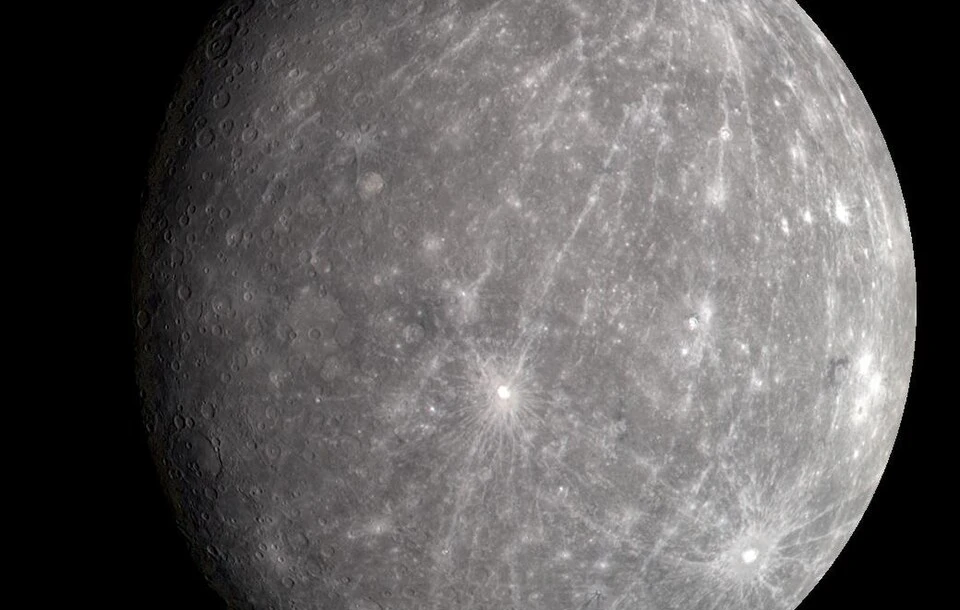
BepiColombo spacecraft arrives in orbit around Mercury
Photograph: ZN.UA Зеркало недели (embedded from source)
What this story says
- The BepiColombo mission has arrived in orbit around Mercury after an eight-year journey.
- The spacecraft traveled nearly 10 billion kilometers to reach the solar system's innermost planet.
- The mission is a joint effort between the European Space Agency and the Japanese Aerospace Exploration Agency.
- BepiColombo will eventually split into two probes to conduct different scientific investigations.
Who covered it
Percentages are shares of the 32 outlets carrying a published leaning rating. 23 of the 55 outlets we know ran this story carry no rating and are not counted in them. Coverage measured .
Trust
42/100
Craft
60/100
Hype
41/100
55 sources · methodology
The BepiColombo mission, a joint European-Japanese endeavor, has successfully entered orbit around Mercury. The spacecraft's arrival marks the culmination of an eight-year journey that spanned nearly 10 billion kilometers. This is only the second time in history that a spacecraft has been placed into orbit around Mercury, the solar system's smallest and innermost planet.
Launched in October 2018, the mission's long voyage was necessary due to Mercury's proximity to the Sun. The Sun's gravity accelerates spacecraft, requiring significant braking maneuvers to avoid overshooting the planet. The mission is expected to last approximately three years in orbit before the probes eventually fall to the planet's surface.
Mission Objectives and Probe Separation
The primary goals of the BepiColombo mission are to study Mercury's formation, its unique magnetic field, and its surface composition. Scientists are particularly interested in understanding how the planet formed so close to the Sun and why it possesses a magnetic field despite its slow rotation. Upon arrival, the spacecraft is set to separate into two distinct probes: the European MPO (Mercury Planetary Orbiter) and a Japanese probe. These probes will conduct different aspects of the research, with the MPO focusing on mapping the surface and studying the planet's internal structure, while the Japanese probe will investigate Mercury's magnetic field and its tenuous exosphere.
Coverage Comparison
What the coverage left out
None of the left-rated digests mention the mission's cost of 1.6 billion euros, which was reported by ZN.UA Зеркало недели. None of the right-rated digests mention the mission's cost estimate or the specific scientific aims beyond reaching Mercury and braving its conditions.
Still developing. We have re-checked which outlets are covering this 14 times, most recently on 22 Nov 2026, 15:30, and will add the sides that appear.
How each side covered it
Our own reading of the reporting listed below, written from the outlets’ articles rather than quoted from them. The reasoning is set out on our methodology page.
Left
10 rated outlets
- Associated Press News and Antena 3 highlighted the mission's arrival and its eight-year journey. Arizona Daily Sun noted that twin orbiters are the first to reach Mercury in over a decade. The Associated Press described the spacecraft as a 'pair of spacecraft' that 'slipped into orbit'.
Centre
16 rated outlets
- Centre-rated reports from ZN.UA Зеркало недели, saarbruecker-zeitung.de, volksfreund.de, EarthSky, Hola News, Space, Ilta-Sanomat, 20minutos, and National Geographic focused on the mission's arrival and its eight-year journey. ZN.UA Зеркало недели provided the most detail, mentioning the mission's cost of 1.6 billion euros and quoting Professor Emma Bunce. Several outlets, including saarbruecker-zeitung.de, volksfreund.de, and geo, used the headline 'Solar Next Planet: Mercury Probe "BepiColombo" Orbits Target Planets', stating that the probe had covered ten billion kilometres and arrived at its destination. Space reported that the mission 'will arrive in orbit around Mercury today (Nov. 21), more than eight years after leaving its home'. National Geographic framed the arrival as a 'New Mission Arrives at Mercury, the Solar System's Most Mysterious Planet'.
Right
6 rated outlets
- Handelsblatt and Hot Air reported on the BepiColombo mission's arrival at Mercury. Handelsblatt stated that '"BepiColombo" has covered ten billion kilometres and has finally arrived at its destination: Mercury.' Hot Air's headline, 'A Brave Spacecraft Is About to Face Mercury and Try Not to Die,' highlighted the mission's daring nature in braving Mercury's extreme heat.
Questions about this coverage
- How did the left and right cover BepiColombo spacecraft arrives in orbit around Mercury?
- Of the 32 outlets on this story carrying a published leaning rating, 31% are rated left, 50% are rated centre, 19% are rated right. Those percentages are shares of the rated outlets, not of every outlet that ran it, which was 55. The sections above set out what each side emphasised, in its own terms.
- Is BepiColombo spacecraft arrives in orbit around Mercury left or right?
- Neither side dominates it. Of the 32 rated outlets on this story, 31% are rated left, 50% are rated centre, 19% are rated right, and no side holds the 70% this site would want before calling a field one-sided. A story is not left or right in any case; the outlets that carried it are what carry ratings.
- Is the coverage of BepiColombo spacecraft arrives in orbit around Mercury biased?
- BepiColombo spacecraft arrives in orbit around Mercury is one event reported by 55 outlets, and this page does not rate the story as biased or unbiased. What it publishes is the spread: which outlets ran it, where named rating organisations place each of them on the spectrum, and what each side chose to lead with. A leaning rating describes an outlet's record over time, not this article, and the two should not be run together.
- Which outlets covered BepiColombo spacecraft arrives in orbit around Mercury?
- 55 that we know of, every one of them listed further up this page with a link to its own report and to what we hold on the publisher. Nothing here is a summary of somebody else's summary: the outlets are named so the original reporting can be read.
- How long did the BepiColombo mission take to reach Mercury?
- The BepiColombo mission took eight years to reach Mercury. It launched in October 2018 and completed its journey by entering orbit around the planet in November 2026, having traveled nearly 10 billion kilometers.
- What is the main goal of the BepiColombo mission?
- The main goal of the BepiColombo mission is to study Mercury's formation, its magnetic field, and its surface composition. The mission aims to understand how the planet formed so close to the Sun and why it has a magnetic field.
- How many probes make up the BepiColombo mission?
- The BepiColombo mission consists of two probes: the European MPO (Mercury Planetary Orbiter) and a Japanese probe. These probes will eventually separate to conduct different scientific investigations of Mercury.
Read it at the source
55 outlets, grouped by the leaning a published rating gives them. Every headline links to the original; an underlined outlet name opens our profile of that publisher.
Left
10- The Space Mission BepiColombo Entered Mercury's Orbit After Eight Years of Travel (opens franceinfo.fr in a new tab)
franceinfo.fr — is franceinfo.fr biased? Our profile of this outlet
- After Eight Years of Travel, BepiColombo Entered the Orbit of the Least Known Planets in the Solar System - HotNews.ro (opens Hot News in a new tab)
- Mercury gets its first visitor in years as a pair of spacecraft loop into orbit (opens Los Angeles Times in a new tab)
Los Angeles Times — is Los Angeles Times biased? Our profile of this outlet
- Mercury gets its first visitors in years as a pair of spacecraft loop into orbit (opens NBC Boston in a new tab)
NBC Boston — is NBC Boston biased? Our profile of this outlet
- Solar Next Planet: Mercury Probe "BepiColombo" Orbits Target Planets (opens Zeit Online in a new tab)
Zeit Online — is Zeit Online biased? Our profile of this outlet
- Little Mercury gets its first visitor in years as a pair of spacecraft loop into orbit (opens Associated Press News in a new tab)
Associated Press News — is Associated Press News biased? Our profile of this outlet
- The Mystery of Mercury (opens The New Yorker in a new tab)
The New Yorker — is The New Yorker biased? Our profile of this outlet
- The Mysterious Mercury Is Ready to Receive a Visitor After an 8-Year Journey. BepiColombo Probe Has Traveled 10 Billion Kilometers (opens antena3.ro in a new tab)
antena3.ro — is antena3.ro biased? Our profile of this outlet
Centre
16- Japanese-European Space Probe Enters Mercury Orbit After Eight Years (opens Ekstra Bladet in a new tab)
Ekstra Bladet — is Ekstra Bladet biased? Our profile of this outlet
- Joint Probe From Europe and Japan Entered Mercury Orbit (opens TVN in a new tab)
- Joint Probe From Europe and Japan Entered Mercury Orbit (opens France24 in a new tab)
- Probe "BepiColombo" Reaches Mercury Orbit (opens Tagesschau in a new tab)
Tagesschau — is Tagesschau biased? Our profile of this outlet
- Merkuriusta Tutkiva BepiColombo Saapui Kiertoradalle (opens cedarnews.net in a new tab)
cedarnews.net — is cedarnews.net biased? Our profile of this outlet
- Merkuriusta Tutkiva BepiColombo Saapui Kiertoradalle (opens yle in a new tab)
- Solar Next Planet: Mercury Probe "BepiColombo" Orbits Target Planets (opens volksfreund.de in a new tab)
volksfreund.de — is volksfreund.de biased? Our profile of this outlet
- Solar Next Planet: Mercury Probe "BepiColombo" Orbits Target Planets (opens saarbruecker-zeitung.de in a new tab)
saarbruecker-zeitung.de — is saarbruecker-zeitung.de biased? Our profile of this outlet
Show 8 more
- BepiColombo goes into orbit around Mercury today! (opens EarthSky in a new tab)
- More than Eight Years on the Road: the Second Mission in History Enters the Orbit of Mercury (opens ZN.UA Зеркало недели in a new tab)
ZN.UA Зеркало недели — is ZN.UA Зеркало недели biased? Our profile of this outlet
- The BepiColombo Mission Will Be Inserted Into the Orbit of Mercury After Eight Years of Travel (opens Hola News in a new tab)
- European-Japanese BepiColombo probe arrives in orbit around Mercury today (opens Space in a new tab)
- A Probe that Has Been Traveling for Eight Years Is Approaching Mercury – with Finnish Technology on Board (opens Ilta-Sanomat in a new tab)
Ilta-Sanomat — is Ilta-Sanomat biased? Our profile of this outlet
- BepiColombo Mission Will Attempt to Enter Mercury Orbit This Saturday After Eight Years of Travel Through the Solar System (opens 20minutos in a new tab)
- Twin orbiters become 1st to reach Mercury in more than a decade (opens The Florida Times-Union in a new tab)
The Florida Times-Union — is The Florida Times-Union biased? Our profile of this outlet
- A New Mission Arrives at Mercury, the Solar System's Most Mysterious Planet (opens National Geographic in a new tab)
National Geographic — is National Geographic biased? Our profile of this outlet
Right
6- Japanese-European Space Probe Enters Mercury Orbit After Eight Years (opens BT in a new tab)
- Japanese-European Space Probe Enters Mercury Orbit After Eight Years (opens berlingske.dk in a new tab)
berlingske.dk — is berlingske.dk biased? Our profile of this outlet
- BepiColombo Probe Enters Mercury Orbit After Eight Years of Travel Through the Solar System (opens Globo in a new tab)
- Earth's messenger reaches Mercury: BepiColombo captured by planet's gravity (opens India Today in a new tab)
India Today — is India Today biased? Our profile of this outlet
- Solar Next Planet: Mercury Probe "BepiColombo" Orbits Target Planets (opens Handelsblatt in a new tab)
Handelsblatt — is Handelsblatt biased? Our profile of this outlet
- A Brave Spacecraft Is About to Face Mercury and Try Not to Die (opens Hot Air in a new tab)
Not rated
23- Japanese-European Space Probe Enters Mercury Orbit After Eight Years (opens avisendanmark.dk in a new tab)
avisendanmark.dk — is avisendanmark.dk biased? Our profile of this outlet
- Two European Probes Took Eight Years to Brake to Reach Mercury (opens SoCientífica in a new tab)
SoCientífica — is SoCientífica biased? Our profile of this outlet
- BepiColombo Enters Mercury's Orbit: the Extreme Challenge Against the Gravity of the Sun After 8 Years of Travel (opens Scenarieconomici.it in a new tab)
Scenarieconomici.it — is Scenarieconomici.it biased? Our profile of this outlet
- Merkuriusta Tutkiva BepiColombo Saapui Kiertoradalle (opens SSS.fi in a new tab)
- After Eight Years of Approach: Mercury Probe "BepiColombo" Orbits Target Planets (opens epochtimes.de in a new tab)
epochtimes.de — is epochtimes.de biased? Our profile of this outlet
- The Pair of Spacecraft Entered Mercury Orbit After a Journey of 10 Billion Kilometers. (opens Thanh Niên in a new tab)
Thanh Niên — is Thanh Niên biased? Our profile of this outlet
- After eight years in space, BepiColombo enters orbit around Mercury (opens Mathrubhumi in a new tab)
Mathrubhumi — is Mathrubhumi biased? Our profile of this outlet
- Solar Next Planet: Mercury Probe "BepiColombo" Orbits Target Planets (opens geo in a new tab)
Show 15 more
- Mission BepiColombo Is Inserted Into the Orbit of Mercury After Eight Years of Travel (opens lavozdemichoacan.com.mx in a new tab)
lavozdemichoacan.com.mx — is lavozdemichoacan.com.mx biased? Our profile of this outlet
- The Spacecraft Flew to Mercury, and After Eight Years of Space Travel, It Will Orbit This Mysterious Planet. (opens centralasia.media in a new tab)
centralasia.media — is centralasia.media biased? Our profile of this outlet
- After an Eight-Year Arduous Journey, the Probe Is Ready to Explore the Mysteries of the Small Planet (opens illvet.se in a new tab)
- Eight years and nine gravity assists – BepiColombo enters Mercury orbit (opens Aroged in a new tab)
- The Probe of Europe and Japan Will Orbit Mercury After 8 Years (opens O Cafezinho in a new tab)
O Cafezinho — is O Cafezinho biased? Our profile of this outlet
- BepiColombo Faces His Arrival in Mercury After Eight Years of Travel (opens DiarioBitcoin in a new tab)
DiarioBitcoin — is DiarioBitcoin biased? Our profile of this outlet
- ♪ OBJECTION OF THE YEAR ♪ ♪ LAUGHTER ♪ ♪ AND THE SAD ♪ ♪ THE NADOMAK CY ♪ (opens dnevnik.rs in a new tab)
dnevnik.rs — is dnevnik.rs biased? Our profile of this outlet
- The Spacecraft that Will Explore Mercury in Detail for the First Time Enters Orbit (opens Naftemporiki in a new tab)
Naftemporiki — is Naftemporiki biased? Our profile of this outlet
- BepiColombo: The 37 Minutes that Determine the Arrival at Mercury - Techmaniacs (opens techmaniacs.gr in a new tab)
techmaniacs.gr — is techmaniacs.gr biased? Our profile of this outlet
- BepiColombo Will Attempt to Enter Mercury's Orbit with a Risky 37-Minute Maneuver (opens sondakika.com in a new tab)
sondakika.com — is sondakika.com biased? Our profile of this outlet
- BepiColombo Will Enter Mercury's Orbit After 8 Years and 10 Billion Kilometers. (opens Haberler in a new tab)
- After Eight Years of Travel, This European Space Probe Will Finally Be Placed in Orbit Around the Least Explored Planet of the Solar System. (opens Journal du Geek in a new tab)
Journal du Geek — is Journal du Geek biased? Our profile of this outlet
- The Mysterious Planet Mercury Is About to Receive a Visitor (opens Aktual24 in a new tab)
- After 8 Years of Travel, the European Probe BepiColombo Finally Reaches Mercury: Why Its Mission Counts (opens Presse-citron in a new tab)
Presse-citron — is Presse-citron biased? Our profile of this outlet
- 8-Year Trip Took Probe to Mercury - 20/11/2026 (opens Folha de S.Paulo in a new tab)
Folha de S.Paulo — is Folha de S.Paulo biased? Our profile of this outlet
How did this read?
About the coverage, not about the story. We do not ask whether you agree with what happened — we have no honest use for that answer.
More in Science & Tech
All Science & Tech →

Elsewhere on the site
 Conflict & Security•3 min readUS Tightens Iran Naval Blockade as Tankers Mass
 Politics•3 min readTrump wants permanent Iran deal, rules out nuclear weapons
 Politics•5 min readIran proposes Strait of Hormuz reopening for US concessions
 Conflict & Security•3 min readIRGC chief Ahmad Vahidi visits Iran's underground missile city and warns US