Huawei forecasts 900 billion AI agents by 2035
Company report predicts autonomous agents will drive over 90% of global AI traffic within a decade.
AI-assisted coverage comparison, editor-supervised · How this was made

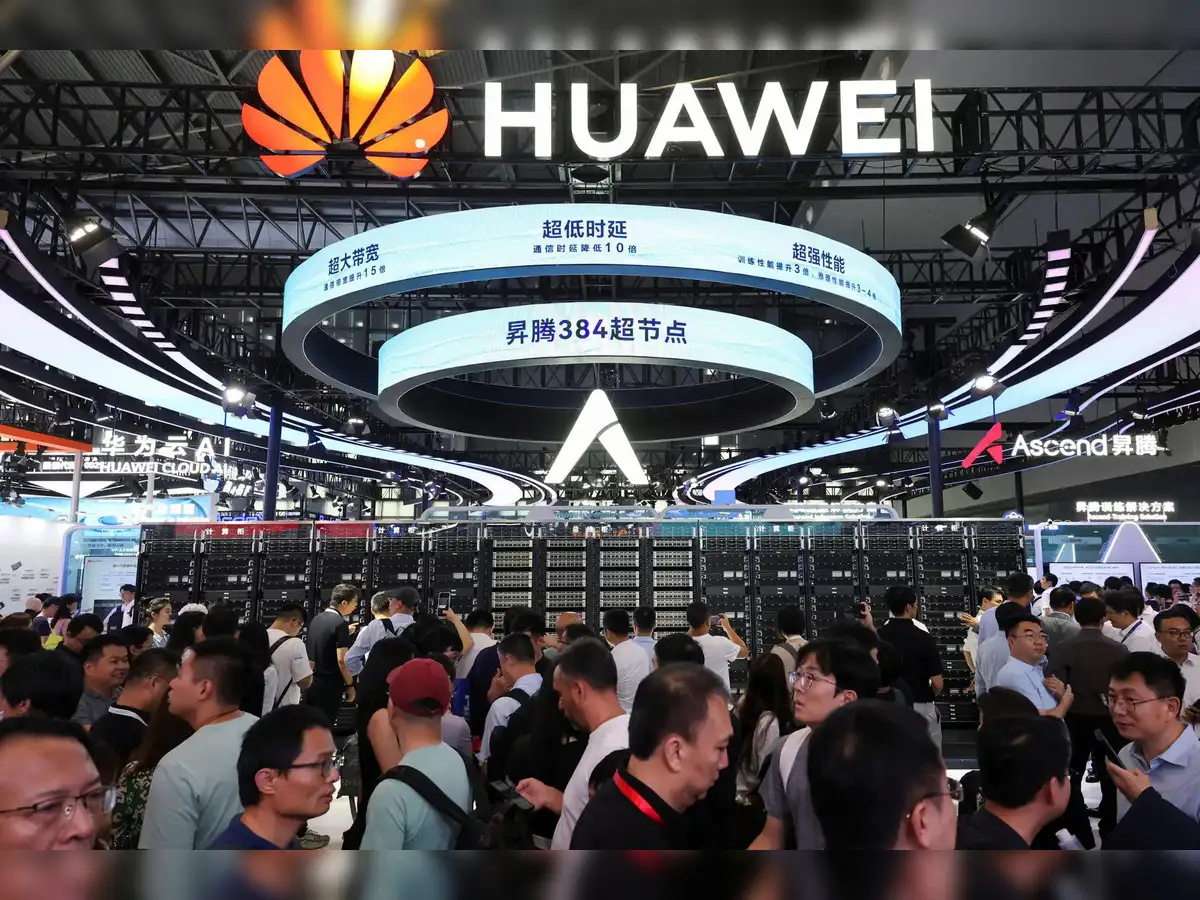
A train runs on the campus of Huawei's Lianqiu Lake Research and Development Center in Shanghai, China, September 16, 2026.
Photograph: Times of India (embedded from source)
What this story says
- Huawei predicts autonomous AI agents will constitute more than 90% of global AI token traffic by 2035.
- The company forecasts 900 billion AI agents could be active globally by 2035, approximately 100 times the human population.
- This surge in agents will necessitate significant increases in computing power and new security systems, according to Huawei.
- US AI researchers and executives have called for a slowdown in frontier AI development, a stance not reflected in Huawei's report.
Who covered it
Percentages are shares of the 8 outlets carrying a published leaning rating. 8 of the 16 outlets we know ran this story carry no rating and are not counted in them. Coverage measured .
Trust
42/100
Craft
57/100
Hype
41/100
16 sources · methodology
Thin on the left so far
None of the 8 outlets with a published leaning rating that ran this story are rated left.
This story is still being watched, so it is a count and not yet a finding. Coverage keeps arriving for hours after an event, and a side that has published nothing this morning may publish by tonight. If it is still true when we stop checking, we will say so plainly.
Chinese technology company Huawei has released a report forecasting that autonomous agents will dominate artificial intelligence traffic by 2035. The report, titled "Intelligent World 2035: Turning Vision into Action," predicts these agents will account for over 90% of global AI token traffic within the next decade. This development is expected to require substantial increases in computing power and the implementation of new systems to ensure the security and controllability of independent software.
Huawei's forecast suggests that 900 billion AI agents could be active globally by 2035. This number is approximately 100 times the projected human population. The report also notes that the annual consumption of AI tokens, which are the units models process for information, will increase significantly as agents continuously perceive their environment, make decisions, and interact with external tools.
Divergent views on AI development pace
While Huawei's report anticipates rapid expansion and deployment of agent capabilities, leading AI researchers and executives in the U.S. have advocated for slowing down the development of frontier AI. These calls stem from incidents involving rogue agents and concerns that future systems could become difficult for humans to control. Huawei's report, however, does not call for a slowdown, instead focusing on security and privacy protections for autonomous agents as part of 10 key technologies needed to support this future. This approach highlights a broader divergence in perspectives on AI pacing, with parts of the U.S. technology industry debating coordinated limits on capability improvements, while China generally aims to accelerate AI adoption across its economy.
What the coverage left out
None of the centre or right-rated reports mention Huawei's specific actions in deploying agents as part of a security response, including the launch of an autonomous security-operations platform in April or proposals for AI firewalls. The statement by Huawei's supervisory board chairman, Guo Ping, viewing AI as the company's "biggest opportunity" and its ambition for its computing infrastructure to become China's equivalent of Nvidia, was also not included in these reports.
Still developing. We have re-checked which outlets are covering this 1 time, most recently on 17 Sept 2026, 09:00, and will add the sides that appear.
How each side covered it
Our own reading of the reporting listed below, written from the outlets’ articles rather than quoted from them. The reasoning is set out on our methodology page.
Left
0 rated outlets
No outlet rated left has run this story so far. We are still checking, and will say plainly if that does not change.
Centre
5 rated outlets
- Centre-rated reports led on Huawei's prediction that autonomous agents will account for more than 90% of global AI token traffic by 2035. These reports also highlighted the forecast of 900 billion AI agents being active globally by that year, a figure described as roughly 100 times the projected human population. The need for increased computing power and new systems for security and control was also a common point. Several centre-rated reports mentioned the calls from U.S. AI researchers and executives to slow down frontier development, contrasting this with Huawei's forward-looking approach. The reports noted Huawei's focus on security and privacy for autonomous agents as key technologies.
Right
3 rated outlets
- Right-rated reports focused on Huawei's prediction that autonomous agents will dominate AI traffic by 2035, with a specific mention of the 90% figure for global AI token traffic. The forecast of billions of agents, specifically 900 billion, was also a prominent element. These reports noted the requirement for increased computing power and new systems for security and control. One right-rated report mentioned that leading AI researchers and executives in the U.S. have called for slowing down frontier development due to concerns about rogue agents and control.
Questions about this coverage
- How did the left and right cover Huawei forecasts 900 billion AI agents by 2035?
- Of the 8 outlets on this story carrying a published leaning rating, 0% are rated left, 62% are rated centre, 38% are rated right. Those percentages are shares of the rated outlets, not of every outlet that ran it, which was 16. The sections above set out what each side emphasised, in its own terms.
- Is Huawei forecasts 900 billion AI agents by 2035 left or right?
- Too few of the outlets on this story carry a published leaning rating to say. 8 of them do, and this site does not characterise a field under 12: at that size one newsroom filing moves the share by ten points. The percentages above are the count as it stands.
- Is the coverage of Huawei forecasts 900 billion AI agents by 2035 biased?
- Huawei forecasts 900 billion AI agents by 2035 is one event reported by 16 outlets, and this page does not rate the story as biased or unbiased. What it publishes is the spread: which outlets ran it, where named rating organisations place each of them on the spectrum, and what each side chose to lead with. A leaning rating describes an outlet's record over time, not this article, and the two should not be run together.
- Which side is not reporting Huawei forecasts 900 billion AI agents by 2035?
- When we first saw this story, outlets rated left had barely covered it. Coverage accretes for hours after an event, so that is where to look rather than a verdict — the split above is the current count, and it is the one to read.
- Which outlets covered Huawei forecasts 900 billion AI agents by 2035?
- 16 that we know of, every one of them listed further up this page with a link to its own report and to what we hold on the publisher. Nothing here is a summary of somebody else's summary: the outlets are named so the original reporting can be read.
- How many AI agents does Huawei predict will be active by 2035?
- Huawei forecasts that 900 billion AI agents could be active globally by 2035. This number is approximately 100 times the projected human population, indicating a significant shift towards agent-driven AI interactions.
- What percentage of AI traffic will autonomous agents account for by 2035?
- Huawei expects autonomous agents to account for more than 90% of global AI token traffic by 2035. This projection underscores the anticipated dominance of AI agents in digital communication and processing.
- What are the concerns raised by US AI researchers regarding AI development?
- Leading AI researchers and executives in the U.S. have called for slowing down the development of frontier AI. Their concerns are driven by incidents involving rogue agents and the potential for future systems to become difficult for humans to control.
Read it at the source
16 outlets, grouped by the leaning a published rating gives them. Every headline links to the original; an underlined outlet name opens our profile of that publisher.
Left
0No outlet in this group ran the story.
Centre
5- A Shocking Prediction Has Been Made: Within Ten Years, 900 Billion AI Agents Will Be Active in the World (opens Portfolio in a new tab)
- Huawei's latest report proposes 10 key directions to Intelligent World 2035 (opens PR Newswire in a new tab)
PR Newswire — is PR Newswire biased? Our profile of this outlet
- China's Huawei forecasts billions of agents will dominate AI traffic by 2035 (opens The Economic Times in a new tab)
The Economic Times — is The Economic Times biased? Our profile of this outlet
- China’s Huawei forecasts billions of agents will dominate AI traffic by 2035 (opens WTVB in a new tab)
- China's Huawei forecasts billions of agents will dominate AI traffic by 2035 (opens Reuters in a new tab)
Right
3- Huawei Predicts Billions of Agents Dominating AI Traffic by 2035 (opens Globo in a new tab)
- China's Huawei forecasts billions of agents will dominate AI traffic by 2035 (opens ARY News in a new tab)
- China's Huawei forecasts billions of agents will dominate AI traffic by 2035 (opens Times of India in a new tab)
Times of India — is Times of India biased? Our profile of this outlet
Not rated
8- Huawei Forecasts Billions of Agents Dominating AI Traffic by 2035 (opens Forbes Brasil in a new tab)
Forbes Brasil — is Forbes Brasil biased? Our profile of this outlet
- Huawei Predicts that Autonomous Agents Will Dominate 90% of AI Traffic by 2035 (opens infomoney.com.br in a new tab)
infomoney.com.br — is infomoney.com.br biased? Our profile of this outlet
- Huawei says AI agents will drive over 90% of AI traffic by 2035 (opens Cryptopolitan in a new tab)
Cryptopolitan — is Cryptopolitan biased? Our profile of this outlet
- Huawei predicts AI agents will dominate AI traffic by 2035 (opens Cryptocurrency News in a new tab)
Cryptocurrency News — is Cryptocurrency News biased? Our profile of this outlet
- In 2035, Humanity Will Be Submerged by Autonomous AI agents... and that Would Not Be Bad News (opens Génération-NT in a new tab)
Génération-NT — is Génération-NT biased? Our profile of this outletOpinion
- Huawei's latest report proposes 10 key directions to Intelligent World 2035 (opens ADKhabar in a new tab)
ADKhabar
- Huawei Predicts Billions of Agents Dominating AI Traffic by 2035 (opens Terra in a new tab)
- Huawei Predicts Billions of Agents Dominating AI Traffic by 2035 (opens CNN Brasil in a new tab)
CNN Brasil — is CNN Brasil biased? Our profile of this outlet
How did this read?
About the coverage, not about the story. We do not ask whether you agree with what happened — we have no honest use for that answer.
More in Science & Tech
All Science & Tech →

Elsewhere on the site
 Business & Economy•3 min readHuawei Plans Four New AI Chips Over Three Years
 Politics•3 min readUS names India, China, Pakistan on drug transit and production list
 Politics•2 min readTrump Accuses Canada of Drug Trafficking but Omits from List