Human brain cells transplanted into mice to study disease
Researchers replaced parts of mouse cerebral cortex with lab-grown human neurons, showing improved function and human-like responses.
AI-assisted coverage comparison, editor-supervised · How this was made
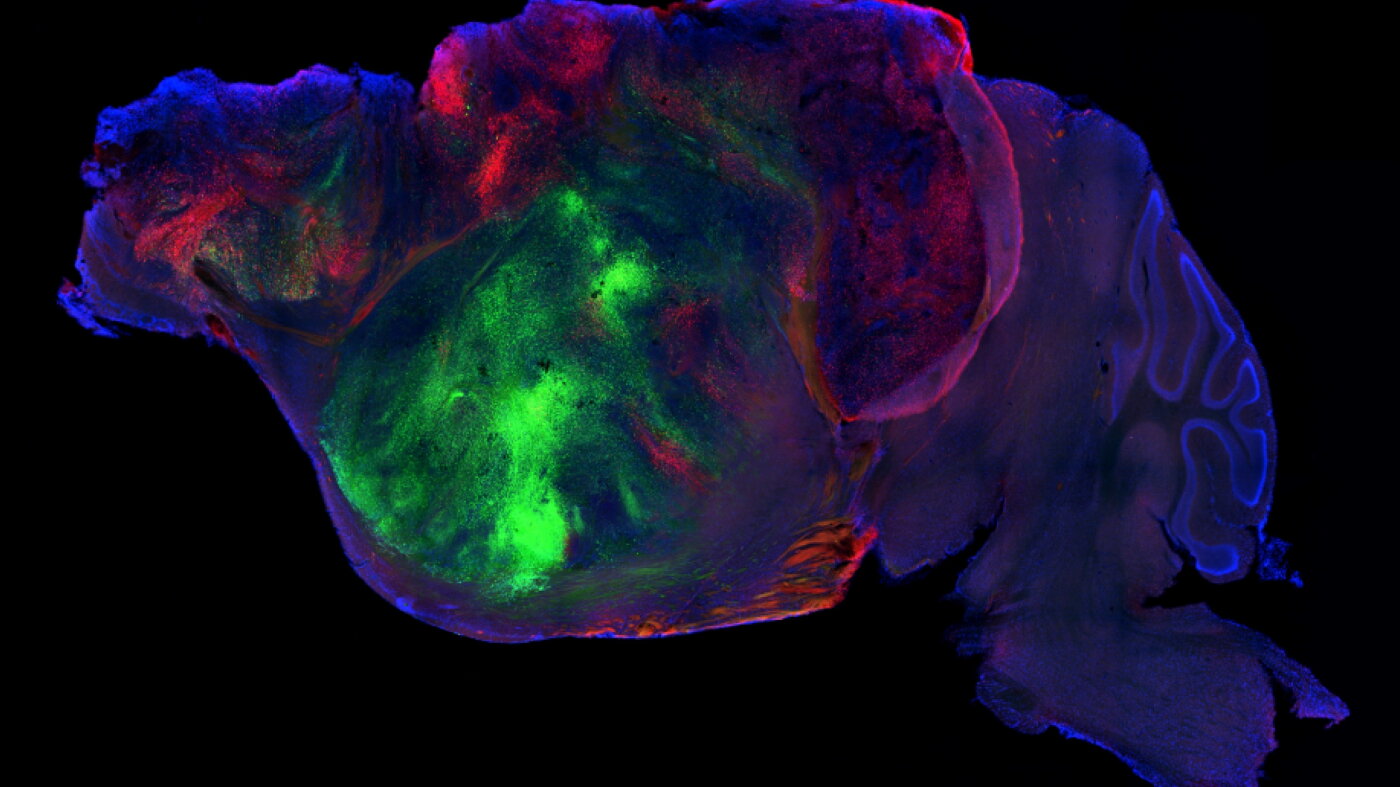
Human brain cells transplanted into mice to study disease
Photograph: npr (embedded from source)
What this story says
- Researchers have developed a method to implant millions of human brain cells into mice by replacing parts of their cerebral cortex.
- This technique allows for the study of neurodegenerative diseases and human brain function in a more natural environment than a petri dish.
- The altered mice demonstrated improved memory tasks, better interaction with other mice, and exhibited human-like responses to low-oxygen conditions.
- The research raises ethical questions regarding the implications of this technique in larger animals and the treatment of these mice.
Who covered it
Percentages are shares of the 30 outlets carrying a published leaning rating. 17 of the 47 outlets we know ran this story carry no rating and are not counted in them. Coverage measured .
Trust
42/100
Craft
61/100
Hype
41/100
47 sources · methodology
Scientists have developed a new method to transplant lab-grown human brain cells into mice, aiming to create better models for studying neurodegenerative diseases and human brain function. The technique involves genetically engineering mice to lack significant portions of their cerebral cortex and then replacing these areas with human neurons.
The human brain cells, grown in a lab, were implanted into the genetically engineered mice. These altered mice showed improvements in memory tasks and social interaction compared to their unmodified counterparts. Furthermore, they displayed human-like reactions to low-oxygen conditions, a response not seen in regular mice. Researchers suggest this offers a more integrated biological system for studying brain conditions than traditional laboratory models.
Disagreement on integration and function
While some reports indicate the human brain cells integrated and occupied over 90% of the available space, others suggest they did not organize on a larger scale. Ars Technica noted that the results were only a slight improvement over mice missing the entire brain structure. However, multiple outlets reported that the human cells formed functional neural networks and integrated into the animal's nervous system.
What the coverage left out
None of the digests mention the specific number of mouse neurons removed or the exact volume of the human cortical neurons added. The full report from NPR states that researchers removed approximately 14 million mouse neurons and added around 4 million human cortical neurons, a detail not present in the digests.
Still developing. We have re-checked which outlets are covering this 4 times, most recently on 16 Sept 2026, 20:45, and will add the sides that appear.
How each side covered it
Our own reading of the reporting listed below, written from the outlets’ articles rather than quoted from them. The reasoning is set out on our methodology page.
Left
12 rated outlets
- Left-rated reports highlighted the potential of the research to study neurodegenerative diseases and human brain function, with many mentioning Sergiu Pașca, the Romanian-led Stanford team. Outlets like Gizmodo and Le Monde focused on the scale of the achievement, with Gizmodo stating scientists grew more human brain tissue in a mouse than ever before. The ethical questions raised by the research were also a common theme, as seen in headlines from Le Monde and IndexHR. Several reports, including those from HotNews.ro and El Pais, emphasised the potential for new treatments for serious diseases like schizophrenia and epilepsy.
Centre
12 rated outlets
- Centre-rated reports focused on the technical achievement and its implications for disease research. BBC News described it as a "science breakthrough" and highlighted the genetic alteration of mice to receive human brain cells. Medical Xpress and ElNacional.cat noted that the engineered mice provided space for human brain organoids to form working circuits and occupy more than 90% of the cortex. Reuters and 20minutos reported on the transplantation of lab-grown human brain tissue into mice, suggesting it could speed research into devastating disorders and accelerate study into neurological disorders.
Right
6 rated outlets
- Right-rated reports, such as those from Korrespondent.net and Globo, focused on the creation of mice with a significant portion of their brains being human. Regional Media News and Independent Journal Review highlighted the transplantation of lab-grown human brain tissue and organoids into mice engineered to lack most of their cortex. ABC.es reported that scientists grafted human neurons into "half-brained" mice, regaining their capabilities. The potential for studying neurological disorders was a common thread across these reports.
Questions about this coverage
- How did the left and right cover Human brain cells transplanted into mice to study disease?
- Of the 30 outlets on this story carrying a published leaning rating, 32% are rated left, 50% are rated centre, 18% are rated right. Those percentages are shares of the rated outlets, not of every outlet that ran it, which was 47. The sections above set out what each side emphasised, in its own terms.
- Is Human brain cells transplanted into mice to study disease left or right?
- Neither side dominates it. Of the 30 rated outlets on this story, 32% are rated left, 50% are rated centre, 18% are rated right, and no side holds the 70% this site would want before calling a field one-sided. A story is not left or right in any case; the outlets that carried it are what carry ratings.
- Is the coverage of Human brain cells transplanted into mice to study disease biased?
- Human brain cells transplanted into mice to study disease is one event reported by 47 outlets, and this page does not rate the story as biased or unbiased. What it publishes is the spread: which outlets ran it, where named rating organisations place each of them on the spectrum, and what each side chose to lead with. A leaning rating describes an outlet's record over time, not this article, and the two should not be run together.
- Which outlets covered Human brain cells transplanted into mice to study disease?
- 47 that we know of, every one of them listed further up this page with a link to its own report and to what we hold on the publisher. Nothing here is a summary of somebody else's summary: the outlets are named so the original reporting can be read.
- What did scientists do in this experiment?
- Researchers transplanted lab-grown human brain cells into genetically engineered mice. They replaced parts of the mice's cerebral cortex with these human neurons, creating a hybrid brain model for scientific study.
- What are the potential benefits of this research?
- This technique allows for a more integrated study of neurodegenerative diseases and human brain function. The altered mice showed improved memory and behaviour, potentially speeding up research into conditions like schizophrenia, epilepsy, and cerebral palsy.
- Did the human brain cells fully integrate into the mouse brain?
- Reports indicate varying degrees of integration. Some suggest the human cells occupied a large portion of the space and formed functional networks, while others noted they did not organize on a larger scale and the functional improvement was slight.
- What ethical concerns have been raised?
- The research raises ethical questions about the implications of using this technique in larger animals and the potential for consciousness to emerge in the human brain cells. Researchers have taken steps to address these concerns, such as limiting the age of the human cells in the study.
Read it at the source
47 outlets, grouped by the leaning a published rating gives them. Every headline links to the original; an underlined outlet name opens our profile of that publisher.
Left
12- A Team of Researchers at Stanford, Led by a Romanian, Transplanted Human Brain Tissue to Mice: "Opens the Way for the Cure of Serious Diseases - HotNews.ro (opens Hot News in a new tab)
- New Model for Studying Complex Brain Diseases (opens delo.si in a new tab)
- Human Brain Tissue Successfully Grown Inside Mice (opens IndexHR in a new tab)
- Human Brain Cells Implanted in the Mouse Brain (opens Le Monde in a new tab)
- Scientists Grew More Human Brain Tissue in a Mouse Than Ever Before—and People Have Questions (opens Gizmodo in a new tab)
- Mice with Millions of Human Neurons in Their Brain Bring the Response to Mental Illness (opens El Pais in a new tab)
- Human Mini-Brains Have Been Transplanted Into The Heads Of Mice, Forming New Neural Networks (opens IFLScience in a new tab)
IFLScience — is IFLScience biased? Our profile of this outlet
- The First Mouse with a ‘Human’ Cerebral Cortex Will Better Investigate Cerebral Palsy and Dementia (opens Eldiario.es in a new tab)
Eldiario.es — is Eldiario.es biased? Our profile of this outlet
Show 4 more
- Scientists made mice with half a brain. Then they filled them with human organoids (opens STAT in a new tab)
- Human Neurons Implanted in Mice Accelerate the Study of Mental Disorders (opens La Vanguardia in a new tab)
La Vanguardia — is La Vanguardia biased? Our profile of this outlet
- Mice with human brain cells offer a tool to study disease. Ethicists ask: What's next? (opens Georgia Public Broadcasting in a new tab)
Georgia Public Broadcasting — is Georgia Public Broadcasting biased? Our profile of this outlet
- Mice with human brain cells offer a tool to study disease. Ethicists ask: What's next? (opens NPR in a new tab)
Centre
12- Researchers swap in human brain cells for a mouse's cortex (opens Ars Technica in a new tab)
Ars Technica — is Ars Technica biased? Our profile of this outlet
- Mice with Millions of Human Neurons Open a New Avenue for Studying Neurological Disorders (opens ElNacional.cat in a new tab)
ElNacional.cat — is ElNacional.cat biased? Our profile of this outlet
- They Manage to Graft Human Tissue Into Mice without Cerebral Cortex, Which Will Help the Study of Neurological Disorders (opens 20minutos in a new tab)
- Part-human part-mouse brain developed in science breakthrough (opens BBC News in a new tab)
- Cultivate Human Brain Tissue in Mouse Models for Future Disease Study (opens Hola News in a new tab)
- Human-Derived Brain Organoids Create Functional Networks in Mice (opens The Scientist in a new tab)
The Scientist — is The Scientist biased? Our profile of this outlet
- Scientists transplant lab-grown human brain tissue into mice (opens Reuters in a new tab)
- Scientists transplant lab-grown human brain tissue into mice (opens WTVB in a new tab)
Show 4 more
- Human organoids restore cognition in mice with half a brain (opens NewScientist in a new tab)
NewScientist — is NewScientist biased? Our profile of this outlet
- Scientists shrank mice's brains and replaced the missing tissue with human 'organoids' (opens Live Science in a new tab)
Live Science — is Live Science biased? Our profile of this outlet
- Mice with human brain cells offer a tool to study disease. Ethicists ask: What's next? (opens KPBS in a new tab)
- Human brain cells transplanted into mice in ‘most extensive’ integration ever (opens Nature in a new tab)
Right
6- Scientists Created Mice with Half a Human Brain. (opens Korrespondent.net in a new tab)
Korrespondent.net — is Korrespondent.net biased? Our profile of this outlet
- Scientists transplant lab-grown human brain tissue into mice - Regional Media News (opens regionalmedianews.com in a new tab)
regionalmedianews.com — is regionalmedianews.com biased? Our profile of this outlet
- Scientists Make Rats with Half the Human Brain (opens Globo in a new tab)
- Human Brain Organoids Build Circuits in Cortex-Less Mice (opens Independent Journal Review in a new tab)
Independent Journal Review — is Independent Journal Review biased? Our profile of this outlet
- Scientists Graft Human Neurons Into Half-Brained Mice and Regain Their Capabilities (opens ABC in a new tab)
- Human ‘Mini-Brain’ Grown in Mouse Brain… Most of the Outer Surface of the Cerebrum Filled with Human Neural Tissue (opens Unknown in a new tab)
Unknown
Not rated
17- Primera in Medicine: A Romanian Researcher Transplanted Human Brain Cells to Mice (opens jurnalul.ro in a new tab)
jurnalul.ro — is jurnalul.ro biased? Our profile of this outlet
- Human Brain Tissue "Rooted" in the Brains of Mice - The Unprecedented Experiment that Opens New Paths in Medicine (Pics) (opens Unknown in a new tab)
Unknown
- A Romanian Researcher From Stanford, Behind an Unprecedented Experiment: Human Brain Tissue, Transplanted Into Mice (opens Mediafax in a new tab)
- Scientists Have Grown Human Brain Tissue in Mice (opens Pančevo 013 info in a new tab)
Pančevo 013 info — is Pančevo 013 info biased? Our profile of this outlet
- Unprecedented Experiment: a Romanian Teacher and His Stanford Team Created Half-Human Mice with Brains (opens antena3.ro in a new tab)
antena3.ro — is antena3.ro biased? Our profile of this outlet
- It's Not Science Fiction: Researchers Have Created Mice with Human Brains (opens Unknown in a new tab)
Unknown
- The First Mouse with a "Human" Cerebral Cortex Will Better Investigate some Psychiatric Illnesses (opens elDiarioAR in a new tab)
elDiarioAR — is elDiarioAR biased? Our profile of this outlet
- Engineered mice give human brain organoids space to form working circuits (opens Medical Xpress in a new tab)
Medical Xpress — is Medical Xpress biased? Our profile of this outlet
Show 9 more
- Human Brain Organoids Built Neural Nets in Mice (opens nplus1.ru in a new tab)
- Brain Organoids Gain Realism Thanks to a New Experimental Mouse Platform (opens diariomedico.com in a new tab)
diariomedico.com — is diariomedico.com biased? Our profile of this outlet
- Scientists transplant lab-grown human brain tissue into mice (opens BizToc in a new tab)
- Mice with human brain cells open a new testing ground for drugmakers to study disease (opens endpoints.news in a new tab)
endpoints.news — is endpoints.news biased? Our profile of this outlet
- Human brain organoids flourish in emptied mouse cortex (opens thetransmitter.org in a new tab)
thetransmitter.org
- Scientists Grew Human Brain Tissue Inside Mice. Here's What Happened. (opens Science Alert in a new tab)
Science Alert — is Science Alert biased? Our profile of this outlet
- Mice with human brain cells offer a tool to study disease. Ethicists ask: What's next? (opens ksfr.org in a new tab)
- Meet a mouse whose brain cortex is made up of human cells (opens MIT Technology Review in a new tab)
MIT Technology Review — is MIT Technology Review biased? Our profile of this outlet
- These mice have human (nerve cells) on the brain (opens Science News in a new tab)
Science News — is Science News biased? Our profile of this outlet
How did this read?
About the coverage, not about the story. We do not ask whether you agree with what happened — we have no honest use for that answer.
More in Science & Tech
All Science & Tech →

Elsewhere on the site
 Business & Economy•3 min readFederal Reserve Hikes Interest Rate for First Time in Three Years
 Politics•2 min readBC Premier Eby tells legislators to be 'election ready'
 Politics•4 min readHouse Republicans Accuse ActBlue of Weakening Fraud Controls
 Politics•3 min readSenate panel advances bill to allow lawsuits over government pressure on speech