Ryanair cuts 2027 passenger target and warns of higher fares as fuel costs rise
The airline reduced its annual traffic forecast and said short-haul fares could rise materially if oil prices stay high.
AI-assisted coverage comparison, editor-supervised · How this was made
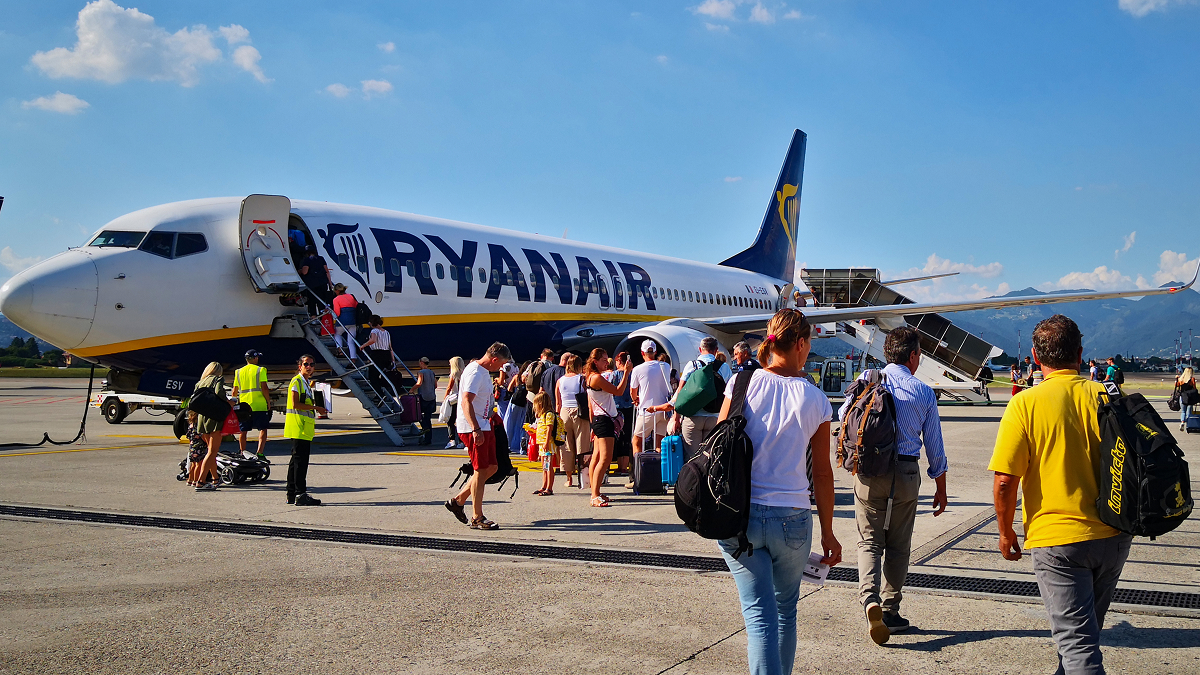
Ryanair cuts 2027 passenger target and warns of higher fares as fuel costs rise
Photograph: Euro Weekly News (embedded from source)
What this story says
- Ryanair reduced its fiscal 2027 passenger target by 2 million, from 216 million to 214 million, to limit exposure to unhedged fuel costs during winter.
- The airline hedged 80% of its fuel needs through March 2027 at about $67 a barrel, but jet fuel traded at roughly $140 a barrel at the time of the report.
- Ryanair expects winter losses of €70 million to €100 million and warned that short-haul fares in Europe could rise materially if oil prices remain high.
- The airline carried 22.2 million passengers in August 2026, up 6% year-on-year, but plans to keep winter capacity flat compared with last year.
Who covered it
Percentages are shares of the 52 outlets carrying a published leaning rating. 82 of the 134 outlets we know ran this story carry no rating and are not counted in them. Coverage measured .
Trust
88/100
Craft
85/100
Hype
25/100
134 sources · methodology
Ryanair reduced its passenger target for the fiscal year ending March 2027 from 216 million to 214 million. The airline said the cut was intended to reduce its exposure to unhedged fuel costs during the winter months, when it typically records losses. Ryanair carried 22.2 million passengers in August 2026, a 6% increase over the same month in 2025, and its load factor remained at 96%.
The airline has hedged 80% of its fuel needs through March 2027 at about $67 a barrel, according to its own figures. Jet fuel traded at roughly $140 a barrel at the time of the reports. Ryanair said it would keep its winter capacity broadly flat compared with the previous year, a move it expects will cut winter losses by €70 million to €100 million. It still plans to grow passenger numbers by 5% between April and October 2027.
Ryanair warned that if oil prices remain elevated through the summer of 2027, short-haul airfares across Europe could rise materially. It also said that rivals with less fuel hedging might struggle to maintain their schedules or could be forced to cut flights. The airline holds the largest passenger market share in Spain, carrying close to 29.8 million passengers into and out of the country in the first half of 2026.
Where the reports disagree on the cause of high fuel prices
The reports attribute the rise in fuel costs to different causes. Euro Weekly News and several left-rated digests cite renewed tension between the United States and Iran as the driver of higher oil prices. barlamantoday.com and the right-rated digest from Le Journal de Montréal describe the situation as the "Iran war" or "the war in the Middle East". The centre-rated digest from Tagesschau refers to the "energy crisis" without naming a specific conflict.
What the coverage left out
None of the right-rated digests mention Ryanair’s estimate of winter losses between €70 million and €100 million. Only one of the six right-rated digests, from Le Figaro, includes the detail that Ryanair has hedged 80% of its fuel needs at $67 a barrel. None of the centre-rated digests omit the winter loss estimate or the hedging details. The left-rated digests all carried both figures.
Still developing. We have re-checked which outlets are covering this 3 times, most recently on 3 Sept 2026, 14:00, and will add the sides that appear.
How each side covered it
Our own reading of the reporting listed below, written from the outlets’ articles rather than quoted from them. The reasoning is set out on our methodology page.
Left
19 rated outlets
- The left-rated digests led on Ryanair’s warning that short-haul fares in Europe could rise materially if oil prices remain high. Euro Weekly News, the only full report among them, quoted the airline’s statement that fares could increase "sharply" and noted that British and Irish holidaymakers could be particularly affected. It also detailed Ryanair’s hedging position and the reduction in its winter losses.
- Il Fatto Quotidiano’s digest highlighted the risk to Italian routes, framing the cuts as a response to "expensive fuel". The Local’s digests in Austria, Germany, Denmark, Switzerland and Spain carried identical wording, stating that Ryanair and other carriers faced higher fuel costs "caused by the US-Iran war". None of the left-rated digests omitted the winter loss estimate or the hedging details.
Centre
25 rated outlets
- The centre-rated digests focused on Ryanair’s capacity cuts and the broader impact on the airline industry. Skift and aerotime.aero led on the warning that less-hedged rivals might struggle to survive the winter. Quartz and Tagesschau emphasised the financial impact, noting that Ryanair’s move could cut winter losses by up to €100 million. TF1 INFO’s digest framed the story around the airline’s strategic adjustments in response to "the explosion of kerosene" costs.
- Extra.ie’s digest highlighted the specific routes affected by the winter cuts, while mannheim24.de described the situation as Ryanair "pulling the emergency brake". None of the centre-rated digests omitted the passenger target reduction or the hedging details, but only Skift and aerotime.aero mentioned the potential for fare increases.
Right
8 rated outlets
- The right-rated digests led on the potential for higher airfares and the financial strain on airlines. Le Figaro’s digest quoted Ryanair’s warning that fares would "increase significantly" if high oil prices continued. Globo and REALITATEA.NET framed the story around the risk of airline bankruptcies, while Origo described the situation as a "brutal price increase" for tickets. The Daily Express’s digest focused on the impact on passengers, warning of "cancelled flights".
- Le Journal de Montréal’s digest attributed the high fuel costs directly to "the war in the Middle East". None of the right-rated digests mentioned the winter loss estimate of €70 million to €100 million, and only Le Figaro’s digest included the hedging details.
Questions about this coverage
- How did the left and right cover Ryanair cuts 2027 passenger target and warns of higher fares as fuel…?
- Of the 52 outlets on this story carrying a published leaning rating, 37% are rated left, 48% are rated centre, 15% are rated right. Those percentages are shares of the rated outlets, not of every outlet that ran it, which was 134. The sections above set out what each side emphasised, in its own terms.
- Is Ryanair cuts 2027 passenger target and warns of higher fares as fuel… left or right?
- Neither side dominates it. Of the 52 rated outlets on this story, 37% are rated left, 48% are rated centre, 15% are rated right, and no side holds the 70% this site would want before calling a field one-sided. A story is not left or right in any case; the outlets that carried it are what carry ratings.
- Is the coverage of Ryanair cuts 2027 passenger target and warns of higher fares as fuel… biased?
- Ryanair cuts 2027 passenger target and warns of higher fares as fuel costs rise is one event reported by 134 outlets, and this page does not rate the story as biased or unbiased. What it publishes is the spread: which outlets ran it, where named rating organisations place each of them on the spectrum, and what each side chose to lead with. A leaning rating describes an outlet's record over time, not this article, and the two should not be run together.
- Which outlets covered Ryanair cuts 2027 passenger target and warns of higher fares as fuel…?
- 134 that we know of, every one of them listed further up this page with a link to its own report and to what we hold on the publisher. Nothing here is a summary of somebody else's summary: the outlets are named so the original reporting can be read.
- Why did Ryanair cut its 2027 passenger target?
- Ryanair reduced its fiscal 2027 passenger target from 216 million to 214 million to limit its exposure to unhedged fuel costs during the winter months, when it typically records losses. The airline said the move would cut winter losses by €70 million to €100 million.
- How much has Ryanair hedged its fuel costs?
- Ryanair has hedged 80% of its fuel needs through March 2027 at about $67 a barrel. Jet fuel traded at roughly $140 a barrel at the time of the reports, leaving 20% of its winter fuel bill exposed to higher market prices.
- What did Ryanair say about airfares in Europe?
- Ryanair warned that if oil prices remain elevated through the summer of 2027, short-haul airfares across Europe could rise materially. It also said that rivals with less fuel hedging might struggle to maintain their schedules or could be forced to cut flights.
- Which outlets disagreed on the cause of high fuel prices?
- Euro Weekly News and left-rated digests attributed the rise in fuel costs to tension between the United States and Iran. barlamantoday.com and Le Journal de Montréal described it as the "Iran war" or "the war in the Middle East". Tagesschau referred to the "energy crisis" without naming a specific conflict.
Read it at the source
134 outlets, grouped by the leaning a published rating gives them. Every headline links to the original; an underlined outlet name opens our profile of that publisher.
Left
19- "Ready to Cut 10,000 Winter Flights for Expensive Fuel, Airline Prices Will Still Rise Substantially': Ryanair's Move and the Italian Routes at Risk (opens Il Fatto Quotidiano in a new tab)
Il Fatto Quotidiano — is Il Fatto Quotidiano biased? Our profile of this outlet
- Planning a European Holiday in 2027? Ryanair Warns Air Fares Are Set to Rise 'Materially' (opens IBTimes UK in a new tab)
IBTimes UK — is IBTimes UK biased? Our profile of this outlet
- Flying to Spain in 2027? Ryanair warns fares could rise sharply (opens Euro Weekly News in a new tab)
Euro Weekly News — is Euro Weekly News biased? Our profile of this outlet
- Ryanair to cut winter flights in Europe to save on fuel costs (opens The Local - Se in a new tab)
The Local - Se — is The Local - Se biased? Our profile of this outlet
- Ryanair to cut winter flights in Europe to save on fuel costs (opens The Local - No in a new tab)
The Local - No — is The Local - No biased? Our profile of this outlet
- Ryanair to cut winter flights in Europe to save on fuel costs (opens The Local - It in a new tab)
The Local - It — is The Local - It biased? Our profile of this outlet
- Ryanair to cut winter flights in Europe to save on fuel costs (opens The Local - Fr in a new tab)
The Local - Fr — is The Local - Fr biased? Our profile of this outlet
- Ryanair to cut winter flights in Europe to save on fuel costs (opens The Local - Es in a new tab)
The Local - Es — is The Local - Es biased? Our profile of this outlet
Show 11 more
- Ryanair to cut winter flights in Europe to save on fuel costs (opens The Local - Dk in a new tab)
The Local - Dk — is The Local - Dk biased? Our profile of this outlet
- Ryanair to cut winter flights in Europe to save on fuel costs (opens The Local - De in a new tab)
The Local - De — is The Local - De biased? Our profile of this outlet
- Ryanair to cut winter flights in Europe to save on fuel costs (opens The Local - Ch in a new tab)
The Local - Ch — is The Local - Ch biased? Our profile of this outlet
- Ryanair to cut winter flights in Europe to save on fuel costs (opens The Local - AT in a new tab)
The Local - AT — is The Local - AT biased? Our profile of this outlet
- Ryanair Says Flight Prices Should Be Expected to Rise at Current Oil Prices (opens telex.hu in a new tab)
- Ryanair's oil price warning as airlines may 'struggle to survive' (opens Wales Online in a new tab)
Wales Online — is Wales Online biased? Our profile of this outlet
- Ryanair's oil price warning as airlines could 'struggle to survive' (opens Irish Mirror in a new tab)
Irish Mirror — is Irish Mirror biased? Our profile of this outlet
- Some airliners will ‘struggle to survive’ if oil prices stay high, warns Ryanair (opens perspectivemedia.com in a new tab)
perspectivemedia.com — is perspectivemedia.com biased? Our profile of this outlet
- Some airlines will ‘struggle to survive’ if oil prices stay high, warns Ryanair (opens The Independent (US) in a new tab)
The Independent (US) — is The Independent (US) biased? Our profile of this outlet
- Some airlines will ‘struggle to survive’ if oil prices stay high, warns Ryanair (opens The Independent in a new tab)
The Independent — is The Independent biased? Our profile of this outlet
- Ryanair cuts winter capacity as unhedged jet fuel costs bite (opens Irish Times in a new tab)
Irish Times — is Irish Times biased? Our profile of this outlet
Centre
25- Ryanair winter cuts 2026: The full list of routes affected (opens Extra.ie in a new tab)
- Nicolas Dares : Ryanair in Turbulence Zone (opens TF1 INFO in a new tab)
- Ryanair warns some European airlines may not survive winter fuel crisis (opens aerotime.aero in a new tab)
aerotime.aero — is aerotime.aero biased? Our profile of this outlet
- High Kerosene Costs Shake Industry: Ryanair Pulls Emergency Brake and Sets the Red Pin in the Winter Timetable (opens mannheim24.de in a new tab)
mannheim24.de — is mannheim24.de biased? Our profile of this outlet
- Ryanair is slashing its winter schedule to dodge soaring jet fuel costs (opens Quartz in a new tab)
- Ryanair Pulls Winter Capacity and Warns Rivals May Struggle to Survive (opens Skift in a new tab)
- Ryanair Lowers Forecast - Aviation Under Cost Pressure (opens Tagesschau in a new tab)
Tagesschau — is Tagesschau biased? Our profile of this outlet
- Less Flights and Price Increases: Ryanair Is Already Adjusting Its Flight Schedule for This Winter Against the Cost of Kerosene (opens lindependant.fr in a new tab)
lindependant.fr — is lindependant.fr biased? Our profile of this outlet
Show 17 more
- Transport. Fuels: Faced with Rising Prices, Ryanair Plans to Reduce Its Flights in Winter (opens leprogres.fr in a new tab)
leprogres.fr — is leprogres.fr biased? Our profile of this outlet
- Transport. Fuels: Faced with Rising Prices, Ryanair Plans to Reduce Its Flights in Winter (opens ledauphine.com in a new tab)
ledauphine.com — is ledauphine.com biased? Our profile of this outlet
- Fuel Prices: Ryanair Will Reduce Its Flights This Winter to Compensate for Costs (opens Sud Ouest in a new tab)
- Ryanair Prepares for a Difficult Winter: Travellers Could Make the Most of It (opens La Libre in a new tab)
- Ryanair Promises to "Trim" Its Winter Flight Schedule (opens Lietuvos Radijas ir Televizija in a new tab)
- Ryanair warns of price rises as higher fuel costs dent annual traffic (opens dailymail.com in a new tab)
dailymail.com — is dailymail.com biased? Our profile of this outlet
- Ryanair Warns Some Airlines Could Struggle with Jet Fuel Price Spike (opens Oil Price in a new tab)
- Some competitors will struggle to survive if oil prices stay high, says Ryanair (opens Yorkshire Post in a new tab)
Yorkshire Post — is Yorkshire Post biased? Our profile of this outlet
- Some airlines will ‘struggle to survive’ if oil prices stay high, warns Ryanair (opens News & Star in a new tab)
News & Star — is News & Star biased? Our profile of this outlet
- Ryanair warns flight prices could 'increase materially' (opens Manchester Evening News in a new tab)
Manchester Evening News — is Manchester Evening News biased? Our profile of this outlet
- Ryanair Trims Passenger Goal, Sees Rivals at Risk on Fuel Cost (opens Bloomberg in a new tab)
- Some airlines will ‘struggle to survive’ if oil prices stay high, warns Ryanair (opens westerntelegraph.co.uk in a new tab)
westerntelegraph.co.uk — is westerntelegraph.co.uk biased? Our profile of this outlet
- Ryanair trims traffic target, warns rivals face winter squeeze amid fuel costs (opens Reuters in a new tab)
- Ryanair warns soaring jet fuel prices could topple rival European airlines (opens business-live.co.uk in a new tab)
business-live.co.uk — is business-live.co.uk biased? Our profile of this outlet
- Some airlines will ‘struggle to survive’ if oil prices stay high, warns Ryanair (opens Evening Standard in a new tab)
Evening Standard — is Evening Standard biased? Our profile of this outlet
- Ryanair: Soaring jet fuel prices could topple rival airlines (opens City AM in a new tab)
- Ryanair trims annual traffic target due to fuel prices (opens RTÉ in a new tab)
Right
8- Ryanair Plans to Reduce Its Flights in Winter to Limit Fuel Costs (opens Le Journal de Montreal in a new tab)
Le Journal de Montreal — is Le Journal de Montreal biased? Our profile of this outlet
- Ryanair Has Already Sounded the Alarm: Brutal Price Increases for Airline Tickets Are Possible (opens Origo in a new tab)
- Ryanair issues major ticket price update - cancelled flights warning (opens Daily Express in a new tab)
Daily Express — is Daily Express biased? Our profile of this outlet
- Ryanair Reduces Passenger Destination to Contain Fuel Cost (opens Globo in a new tab)
- Ryanair Plans to Reduce Its Flights in Winter to Limit Fuel Costs (opens Le Figaro in a new tab)
- Ryanair Warns: Airline Tickets Are Expensive, and some Airlines Will Fight to Survive (opens REALITATEA.NET in a new tab)
REALITATEA.NET — is REALITATEA.NET biased? Our profile of this outlet
- Ryanair to cut winter schedule to trim oil costs (opens Free Malaysia Today News in a new tab)
Free Malaysia Today News — is Free Malaysia Today News biased? Our profile of this outlet
- Ryanair cuts passenger target as high fuel costs prompt smaller winter schedule (opens Anadolu Ajansı in a new tab)
Anadolu Ajansı — is Anadolu Ajansı biased? Our profile of this outlet
Not rated
82- Ryanair Cuts Flights and Warns of Painful Price Increases (opens pmo.ee in a new tab)
- Ryanair Cuts 2027 Traffic Target as Iran War Drives Up Fuel Costs (opens barlamantoday.com in a new tab)
barlamantoday.com — is barlamantoday.com biased? Our profile of this outlet
- Ryanair is giving up 2 million passengers to save €100m: What the Iran war is doing to European air travel (opens easterneye.biz in a new tab)
easterneye.biz — is easterneye.biz biased? Our profile of this outlet
- Ryanair Threatens a Brutal Season. What's Next for Ticket Prices? (opens Spider's Web in a new tab)
Spider's Web — is Spider's Web biased? Our profile of this outlet
- Ryanair Threatens Price Hikes and Cuts Winter Flights (opens aripaev.ee in a new tab)
aripaev.ee — is aripaev.ee biased? Our profile of this outlet
- Ryanair Cuts Flights without Cheap Fuel: Fewer Routes and Higher Prices This Winter (opens Qué! in a new tab)
- Ryanair: Less Flights and Higher Rates in Winter with Oil so Expensive (opens iodonna.it in a new tab)
iodonna.it — is iodonna.it biased? Our profile of this outlet
- Kerosene Prices Are High, as Ryanair Cuts Winter Flights and Plans to Hike Prices for Summer 2027. (opens Fortune Italia in a new tab)
Fortune Italia — is Fortune Italia biased? Our profile of this outlet
Show 74 more
- If You Have Holidays in the Plan, You Better Put Your Money Aside. Ryanair Warns that Tariffs Will Increase Significantly in Europe Next Year if Oil Prices Remain High (opens ZF.ro in a new tab)
- Kerosene Crisis: Ryanair Reduces Passenger Forecasts for 2027 by Two Million (opens Hosteltur in a new tab)
- Less and More Expensive Flights: Ryanair Launches Warning that It Can Have an Impact Already in Winter (opens IOL Portugal in a new tab)
IOL Portugal — is IOL Portugal biased? Our profile of this outlet
- There May Be an Increase in Air Tickets! (opens airporthaber2.com in a new tab)
airporthaber2.com — is airporthaber2.com biased? Our profile of this outlet
- Alarm European Skies: Ryanair Cuts Flights and Warns that Many Companies Risk Disappearing This Winter (opens Scenarieconomici.it in a new tab)
Scenarieconomici.it — is Scenarieconomici.it biased? Our profile of this outlet
- High Fuel Prices: Ryanair Reduces Traffic Targets (opens CHECK-IN.dk in a new tab)
CHECK-IN.dk — is CHECK-IN.dk biased? Our profile of this outlet
- Fuel: Ryanair Cuts Two Million Passengers From Its 2027 Forecasts (opens Air Journal in a new tab)
Air Journal — is Air Journal biased? Our profile of this outlet
- Ryanair Warns that Airline Tickets Will Suddenly Be Expensive in Europe Due to Rising Oil Prices (opens PSnews in a new tab)
- Air Tickets in Europe Can Rise Significantly: What Is the Reason (opens Unknown in a new tab)
Unknown
- High Kerosene Costs Shake Industry: Ryanair Pulls Emergency Brake and Sets the Red Pin in the Winter Timetable (opens op-online.de in a new tab)
op-online.de — is op-online.de biased? Our profile of this outlet
- Ryanair Predicts Flight Prices Will Rise (opens 24 HU in a new tab)
- Ryanair Cuts Back on Winter Flights Due to Rising Fuel Costs (opens Business AM in a new tab)
Business AM — is Business AM biased? Our profile of this outlet
- Expensive Oil Forces Ryanair to Change Plans. It Cuts Flights and Threatens to Raise Ticket Prices - Seznam Zprávy (opens seznamzpravy.cz in a new tab)
seznamzpravy.cz — is seznamzpravy.cz biased? Our profile of this outlet
- Some airlines will ‘struggle to survive’ if oil prices stay high, warns Ryanair (opens Rother Radio in a new tab)
Rother Radio — is Rother Radio biased? Our profile of this outlet
- Ryanair: Some Airlines Will ‘Struggle To Survive’ With High Oil Prices (opens Asianewstoday in a new tab)
Asianewstoday — is Asianewstoday biased? Our profile of this outlet
- Ryanair warns air fares in Europe will jump next year if oil price stays high (opens online-listing.com in a new tab)
online-listing.com — is online-listing.com biased? Our profile of this outlet
- Ryanair Cuts Flights and Announces Ticket Increases (opens ieidiseis.gr in a new tab)
ieidiseis.gr — is ieidiseis.gr biased? Our profile of this outlet
- Ryanair Plans to Reduce Its Flights in Winter to Limit Fuel Costs (opens Le Journal de Quebec in a new tab)
Le Journal de Quebec — is Le Journal de Quebec biased? Our profile of this outlet
- Ryanair to cut winter flights in Europe to save on fuel costs (opens The Local in a new tab)
- Aircraft: Ryanair Makes an Important Statement on Its Flights 2026-2027, Fares Will Change (opens Presse-citron in a new tab)
Presse-citron — is Presse-citron biased? Our profile of this outlet
- Ryanair Has Announced Bad News: Fuel Prices Are Hellish, Airfares Could Become Much More Expensive – Low-Cost Travelers Could Be Left Behind (opens Világgazdaság in a new tab)
Világgazdaság — is Világgazdaság biased? Our profile of this outlet
- Oil Prices Change Ryanair's Winter Plans: Cheap Tickets at Risk (opens RayHaber in a new tab)
- Ryanair Will Limit Itself This Winter to Save Fuel (opens rfj.ch in a new tab)
- High Fuel Prices: Ryanair Cuts Passenger Destination (opens airliners.de in a new tab)
airliners.de — is airliners.de biased? Our profile of this outlet
- Europe’s largest airline warns of jet-fuel prices hitting $140 this winter as it cuts capacity | Tech, Entertainment, Sport, Fashion, Travel News (opens thegne.online in a new tab)
thegne.online — is thegne.online biased? Our profile of this outlet
- Ryanair Cuts Oil Flights and Warns of More Expensive Tickets (opens negocios.com in a new tab)
negocios.com — is negocios.com biased? Our profile of this outlet
- Ryanair: Air Tickets Will Become More Expensive if High Oil Prices Continue (opens Naslovi.net in a new tab)
Naslovi.net — is Naslovi.net biased? Our profile of this outlet
- Ryanair Warns: If Oil Stays Expensive, Airline Tickets Will Also Be More Expensive (opens Dnevnik in a new tab)
- Bad News for Cheap Flight Lovers: Ryanair Could Face Major Price Increases Next Year (opens Pénzcentrum in a new tab)
Pénzcentrum — is Pénzcentrum biased? Our profile of this outlet
- Ryanair: Cuts to Winter Schedule and Reduced Passenger Target Due to Expensive Fuel (opens GR Times in a new tab)
- Airline Announces More Expensive Tickets: "Some Competitors Could Struggle to Survive" (opens glasistre.hr in a new tab)
glasistre.hr — is glasistre.hr biased? Our profile of this outlet
- Ryanair Announced to Reduce the Volume of Flights for the Winter Season (opens vz.lt in a new tab)
- Ryanair Anticipates Fewer Flights in Winter Due to High Fuel Prices (opens SIC Notícias in a new tab)
SIC Notícias — is SIC Notícias biased? Our profile of this outlet
- Ryanair: High Oil Prices Push Airline Tickets up Sharply (opens tpo.nl in a new tab)
- Ryanair Reduces Winter Flights for Expensive Fuel (opens Agi.it in a new tab)
- Ryanair Warns: Airline Tickets May Cost (opens Economedia.ro in a new tab)
Economedia.ro — is Economedia.ro biased? Our profile of this outlet
- Ryanair Predicts Price Increases in Europe and Limiting Its Flights in Winter Due to the War in Iran (opens LaProvence.com in a new tab)
LaProvence.com — is LaProvence.com biased? Our profile of this outlet
- Ryanair Plans to Reduce Flights in Winter to Limit Fuel Costs (opens Correio da Manhã in a new tab)
Correio da Manhã — is Correio da Manhã biased? Our profile of this outlet
- Ryanair Anticipates Fewer Flights in Winter to Limit Fuel Costs (opens Noticias ao Minuto in a new tab)
Noticias ao Minuto — is Noticias ao Minuto biased? Our profile of this outlet
- Ryaner Warns of a Possible Increase in Ticket Prices (opens srpskainfo.com in a new tab)
srpskainfo.com — is srpskainfo.com biased? Our profile of this outlet
- Transport. Fuels: Faced with Rising Prices, Ryanair Plans to Reduce Its Flights in Winter (opens vosgesmatin.fr in a new tab)
vosgesmatin.fr — is vosgesmatin.fr biased? Our profile of this outlet
- Transport. Fuels: Faced with Rising Prices, Ryanair Plans to Reduce Its Flights in Winter (opens republicain-lorrain.fr in a new tab)
republicain-lorrain.fr — is republicain-lorrain.fr biased? Our profile of this outlet
- Transport. Fuels: Faced with Rising Prices, Ryanair Plans to Reduce Its Flights in Winter (opens lejsl.com in a new tab)
- Transport. Fuels: Faced with Rising Prices, Ryanair Plans to Reduce Its Flights in Winter (opens estrepublicain.fr in a new tab)
estrepublicain.fr — is estrepublicain.fr biased? Our profile of this outlet
- Transport. Fuels: Faced with Rising Prices, Ryanair Plans to Reduce Its Flights in Winter (opens bienpublic.com in a new tab)
bienpublic.com — is bienpublic.com biased? Our profile of this outlet
- Ryanair to Cut Winter Flight Schedule: Cut Several Million Passengers (opens lrytas.lt in a new tab)
- Ryanair Warning. Air Tickets Will Be Expensive, Airlines "Will Fight to Survive" • Newsweek Romania (opens newsweek.ro in a new tab)
newsweek.ro — is newsweek.ro biased? Our profile of this outlet
- Ryanair: Ticket Prices Could Rise Significantly Next Year (opens Heti Világgazdaság in a new tab)
Heti Világgazdaság — is Heti Világgazdaság biased? Our profile of this outlet
- Ryanair Warns of Price Hikes – Cancels Departures (opens Skånska Dagbladet in a new tab)
Skånska Dagbladet — is Skånska Dagbladet biased? Our profile of this outlet
- Ryanair Cuts Winter Flights: Here's What the Decision Means for Fares and Small Airlines (opens Telegraf in a new tab)
- With Expensive Oil, some Airlines May Struggle to Survive This Winter (opens poslovni.hr in a new tab)
poslovni.hr — is poslovni.hr biased? Our profile of this outlet
- Ryanair Warns: Tickets Could Become Significantly More Expensive, some Airlines Could Disappear (opens 24sata.hr in a new tab)
- Ryanair Warns of Price Hikes – Cancels Departures (opens ekuriren.se in a new tab)
ekuriren.se — is ekuriren.se biased? Our profile of this outlet
- Tough Warning From Ryanair: Airfares Could Be Significantly Expensive, and some Airlines "Will Fight to survive." (opens Ştiri de Cluj in a new tab)
Ştiri de Cluj — is Ştiri de Cluj biased? Our profile of this outlet
- Ryanair: Jet Fuel at $140 and Flight Cuts — Warning of More Expensive Tickets (opens Naftemporiki in a new tab)
Naftemporiki — is Naftemporiki biased? Our profile of this outlet
- Low-Cost Carrier Warns: It Will Be More Expensive to Fly (opens Dagens industri in a new tab)
Dagens industri — is Dagens industri biased? Our profile of this outlet
- Ryanair Warning. Some Airlines "Will Fight to Survive because of High Oil Prices, and Airline Tickets Will Be Expensive (opens Mediafax in a new tab)
- Ryanair Cuts Flights – Ticket Prices May Rise This Winter (opens borskollen.se in a new tab)
borskollen.se — is borskollen.se biased? Our profile of this outlet
- Ryanair Warns of Price Increases for Air Tickets in Europe. (opens ekonomim.com in a new tab)
ekonomim.com — is ekonomim.com biased? Our profile of this outlet
- Ryanair Warns: Rising Oil Prices Threaten Airline Survival (opens atvbl.rs in a new tab)
- Ryanair Warns: Airfares in Europe Will Rise in 2027 (opens NewsBomb in a new tab)
- Ryanair Cancels Flights From Reggio, the Pd Attacks: "To Dublin to Announce the Cuts?" (opens corrieredellacalabria.it in a new tab)
corrieredellacalabria.it — is corrieredellacalabria.it biased? Our profile of this outlet
- Ryanair warns on airlines' futures amid high oil prices (opens Bdaily Business News in a new tab)
Bdaily Business News — is Bdaily Business News biased? Our profile of this outlet
- Ryanair Reduces Its Annual Passenger Target to Limit Its Exposure to Uncovered Fuel in the Winter (opens Forbes España in a new tab)
Forbes España — is Forbes España biased? Our profile of this outlet
- Low-Cost Airline Ryanair Expects Less Profit and Passengers (opens wiwo.de in a new tab)
- Ryanair warns airline rivals could ‘struggle to survive’ as oil prices send fares soaring (opens London Loves Business in a new tab)
London Loves Business — is London Loves Business biased? Our profile of this outlet
- Ryanair, Increases the Summer Traffic but Cuts Forecast on 2027 to 214 Million Passengers (opens teleborsa.it in a new tab)
teleborsa.it — is teleborsa.it biased? Our profile of this outlet
- Ryanair reduces winter traffic target due to oil prices (opens Business Plus in a new tab)
Business Plus
- Rise in Oil Prices Hits Cheap Flights - Dünya Newspaper (opens dunya.com in a new tab)
- Ryanair: "Scissors" in Flights and Warnings of Price Increases Due to Energy Costs (opens Reporter.gr in a new tab)
Reporter.gr — is Reporter.gr biased? Our profile of this outlet
- Ryanair Reduces Passenger Targets and Warns About Fuel Costs (opens Wall Street Italia in a new tab)
Wall Street Italia — is Wall Street Italia biased? Our profile of this outlet
- Ryanair Reduces Passenger Targets and Warns About Fuel Costs (opens FinanzaOnline in a new tab)
FinanzaOnline — is FinanzaOnline biased? Our profile of this outlet
- Ryanair Trims Passenger Goal, Sees Rivals at Risk on Fuel Cost (opens BizToc in a new tab)
- Open War on Fees: Ryanair Loses Almost 30 Million in Spain While Fleeing to Italy (opens Merca2.es in a new tab)
How did this read?
About the coverage, not about the story. We do not ask whether you agree with what happened — we have no honest use for that answer.