El Niño to Intensify, Peak in December 2026, WMO Predicts
The World Meteorological Organization warns of increased global temperatures and extreme weather risks.
AI-assisted coverage comparison, editor-supervised · How this was made
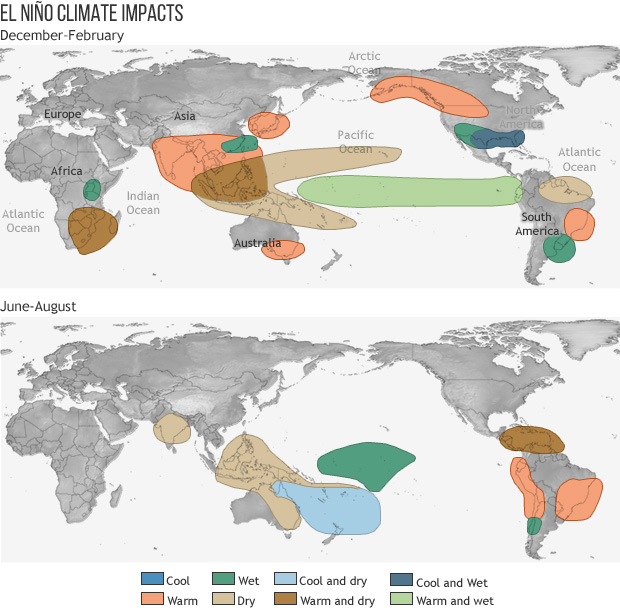
Photograph: Content published by Rebecca Lindsey and reviewed by Tom Di Liberto. Image credit to NOAA Climate.gov via Wikimedia Commons (Public domain)
What this story says
- The World Meteorological Organization (WMO) forecasts the current El Niño event will intensify and reach its peak in December 2026.
- The WMO suggests the phenomenon could last until February 2027 and may rank among the strongest since 1950.
- The strengthening El Niño is predicted to increase global temperatures and elevate the risk of droughts and floods globally.
- Multiple news outlets reported on the WMO's forecast, with a focus on the timing of the peak and the potential intensity of the event.
Who covered it
Percentages are shares of the 60 outlets carrying a published leaning rating. 88 of the 148 outlets we know ran this story carry no rating and are not counted in them. Coverage measured .
Trust
76/100
Craft
70/100
Hype
15/100
148 sources · methodology
Thin on the left so far
Only 19 of the 60 outlets with a published leaning rating that ran this story are rated left.
This story is still being watched, so it is a count and not yet a finding. Coverage keeps arriving for hours after an event, and a side that has published nothing this morning may publish by tonight. If it is still true when we stop checking, we will say so plainly.
The World Meteorological Organization (WMO) has predicted that the ongoing El Niño weather phenomenon will continue to intensify, reaching its peak in December 2026. The WMO also stated that the event could persist until February 2027 and may be one of the strongest recorded since 1950. This strengthening is expected to lead to an increase in global temperatures and raise the worldwide risk of droughts and floods.
Coverage
What the coverage left out
None of the digests mention the specific date of 29 July 2026 for the WMO's prediction, only that it was made on Thursday, 8 October. The digests also do not specify the exact year for the peak, stating December, though the WMO's prediction is for December 2026.
Still developing. We have re-checked which outlets are covering this 4 times, most recently on 8 Oct 2026, 15:45, and will add the sides that appear.
How each side covered it
Our own reading of the reporting listed below, written from the outlets’ articles rather than quoted from them. The reasoning is set out on our methodology page.
Left
19 rated outlets
- Left-rated outlets reported that the World Meteorological Organization (WMO) predicted El Niño would intensify and peak in December. The digests stated the phenomenon would continue until February.
- Several left-rated digests noted the WMO's warning that this El Niño could be one of the most intense since 1950. One digest mentioned an increased probability of extreme heat waves.
- The digests from these outlets did not mention specific temperature forecasts or economic impacts. They also did not quote any experts other than referencing the WMO.
Centre
20 rated outlets
- Digi 24, Sud Ouest, France24, and Hola News, all rated centre, reported that the El Niño phenomenon is intensifying and will reach its peak in December. Digi 24 and Sud Ouest mentioned the potential for it to be one of the strongest on record. France24 and Hola News noted the WMO's warning that the event will increase global temperatures and the risk of droughts and floods, with France24 adding that its impact will aggravate man-made climate change effects.
Right
21 rated outlets
- The seven right-rated digests led with the WMO's forecast of El Niño reaching record strength and the associated global risks. The Hindu Business Line mentioned the potential for record Pacific warmth and a possible twist from the Indian Ocean Dipole. The Nation and Anadolu Ajansı reported that the event's strengthening increases risks of extreme heat, drought, and flooding worldwide. Realitatea.net, dagelijksestandaard.nl, Nieuws.nl, and Reformatorisch Dagblad focused on the December peak and the possibility of it being one of the strongest since 1950. Free Malaysia Today News noted that the phenomenon is already affecting some regions, citing drought in Central America.
Questions about this coverage
- How did the left and right cover El Niño to Intensify, Peak in December 2026, WMO Predicts?
- Of the 60 outlets on this story carrying a published leaning rating, 32% are rated left, 33% are rated centre, 35% are rated right. Those percentages are shares of the rated outlets, not of every outlet that ran it, which was 148. The sections above set out what each side emphasised, in its own terms.
- Is El Niño to Intensify, Peak in December 2026, WMO Predicts left or right?
- Neither side dominates it. Of the 60 rated outlets on this story, 32% are rated left, 33% are rated centre, 35% are rated right, and no side holds the 70% this site would want before calling a field one-sided. A story is not left or right in any case; the outlets that carried it are what carry ratings.
- Is the coverage of El Niño to Intensify, Peak in December 2026, WMO Predicts biased?
- El Niño to Intensify, Peak in December 2026, WMO Predicts is one event reported by 148 outlets, and this page does not rate the story as biased or unbiased. What it publishes is the spread: which outlets ran it, where named rating organisations place each of them on the spectrum, and what each side chose to lead with. A leaning rating describes an outlet's record over time, not this article, and the two should not be run together.
- Which side is not reporting El Niño to Intensify, Peak in December 2026, WMO Predicts?
- When we first saw this story, outlets rated left had barely covered it. Coverage accretes for hours after an event, so that is where to look rather than a verdict — the split above is the current count, and it is the one to read.
- Which outlets covered El Niño to Intensify, Peak in December 2026, WMO Predicts?
- 148 that we know of, every one of them listed further up this page with a link to its own report and to what we hold on the publisher. Nothing here is a summary of somebody else's summary: the outlets are named so the original reporting can be read.
- When is the El Niño expected to peak?
- The World Meteorological Organization predicts the current El Niño event will intensify and reach its peak in December 2026. This peak is expected to occur before the phenomenon potentially persists into February 2027.
- How strong could this El Niño event be?
- The World Meteorological Organization has warned that the current El Niño could be one of the strongest episodes recorded since 1950. This assessment is based on its rapid intensification and expected peak.
- What are the predicted global impacts of this El Niño?
- The WMO forecasts that the strengthening El Niño will increase global temperatures. It also warns of a heightened risk of extreme weather events worldwide, including droughts and floods.
Read it at the source
148 outlets, grouped by the leaning a published rating gives them. Every headline links to the original; an underlined outlet name opens our profile of that publisher.
Left
19- El Niño Will Intensify Until It Reaches Its Peak in December, Alerts the UN (opens La Opinion in a new tab)
La Opinion — is La Opinion biased? Our profile of this outletOpinion
- UN: Pacific Temperature Peaks in December, Drought and Flood Risk Looms (opens Dnevni list Danas in a new tab)
Dnevni list Danas — is Dnevni list Danas biased? Our profile of this outlet
- El Niño Is Rapidly Gaining Strength. Scientists Announce when Peak Is Expected (opens IndexHR in a new tab)
- With an Anomaly of +3.7 °C Expected in December, El Niño Will Beat All Records (opens Liberation in a new tab)
Liberation — is Liberation biased? Our profile of this outlet
- UN: El Niño will intensify, then peak in December (opens Inquirer in a new tab)
- El Niño Could Push Temperatures in the Pacific to Record Highs, It Means Danger to the Whole World, Warns WMO (opens Telegrafi in a new tab)
- Here's When Experts Think 2026's 'Godzilla' El Niño Will 'Peak' And End (opens HuffPost UK in a new tab)
HuffPost UK — is HuffPost UK biased? Our profile of this outlet
- Climate: El Niño Will Continue to Intensify Until Its Peak in December (opens TVA Nouvelles in a new tab)
TVA Nouvelles — is TVA Nouvelles biased? Our profile of this outlet
Show 11 more
- A Historic Record Is Expected. El Niño Heads Into Uncharted Waters (opens Novinky.cz in a new tab)
Novinky.cz — is Novinky.cz biased? Our profile of this outlet
- Brace for more heat: Worst of El Niño yet to come, peak likely in December (opens Indian Express in a new tab)
Indian Express — is Indian Express biased? Our profile of this outlet
- El Niño, the Alarm of the UN: in December Hot Record. Drought and Flooding Risk (opens La Repubblica in a new tab)
La Repubblica — is La Repubblica biased? Our profile of this outlet
- UN weather body provides update on when El Nino will peak – and end (opens The Independent (US) in a new tab)
The Independent (US) — is The Independent (US) biased? Our profile of this outlet
- UN weather body provides update on when El Nino will peak – and end (opens The Independent in a new tab)
The Independent — is The Independent biased? Our profile of this outlet
- UN weather body says El Niño set to intensify and last until February 2027 (opens Ada Derana in a new tab)
Ada Derana — is Ada Derana biased? Our profile of this outlet
- El Nino Is Forecast to Intensify, Peaking in December! See What It Brings (opens Delo in a new tab)
- "One of the Most Intense Episodes Since at Least 1950": the El Niño Weather Phenomenon Will Continue to Intensify Until December (opens franceinfo.fr in a new tab)
franceinfo.fr — is franceinfo.fr biased? Our profile of this outlet
- UN Warns About El Niño, the Climate Phenomenon Is Not yet Close to Stopping (opens Le Huffington Post in a new tab)
Le Huffington Post — is Le Huffington Post biased? Our profile of this outlet
- El Niño This Year May Become One of the Most Intense Since 1950 (opens Sapo in a new tab)
- UN Warning: El Niño Will Continue to Intensify Until Its Peak in December (opens La Presse in a new tab)
Centre
20- El Nino Will Intensify, Peak In December, UN Warns (opens Channels Television in a new tab)
Channels Television — is Channels Television biased? Our profile of this outlet
- UN weather body says El Niño set to intensify and last until February 2027 (opens CTV News in a new tab)
- The El Niño Phenomenon Will Continue to Intensify Until Its Peak in December, According to the UN (opens TF1 INFO in a new tab)
- El Niño Will Be Increasingly Intense, Peaking in December. 'Temperatures at Record Highs'. Here's What It Means (opens Il Messaggero in a new tab)
Il Messaggero — is Il Messaggero biased? Our profile of this outlet
- El Niño Strengthens and Threatens to Bring Pacific Temperatures to Record Highs by the End of the Year (opens 20minutos in a new tab)
- Climate. The El Niño Phenomenon Will Intensify Further and Could Reach a Record Level in December (opens ledauphine.com in a new tab)
ledauphine.com — is ledauphine.com biased? Our profile of this outlet
- Climate. El Niño Will Intensify Further and Could Reach a Record Level in December (opens leprogres.fr in a new tab)
leprogres.fr — is leprogres.fr biased? Our profile of this outlet
- UN weather body says El Niño set to intensify and last until February 2027 - BusinessWorld Online (opens bworldonline.com in a new tab)
bworldonline.com — is bworldonline.com biased? Our profile of this outlet
Show 12 more
- The Warning Has Been Issued: We Are Facing an El Niño of the Strongest Intensity Seen in 75 Years, and that Does Not Bode Well. (opens Portfolio in a new tab)
Portfolio — is Portfolio biased? Our profile of this outletOpinion
- El Nino forecast to reach record strength as global heat, weather risks rise: WMO (opens The Express Tribune in a new tab)
The Express Tribune — is The Express Tribune biased? Our profile of this outlet
- Super El Nino Will Be Even Stronger (opens 24ur.com in a new tab)
- Kenya: El Niño to Peak in December in Potentially Strongest Event Since 1950, Wmo Warns (opens allAfrica in a new tab)
- UN weather body says El Niño set to intensify and last until February 2027 (opens WTVB in a new tab)
- UN: El Niño Reaches Its Peak in December, High Risk of Drought and Floods (opens Algemeen Dagblad in a new tab)
Algemeen Dagblad — is Algemeen Dagblad biased? Our profile of this outlet
- El Niño to intensify before December peak (opens RTÉ in a new tab)
- UN: The El Niño Phenomenon Will Continue to Intensify Until It Reaches Its Peak in December (opens Digi 24 in a new tab)
- Climate: the Powerful Weather Phenomenon El Niño Will Continue to Intensify Until Its Peak, Expected in December (opens Sud Ouest in a new tab)
- UN: El Niño Weather Phenomenon Will Strengthen, Peak in December (opens Lietuvos Radijas ir Televizija in a new tab)
- El Niño Will Intensify to Reach Its Peak in December, UN Alerts (opens France24 in a new tab)
- WMO Warns of an El Niño that Will Raise Temperatures in Much of the Planet (opens Hola News in a new tab)
Right
21- UN warns El Niño set to peak in December as climate change fuels extreme floods and droughts (opens Malay Mail in a new tab)
Malay Mail — is Malay Mail biased? Our profile of this outlet
- El Niño's Peak Yet To Come, Could Become One Of Strongest On Record: WMO (opens ABP News in a new tab)
- El Niño in Progress May Become One of the Most Intense Since 1950 (opens Observador in a new tab)
Observador — is Observador biased? Our profile of this outlet
- This Year's El Niño Is the Strongest in at Least 76 Years. It Will Last for at Least Four More Months. (opens Aftenposten in a new tab)
Aftenposten — is Aftenposten biased? Our profile of this outlet
- Earth ‘Almost Entirely in the Red’: Intensifying Super El Nino Smashes Ocean Heat Records | 🌎 LatestLY (opens Latestly in a new tab)
- UN weather body says El Niño set to intensify and last until February 2027 (opens Cyprus Mail in a new tab)
Cyprus Mail — is Cyprus Mail biased? Our profile of this outlet
- El Nino could rank among strongest since 1950, peak in December, last through February: UN body (opens Times of India in a new tab)
Times of India — is Times of India biased? Our profile of this outlet
- UN Climate Alert: El Niño Will Intensify in the Coming Weeks and Anticipate Its Peak (opens Clarin in a new tab)
Show 13 more
- El Niño Will Reach Peak in December and May Be One of the Strongest in 75 Years (opens Globo in a new tab)
- El Niño Intensifies and Points to a Historic Record: WMO Updates Its Forecast with up to +3.7 oC in the Pacific (opens La Razón in a new tab)
- El Nino will intensify, then peak in December: UN (opens ARY News in a new tab)
- "A Record Level" of Temperatures in the Coming Months: the El Niño Phenomenon Will Continue to Intensify Until Its Peak in December (opens Le Figaro in a new tab)
- Unfolding El Niño may be the strongest since 1950s, says WMO (opens The Hindu Business Line in a new tab)
The Hindu Business Line — is The Hindu Business Line biased? Our profile of this outlet
- El Nino forecast to reach record strength as global heat, weather risks rise: WMO (opens The Nation in a new tab)
The Nation — is The Nation biased? Our profile of this outlet
- El Nino Is Intensifying and Could Reach a Record Level in December. (opens REALITATEA.NET in a new tab)
REALITATEA.NET — is REALITATEA.NET biased? Our profile of this outlet
- El Nino Forecast to Reach Record Strength as Global Heat, Weather Risks Rise: WMO (opens Anadolu Ajansı in a new tab)
Anadolu Ajansı — is Anadolu Ajansı biased? Our profile of this outlet
- UN: El Niño Reaches Its Peak in December (opens dagelijksestandaard.nl in a new tab)
dagelijksestandaard.nl — is dagelijksestandaard.nl biased? Our profile of this outlet
- UN: El Niño Reaches Its Peak in December (opens Reformatorisch Dagblad in a new tab)
Reformatorisch Dagblad — is Reformatorisch Dagblad biased? Our profile of this outlet
- El Nino will intensify, then peak in December: UN (opens Arab News in a new tab)
- El Nino will intensify before its peak in December, says UN (opens Free Malaysia Today News in a new tab)
Free Malaysia Today News — is Free Malaysia Today News biased? Our profile of this outlet
- El Nino will intensify, then peak in December: UN (opens ABS-CBN in a new tab)
Not rated
88- UN Agency Says El Niño Should Intensify and Go by February (opens EBC in a new tab)
- UN Warns El Niño Peak in December to Drive Heat (opens Business Elites Africa in a new tab)
Business Elites Africa — is Business Elites Africa biased? Our profile of this outlet
- El Niño Could Break a Historic Record and Be the Strongest in 76 Years: when He Would Reach the Peak (opens ADNSur in a new tab)
- El Nino Could Become One of Strongest on Record, UN Warns - Khaleej Mag (opens Khaleej Mag in a new tab)
Khaleej Mag — is Khaleej Mag biased? Our profile of this outlet
- Sea surface temperatures suggest El Niño is strengthening (opens ecotopical.com in a new tab)
ecotopical.com — is ecotopical.com biased? Our profile of this outlet
- This Will Be El Niño's Worst Time with Droughts, Floods and Record Temperatures. (opens El Sol in a new tab)
- UN Anticipates El Niño’s “High Point” by December (opens Canal C in a new tab)
- The Child Will Continue to Intensify: when Would It Reach Its Peak? (opens elciudadanoweb.com in a new tab)
elciudadanoweb.com — is elciudadanoweb.com biased? Our profile of this outlet
Show 80 more
- El Niño Escalates Rapidly and Will Reach Its Highest Level in December at the Risk of Temperature Records (opens elfinancierocr.com in a new tab)
elfinancierocr.com — is elfinancierocr.com biased? Our profile of this outlet
- UN: Pacific Temperature Peaks in December, Drought and Flood Risk Looms (opens n1info.rs in a new tab)
- El Niño Towards a Record Peak in December, UN Alarm: "Unprecedented Intensity" (opens newsbiella.it in a new tab)
newsbiella.it — is newsbiella.it biased? Our profile of this outlet
- El Niño Will Intensify Until December and Could Be One of the Strongest Since 1950 (opens Diario Correo in a new tab)
Diario Correo — is Diario Correo biased? Our profile of this outlet
- Climate: El Niño Will Continue to Intensify and Reach Its Peak in December (opens elDiarioAR in a new tab)
elDiarioAR — is elDiarioAR biased? Our profile of this outlet
- El Niño Towards a Record Peak in December, UN Alarm: "Unprecedented Intensity" (opens Calabria News in a new tab)
Calabria News — is Calabria News biased? Our profile of this outlet
- El Niño Towards a Record Peak in December, UN Alarm: "Unprecedented Intensity" (opens canaledieci.it in a new tab)
canaledieci.it — is canaledieci.it biased? Our profile of this outlet
- El Niño Towards a Record Peak in December, UN Alarm: "Unprecedented Intensity" (opens Rec News in a new tab)
- El Niño Towards a Record Peak in December, UN Alarm: "Unprecedented Intensity" (opens Giornale Radio in a new tab)
Giornale Radio — is Giornale Radio biased? Our profile of this outlet
- Climate: El Niño Will Continue to Intensify Until Its Peak in December (opens 24 heures in a new tab)
- The Child Will Continue to Intensify: when Would It Reach Its Peak? (opens Noticias Argentinas in a new tab)
Noticias Argentinas — is Noticias Argentinas biased? Our profile of this outlet
- UN Warns El Niño Set to Peak in December as Climate Change Fuels Extreme Floods and Droughts (opens AlKhaleej Today in a new tab)
AlKhaleej Today — is AlKhaleej Today biased? Our profile of this outlet
- Weather: 'Super El Niño' at Historic Levels - Earth 'Blushes' and Climax Comes in December (opens gazzetta.gr in a new tab)
gazzetta.gr — is gazzetta.gr biased? Our profile of this outlet
- WMO Anticipates El Niño Will Reach a Historic Record (opens MisionesOnline in a new tab)
MisionesOnline — is MisionesOnline biased? Our profile of this outlet
- Winter 2026-2027 Comes with El Niño Strong. What Happens In (opens ePitești in a new tab)
- WMO Warned that El Niño Will Continue to Strengthen and Could Be One of the Most Intense Since 1950 (opens diariojunio.com.ar in a new tab)
diariojunio.com.ar — is diariojunio.com.ar biased? Our profile of this outlet
- El Niño Is Strengthening, but Here's when It Will Peak - World — News Standard (opens standartnews.com in a new tab)
standartnews.com — is standartnews.com biased? Our profile of this outlet
- The UN Warns that El Niño Will Continue to Strengthen and Could Be One of the Most Intense Since 1950 (opens Noticias al Día y a la Hora in a new tab)
Noticias al Día y a la Hora — is Noticias al Día y a la Hora biased? Our profile of this outlet
- El Niño: Peaking in December – What the WMO Predicts (opens Alpha TV in a new tab)
- El Niño to intensify ahead of forecast December peak, WMO warns (opens Farmers Review Africa in a new tab)
Farmers Review Africa
- El Niño: Peak of the Phenomenon Expected in December - It Will Intensify the Consequences of Climate Change (opens enikos.gr in a new tab)
- UN Alert: El Niño Phenomenon Could Become One of the Most Intense of the Last 75 Years - La Critica (opens La Crítica in a new tab)
La Crítica — is La Crítica biased? Our profile of this outlet
- The UN Anticipated when El Niño’s “High Point” Could Be Presented (opens cba24n.com.ar in a new tab)
cba24n.com.ar — is cba24n.com.ar biased? Our profile of this outlet
- The UN Says El Niño Phenomenon Will Intensify and Continue Until February 2027 (opens La República in a new tab)
La República — is La República biased? Our profile of this outlet
- 'Bake' Land; Strongest El Nino Since 1950, Impact to Increase (opens Mathrubhumi in a new tab)
Mathrubhumi — is Mathrubhumi biased? Our profile of this outlet
- Warns of One of the Strongest Phenomena in Decades: It Is Clear when It Will Reach Its Peak (opens lrytas.lt in a new tab)
- UN Issues Major Warning As ‘Super’ El Niño Set To Peak In December (opens Nova.ie in a new tab)
- Climate : El Niño Will Intensify Until Its Peak in December (opens RTS in a new tab)
- A Climate Phenomenon that Puts the World on the Line. (opens برس بي in a new tab)
برس بي
- Here's when El Nino is expected to peak, according to the UN (opens African News Agency in a new tab)
African News Agency — is African News Agency biased? Our profile of this outlet
- El Niño Intensifies: Its Peak in December - "Heat Ready to Be Unleashed" (opens CNN Greece in a new tab)
CNN Greece — is CNN Greece biased? Our profile of this outlet
- El Nino Is Intensifying Rapidly and Could Reach a Record Level in December. What Will Happen with the Weather (opens Stirile Antena 1 Observator in a new tab)
Stirile Antena 1 Observator — is Stirile Antena 1 Observator biased? Our profile of this outlet
- Climate. El Niño Will Intensify Further and Could Reach a Record Level in December (opens lejsl.com in a new tab)
- Climate. El Niño Will Intensify Further and Could Reach a Record Level in December (opens vosgesmatin.fr in a new tab)
vosgesmatin.fr — is vosgesmatin.fr biased? Our profile of this outlet
- Climate. El Niño Will Intensify Further and Could Reach a Record Level in December (opens republicain-lorrain.fr in a new tab)
republicain-lorrain.fr — is republicain-lorrain.fr biased? Our profile of this outlet
- Climate. El Niño Will Intensify Further and Could Reach a Record Level in December (opens estrepublicain.fr in a new tab)
estrepublicain.fr — is estrepublicain.fr biased? Our profile of this outlet
- "The Ocean Where El Niño Draws This Heat Is the Warmest We Have Ever Seen": the Powerful Phenomenon Will Continue to Intensify Until Its Peak in December (opens cnews.fr in a new tab)
- Climate: El Niño Will Continue to Strengthen Until Its Peak in December (opens ypaithros.gr in a new tab)
ypaithros.gr — is ypaithros.gr biased? Our profile of this outlet
- Bad News for the Climate: the El Niño Phenomenon Will Continue to Intensify Until December According to the United Nations, Here Are the Consequences (opens nicematin.com in a new tab)
nicematin.com — is nicematin.com biased? Our profile of this outlet
- El Nino Intensifys Quickly and Could Reach Record Levels. When It Appears and What Effects Are Expected (opens Stirile Pro TV in a new tab)
Stirile Pro TV — is Stirile Pro TV biased? Our profile of this outlet
- El Nino Strengthens Rapidly as December Peak Looms (opens globalnewspakistan in a new tab)
globalnewspakistan — is globalnewspakistan biased? Our profile of this outlet
- Weather: 'Super El Niño' at Historic Levels - Earth 'Blushes' and Climax Comes in December (opens NewsBomb in a new tab)
- WMO Reveals When El Niño Will Peak, Says It Will Be Strongest Since 1950 (opens Kenya Times Trending, Breaking News and Videos in a new tab)
- WMO Warns of an El Niño that Will Raise Temperatures in Much of the Planet (opens efeverde.com in a new tab)
efeverde.com — is efeverde.com biased? Our profile of this outlet
- Super El Niño Is Intensifying! It Will Peak in December and Last Until February. (opens haberglobal.com in a new tab)
haberglobal.com — is haberglobal.com biased? Our profile of this outlet
- El Niño Will Intensify to Peak in December, UN Says; It Can Be the Strongest Since 1950 (opens Terra in a new tab)
- THE PEAK OF "EL NINJA" IS COMING Record Ocean Temperatures Are Expected in December, Here's What Awaits Us (opens srpskainfo.com in a new tab)
srpskainfo.com — is srpskainfo.com biased? Our profile of this outlet
- El Niño to Peak in December in Potentially Strongest Event Since 1950, WMO Warns (opens capitalfm.africa in a new tab)
capitalfm.africa — is capitalfm.africa biased? Our profile of this outlet
- El Niño: At Record Levels in December – How It Will Affect the Planet (opens proson.gr in a new tab)
- World Meteorological Organization: El Nino Could Reach Record Strength as Global Temperatures and Weather Risks Rise (opens 6yka.com in a new tab)
- El Niño Is Escalating and Will Peak in December (opens Naftemporiki in a new tab)
Naftemporiki — is Naftemporiki biased? Our profile of this outlet
- UN: El Niño Reaches Its Peak in December, High Risk of Drought and Floods (opens gelderlander.nl in a new tab)
gelderlander.nl — is gelderlander.nl biased? Our profile of this outlet
- WMO Warns: El Nino History Could Break Records, Extreme Weather Events Are at the Door (opens Aydınlık in a new tab)
- FORECAST ⟩ Exceptionally Powerful El Niño to Strengthen Further and Peak in December (opens pmo.ee in a new tab)
- WMO Expects El Niño to Intensify and Continue Until February 2027 (opens El Economista in a new tab)
El Economista — is El Economista biased? Our profile of this outlet
- Climate - UN: El Niño Will Continue to Strengthen Until Its Peak in December (opens insider.gr in a new tab)
insider.gr — is insider.gr biased? Our profile of this outlet
- El Niño Will Continue to Strengthen Until Its Peak in December (opens sigmalive.com in a new tab)
sigmalive.com — is sigmalive.com biased? Our profile of this outlet
- The El Niño Phenomenon Is Approaching a Record Level: What Will Happen to the Weather in the Next Few Months (opens realitatea.md in a new tab)
realitatea.md — is realitatea.md biased? Our profile of this outlet
- Climate: El Nino Will Peak in December, 'It Will Be Powerful' (opens Agi.it in a new tab)
- El Niño Is Scheduled for December (opens RÚV in a new tab)
- El Niño: Peaks in December – How Strong Is the Phenomenon Expected to Be? (opens pelop.gr in a new tab)
- El Niño This Year May Become One of the Most Intense Since 1950 (opens SIC Notícias in a new tab)
SIC Notícias — is SIC Notícias biased? Our profile of this outlet
- El Niño Can Be One of the Strongest Ever and Threatens to Provoke Extreme Heat Waves Around the World (opens IOL Portugal in a new tab)
IOL Portugal — is IOL Portugal biased? Our profile of this outlet
- WMO: El Niño Will Continue to Strengthen Until Its Peak in December (opens ΑΘΗΝΑ 9,84 in a new tab)
ΑΘΗΝΑ 9,84 — is ΑΘΗΝΑ 9,84 biased? Our profile of this outlet
- El Niño in Progress May Become One of the Most Intense Since 1950 (opens Correio da Manhã in a new tab)
Correio da Manhã — is Correio da Manhã biased? Our profile of this outlet
- El Niño Phenomenon on Track for Historic Record Since 1950 - Peaking in December (opens flash.gr in a new tab)
- El Niño Will Continue to Strengthen Until Its Peak in December (opens Capital.gr in a new tab)
Capital.gr — is Capital.gr biased? Our profile of this outlet
- UN: El Niño Will Intensify Until Its Peak in December (opens Business Daily in a new tab)
Business Daily — is Business Daily biased? Our profile of this outlet
- El Niño Will Strengthen Further, Bringing Droughts and Floods Around the World (opens Dnevnik in a new tab)
- Climate: El Niño Continues to Intensify, Its Peak Expected in December (opens La Croix in a new tab)
- El Niño in Progress May Become One of the Most Intense Since 1950 (opens Noticias ao Minuto in a new tab)
Noticias ao Minuto — is Noticias ao Minuto biased? Our profile of this outlet
- Strongest El Nino Since 1950 to Peak in December, UN Climate Agency Warns (opens madhyamam.com in a new tab)
madhyamam.com — is madhyamam.com biased? Our profile of this outlet
- Climate: El Niño Could Experience One of the Most Intense Episodes Since 1950 (opens LaProvence.com in a new tab)
LaProvence.com — is LaProvence.com biased? Our profile of this outlet
- An Extreme Climatic Phenomenon Is Intensifying Rapidly. El Niño Could Reach a Record Intensity in December (opens spotmedia.ro in a new tab)
spotmedia.ro — is spotmedia.ro biased? Our profile of this outlet
- UN: El Niño Reaches Its Peak in December (opens welingelichtekringen.nl in a new tab)
welingelichtekringen.nl — is welingelichtekringen.nl biased? Our profile of this outlet
- UN Warns: El Niño Reaches Peak in December (opens Nieuws.nl in a new tab)
- WMO: El Niño set to reach record strength by December (opens kbc.co.ke in a new tab)
- WMO Warns of an El Niño that Will Raise Temperatures in Much of the Planet (opens Proceso Digital in a new tab)
Proceso Digital — is Proceso Digital biased? Our profile of this outlet
- The Nino Berpotensi Capai Tahap ‘Super’ Hingga Januari 2027 (opens Malay News- Malaysian newspapers from Kuala Lumpur in a new tab)
- El Nino Is Expected to Continue Until the Middle of Next Year (opens Utusan Online in a new tab)
Utusan Online — is Utusan Online biased? Our profile of this outlet
How did this read?
About the coverage, not about the story. We do not ask whether you agree with what happened — we have no honest use for that answer.
More in Climate
All Climate →
Elsewhere on the site
 Politics•3 min readEPA proposes rollback of methane rules for oil and gas
 Business & Economy•2 min readUS household water bills rise faster than inflation
 Media•4 min readOpenAI Bans Russian and Iranian Accounts for Influence Operations
 Politics•3 min readPrince Harry describes depression after moving to Canada