Mediterranean Sea hits record 28.5°C as invasive species exceed 1,000
Western Mediterranean temperatures up to 6°C above average, raising concerns over extreme weather and ecosystem disruption
AI-assisted coverage comparison, editor-supervised · How this was made
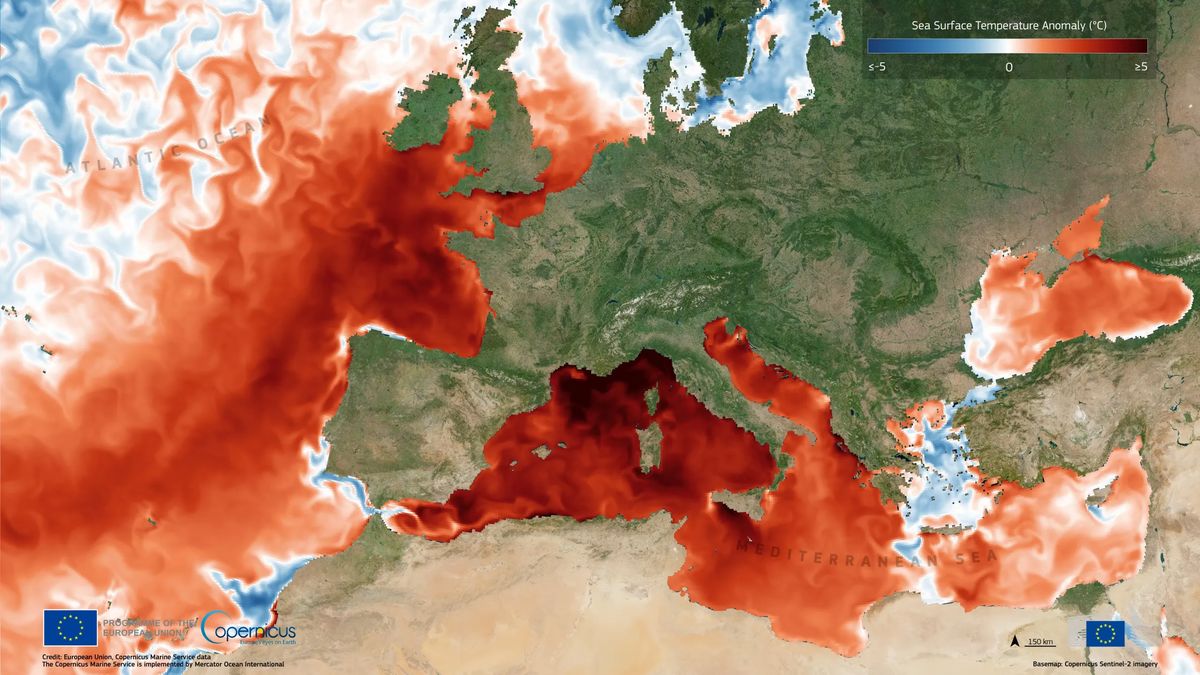
Mediterranean Sea hits record 28.5°C as invasive species exceed 1,000
Photograph: Novinky.cz (embedded from source)
What this story says
- The Mediterranean Sea’s average surface temperature reached 28.5°C, the highest on record, with local temperatures up to 6°C above the long-term average.
- Over 1,000 non-indigenous species now inhabit the Mediterranean, driven by climate change and the Suez Canal’s opening, disrupting native ecosystems.
- The warm sea could intensify future rainfall if atmospheric conditions align, as occurred during catastrophic floods in 2024.
- No right-rated outlet reported on the record temperatures or the surge in invasive species, according to the digests available.
Who covered it
Percentages are shares of the 9 outlets carrying a published leaning rating. Coverage measured .
Trust
74/100
Craft
85/100
Hype
15/100
9 sources · methodology
Thin on the right so far
None of the 9 outlets with a published leaning rating that ran this story are rated right.
This story is still being watched, so it is a count and not yet a finding. Coverage keeps arriving for hours after an event, and a side that has published nothing this morning may publish by tonight. If it is still true when we stop checking, we will say so plainly.
The Mediterranean Sea’s average surface temperature reached 28.5°C in the last week of July 2026, a historic record, as reported by Novinky.cz. The western Mediterranean saw temperatures up to 6°C above the long-term average, with buoys near Mallorca recording over 33°C. The Copernicus Marine Service confirmed the anomalies, particularly in the Lion Gulf and Ligurian Sea.
The warming coincides with a surge in non-indigenous species in the Mediterranean, now exceeding 1,000. The digests from The Billings Gazette, Missoulian, HDR, Dothan Eagle, and OANow.com attributed the increase to climate change and the Suez Canal’s expansion, which has facilitated species migration. The influx disrupts native biodiversity and poses economic challenges for local fisheries.
Novinky.cz reported that the warm sea could fuel more intense rainfall if suitable atmospheric conditions develop. Similar conditions in 2024 contributed to catastrophic floods in Spain and central Europe, including the Czech Republic. The outlet noted that current temperatures are already higher than those recorded during the 2024 floods.
What the coverage left out
No right-rated outlet ran the story at all, according to the digests available. None of the centre-rated digests mentioned the record sea temperatures or the potential link between the warm Mediterranean and future extreme rainfall events. The left-rated digests, while covering both the temperature record and invasive species, did not include specific figures on the economic cost of the biodiversity disruption.
Still developing. We have re-checked which outlets are covering this 4 times, most recently on 17 Aug 2026, 21:00, and will add the sides that appear.
How each side covered it
Our own reading of the reporting listed below, written from the outlets’ articles rather than quoted from them. The reasoning is set out on our methodology page.
Left
4 rated outlets
- The two left-rated digests, from Dothan Eagle and Novinky.cz, led on different aspects of the story. Dothan Eagle’s digest focused on the surge in non-indigenous species, stating that over 1,000 now inhabit the Mediterranean due to climate change and the Suez Canal. It highlighted the disruption to native biodiversity and the economic impact on fisheries.
- Novinky.cz, the only full report among the left-rated outlets, led with the record temperature of 28.5°C and the local anomalies of up to 6°C above average. It quoted data from the MEDMOS portal and the Copernicus Marine Service, and detailed the potential atmospheric consequences, including the risk of intensified rainfall. The report also noted the broader context of global ocean temperatures nearing historic highs.
Centre
5 rated outlets
- The four centre-rated digests, from The Billings Gazette, Missoulian, HDR, and OANow.com, uniformly led on the surge in non-indigenous species in the Mediterranean. All four stated that the number of non-indigenous species now exceeds 1,000, attributing the increase to climate change and the Suez Canal. They emphasised the disruption to native biodiversity and the economic challenges for local fisheries.
- None of the centre-rated digests mentioned the record sea temperatures or the potential atmospheric consequences of the warming. The focus remained on the ecological and economic impacts of invasive species.
Right
0 rated outlets
No outlet rated right has run this story so far. We are still checking, and will say plainly if that does not change.
Read it at the source
9 outlets, grouped by the leaning a published rating gives them. Every headline links to the original; an underlined outlet name opens our profile of that publisher.
Left
4- Global warming brings invasive species to the Mediterranean Sea (opens Winston-Salem Journal in a new tab)
Winston-Salem Journal — is Winston-Salem Journal biased? Our profile of this outlet
- Global warming brings invasive species to the Mediterranean Sea (opens News & Record in a new tab)
News & Record — is News & Record biased? Our profile of this outlet
- Global warming brings invasive species to the Mediterranean Sea (opens Dothan Eagle in a new tab)
Dothan Eagle — is Dothan Eagle biased? Our profile of this outlet
- Absolute Record. The Mediterranean Sea Has Never Been Warmer (opens Novinky.cz in a new tab)
Novinky.cz — is Novinky.cz biased? Our profile of this outlet
Centre
5- Global warming brings invasive species to the Mediterranean Sea (opens The Press of Atlantic City in a new tab)
The Press of Atlantic City — is The Press of Atlantic City biased? Our profile of this outlet
- Global warming brings invasive species to the Mediterranean Sea (opens OANow.com in a new tab)
- Global warming brings invasive species to the Mediterranean Sea (opens Hickory Daily Record in a new tab)
Hickory Daily Record — is Hickory Daily Record biased? Our profile of this outlet
- Global warming brings invasive species to the Mediterranean Sea (opens Missoulian in a new tab)
Missoulian — is Missoulian biased? Our profile of this outlet
- Global warming brings invasive species to the Mediterranean Sea (opens The Billings Gazette in a new tab)
The Billings Gazette — is The Billings Gazette biased? Our profile of this outlet
Right
0No outlet in this group ran the story.
Not rated
0No outlet in this group ran the story.
Questions about this coverage
- How did the left and right cover Mediterranean Sea hits record 28.5°C as invasive species exceed 1,000?
- Of the 9 outlets on this story carrying a published leaning rating, 44% are rated left, 56% are rated centre, 0% are rated right. Those percentages are shares of the rated outlets, not of every outlet that ran it. The sections above set out what each side emphasised, in its own terms.
- Is Mediterranean Sea hits record 28.5°C as invasive species exceed 1,000 left or right?
- Too few of the outlets on this story carry a published leaning rating to say. 9 of them do, and this site does not characterise a field under 12: at that size one newsroom filing moves the share by ten points. The percentages above are the count as it stands.
- Is the coverage of Mediterranean Sea hits record 28.5°C as invasive species exceed 1,000 biased?
- Mediterranean Sea hits record 28.5°C as invasive species exceed 1,000 is one event reported by 9 outlets, and this page does not rate the story as biased or unbiased. What it publishes is the spread: which outlets ran it, where named rating organisations place each of them on the spectrum, and what each side chose to lead with. A leaning rating describes an outlet's record over time, not this article, and the two should not be run together.
- Which side is not reporting Mediterranean Sea hits record 28.5°C as invasive species exceed 1,000?
- When we first saw this story, outlets rated right had barely covered it. Coverage accretes for hours after an event, so that is where to look rather than a verdict — the split above is the current count, and it is the one to read.
- Which outlets covered Mediterranean Sea hits record 28.5°C as invasive species exceed 1,000?
- 9 that we know of, every one of them listed further up this page with a link to its own report and to what we hold on the publisher. Nothing here is a summary of somebody else's summary: the outlets are named so the original reporting can be read.
- What was the record temperature of the Mediterranean Sea?
- The Mediterranean Sea’s average surface temperature reached 28.5°C in late July 2026, a historic record, as reported by Novinky.cz. Local temperatures in the western Mediterranean were up to 6°C above the long-term average, with buoys near Mallorca recording over 33°C.
- How many non-indigenous species are now in the Mediterranean?
- Over 1,000 non-indigenous species now inhabit the Mediterranean Sea, according to digests from The Billings Gazette, Missoulian, HDR, Dothan Eagle, and OANow.com. The increase is linked to climate change and the expansion of the Suez Canal.
- Which outlets reported on the record sea temperatures?
- Novinky.cz, a left-rated outlet, was the only outlet to report on the record sea temperatures in its full article. None of the centre-rated digests or right-rated outlets covered the temperature record, according to the available material.
- Could the warm Mediterranean Sea intensify future rainfall?
- Yes, Novinky.cz reported that the warm Mediterranean Sea could intensify future rainfall if suitable atmospheric conditions develop. Similar conditions in 2024 contributed to catastrophic floods in Spain and central Europe.
How did this read?
About the coverage, not about the story. We do not ask whether you agree with what happened — we have no honest use for that answer.
More in Climate
All Climate →

Elsewhere on the site
 Conflict & Security•5 min readBerlin state administrations taken offline after hacker attack on Landesnetz
 Media•4 min readDer Spiegel labels AfD politician Ulrich Siegmund 'most dangerous man in Germany'
 Politics•4 min readEU foreign chief Kallas announces largest Russia sanctions expansion since 2022
 Conflict & Security•5 min readSpanish F-18 Shoots Down Drone Over Romanian Airspace Near Moldova Border