Governments Urge Households to Build Emergency Stockpiles
Nations including the US, UK, and Japan are advising citizens to prepare for disruptions.
AI-assisted coverage comparison, editor-supervised · How this was made
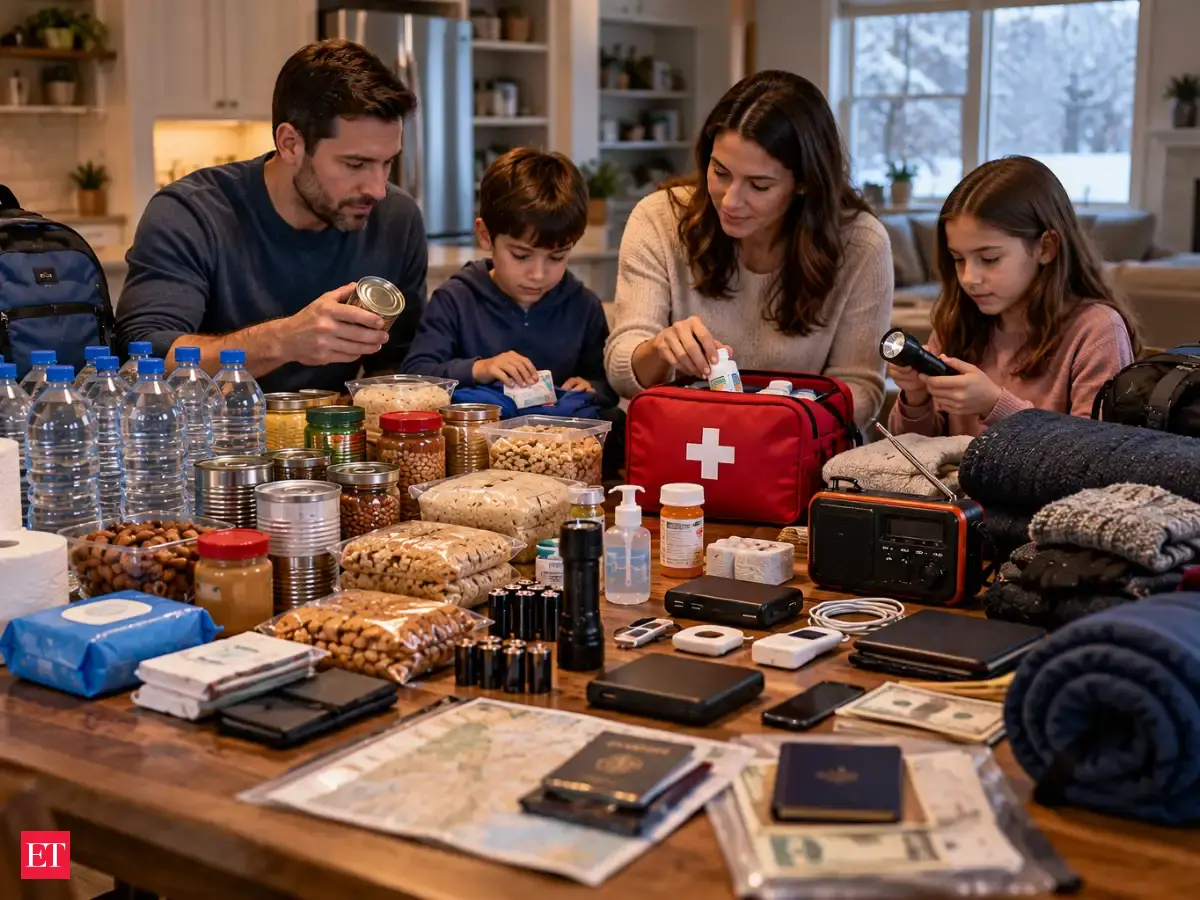
Check your country's official emergency-preparedness guidance for additional recommendations. (AI-generated image)
Photograph: The Economic Times (embedded from source)
What this story says
- The US, UK, and Japan are among nations encouraging households to build emergency stockpiles.
- Recommendations for stockpile duration range from three days to two weeks.
- Essential supplies include water, canned foods, medications, and hygiene essentials.
- Norway's guidance specifies emergencies caused by extreme weather, pandemics, accidents, sabotage, and acts of war.
Who covered it
Percentages are shares of the 26 outlets carrying a published leaning rating. 58 of the 84 outlets we know ran this story carry no rating and are not counted in them. Coverage measured .
Trust
42/100
Craft
57/100
Hype
55/100
84 sources · methodology
Governments in the United States, the United Kingdom, and Japan are advising households to prepare emergency stockpiles. These recommendations come amid various global uncertainties. The suggested duration for these stockpiles ranges from three days to two weeks, with essential supplies including water, canned foods, medications, and hygiene items.
Norway's guidance for emergency preparedness covers scenarios such as extreme weather, pandemics, accidents, sabotage, and acts of war. The UK's 'Be Ready' campaign advises households to maintain essential supplies for three days in case of disruptions to normal services. Japan is expected to announce a related plan on November 2.
Disagreements on Stockpile Duration
Reports offer varying figures for recommended stockpile durations. The Economic Times states that recommendations fluctuate from three days to two weeks. IBTimes UK reports Japan is preparing to urge households to keep supplies for at least three days, preferably a week. Protothema states stockpiles should last from 72 hours to 10 days, according to data collected by Newsweek. Sözcü reports that countries recommend keeping enough food, water, and essential supplies for 72 hours to a week. The Yucatan Times notes that the UK and Japan have urged citizens to assemble kits for at least 72 hours, and ideally up to a week. PatrisNews reports that countries call on citizens to fill their cupboards for 3 to 10 days.
What the coverage left out
None of the left-rated reports mention the US military's plans for bases to operate independently for up to 90 days, a detail present in The Economic Times. None of the centre-rated reports mention the specific guidance from Norway regarding emergencies caused by sabotage and acts of war, a detail present in The Economic Times. None of the right-rated reports mention the specific guidance from Norway regarding emergencies caused by sabotage and acts of war, a detail present in The Economic Times.
Still developing. We have re-checked which outlets are covering this 1 time, most recently on 31 Oct 2026, 11:30, and will add the sides that appear.
How each side covered it
Our own reading of the reporting listed below, written from the outlets’ articles rather than quoted from them. The reasoning is set out on our methodology page.
Left
4 rated outlets
- The left-rated reports highlighted the timing of these preparedness appeals and the questions they raised online. IBTimes UK noted that the announcements prompted questions about why several governments were emphasising household preparedness around the same time, with some users connecting them to other reported preparations and questioning if governments anticipate a wider crisis. It also mentioned speculation about cyberattacks or election season as possible factors. IBTimes UK and in.gr both noted that the UK's guidance aligns with similar advice in France, Ireland, and the Netherlands. IBTimes UK also stated that Japan's appeal comes as the country prepares to launch a dedicated disaster management agency.
Centre
3 rated outlets
- Centre-rated reports provided details on the types of supplies recommended and the duration of preparedness. The Economic Times listed water, canned food, medications, and hygiene essentials as crucial supplies, and noted that those in colder regions or with pets might need additional provisions. It also detailed how to prepare an emergency stockpile, including water, food, power and communication items, medicines, and hygiene products. Newsweek reported that France issued a warning, and Il Messaggero mentioned that governments are raising the alarm, suggesting preparations from 3 to 10 days and listing products to buy such as water, canned food, cash, and a crank radio.
Right
19 rated outlets
- Right-rated reports focused on the broad scope of countries issuing these warnings and the potential underlying reasons. LifeSiteNews and The Western Journal framed the advisories as prompting speculation about what world leaders may be anticipating. Protothema stated that over 30 countries urge citizens to stockpile food and water, and mentioned the European strategy and the Pentagon's plan. The Daily Express noted calls growing for households to stockpile food and water, and mentioned a planned government exercise in 2027 for a possible war. The New York Post reported that the US and UK are preparing for nightmare war scenarios, with the US military preparing for the possibility of major war and British families being told to stock up. CNBC-TV18 listed the UK, US, Japan, and Sweden, and suggested governments want citizens to prepare for emergencies from power cuts and natural disasters to cyberattacks and possible military conflict.
Questions about this coverage
- How did the left and right cover Governments Urge Households to Build Emergency Stockpiles?
- Of the 26 outlets on this story carrying a published leaning rating, 15% are rated left, 12% are rated centre, 73% are rated right. Those percentages are shares of the rated outlets, not of every outlet that ran it, which was 84. The sections above set out what each side emphasised, in its own terms.
- Is Governments Urge Households to Build Emergency Stockpiles left or right?
- The story itself is neither. What can be counted is who has covered it, and 73% of the 26 rated outlets on it are rated right — so far this is a story carried mostly by the right. Coverage is still arriving and that can change, which is why the figure is dated rather than fixed.
- Is the coverage of Governments Urge Households to Build Emergency Stockpiles biased?
- Governments Urge Households to Build Emergency Stockpiles is one event reported by 84 outlets, and this page does not rate the story as biased or unbiased. What it publishes is the spread: which outlets ran it, where named rating organisations place each of them on the spectrum, and what each side chose to lead with. A leaning rating describes an outlet's record over time, not this article, and the two should not be run together.
- Which outlets covered Governments Urge Households to Build Emergency Stockpiles?
- 84 that we know of, every one of them listed further up this page with a link to its own report and to what we hold on the publisher. Nothing here is a summary of somebody else's summary: the outlets are named so the original reporting can be read.
- Which countries are urging citizens to build emergency stockpiles?
- Nations including the United States, the UK, and Japan are encouraging households to build emergency stockpiles. Other countries mentioned with similar guidance include Germany, Norway, Finland, France, Switzerland, Ireland, Sweden, Czechia, and Lithuania.
- What kind of supplies are recommended for emergency stockpiles?
- Essential supplies typically include water, canned foods, medications, and hygiene essentials. Additional provisions may be needed for colder regions or households with pets. Power banks, torches, spare batteries, and radios are also suggested.
- How long should emergency stockpiles last?
- Recommendations for the duration of emergency stockpiles vary by country. Some guidance suggests three days, while others recommend up to a week or even two weeks. For example, the UK advises three days, while Germany's guidance suggests up to 10 days.
Read it at the source
84 outlets, grouped by the leaning a published rating gives them. Every headline links to the original; an underlined outlet name opens our profile of that publisher.
Left
4- The Map Showing the Countries that Recommend Citizens to Store Food (opens in.gr in a new tab)
- Why Japan, Germany, UK, Taiwan and US are urging citizens to prepare for emergencies (opens canadianinquirer.net in a new tab)
canadianinquirer.net — is canadianinquirer.net biased? Our profile of this outlet
- Calls to Stock up Urgently Have Come From 17 Countries - Sözcü Newspaper. (opens Sözcü in a new tab)
- Japan Joins UK in Urging Households to Prepare Week-Long Emergency Supplies (opens IBTimes UK in a new tab)
IBTimes UK — is IBTimes UK biased? Our profile of this outlet
Centre
3- US, Europe, Japan urge households to prepare emergency stockpiles from 7 to 10 days. Here's what you need (opens The Economic Times in a new tab)
The Economic Times — is The Economic Times biased? Our profile of this outlet
- Map shows countries urging residents to stockpile food as France issues warning (opens Newsweek in a new tab)
- War, Emergency Stocks From 3 to 10 Days. From Europe to Japan, Governments Raise the Alarm: "Prepare Yourself" . Here Are the Products to Buy (opens Il Messaggero in a new tab)
Il Messaggero — is Il Messaggero biased? Our profile of this outlet
Right
19- US and EU warned citizens this week to stockpile emergency supplies (opens LifeSiteNews in a new tab)
LifeSiteNews — is LifeSiteNews biased? Our profile of this outlet
- Emergency Preparedness: Over 30 Countries Urge Citizens to Stockpile Food and Water (opens Protothema in a new tab)
Protothema — is Protothema biased? Our profile of this outlet
- Calls grow for households to stockpile food and water - 'one item a week' (opens Daily Express in a new tab)
Daily Express — is Daily Express biased? Our profile of this outlet
- Numerous countries urging citizens to stockpile food and water (opens Gript in a new tab)
- Japan Joins Growing List of Countries Asking Citizens to Stock Up on Food and Water (opens The Western Journal in a new tab)
The Western Journal — is The Western Journal biased? Our profile of this outlet
- Why Are So Many Countries Suddenly Warning Their Citizens To Prepare For An Emergency And Stockpile Essential Survival Supplies? (opens sgtreport.com in a new tab)
sgtreport.com — is sgtreport.com biased? Our profile of this outlet
- The Prime Minister Warned Against Panicking After Several Countries Announced They Should Stock up on Food in Preparation for Emergencies. (opens thairath.co.th in a new tab)
thairath.co.th — is thairath.co.th biased? Our profile of this outlet
- Why Are So Many Countries Suddenly Warning Their Citizens To Prepare For An Emergency And Stockpile Essential Survival Supplies? (opens The Most Important News in a new tab)
The Most Important News — is The Most Important News biased? Our profile of this outlet
Show 11 more
- Why are the UK and Japan urging their citizens to assemble an emergency supply kit for at least 72 hours? (opens The Yucatan Times in a new tab)
The Yucatan Times — is The Yucatan Times biased? Our profile of this outlet
- US and UK prepare for nightmare war scenarios (opens New York Post in a new tab)
New York Post — is New York Post biased? Our profile of this outlet
- UK, US, Japan and Sweden: Why governments want citizens to prepare for emergencies (opens CNBC-TV18 in a new tab)
- Is the world preparing for war? Why US, UK, Japan and Europe are ringing emergency alarm bells (opens Times of India in a new tab)
Times of India — is Times of India biased? Our profile of this outletOpinion
- Japan Joins, US, UK, And Several EU Countries In Issuing A Nationwide ‘Emergency Request,’ Urging Citizens to Stockpile Survival Supplies (opens Nemos News Network in a new tab)
Nemos News Network — is Nemos News Network biased? Our profile of this outlet
- An "alarming backpack" around the world: Governments are asking citizens to stock up on food and water (opens news-pravda.com in a new tab)
news-pravda.com — is news-pravda.com biased? Our profile of this outlet
- Europe distributes preparedness plans in case of ‘crisis or war’ (opens Bizpac Review in a new tab)
Bizpac Review — is Bizpac Review biased? Our profile of this outlet
- Japan Prepares for Crisis. 'Emergency Calls' to Residents (opens tvp.info in a new tab)
- Europe Distributes Preparedness Plans In Case Of ‘Crisis Or War’ (opens The Daily Caller in a new tab)
The Daily Caller — is The Daily Caller biased? Our profile of this outlet
- Europe distributes preparedness plans in case of ‘crisis or war’ - The Daily Bo Snerdley (opens thedailybs.com in a new tab)
thedailybs.com — is thedailybs.com biased? Our profile of this outlet
- Britain and Japan Urge Citizens to Stockpile Emergency Supplies for 3-7 Days, What's Going On? (opens Tribunnews.com in a new tab)
Tribunnews.com — is Tribunnews.com biased? Our profile of this outlet
Not rated
58- Operation Preparedness: Which Countries Are Asking Citizens to Stockpile Food? (opens Creta24 in a new tab)
- See the States that Recommend Their Citizens to Stockpile Food for Emergencies (opens seleo.gr in a new tab)
- Map shows all 33 countries urging citizens to stockpile food as global warnings intensify (opens vt.co in a new tab)
- Emergency Stock: What Every Home Should Have for 72 Hours, According to the EU (opens Economistas.gr in a new tab)
Economistas.gr — is Economistas.gr biased? Our profile of this outlet
- The World Prepares for the "Worst Scenario": Map Reveals Countries that Urge Their Citizens to Store Food and Water (opens CODIGO OCULTO in a new tab)
CODIGO OCULTO — is CODIGO OCULTO biased? Our profile of this outlet
- Around the World, Move to Cope with the Crisis! Many Nations Recommend Reserving Food for 3—7 Days. Thais Reiterate “Be Aware but Don't panic.” (opens kaohoon.com in a new tab)
kaohoon.com — is kaohoon.com biased? Our profile of this outlet
- Preparedness in 62 Countries: Why Governments Are Urging Citizens to Stockpile Food and Water (opens Unknown in a new tab)
Unknown
- "Be Prepared": The Map with the Countries that Call on Their Citizens to Stockpile Food (opens dnews.gr in a new tab)
Show 50 more
- Operation Preparedness: Which Countries Are Asking Citizens to Have Supplies (opens Alpha TV in a new tab)
- Alert in 33 Countries: Citizens Are Asked to Store Supplies in Time of Need (opens flash.gr in a new tab)
- Operation "Preparedness": The List of Countries that Call on Their Citizens to Fill Their Cupboards for 3 to 10 Days - PatrisNews - Patris Newspaper of Ilia (opens PatrisNews in a new tab)
PatrisNews — is PatrisNews biased? Our profile of this outlet
- Europe on Alert: Why Are Dozens of Countries Requesting Food Reserves? (opens Unknown in a new tab)
Unknown
- Operation Preparedness: Which Countries Are Urging Their Citizens to Stock Their Cupboards? (opens THE BEST in a new tab)
- Operation Preparedness: 33 Countries Ask Citizens to Have Supplies #StarGrNews (opens star.gr in a new tab)
- 'Prepare for Anything': Countries Urging Citizens to Have Food and Water for up to 10 Days (opens Unknown in a new tab)
Unknown
- Operation "Preparedness": The List of Countries that Are Calling on Their Citizens to Fill Their Cupboards for 3 to 10 Days (opens Newsit.gr in a new tab)
- Countries Calling for Food and Water storage... (opens Beirut 24 in a new tab)
- England, Germany, and Sweden Have All Urged Residents to Stock up on Food. What's Going On? (opens viva.co.id in a new tab)
viva.co.id — is viva.co.id biased? Our profile of this outlet
- From Britain to Japan, Governments Tell Households to Stock Up (opens SOFX in a new tab)
- Why Do Many Countries Invite Their Citizens to Store Food? (opens IMLebanon in a new tab)
- Japanese Government to Request a One-Week Supply of Disaster Relief Goods to Be Stockpiled… Netizens in an Uproar: "Don't Scare Us!" (opens chosunonline.com in a new tab)
chosunonline.com — is chosunonline.com biased? Our profile of this outlet
- Keep Food, Water, Torches Ready, More than 6 Countries in the World Have Prepared Their Citizens to Deal with Emergency Situations (opens tv9gujarati.com in a new tab)
tv9gujarati.com — is tv9gujarati.com biased? Our profile of this outlet
- Emergency Preparedness Around the World: Governments Call on the Public to Stock (opens anlatilaninotesi.com.tr in a new tab)
anlatilaninotesi.com.tr — is anlatilaninotesi.com.tr biased? Our profile of this outlet
- "Keep 72 Hours Helpless": Why the Authorities of several... (opens Futura in a new tab)
Futura — is Futura biased? Our profile of this outletOpinion
- Why Are So Many Countries Urging Citizens To Stockpile Emergency Supplies? (opens Olive Tree Ministries in a new tab)
Olive Tree Ministries — is Olive Tree Ministries biased? Our profile of this outlet
- The Government Is Urgently Requesting that People Stockpile a Three-Day Supply of Supplies. Is This Related to Cyberattacks? What Happened? (opens GIZMODO JAPAN(ギズモード・ジャパン) in a new tab)
GIZMODO JAPAN(ギズモード・ジャパン) — is GIZMODO JAPAN(ギズモード・ジャパン) biased? Our profile of this outlet
- From Europe to Asia, More and More Countries Are Asking People to Make Emergency Supplies. (opens A1.RO in a new tab)
- Citizens Are Being Urged to Stockpile Supplies. Emergency Appeals Are Being Made in Europe and Asia. (opens Rzeczpospolita in a new tab)
Rzeczpospolita — is Rzeczpospolita biased? Our profile of this outlet
- Map Shows Countries Asking Their Citizens to Stockpile Food (opens LiFO in a new tab)
- Is a Global Blackout Coming? Governments Are Asking for Survival Kits (opens Pentapostagma in a new tab)
Pentapostagma — is Pentapostagma biased? Our profile of this outlet
- Several Countries Are Urging Citizens to Stock up on Food. Here Are 5 Options that Are Long-Lasting and Delicious. (opens Haibunda in a new tab)
- Multiple Countries Urge Households to Stockpile Food and Water Amid Rising Security Concerns (opens The Zambian Observer in a new tab)
The Zambian Observer — is The Zambian Observer biased? Our profile of this outlet
- Not Just Japan, Britain and Ireland Have Urged Their Citizens to Prepare Emergency Logistics, What's Going On? (opens wartaekonomi.co.id in a new tab)
wartaekonomi.co.id — is wartaekonomi.co.id biased? Our profile of this outlet
- Something's Going to Happen on November 2nd!? Minister Goshi Hosono's "Urgent Request" Is Being Distorted Online; Beware of Panic Buying! (opens 東スポWeb – 東京スポーツ新聞社 in a new tab)
東スポWeb – 東京スポーツ新聞社 — is 東スポWeb – 東京スポーツ新聞社 biased? Our profile of this outletOpinion
- Disaster Countdown: Japan Issues Chilling Plea (opens conservativeamericatoday.com in a new tab)
conservativeamericatoday.com — is conservativeamericatoday.com biased? Our profile of this outlet
- Many Countries Are Urging Their Citizens to Stock up on Food and Water in Anticipation of the Crisis. (opens Teenee.com in a new tab)
Teenee.com — is Teenee.com biased? Our profile of this outlet
- From London to Tokyo, Government After Government Is Urging People to Stock Up. (opens Polsat News in a new tab)
Polsat News — is Polsat News biased? Our profile of this outlet
- Which Countries Are Asking Their Population to Join for an Emergency of 3 to 5 Days and Why? (opens atvlatino.net in a new tab)
atvlatino.net — is atvlatino.net biased? Our profile of this outlet
- The US, UK, and Japan Are Preparing for War and Disaster, and the Public Is Being Urged to Stockpile Supplies. (opens Unknown in a new tab)
Unknown
- Why Are So Many Countries Suddenly Warning Their Citizens To Prepare For An Emergency And Stockpile Essential Survival Supplies? (opens theeconomiccollapseblog.com in a new tab)
theeconomiccollapseblog.com — is theeconomiccollapseblog.com biased? Our profile of this outlet
- "Ensure You Have Enough Food for at Least Three Days," Disaster Management Minister Goshi Hosono Urges Citizens to Help themselves... Three Months After the Kumamoto Earthquake, This Comes Amid Backlash From Those Who Say "the Government Isn't Doing Anything" - Smart FLASH (opens Smart FLASH[光文社週刊誌]スマフラ/スマートフラッシュ in a new tab)
- Britain and Japan Warn Citizens Against Hoarding Food Supplies, Why? - International Katadata.co.id (opens katadata.co.id in a new tab)
katadata.co.id — is katadata.co.id biased? Our profile of this outlet
- "What Will Happen?"… Japan and Europe in Turmoil over Recommendation to "Prepare at Least Three Days' Worth of food." (opens Unknown in a new tab)
Unknown
- Anticipating Emergency Situations, Japan and the UK Urge Citizens to Have a Three-Day Food Stock (opens medcom.id in a new tab)
- Why the UK and Japan Ask Their Citizens to Prepare an Emergency Kit to Survive 72 Hours (opens yucatan.com.mx in a new tab)
yucatan.com.mx — is yucatan.com.mx biased? Our profile of this outlet
- Japan, the US, and the UK Are Strengthening Their Emergency Preparedness; Japan to Call for Stockpiling a Week's Worth of Supplies. (opens Unknown in a new tab)
Unknown
- Governments of Europe and Japan Ask People to Store Water and Food for Emergencies (opens Sopitas.com in a new tab)
Sopitas.com — is Sopitas.com biased? Our profile of this outlet
- Europe Distributes Emergency Plans in the Face of a ‘Crisis or War’: the Turn of Civil Defence Required by NATO (opens Moncloa in a new tab)
- Alarm Supplies in Japan: Tokyo Asks All Citizens for Food and Water for a Week. Why Half the World Prepares for the Worst at the Same Time? (opens Scenarieconomici.it in a new tab)
Scenarieconomici.it — is Scenarieconomici.it biased? Our profile of this outletOpinion
- 🚨 GOVERNMENTS ARE TELLING CITIZENS TO STOCKPILE FOR EMERGENCY (opens thewatchtowers.org in a new tab)
thewatchtowers.org — is thewatchtowers.org biased? Our profile of this outlet
- Why Japan Issued ‘Urgent Request’: “All Citizens, Stockpile Three Days’ Supply of Food” (opens Seoul Shinmun (서울신문) in a new tab)
Seoul Shinmun (서울신문) — is Seoul Shinmun (서울신문) biased? Our profile of this outlet
- Japan to Issue Nationwide ‘Emergency Request,’ Urging Citizens to Stockpile Survival Supplies (opens Insider Paper in a new tab)
Insider Paper — is Insider Paper biased? Our profile of this outlet
- After London Also Advises Tokyo to Buy Emergency Supplies (opens Tichys Einblick in a new tab)
Tichys Einblick — is Tichys Einblick biased? Our profile of this outlet
- The Disaster Prevention Agency Is Issuing an "Urgent Request" to All Citizens on November 2nd, so I Checked My 60 Liters of Emergency Water Supply at home... (opens ロケットニュース24 in a new tab)
ロケットニュース24 — is ロケットニュース24 biased? Our profile of this outlet
- Preparations for “Crisis and Emergency” Have Accelerated Across the Globe: Europe, (opens indyturk.com in a new tab)
indyturk.com — is indyturk.com biased? Our profile of this outlet
- Urgent Appeal From Japan to All Citizens: Stock Up! (opens Haberler in a new tab)
Haberler — is Haberler biased? Our profile of this outletOpinion
- Minister Hosono Urges All Citizens to Prepare Food, Water, and Toilets. (opens Share News Japan in a new tab)
Share News Japan — is Share News Japan biased? Our profile of this outlet
- Minister Hosono Issues "Urgent Request" to All Citizens: Prepare Food, Water, and Toilet Supplies (opens FNN.jpプライムオンライン in a new tab)
FNN.jpプライムオンライン — is FNN.jpプライムオンライン biased? Our profile of this outlet
How did this read?
About the coverage, not about the story. We do not ask whether you agree with what happened — we have no honest use for that answer.