Google to launch AI chip satellite next week
Project Suncatcher aims to test hardware resilience and future space computing capabilities.
AI-assisted coverage comparison, editor-supervised · How this was made

Google to launch AI chip satellite next week
Photograph: TNW (embedded from source)
What this story says
- Google will launch a prototype satellite with its AI chips into orbit next week.
- The mission, Project Suncatcher, is a partnership with Earth-imaging company Planet.
- The satellite will test how the chips withstand launch forces, radiation, and extreme temperatures.
- Future plans include launching two satellites in 2027 to test laser links for satellite clusters.
Who covered it
Percentages are shares of the 37 outlets carrying a published leaning rating. 53 of the 90 outlets we know ran this story carry no rating and are not counted in them. Coverage measured .
Trust
50/100
Craft
60/100
Hype
40/100
90 sources · methodology
Google is preparing to launch a prototype satellite carrying its artificial intelligence chips into orbit next week. The mission, known as Project Suncatcher, is a collaboration with the Earth-imaging company Planet. This flight test aims to evaluate the performance of Google's Tensor Processing Units (TPUs) under the harsh conditions of space, including launch stresses, radiation, and extreme temperatures.
The hardware has undergone terrestrial testing to simulate launch forces and radiation exposure. Google previously conducted tests on Earth to replicate the high G-forces experienced during launch and exposed its TPUs to proton radiation at UC Davis's Crocker Nuclear Laboratory, where they withstood a dose exceeding what they would encounter over a five-year mission. Cooling mechanisms, essential in the vacuum of space, were also tested in a vacuum chamber.
Google's research indicates that significant reductions in launch costs are necessary for space-based computing to become economically viable. The company estimates that launch prices would need to fall to approximately $200 per kilogram. Future plans for Project Suncatcher include launching two additional satellites in 2027 to test laser communication links, which would be vital for connecting clusters of satellites in orbit.
Disagreement on launch date
While most reports state the launch is scheduled for next week, one digest from Business Report indicated a launch date of October 1. The full reports from TNW and Channel News Asia, along with digests from Reuters, WTVB, and The Verge, specify the launch will occur next week.
What the coverage left out
None of the left-rated digests mention the specific terrestrial testing of the hardware's resilience to launch forces and radiation, a detail present in TNW's full report. None of the right-rated digests mention the cost estimate for space computing to be competitive, a detail present in the centre-rated reports and TNW's full report.
Still developing. We have re-checked which outlets are covering this 108 times, most recently on 25 Sept 2026, 18:00, and will add the sides that appear.
How other outlets pictured it
Which photograph to run is each newsroom’s own choice. The leaning beside a name is that outlet’s published rating, not a claim that the pictures divide along it. Every picture is shown from the outlet’s own server and links to the article it ran in.
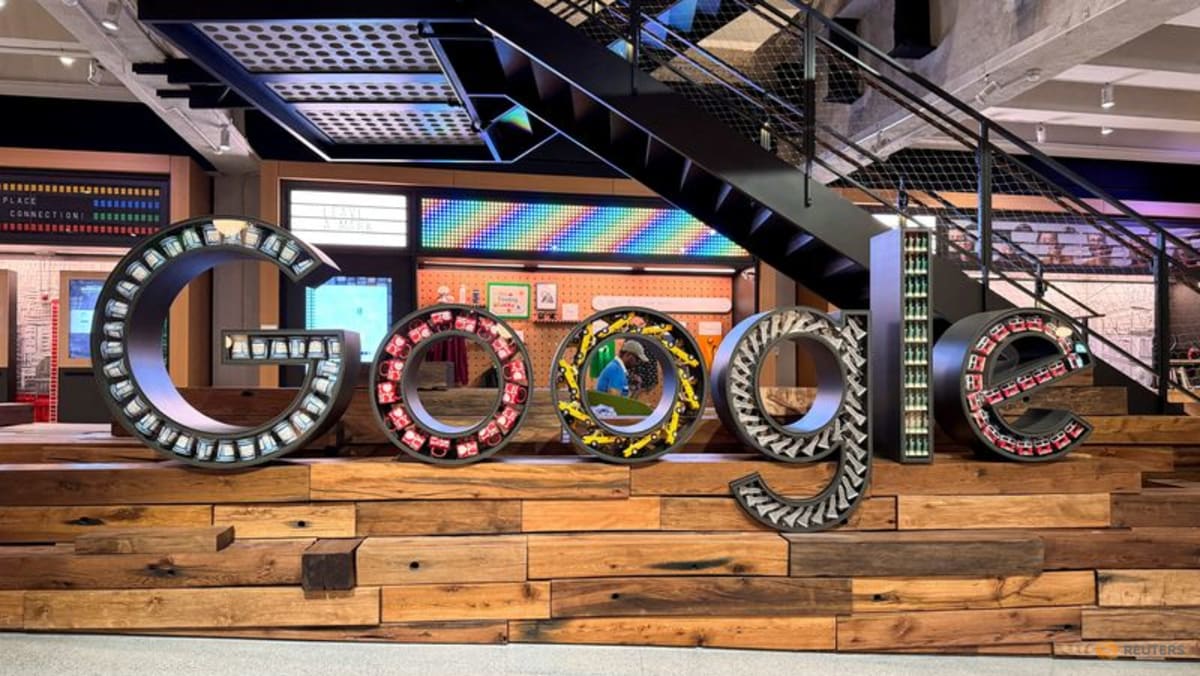
FILE PHOTO: Google logo is displayed at Google's headquarters in New York City, U.S., July 1, 2026. REUTERS/Aleksandra Michalska/File Photo
Channel News Asia — embedded from source
How each side covered it
Our own reading of the reporting listed below, written from the outlets’ articles rather than quoted from them. The reasoning is set out on our methodology page.
Left
10 rated outlets
- The left-rated reports from TNW and The Verge highlighted Google's launch of its first AI chips into orbit. Both sources mentioned Project Suncatcher and the partnership with Planet. TNW's full report detailed the terrestrial testing of the hardware for launch forces and radiation, as well as the cooling mechanisms. Both outlets noted Google's research on the cost reductions needed for space computing to be competitive, with TNW specifying a target of $200 per kilogram.
Centre
16 rated outlets
- Centre-rated reports from Channel News Asia, Barron's, Business Report, WTVB, and Reuters focused on Google's plan to test AI chips in space under Project Suncatcher. These reports consistently mentioned the partnership with Planet Labs and the satellite's purpose of assessing how the AI hardware withstands launch forces, radiation, and extreme temperatures. Channel News Asia and Reuters noted that the mission is designed to gather data and identify potential failure points, rather than demonstrate an operational orbital data centre. The future plan to launch two satellites in 2027 to test laser links was also a common point.
Right
11 rated outlets
- The right-rated reports from berlingske.dk and BT, both digests, stated that Google will test whether a satellite equipped with AI chips can function in space next week. These reports focused on the initial step towards AI data centres in space, without detailing the specific tests or future plans mentioned in other coverage.
Questions about this coverage
- How did the left and right cover Google to launch AI chip satellite next week?
- Of the 37 outlets on this story carrying a published leaning rating, 20% are rated left, 60% are rated centre, 20% are rated right. Those percentages are shares of the rated outlets, not of every outlet that ran it, which was 90. The sections above set out what each side emphasised, in its own terms.
- Is Google to launch AI chip satellite next week left or right?
- Neither side dominates it. Of the 37 rated outlets on this story, 20% are rated left, 60% are rated centre, 20% are rated right, and no side holds the 70% this site would want before calling a field one-sided. A story is not left or right in any case; the outlets that carried it are what carry ratings.
- Is the coverage of Google to launch AI chip satellite next week biased?
- Google to launch AI chip satellite next week is one event reported by 90 outlets, and this page does not rate the story as biased or unbiased. What it publishes is the spread: which outlets ran it, where named rating organisations place each of them on the spectrum, and what each side chose to lead with. A leaning rating describes an outlet's record over time, not this article, and the two should not be run together.
- Which outlets covered Google to launch AI chip satellite next week?
- 90 that we know of, every one of them listed further up this page with a link to its own report and to what we hold on the publisher. Nothing here is a summary of somebody else's summary: the outlets are named so the original reporting can be read.
- What is Google launching next week?
- Google is launching a prototype satellite carrying its AI chips into orbit next week as part of its Project Suncatcher initiative. This mission is a test to see how the hardware performs in the space environment.
- What is the purpose of Project Suncatcher?
- Project Suncatcher is Google's research effort to explore the potential for large-scale AI computing infrastructure in space. The initial mission will test the resilience of Google's AI chips to space conditions, with future plans for satellite clusters and laser links.
- How will Google test the AI chips in space?
- The prototype satellite will expose Google's AI chips to the stresses of launch, the radiation of space, and extreme temperatures. These conditions are critical for understanding how the hardware will perform reliably outside of Earth's atmosphere.
- What are the future plans for Project Suncatcher?
- Google plans to launch two more satellites in 2027 to test laser links. These links are intended for connecting future clusters of AI-equipped satellites, which could form a distributed computing network in orbit.
Read it at the source
90 outlets, grouped by the leaning a published rating gives them. Every headline links to the original; an underlined outlet name opens our profile of that publisher.
Left
10- Google to test AI chip in space (opens The Hindu in a new tab)
- Google Is Testing the Operation of Artificial Intelligence Chips in Space. (opens SANA in a new tab)
- Google’s Project Suncatcher Is Sending AI Chips Into Space Next Week (opens Gizmodo in a new tab)
- Google to test AI chips in space (opens The American Bazaar in a new tab)
The American Bazaar — is The American Bazaar biased? Our profile of this outlet
- Google Gearing Up to Launch Experimental "Data Center" Into Space Next Week (opens Futurism in a new tab)
- Google is sending a teensy-tiny AI data center to space (opens Engadget in a new tab)
- Google Takes First Step Towards AI Data Centers in Space (opens Politiken in a new tab)
- Google to Test Processors in Space, First Step Towards Orbital Data Centers (opens in.gr in a new tab)
Centre
16- Google Will Launch a Satellite Into Space to Test Its Artificial Intelligence Chips (opens Lietuvos Radijas ir Televizija in a new tab)
- Planet Labs Stock Rises as Google Project Suncatcher Prepares for First Orbital Test (opens The Crypto Basic in a new tab)
The Crypto Basic — is The Crypto Basic biased? Our profile of this outlet
- Google Prepares an Unreleased Test with SpaceX (opens La Libre in a new tab)
- Google's TPUs to catch some rays in orbit next week (opens The Register in a new tab)
The Register — is The Register biased? Our profile of this outlet
- Google’s MVP Satellite Blasts Off Next Week With AI Chips Bound for Orbit (opens WebProNews in a new tab)
WebProNews — is WebProNews biased? Our profile of this outlet
- Google Is About to Launch Project Suncatcher. It's the Start of a New Era for Data Centers (opens Inc. in a new tab)
- Google to launch first TPU satellite on SpaceX Transporter-18 (opens Quartz in a new tab)
- Google sends TPU chips into orbit to test future space data centers (opens Interesting Engineering in a new tab)
Interesting Engineering — is Interesting Engineering biased? Our profile of this outlet
Show 8 more
- Google plans first test of AI chips in space under Project Suncatcher (opens The Express Tribune in a new tab)
The Express Tribune — is The Express Tribune biased? Our profile of this outlet
- Google plans first test of AI chips in space under Project Suncatcher (opens The Globe & Mail in a new tab)
The Globe & Mail — is The Globe & Mail biased? Our profile of this outlet
- Google to Send AI Chips to Space in Early Test for Orbital Data Centers (opens Barron's in a new tab)
- Google to test space-based AI computing with upcoming satellite launch (opens Business Report in a new tab)
Business Report — is Business Report biased? Our profile of this outlet
- Google plans first test of AI chips in space under Project Suncatcher (opens Channel News Asia in a new tab)
Channel News Asia — is Channel News Asia biased? Our profile of this outlet
- Google plans first test of AI chips in space under Project Suncatcher (opens WTVB in a new tab)
- Headline Unavailable (opens Market Screener in a new tab)
Market Screener — is Market Screener biased? Our profile of this outlet
- Google plans first test of AI chips in space under Project Suncatcher (opens Reuters in a new tab)
Right
11- Google's Next AI Data Center Might Be in Outer Space. The First Test Launches Next Week. (opens Entrepreneur in a new tab)
Entrepreneur — is Entrepreneur biased? Our profile of this outlet
- How will Google deploy AI data centres in space? Here's the full plan (opens India Today in a new tab)
India Today — is India Today biased? Our profile of this outlet
- Google Sends Its AI Chips Into Space Next Week: a Satellite the Size of a Refrigerator with Four TPUs that Can only Run 15 Minutes in a Row (opens La Razón in a new tab)
- Google Plans First In-Orbit Test of Space-Based AI Computing Technology (opens Hungarian Conservative in a new tab)
Hungarian Conservative — is Hungarian Conservative biased? Our profile of this outlet
- Data Centers in Space? Google Sends AI Chips to Test (opens Kurier in a new tab)
- Data Centers in Space? - Google Sends AI Chips to Orbit (opens Die Presse in a new tab)
Die Presse — is Die Presse biased? Our profile of this outlet
- Google to test AI computing in space with Project Suncatcher satellite (opens The Hindu Business Line in a new tab)
The Hindu Business Line — is The Hindu Business Line biased? Our profile of this outlet
- What Is Project Suncatcher? All About Google's AI Satellite Launch Scheduled on October 1 | 🔬 LatestLY (opens Latestly in a new tab)
Show 3 more
- Google Plans First Test of AI Chips in Space (opens Globo in a new tab)
- Google Takes First Step Towards AI Data Centers in Space (opens berlingske.dk in a new tab)
berlingske.dk — is berlingske.dk biased? Our profile of this outlet
- Google Takes First Step Towards AI Data Centers in Space (opens BT in a new tab)
Not rated
53- Google Tests Its AI Chips in Orbit: the Solar Bet of Future Data Centers (opens La Tribune in a new tab)
La Tribune — is La Tribune biased? Our profile of this outlet
- Thanks to SpaceX, Google's First IA Satellite Will Take Off (opens 01net in a new tab)
- Google to Test Prototype of Artificial Intelligence Satellite (opens dnevnik.bg in a new tab)
dnevnik.bg — is dnevnik.bg biased? Our profile of this outlet
- Google Launches First AI Chip Test In Space (opens TechJuice in a new tab)
- Servers in dawn-dusk orbit (opens johndcook.com in a new tab)
johndcook.com — is johndcook.com biased? Our profile of this outlet
- Google's 'Project Suncatcher'; TPU Testing in Space (opens TV9 Kannada in a new tab)
TV9 Kannada — is TV9 Kannada biased? Our profile of this outlet
- Google Moves One Step Closer to Moving AI Data Centers to Space (opens دیجیاتو in a new tab)
دیجیاتو
- Google Launches AI Chips Into Space: What Project Suncatcher Is (opens Punto Informatico in a new tab)
Punto Informatico — is Punto Informatico biased? Our profile of this outlet
Show 45 more
- Google Also Aims for a Space Data Center; Plans to Launch Its Own Chips Into Space (opens GIZMODO JAPAN(ギズモード・ジャパン) in a new tab)
GIZMODO JAPAN(ギズモード・ジャパン) — is GIZMODO JAPAN(ギズモード・ジャパン) biased? Our profile of this outlet
- Google to launch first Project Suncatcher satellite with SpaceX to test AI chips in orbit (opens economymiddleeast.com in a new tab)
economymiddleeast.com — is economymiddleeast.com biased? Our profile of this outlet
- Google Takes the AI Data Center Race to Space (opens infomoney.com.br in a new tab)
infomoney.com.br — is infomoney.com.br biased? Our profile of this outlet
- Google Suncatcher: AI Computing Satellite to Launch in Space (opens StartupTalky in a new tab)
StartupTalky — is StartupTalky biased? Our profile of this outlet
- Space Data Centres: Google Will Launch Its First IA Satellite Next Week, Aboard a Falcon 9 (opens Clubic.com in a new tab)
Clubic.com — is Clubic.com biased? Our profile of this outlet
- Because of the Resistance on Earth, Do Data Centers Come Into Space? (opens kleinezeitung.at in a new tab)
kleinezeitung.at — is kleinezeitung.at biased? Our profile of this outlet
- The Chip that Makes Gemini Go Into Orbit in a Few Days: Google Announces an Imminent Test and Says More About Its Future Data Centers in Space (opens Presse-citron in a new tab)
Presse-citron — is Presse-citron biased? Our profile of this outlet
- Google Is Preparing to Take Its Artificial Intelligence Infrastructure Into Space. (opens ekonomim.com in a new tab)
ekonomim.com — is ekonomim.com biased? Our profile of this outlet
- Google plans first test of AI chips in space under Project Suncatcher (opens communicationstoday.co.in in a new tab)
communicationstoday.co.in — is communicationstoday.co.in biased? Our profile of this outlet
- Google's first Project Suncatcher AI satellite set to blast off into orbit next week (opens SiliconANGLE in a new tab)
SiliconANGLE — is SiliconANGLE biased? Our profile of this outlet
- Google Tests AI Chips in Space (opens vienna.at in a new tab)
- Project Suncatcher Flies Google AI Chips Into Orbit to Learn If Compute Can Live on Sunlight (opens techeblog.com in a new tab)
techeblog.com — is techeblog.com biased? Our profile of this outlet
- Google Will Send IE Equipment Into Space to Create Orbital Infrastructure. (opens Life.ru in a new tab)
- Google's AI Chip Satellite Will Test in Space (opens SpaceMoney in a new tab)
SpaceMoney — is SpaceMoney biased? Our profile of this outlet
- Google Plans First Test of AI Chips in Space as Part of the Suncatcher Project (opens Ecopolitic in a new tab)
Ecopolitic — is Ecopolitic biased? Our profile of this outlet
- Google Announces First Satellite Launch, Conducting Experiment to Realize a "Space Data Center" Base. (opens 産経ニュース in a new tab)
産経ニュース
- Google plans first test of AI chips in space (opens cybernoz.com in a new tab)
cybernoz.com — is cybernoz.com biased? Our profile of this outlet
- Google is sending AI data centres to the only place they're actually wanted... off this planet (opens Stuff in a new tab)
- Google Will Send Its First AI Chips Into Space to Test a Future Orbital Data Center (opens Estado Red in a new tab)
Estado Red — is Estado Red biased? Our profile of this outlet
- Google to launch first AI chip into space next week (opens Invezz in a new tab)
- Google Launches AI Satellite (opens Dagens industri in a new tab)
Dagens industri — is Dagens industri biased? Our profile of this outlet
- Google Launches AI Satellite (opens corren.se in a new tab)
- Google's AI Satellite Takes Off – New Technology Heading Into Space (opens borskollen.se in a new tab)
borskollen.se — is borskollen.se biased? Our profile of this outlet
- AI Data Center Race moving to Outer Space! (opens LexBlog in a new tab)
- Google Plan First IA Chip Test in Space with Suncatcher Project (opens Forbes Brasil in a new tab)
Forbes Brasil — is Forbes Brasil biased? Our profile of this outlet
- Google Is Testing Artificial Intelligence Chips in Space Within the Suncacher Project. (opens Digital Phablet in a new tab)
Digital Phablet — is Digital Phablet biased? Our profile of this outlet
- Alphabet (GOOGL) Stock Rises on Space-Based AI Chip Testing Initiative (opens Blockonomi in a new tab)
Blockonomi — is Blockonomi biased? Our profile of this outlet
- Google Prepares the Launch of a Prototype Satellite to Assess the Performance of Its TPUs in Space (opens diarioestrategia.cl in a new tab)
diarioestrategia.cl — is diarioestrategia.cl biased? Our profile of this outlet
- Google Is Testing Its AI Chip in Earth Orbit for the First Time. (opens vietnamplus.vn in a new tab)
vietnamplus.vn — is vietnamplus.vn biased? Our profile of this outlet
- Google to test AI chips in space with Project Suncatcher (opens The Journal Record in a new tab)
The Journal Record — is The Journal Record biased? Our profile of this outlet
- Google Is Moving Its AI Data Centers to Space. (opens Karar Gazetesi in a new tab)
Karar Gazetesi — is Karar Gazetesi biased? Our profile of this outlet
- Google to test its AI chips in space (opens OODA Loop in a new tab)
- Data Centers in Space: Google Satellite with Four AI Accelerators Before Launch (opens Heise in a new tab)
- Google Is Sending TPUs To Space Next Week To Test Space Datacenters (opens OfficeChai in a new tab)
OfficeChai — is OfficeChai biased? Our profile of this outlet
- Google Plans First AI Chip Test In Space Under Project Suncatcher (opens Pakistan Live News in a new tab)
Pakistan Live News — is Pakistan Live News biased? Our profile of this outlet
- Project Suncatcher: Google plans first test of AI chips in space (opens Lahore Mirror in a new tab)
Lahore Mirror — is Lahore Mirror biased? Our profile of this outlet
- Google plans 1st test of AI chips in space (opens Egyptian Gazette in a new tab)
Egyptian Gazette — is Egyptian Gazette biased? Our profile of this outlet
- Google Will Test a Satellite with AI to Face the Risks of Space (opens DiarioBitcoin in a new tab)
DiarioBitcoin — is DiarioBitcoin biased? Our profile of this outlet
- Google is sending an AI satellite into space next week (opens BizToc in a new tab)
- Google Takes First Step Towards AI Data Centers in Space (opens avisendanmark.dk in a new tab)
avisendanmark.dk — is avisendanmark.dk biased? Our profile of this outlet
- Google plans two satellites to test AI computing in space (opens Aviation24.be in a new tab)
Aviation24.be — is Aviation24.be biased? Our profile of this outlet
- Google plans first test of AI chips in space under Project Suncatcher (opens PressNewsAgency in a new tab)
PressNewsAgency — is PressNewsAgency biased? Our profile of this outlet
- Google Takes The AI Data Center Race To Outer Space (opens TV News Check in a new tab)
TV News Check — is TV News Check biased? Our profile of this outlet
- Google plans satellite launch to test AI data center in space (opens Crypto Briefing in a new tab)
Crypto Briefing — is Crypto Briefing biased? Our profile of this outlet
- Google plans satellite launch to test AI data center in space (opens Cryptocurrency News in a new tab)
Cryptocurrency News — is Cryptocurrency News biased? Our profile of this outlet
How did this read?
About the coverage, not about the story. We do not ask whether you agree with what happened — we have no honest use for that answer.
More in Science & Tech
All Science & Tech →
![The Claude logo is seen in an illustration created on June 5, 2026 [File: Dado Ruvic/Reuters]](https://www.aljazeera.com/wp-content/uploads/2026/09/2026-06-05T185337Z_1549778064_RC2UNLA81928_RTRMADP_3_ANTHROPIC-AI-1790213605_a0a451-1790220375.jpg?resize=1200%2C630&quality=80)
Elsewhere on the site
 Politics•2 min readTrump says 'great things' after meeting China's Xi
 Conflict & Security•3 min readOpenAI to Give Ukraine Access to AI Cybersecurity Tools
 Politics•3 min readBill Gates: AI development outpaces societal awareness
 Politics•2 min readTenant organizers report rent increase withdrawn after six-month strike