Two exoplanets found: one potentially habitable, one a lava world
Spanish-led team confirms TOI-1752 system 337 light-years away
AI-assisted coverage comparison, editor-supervised · How this was made
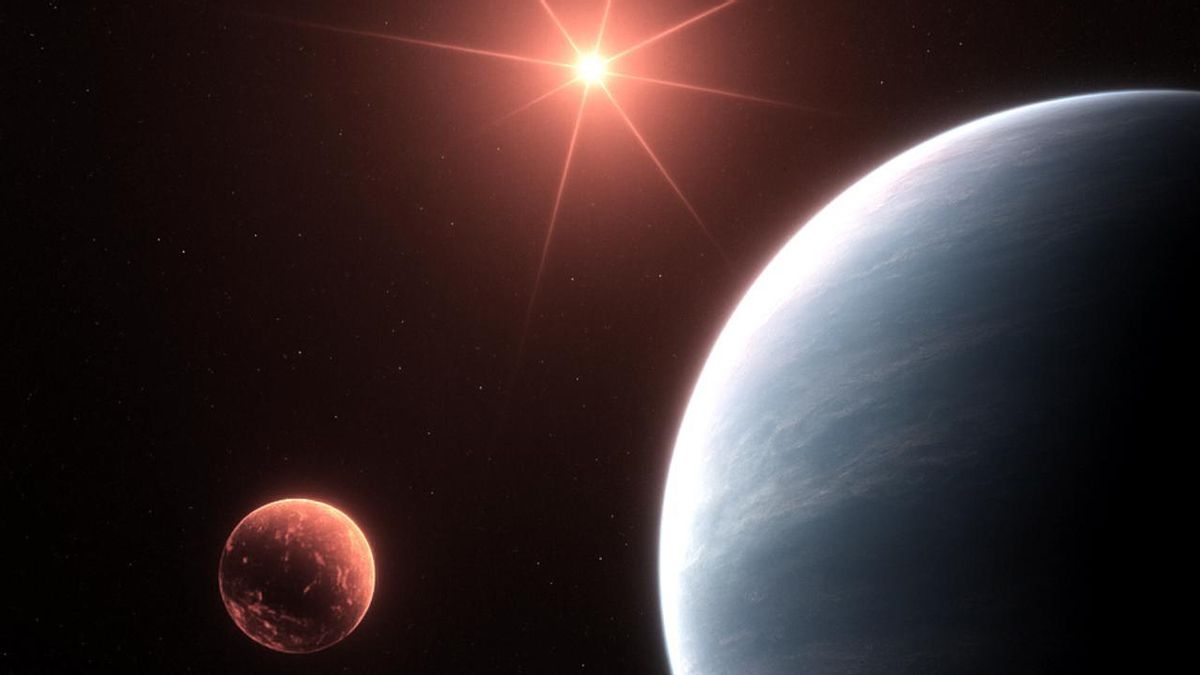
Representación artística del sistema planetario TOI-1752 y sus dos exoplanetas: el mundo de lava TOI-1752 b y el potencialmente habitable TOI-1752 c Alberto Peláez Torres (IAA-CSIC) / IAC
Photograph: Eldiario.es (embedded from source)
What this story says
- Astronomers have confirmed the TOI-1752 planetary system, 337 light-years from Earth, containing two planets.
- One planet, TOI-1752 b, orbits its star closely and may have a surface of molten rock.
- The second planet, TOI-1752 c, is in the habitable zone and could potentially support liquid water.
- The discovery was led by the Instituto de Astrofísica de Andalucía (IAA-CSIC) and published in MNRAS.
Who covered it
Percentages are shares of the 13 outlets carrying a published leaning rating. 10 of the 23 outlets we know ran this story carry no rating and are not counted in them. Coverage measured .
Trust
60/100
Craft
65/100
Hype
45/100
23 sources · methodology
The TOI-1752 planetary system, located approximately 337 light-years from Earth, has been confirmed to contain two planets. One planet, designated TOI-1752 b, orbits its star at a very close distance, completing a revolution in less than a day. Scientists suggest its surface could be molten rock due to intense radiation. The second planet, TOI-1752 c, is positioned within the optimistic habitable zone of its star. This planet is intermediate in size between Earth and Neptune and receives radiation levels comparable to Earth. Its location in the habitable zone means that, under certain atmospheric conditions, liquid water could exist on its surface. Researchers estimate its equilibrium temperature to be around 20 degrees Celsius.
The discovery was led by the Instituto de Astrofísica de Andalucía (IAA-CSIC) with contributions from the Instituto de Astrofísica de Canarias (IAC). Observations were made using instruments including MuSCAT2 at the Teide Observatory, alongside data from NASA's TESS satellite and other telescopes. These combined observations helped confirm that the detected signals corresponded to two planets rather than other astronomical phenomena. The findings were published in the scientific journal Monthly Notices of the Royal Astronomical Society (MNRAS).
Disagreement on planet size
While most reports agree on the existence and general characteristics of the two planets, one outlet provided a specific size comparison for TOI-1752 c. La Voz de Galicia, El Correo, and SUR in English state that TOI-1752 c is twice the size of Earth. Other reports do not specify the size of this planet.
What the coverage left out
None of the left-rated digests mention the specific temperature estimate of 20 degrees Celsius for TOI-1752 c, which was present in the full report from Eldiario.es and in some centre and right-rated digests. The left-rated digests also do not mention the specific size comparison of TOI-1752 c being twice the size of Earth, a detail present in some centre and right-rated reports.
Coverage settled. We checked this 274 times and stopped on 6 Sept 2026, 18:30. The figures above are what it finished at.
How each side covered it
Our own reading of the reporting listed below, written from the outlets’ articles rather than quoted from them. The reasoning is set out on our methodology page.
Left
2 rated outlets
- The left-rated reports from Eldiario.es and Infobae highlighted the contrasting nature of the two planets, describing one as a potential "lava world" and the other as being in the habitable zone. Both reports mentioned the distance of 337 light-years from Earth and the potential for liquid water on TOI-1752 c. Eldiario.es, which provided a full report, detailed the participation of the Instituto de Astrofísica de Canarias (IAC) and the use of specific instruments like MuSCAT2. It also quoted an IAC researcher, Samuel Geraldía, on the significance of the planet for understanding planetary formation and evolution. Infobae's digest focused on the confirmation of the system and the presence of a habitable world and a lava world.
Centre
5 rated outlets
- The centre-rated reports from La Voz de Galicia, 20minutos, El Correo, and europapress.es focused on the confirmation of the new planetary system and the distinct characteristics of its two planets. They consistently mentioned the presence of a potentially habitable planet and a "lava world". Several of these reports, including La Voz de Galicia and El Correo, stated that TOI-1752 c is twice the size of Earth and has an estimated temperature of around 18 degrees Celsius, suggesting it could hold liquid water and an atmosphere. The role of Spanish astronomers and institutes like IAA-CSIC was also noted.
Right
6 rated outlets
- The right-rated reports from SUR in English, Libertad Digital, El Mundo, and La Razón highlighted the discovery of a planetary system with both a habitable planet and a "world of lava". They consistently mentioned the distance of 337 light-years from Earth. SUR in English and La Voz de Galicia (centre) noted that TOI-1752 c is twice the size of Earth and has a temperature of around 18C. Libertad Digital and La Razón focused on the finding of a planet in the habitable zone and a lava world. El Mundo's digest mentioned the confirmation of two exoplanets from the Teide Observatory, one with extreme temperatures and the other potentially capable of supporting life.
Questions about this coverage
- How did the left and right cover Two exoplanets found: one potentially habitable, one a lava world?
- Of the 13 outlets on this story carrying a published leaning rating, 15% are rated left, 39% are rated centre, 46% are rated right. Those percentages are shares of the rated outlets, not of every outlet that ran it, which was 23. The sections above set out what each side emphasised, in its own terms.
- Is Two exoplanets found: one potentially habitable, one a lava world left or right?
- Neither side dominates it. Of the 13 rated outlets on this story, 15% are rated left, 39% are rated centre, 46% are rated right, and no side holds the 70% this site would want before calling a field one-sided. A story is not left or right in any case; the outlets that carried it are what carry ratings.
- Is the coverage of Two exoplanets found: one potentially habitable, one a lava world biased?
- Two exoplanets found: one potentially habitable, one a lava world is one event reported by 23 outlets, and this page does not rate the story as biased or unbiased. What it publishes is the spread: which outlets ran it, where named rating organisations place each of them on the spectrum, and what each side chose to lead with. A leaning rating describes an outlet's record over time, not this article, and the two should not be run together.
- Which outlets covered Two exoplanets found: one potentially habitable, one a lava world?
- 23 that we know of, every one of them listed further up this page with a link to its own report and to what we hold on the publisher. Nothing here is a summary of somebody else's summary: the outlets are named so the original reporting can be read.
- What is the TOI-1752 system?
- The TOI-1752 system is a planetary system located approximately 337 light-years from Earth. It has been confirmed to contain two planets, TOI-1752 b and TOI-1752 c, discovered through observations by NASA's TESS satellite and ground-based telescopes.
- What are the two planets in the TOI-1752 system like?
- TOI-1752 b orbits very close to its star and may have a molten rock surface due to intense radiation. TOI-1752 c is located in the optimistic habitable zone, meaning it could potentially host liquid water and has an estimated equilibrium temperature around 20 degrees Celsius.
- Who led the discovery of the TOI-1752 system?
- The discovery was led by the Instituto de Astrofísica de Andalucía (IAA-CSIC), with participation from the Instituto de Astrofísica de Canarias (IAC). The findings were published in the journal Monthly Notices of the Royal Astronomical Society (MNRAS).
Read it at the source
23 outlets, grouped by the leaning a published rating gives them. Every headline links to the original; an underlined outlet name opens our profile of that publisher.
Left
2- A 337 Light-Year Planetary System with Two Radically Different Planets: One in the Habitable Zone and One in Lava (opens Eldiario.es in a new tab)
Eldiario.es — is Eldiario.es biased? Our profile of this outlet
- Confirm a New Planetary System with a Possible Habitable World and Another with Lava (opens Infobae in a new tab)
Centre
5- A blistering lava world and a larger planet sitting in the habitable zone have been confirmed orbiting the same red dwarf 337 light-years away, a rare pairing that has put the system near the top of astronomers' list for probing whether an alien world can hold an atmosphere. (opens Space Daily in a new tab)
Space Daily — is Space Daily biased? Our profile of this outlet
- Spanish Astronomers Discover a Solar System with a Habitable Planet and a “Mundo De Lava” (opens La Voz de Galicia in a new tab)
La Voz de Galicia — is La Voz de Galicia biased? Our profile of this outlet
- A Spanish Institute Confirms a New Planetary System with a Possible Lava World and a Potentially Habitable One (opens 20minutos in a new tab)
- Spanish Astronomers Discover a Solar System with a Habitable Planet and a “Mundo De Lava” (opens El Correo in a new tab)
- The IAA-CSIC Confirms a New Planetary System "with a possible... (opens europapress.es in a new tab)
europapress.es — is europapress.es biased? Our profile of this outlet
Right
6- Two new planets discovered outside Solar System. One of them could be like Earth (opens India Today in a new tab)
India Today — is India Today biased? Our profile of this outlet
- Spanish-Led Team Confirms New Planet In Habitable Zone (opens tippinsights in a new tab)
tippinsights — is tippinsights biased? Our profile of this outlet
- Spanish astronomers discover solar system with habitable planet and 'world of lava' (opens SUR in English in a new tab)
SUR in English — is SUR in English biased? Our profile of this outlet
- Spanish Scientists Find a Planet in Habitable Zone and a World of Lava 337 Light Years Away (opens Libertad Digital in a new tab)
Libertad Digital — is Libertad Digital biased? Our profile of this outlet
- A World of Lava and Another Potentially Habitable: so Are the Two Exoplanets Confirmed From the Teide Observatory (opens El Mundo in a new tab)
- A New Planetary System with a Possible Habitable World and Another with Lava (opens La Razón in a new tab)
Not rated
10- Researchers Discover a New Exoplanetary System - Research and Development (opens invdes.com.mx in a new tab)
invdes.com.mx — is invdes.com.mx biased? Our profile of this outlet
- A Spanish Institute Confirms a New Planetary System with a Possible Lava-Shaped World and Another Habitable Potential. (opens rador.ro in a new tab)
- Discovered New Planetary System with a Potentially Habitable World (opens Noticias ao Minuto in a new tab)
Noticias ao Minuto — is Noticias ao Minuto biased? Our profile of this outlet
- Confirmed New Planetary System with a Potentially Habitable World (opens Correio da Manhã in a new tab)
Correio da Manhã — is Correio da Manhã biased? Our profile of this outlet
- A gem system with a lava world and a habitable zone sub-Neptune orbiting TOI–1752 (opens Oxford University Press in a new tab)
Oxford University Press — is Oxford University Press biased? Our profile of this outlet
- Andalusian Researchers Confirm a New Planetary System with a Possible Lava World and a Habitable One (opens Diario de Almería in a new tab)
Diario de Almería — is Diario de Almería biased? Our profile of this outlet
- Discover a system with a possible lava world and another potentially habitable (opens lavozdelanzarote.com in a new tab)
lavozdelanzarote.com
- A world of lava and another potentially habitable (opens mundoamerica.com in a new tab)
mundoamerica.com
Show 2 more
- One World of Lava and Another with Water on the Surface: so Are the New Planets Found in the Universe According to the IAC (opens eldia.es in a new tab)
- Found a New Planetary System with a Lava World and a Potentially Habitable One (opens El Independiente in a new tab)
El Independiente — is El Independiente biased? Our profile of this outlet
How did this read?
About the coverage, not about the story. We do not ask whether you agree with what happened — we have no honest use for that answer.