Topic
astronomy
6 stories, newest first.
 Science & Tech
Astronomers Detect First Radio Signals From Exoplanet Beta Pictoris b
For the first time, astronomers have detected radio signals directly from an exoplanet, Beta Pictoris b, located 63.4 light-years away. The signals, likely from the planet's aurora, suggest a powerful magnetic field, offering new insights into planetary environments beyond our solar system.
3 min readTrust 50 · Craft 65 · Hype 45 Science & Tech
Astronomers Confirm Elias 2-24 b as Youngest Known Exoplanet
Astronomers have confirmed Elias 2-24 b as the youngest exoplanet discovered to date, with an age of less than one million years. The Jupiter-sized planet, located 450 light-years away, is still within its natal disk of dust and gas, prompting a re-evaluation of planet-formation models.
3 min readTrust 42 · Craft 61 · Hype 41 Science & Tech
Two exoplanets found: one potentially habitable, one a lava world
An international team of astronomers has confirmed the existence of the TOI-1752 system, located 337 light-years from Earth. The system contains two planets: TOI-1752 b, which may have a molten rock surface, and TOI-1752 c, situated in the habitable zone.
3 min readTrust 60 · Craft 65 · Hype 45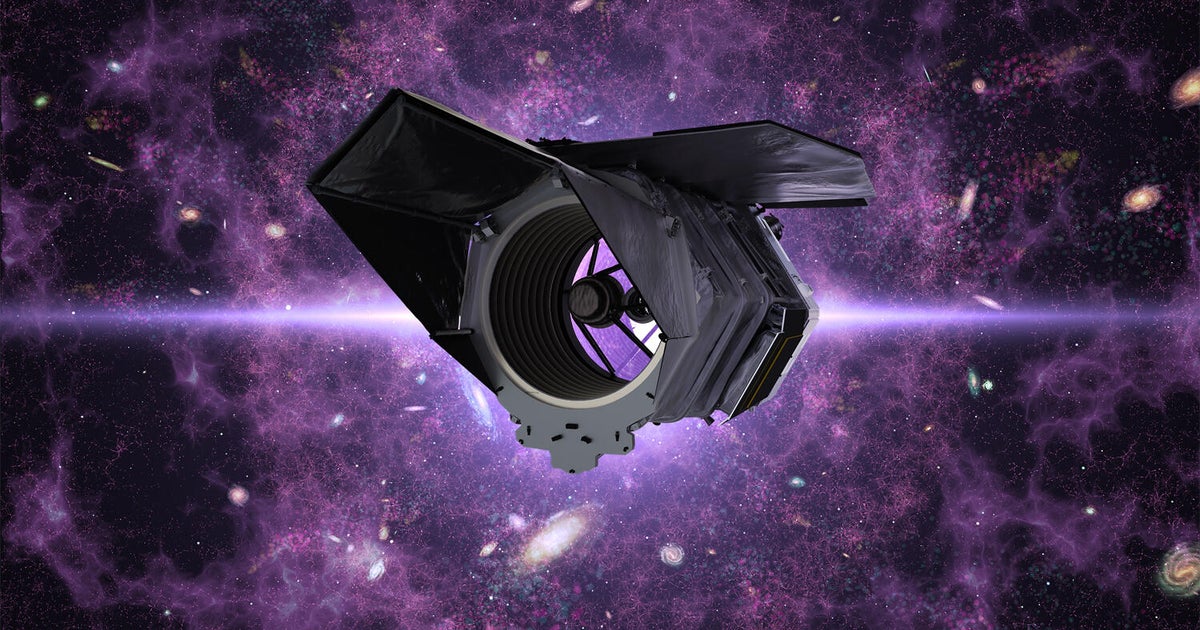 Science & Tech
NASA's Roman Space Telescope Launches on Mission to Study Universe
NASA's Roman Space Telescope has successfully launched aboard a SpaceX Falcon Heavy rocket. The observatory is designed to study dark matter, dark energy, and exoplanets, collecting vast amounts of data to deepen our understanding of the universe.
4 min readTrust 60 · Craft 65 · Hype 20- Science & Tech · Asia-Pacific
Star S301 orbits Milky Way’s black hole at 25,000 km/s, fastest ever recorded
Astronomers have identified a star, S301, orbiting the Milky Way’s central black hole at 25,000 kilometres per second, the fastest known in the galaxy. Its tight orbit may enable scientists to measure the black hole’s spin, testing Einstein’s general relativity.
Asia-Pacific4 min readTrust 70 · Craft 65 · Hype 15  Science & Tech · European Union
NASA WB-57 aircraft to chase 12 August 2026 solar eclipse over Iceland
NASA’s WB-57 research aircraft will fly at 50,000 feet on 12 August 2026 to observe the total solar eclipse over Greenland, Iceland, Spain and Portugal. The mission aims to capture high-resolution images of the solar corona and study atmospheric changes during the event.
European Union5 min readTrust 76 · Craft 95 · Hype 30