Astronomers Detect First Radio Signals From Exoplanet Beta Pictoris b
Signals believed to originate from the planet's aurora could indicate a magnetic field thousands of times stronger than Earth's.
AI-assisted coverage comparison, editor-supervised · How this was made
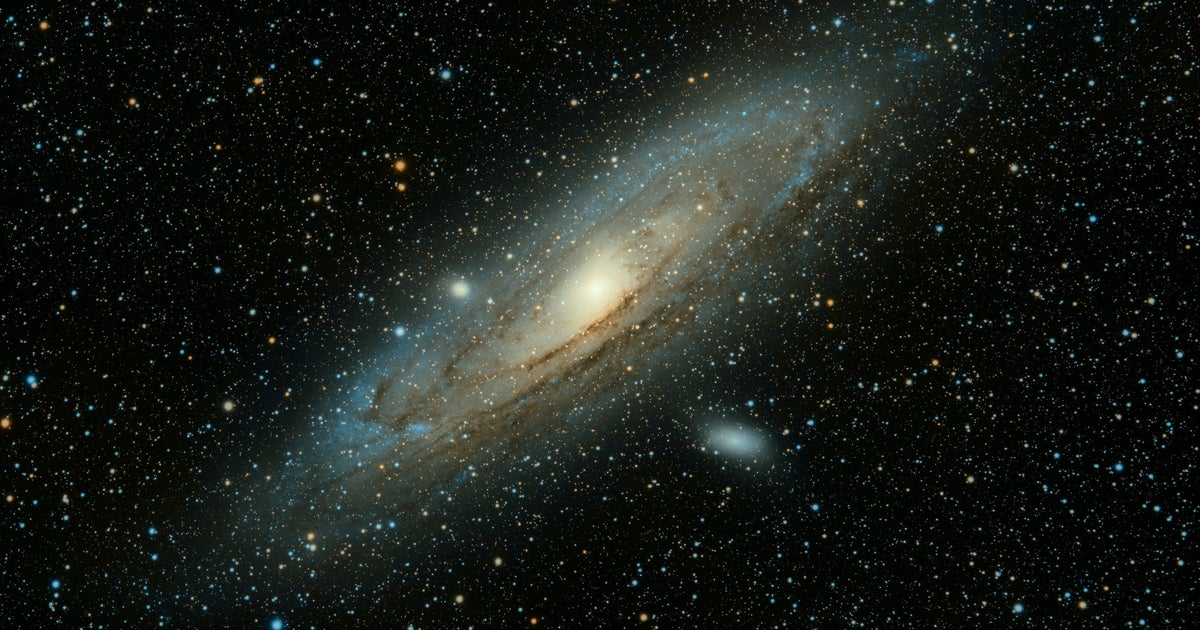
Astronomers Detect First Radio Signals From Exoplanet Beta Pictoris b
Photograph: HuffPost UK (embedded from source)
What this story says
- Astronomers have detected radio signals directly from the exoplanet Beta Pictoris b, a first for planets outside our solar system.
- The signals are believed to originate from the planet's aurora, similar to Earth's Northern Lights.
- Research suggests Beta Pictoris b may possess a magnetic field thousands of times stronger than Earth's.
- The study has not yet undergone peer review.
Who covered it
Percentages are shares of the 10 outlets carrying a published leaning rating. 22 of the 32 outlets we know ran this story carry no rating and are not counted in them. Coverage measured .
Trust
50/100
Craft
65/100
Hype
45/100
32 sources · methodology
Astronomers have detected radio signals originating directly from the exoplanet Beta Pictoris b, approximately 63.4 light-years from Earth. This marks the first time such signals have been unequivocally traced to a planet beyond our solar system, rather than its host star. The findings suggest Beta Pictoris b may have a magnetic field thousands of times stronger than Earth's.
The radio signals are thought to emanate from the planet's aurora, a phenomenon caused by charged particles interacting with its atmosphere and magnetic field. Researchers identified the signals using South Africa's MeerKAT radio telescope array. The study, which has not yet been peer-reviewed, also suggests that advancements in next-generation radio observatories could allow for the detection of similar emissions from more distant exoplanets.
Disagreement on signal origin
While the majority of reports state the signals originate from Beta Pictoris b, one digest from Digato states the signal is likely emanating from the planet's polar axils. The Economic Times and Science News digests state the signals are related to radio emissions from aurorae, and IBTimes UK and Index.hr digests mention auroral radio emissions.
What the coverage left out
None of the left, centre, or right-rated reports mention the specific details of the research team's affiliation with the University of Oregon, which was stated in the full report from HuffPost UK.
Still developing. We have re-checked which outlets are covering this 3 times, most recently on 22 Sept 2026, 18:00, and will add the sides that appear.
How each side covered it
Our own reading of the reporting listed below, written from the outlets’ articles rather than quoted from them. The reasoning is set out on our methodology page.
Left
4 rated outlets
- Left-rated reports from HuffPost UK, IBTimes UK, and Index.hr highlighted the detection of the first direct radio signal from an exoplanet. HuffPost UK and IBTimes UK noted that the signals originated from the planet's aurora. HuffPost UK also detailed the potential strength of Beta Pictoris b's magnetic field, suggesting it could be thousands of times stronger than Earth's, and mentioned the use of the MeerKAT radio telescope. Index.hr explicitly stated the signals were not from aliens.
Centre
4 rated outlets
- Centre-rated reports from The Economic Times and Science News focused on the breakthrough of detecting repeating radio bursts from an exoplanet and what it reveals about the planet's magnetic environment. The Economic Times specified the distance as 63 light-years and mentioned the signals were detected in the frequency band between 0.85 GHz and 3.5 GHz. Science News noted that Beta Pictoris b has the mass of 10 Jupiters and a magnetic field thousands of times stronger than Earth's. Both outlets mentioned the signals are related to auroral processes.
Right
2 rated outlets
- Right-rated reports from La Razón and Moneycontrol highlighted that astronomers have detected direct radio signals from an exoplanet for the first time. La Razón mentioned the discovery of auroras on Beta Pictoris b. Moneycontrol's headline posed the question of whether an alien planet had spoken to Earth, but its digest clarified that scientists decoded the signals from Beta Pictoris b, which could reveal secrets about its magnetic field and auroras.
Questions about this coverage
- How did the left and right cover Astronomers Detect First Radio Signals From Exoplanet Beta Pictoris b?
- Of the 10 outlets on this story carrying a published leaning rating, 40% are rated left, 40% are rated centre, 20% are rated right. Those percentages are shares of the rated outlets, not of every outlet that ran it, which was 32. The sections above set out what each side emphasised, in its own terms.
- Is Astronomers Detect First Radio Signals From Exoplanet Beta Pictoris b left or right?
- Too few of the outlets on this story carry a published leaning rating to say. 10 of them do, and this site does not characterise a field under 12: at that size one newsroom filing moves the share by ten points. The percentages above are the count as it stands.
- Is the coverage of Astronomers Detect First Radio Signals From Exoplanet Beta Pictoris b biased?
- Astronomers Detect First Radio Signals From Exoplanet Beta Pictoris b is one event reported by 32 outlets, and this page does not rate the story as biased or unbiased. What it publishes is the spread: which outlets ran it, where named rating organisations place each of them on the spectrum, and what each side chose to lead with. A leaning rating describes an outlet's record over time, not this article, and the two should not be run together.
- Which outlets covered Astronomers Detect First Radio Signals From Exoplanet Beta Pictoris b?
- 32 that we know of, every one of them listed further up this page with a link to its own report and to what we hold on the publisher. Nothing here is a summary of somebody else's summary: the outlets are named so the original reporting can be read.
- What is Beta Pictoris b?
- Beta Pictoris b is an exoplanet located approximately 63.4 light-years from Earth. It is described as a young, massive gas giant, potentially with a magnetic field thousands of times stronger than Earth's, and it orbits the star Beta Pictoris.
- What are the detected radio signals from Beta Pictoris b?
- Astronomers have detected radio signals directly from Beta Pictoris b for the first time. These signals are believed to originate from the planet's aurora, which is caused by charged particles interacting with its atmosphere and magnetic field.
- What is the significance of this discovery?
- This discovery marks the first direct measurement of a magnetic field strength for an exoplanet. It suggests Beta Pictoris b has a very powerful magnetic field and demonstrates a new method for studying planetary environments beyond our solar system.
Read it at the source
32 outlets, grouped by the leaning a published rating gives them. Every headline links to the original; an underlined outlet name opens our profile of that publisher.
Left
4- Astronomers Detect the First Direct Radio Signal From an Exoplanet but Disappoint Alien Enthusiasts (opens IBTimes UK in a new tab)
IBTimes UK — is IBTimes UK biased? Our profile of this outlet
- Space Scientists Just Found The First Ever Direct Radio Signal From An Exoplanet (opens HuffPost UK in a new tab)
HuffPost UK — is HuffPost UK biased? Our profile of this outlet
- Beta Pictoris B: Radio Signals From an Exoplanet at 63 Light Years (opens Il Fatto Quotidiano in a new tab)
Il Fatto Quotidiano — is Il Fatto Quotidiano biased? Our profile of this outlet
- A Radio Signal Has Arrived From a Planet 63 Light Years Away. It's Not Aliens. (opens IndexHR in a new tab)
Centre
4- Is There Life Outside the Earth? A Mysterious Signal Arrives From a Distant Planet for the First Time. (opens cedarnews.net in a new tab)
cedarnews.net — is cedarnews.net biased? Our profile of this outlet
- A planet 63 light-years away is sending repeating radio bursts, and scientists can read them for the first time. Here’s what it reveals about the alien world (opens The Economic Times in a new tab)
The Economic Times — is The Economic Times biased? Our profile of this outlet
- Astronomers Detect Radio Signals Coming Directly From an Exoplanet For The First Time (opens Science Alert in a new tab)
Science Alert — is Science Alert biased? Our profile of this outlet
- First radio waves seen from an exoplanet hint at otherworldly auroras (opens Science News in a new tab)
Science News — is Science News biased? Our profile of this outlet
Right
2- Harvard & Smithsonian Astrophysics Center Astronomers First Detect Direct Radio Signals From an Exoplanet and Discover Aurora (opens La Razón in a new tab)
- Did an alien planet just "speak" to Earth? Scientists decode Beta Pictoris B’s first-ever radio signals (opens Moneycontrol in a new tab)
Moneycontrol — is Moneycontrol biased? Our profile of this outlet
Not rated
22- Scientists Receive Radio Signal From Exoplanet for First Time (opens Unknown in a new tab)
Unknown
- First Detection of Radio Signals Coming Directly From an Exoplanet (opens Fredzone in a new tab)
- Receive Radio Signals Directly From Exoplanets for the First Time (opens futurezone.at in a new tab)
futurezone.at — is futurezone.at biased? Our profile of this outlet
- For the First Time, Radio Signal Received Clearly From an Exoplanet (opens winfuture.de in a new tab)
winfuture.de — is winfuture.de biased? Our profile of this outlet
- A First in Space - Did a Direct Radio Signal Come From Aliens? (opens BAKU.WS in a new tab)
- The Source of the Signal From Outer Space Has Been Identified: It's Not Aliens, the Reality Is Something Else Entirely. (opens tgrthaber.com in a new tab)
tgrthaber.com — is tgrthaber.com biased? Our profile of this outlet
- Exciting Discovery: Direct Radio Signal Received From Another Planet (opens gazetepencere.com in a new tab)
gazetepencere.com — is gazetepencere.com biased? Our profile of this outlet
- Radio Signals From an Exoplanet Detected for the First Time (opens interia.pl in a new tab)
interia.pl — is interia.pl biased? Our profile of this outlet
Show 14 more
- Radio signals detected from a planet beyond our Solar System. Landmark discovery could help us search for habitable worlds | BBC Sky at Night Magazine (opens skyatnightmagazine in a new tab)
skyatnightmagazine
- Astronomers Have Caught a Radio Signal From an Exoplanet for the First Time (opens RTVI in a new tab)
- This exoplanet appears on the radio for the first time - scientists directly record its radio emissions (opens Aroged in a new tab)
- For the First Time, Radio Signals Were Picked up on an Exoplanet. (opens Numerama in a new tab)
- Historical Premiere in Astronomy: Researchers Have Detected Radio Signals Coming Directly From an Exoplanet, From 63 Light-Years (opens antena3.ro in a new tab)
antena3.ro — is antena3.ro biased? Our profile of this outlet
- First Radio Signal Detected From Exoplanet. (opens Akşam in a new tab)
- Scientists First Detect a Radio Signal Coming Directly From an Exoplanet (opens Mediafax in a new tab)
- A Radio Signal Has Arrived From an Alien Planet. (opens Heti Világgazdaság in a new tab)
Heti Világgazdaság — is Heti Világgazdaság biased? Our profile of this outlet
- Polar Light Enables Direct Measurement of an Exoplanet Magnetic Field for the First Time (opens scinexx.de in a new tab)
scinexx.de — is scinexx.de biased? Our profile of this outlet
- Astronomers Record First Radio Signal From Exoplanet (opens azedu.az in a new tab)
- Historic Discovery in Space: Radio Signal Detected From an Exoplanet for the First Time. (opens haberglobal.com in a new tab)
haberglobal.com — is haberglobal.com biased? Our profile of this outlet
- Are They Aliens: Radio Signal From Space Came From a Certain Planet for the First Time (opens Unknown in a new tab)
Unknown
- Mysterious Radio Signals Have Reached Earth From a Planet (opens 24 HU in a new tab)
- Radio Signals Directly From an Exoplanet Detected for the First Time (opens techgear.gr in a new tab)
techgear.gr — is techgear.gr biased? Our profile of this outlet
How did this read?
About the coverage, not about the story. We do not ask whether you agree with what happened — we have no honest use for that answer.
More in Science & Tech
All Science & Tech →


Elsewhere on the site
 Politics•3 min readTrump threatens UN with military force in Western Hemisphere
 Politics•3 min readTrump warns GOP: End filibuster or face electoral oblivion
 Conflict & Security•2 min readTrump announces plans for two US military bases in Greenland
 Politics•4 min readTrump calls Cuba a 'failed state' at UN; Cuban delegation walks out