Cannabis Use for Psychoactive Purposes Dates Back 2,800 Years, Study Suggests
Findings in a Siberian tomb indicate earlier use than previously documented in China.
AI-assisted coverage comparison, editor-supervised · How this was made
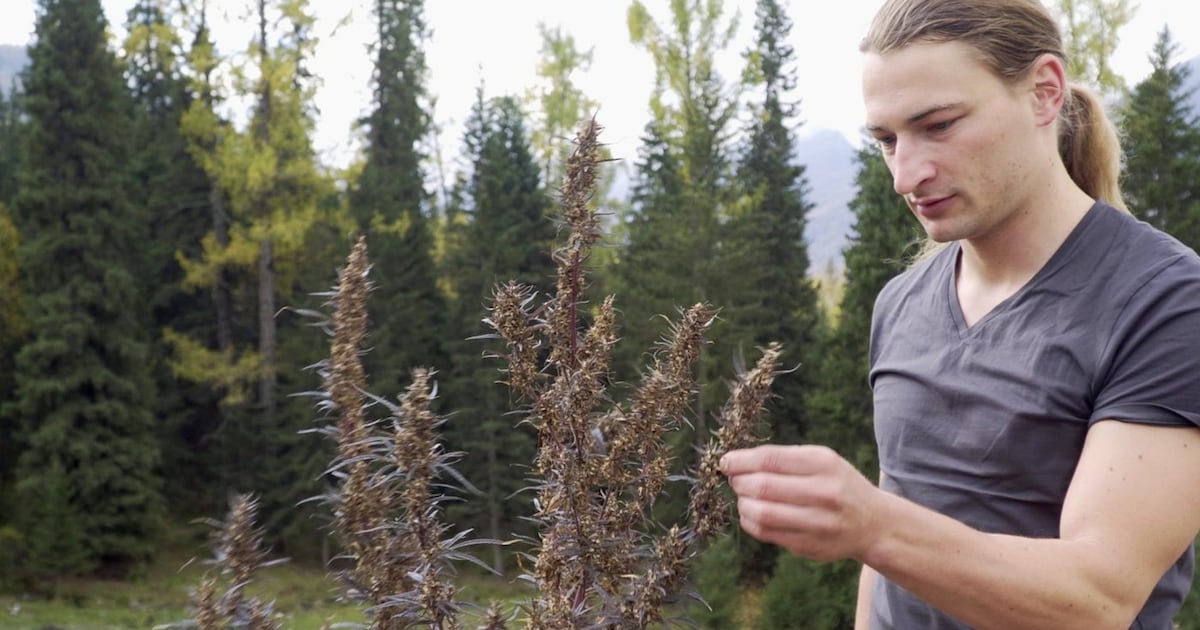
Archaeologist at the University of Bern Gino Caspari touches a cannabis plant in the Altai Mountains, Siberia, Russia, in Sept. 2016. (Frozen Corpses Golden Treasures, T.Wallace & G. Caspari via AP)
Photograph: CTV News (embedded from source)
What this story says
- Archaeologists suggest cannabis was used for psychoactive purposes at least 2,800 years ago, based on findings in a Siberian tomb.
- The study analyzed cannabis seeds and preserved human hair from the Tunnug 1 site in southern Siberia.
- These findings indicate cannabis use for psychoactive purposes may predate previously known use in China by 300 years.
- Some independent experts have raised skepticism regarding the hair analysis and the strength of the evidence for psychoactive use.
Who covered it
Percentages are shares of the 72 outlets carrying a published leaning rating. 8 of the 80 outlets we know ran this story carry no rating and are not counted in them. Coverage measured .
Trust
60/100
Craft
65/100
Hype
25/100
80 sources · methodology
Evidence suggests that cannabis was used for its psychoactive effects at least 2,800 years ago, according to a new study. Archaeologists excavating the Tunnug 1 site in southern Siberia discovered cannabis seeds and preserved human hair within a monumental tomb. The findings, published in the journal Science, propose that this use of cannabis for psychoactive purposes may be 300 years older than previously documented instances in China.
The research team, comprising scientists from Germany, Russia, Sweden, and Switzerland, analyzed materials from the Tunnug 1 site, which is associated with the Scythians, ancient nomads. The tomb contained over 1,000 cannabis seeds, which were radiocarbon dated. Alongside the seeds, preserved human hair was also found. Researchers noted the rarity of finding both plant material and human soft tissue with active compounds in the same context.
Disagreement on Evidence Strength
While the study suggests psychoactive use, some independent experts have voiced reservations. Volker Auwaerter, head of forensic toxicology at the University Medical Center in Freiburg, Germany, described the hair analysis as "scientifically weak" and stated there was insufficient evidence to confirm cannabis use for its psychoactive properties. He suggested the hair could have acquired traces of cannabis through environmental exposure rather than consumption. However, Elisa Guerra Doce, a supporter of toxicological hair analysis in archaeology, indicated that such methods have been used to identify the consumption of psychoactive substances and supported the authors' conclusion that cannabis was consumed, not merely offered.
What the coverage left out
None of the left-rated digests mention the specific concerns raised by independent expert Volker Auwaerter regarding the scientific weakness of the hair analysis and the potential for environmental contamination. Similarly, none of the centre-rated digests detail Auwaerter's specific criticisms of the hair analysis or the strength of the evidence for psychoactive use.
Still developing. We have re-checked which outlets are covering this 3 times, most recently on 6 Nov 2026, 09:30, and will add the sides that appear.
How each side covered it
Our own reading of the reporting listed below, written from the outlets’ articles rather than quoted from them. The reasoning is set out on our methodology page.
Left
19 rated outlets
- Left-rated reports focused on the suggestion that people were using cannabis for psychoactive purposes nearly 2,800 years ago. Several reports highlighted the discovery of cannabis seeds and preserved hair in a Siberian tomb as evidence of the earliest known use for such effects. The Independent and The Independent (US) both used headlines stating people "may have been getting high off cannabis 'almost 2,800 years ago'." The Toronto Star, The Record, and The Seattle Times also led with the study's suggestion of early psychoactive cannabis use. Watauga Democrat's headline, "Stoned Age? People have been getting ‘high’ on cannabis for 2,800 years," also reflected this emphasis.
Centre
41 rated outlets
- Centre-rated reports highlighted the discovery of cannabis seeds and preserved hair in a Siberian tomb as pointing to the oldest signs of cannabis use for highs, dating back 2,800 years. 7NEWS Australia noted that the "ancient burial site reveals early humans’ drug habits." Many reports, including those from CTV News, Washington Top News, Sun-Sentinel, My Mother Lode, and KPVI, used headlines similar to "Seeds, preserved hair in tomb point to oldest signs of cannabis high 2,800 years ago, study suggests." Discover Magazine's headline focused on "Human Hair in a 2,800-Year-Old Tomb Points to What May Be the Earliest Known Cannabis High."
Right
12 rated outlets
- Right-rated reports focused on the discovery of ancient cannabis use in Siberia, with several using headlines like "Siberian Tomb Reveals 2,800-Year-Old Cannabis Use" (Independent Journal Review) or "In Siberia, They Found the Most Ancient Traces of Cannabis Use" (vz.ru). BNR Nieuwsradio's headline stated, "Siberian Nomads Were Already Using Weed 2,800 Years Ago." Arab News reported that "Seeds, preserved hair in tomb point to oldest signs of cannabis high 2,800 years ago, study suggests," and noted that "skepticism remains among some experts regarding the findings." Dagens Nyheter reported on a "Drug Test in Siberian Burial Mound Reveals Cannabis Use 2,800 Years Ago."
Questions about this coverage
- How did the left and right cover Cannabis Use for Psychoactive Purposes Dates Back 2,800 Years, Study…?
- Of the 72 outlets on this story carrying a published leaning rating, 26% are rated left, 57% are rated centre, 17% are rated right. Those percentages are shares of the rated outlets, not of every outlet that ran it, which was 80. The sections above set out what each side emphasised, in its own terms.
- Is Cannabis Use for Psychoactive Purposes Dates Back 2,800 Years, Study… left or right?
- Neither side dominates it. Of the 72 rated outlets on this story, 26% are rated left, 57% are rated centre, 17% are rated right, and no side holds the 70% this site would want before calling a field one-sided. A story is not left or right in any case; the outlets that carried it are what carry ratings.
- Is the coverage of Cannabis Use for Psychoactive Purposes Dates Back 2,800 Years, Study… biased?
- Cannabis Use for Psychoactive Purposes Dates Back 2,800 Years, Study Suggests is one event reported by 80 outlets, and this page does not rate the story as biased or unbiased. What it publishes is the spread: which outlets ran it, where named rating organisations place each of them on the spectrum, and what each side chose to lead with. A leaning rating describes an outlet's record over time, not this article, and the two should not be run together.
- Which outlets covered Cannabis Use for Psychoactive Purposes Dates Back 2,800 Years, Study…?
- 80 that we know of, every one of them listed further up this page with a link to its own report and to what we hold on the publisher. Nothing here is a summary of somebody else's summary: the outlets are named so the original reporting can be read.
- What evidence suggests early cannabis use?
- Archaeologists found cannabis seeds and preserved human hair in a 2,800-year-old tomb at the Tunnug 1 site in southern Siberia. Analysis of these materials suggests the plant was used for psychoactive purposes.
- How does this finding compare to previous knowledge?
- The study suggests that cannabis use for psychoactive purposes may have occurred at least 2,800 years ago, potentially predating previously known use in China by 300 years.
- Are there any doubts about these findings?
- Yes, some independent experts, such as Volker Auwaerter, have expressed skepticism about the hair analysis and the strength of the evidence for psychoactive use, suggesting the hair might have been exposed to cannabis rather than having consumed it.
Read it at the source
80 outlets, grouped by the leaning a published rating gives them. Every headline links to the original; an underlined outlet name opens our profile of that publisher.
Left
19- People may have been getting high off cannabis 'almost 2,800 years ago' (opens The Independent (US) in a new tab)
The Independent (US) — is The Independent (US) biased? Our profile of this outlet
- People may have been getting high off cannabis 'almost 2,800 years ago' (opens The Independent in a new tab)
The Independent — is The Independent biased? Our profile of this outlet
- Stoned Age? People have been getting ‘high’ on cannabis for 2,800 years (opens Watauga Democrat in a new tab)
Watauga Democrat — is Watauga Democrat biased? Our profile of this outlet
- Seeds, preserved hair in tomb point to oldest signs of cannabis high 2,800 years ago, study suggests (opens The Record in a new tab)
The Record — is The Record biased? Our profile of this outlet
- Seeds, preserved hair in tomb point to oldest signs of cannabis high 2,800 years ago, study suggests (opens The Toronto Star in a new tab)
The Toronto Star — is The Toronto Star biased? Our profile of this outlet
- Seeds, preserved hair in tomb point to oldest signs of cannabis high 2,800 years ago, study suggests (opens The Seattle Times in a new tab)
The Seattle Times — is The Seattle Times biased? Our profile of this outlet
- Seeds, preserved hair in tomb point to oldest signs of cannabis high 2,800 years ago, study suggests (opens ABC News in a new tab)
- Seeds, preserved hair in tomb point to oldest signs of cannabis high 2,800 years ago, study suggests (opens Associated Press News in a new tab)
Associated Press News — is Associated Press News biased? Our profile of this outlet
Show 11 more
- Siberian Burial Site Reveals First Known Use of Cannabis as Drug (opens Gizmodo in a new tab)
- Cannabis in Funeral Rites 2,800 Years Ago: Find Traces of Thc (opens Il Fatto Quotidiano in a new tab)
Il Fatto Quotidiano — is Il Fatto Quotidiano biased? Our profile of this outlet
- Nomad Riders of the Siberian Steppe Already Consumed Cannabis for Their Ceremonies 2,800 Years Ago (opens Eldiario.es in a new tab)
Eldiario.es — is Eldiario.es biased? Our profile of this outlet
- Stoned in the Bronze Age? Archaeologists Find Earliest Evidence of Weed Use (opens De Morgen in a new tab)
- Oldest Evidence of Getting High on Cannabis Discovered In 2,800-Year-Old Tomb: ‘Absolutely Crazy’ (opens 404 Media in a new tab)
- Already 2800 Years Ago, People Were Smoking – This Is What Finds in Siberia Show. (opens watson in a new tab)
- Remains of Hair Found in an Ancient Grave in Siberia Reveal that Cannabis Was Already Consumed in Funeral Rituals of 2,800 Years Ago (opens La Vanguardia in a new tab)
La Vanguardia — is La Vanguardia biased? Our profile of this outlet
- Stoned Age? People have been getting ‘high’ on cannabis for 2,800 years (opens ashepostandtimes.com in a new tab)
ashepostandtimes.com — is ashepostandtimes.com biased? Our profile of this outletOpinion
- Stoned Age? People have been getting ‘high’ on cannabis for 2,800 years (opens News-Herald in a new tab)
News-Herald — is News-Herald biased? Our profile of this outletOpinion
- Stoned Age? People have been getting ‘high’ on cannabis for 2,800 years (opens The Laconia Daily Sun in a new tab)
The Laconia Daily Sun — is The Laconia Daily Sun biased? Our profile of this outletOpinion
- Ancient humans used cannabis in burial rituals 2,800 years ago (opens Scientific American in a new tab)
Scientific American — is Scientific American biased? Our profile of this outlet
Centre
41- Ancient burial site reveals early humans’ drug habits (opens 7NEWS Australia in a new tab)
7NEWS Australia — is 7NEWS Australia biased? Our profile of this outlet
- Seeds, preserved hair in tomb point to oldest signs of cannabis high 2,800 years ago, study suggests – WTOP News (opens Washington Top News in a new tab)
Washington Top News — is Washington Top News biased? Our profile of this outlet
- Not only Hippies: Archaeologists Discover Cannabis Remains in 2,800-Year-Old Hair (opens INTELLINEWS in a new tab)
INTELLINEWS — is INTELLINEWS biased? Our profile of this outlet
- Were These Ancient Siberian Nomads the First Marijuana Users? (opens El Diario in a new tab)
- Human Hair in a 2,800-Year-Old Tomb Points to What May Be the Earliest Known Cannabis High (opens Discover Magazine in a new tab)
Discover Magazine — is Discover Magazine biased? Our profile of this outlet
- Seeds, preserved hair in tomb point to oldest signs of cannabis high 2,800 years ago, study suggests (opens Sun-Sentinel in a new tab)
Sun-Sentinel — is Sun-Sentinel biased? Our profile of this outlet
- Tomb in Siberia reveals humans were using cannabis 2800 years ago (opens NewScientist in a new tab)
NewScientist — is NewScientist biased? Our profile of this outlet
- Seeds, preserved hair in tomb point to oldest signs of cannabis high 2,800 years ago, study suggests (opens My Mother Lode in a new tab)
My Mother Lode — is My Mother Lode biased? Our profile of this outlet
Show 33 more
- Stoned Age? People have been getting ‘high’ on cannabis for 2,800 years (opens iosconews.com in a new tab)
iosconews.com — is iosconews.com biased? Our profile of this outletOpinion
- Stoned Age? People have been getting ‘high’ on cannabis for 2,800 years (opens Delaware Business Now in a new tab)
Delaware Business Now — is Delaware Business Now biased? Our profile of this outlet
- Stoned Age? People have been getting ‘high’ on cannabis for 2,800 years (opens Purdue Exponent in a new tab)
Purdue Exponent — is Purdue Exponent biased? Our profile of this outletOpinion
- Stoned Age? People have been getting ‘high’ on cannabis for 2,800 years (opens http://www.wfxg.com in a new tab)
http://www.wfxg.com — is http://www.wfxg.com biased? Our profile of this outletOpinion
- Stoned Age? People have been getting ‘high’ on cannabis for 2,800 years (opens Idaho County Free Press in a new tab)
Idaho County Free Press — is Idaho County Free Press biased? Our profile of this outletOpinion
- Stoned Age? People have been getting ‘high’ on cannabis for 2,800 years (opens WFMZ in a new tab)
- Stoned Age? People have been getting ‘high’ on cannabis for 2,800 years (opens NE Iowa Publishing in a new tab)
NE Iowa Publishing — is NE Iowa Publishing biased? Our profile of this outletOpinion
- Stoned Age? People have been getting ‘high’ on cannabis for 2,800 years (opens KPVI in a new tab)
- 2,800-Year-Old Tomb Offers Earliest Evidence of Cannabis High (opens Internewscast in a new tab)
Internewscast — is Internewscast biased? Our profile of this outlet
- Found in a Siberian Tomb of 2,800 Years Old the Oldest Evidence of Psychoactive Use of Cannabis (opens 20minutos in a new tab)
- Seeds, preserved hair in tomb point to oldest signs of cannabis high 2,800 years ago, study suggests (opens CTV News in a new tab)
- Seeds, preserved hair in tomb point to oldest signs of cannabis high 2 (opens WBAL in a new tab)
- Seeds, preserved hair in tomb point to oldest signs of cannabis high 2,800 years ago, study suggests (opens Newsday in a new tab)
- Seeds, preserved hair in tomb point to oldest signs of cannabis high 2,800 years ago, study suggests (opens The Star Democrat in a new tab)
The Star Democrat — is The Star Democrat biased? Our profile of this outlet
- Seeds, preserved hair in tomb point to oldest signs of cannabis high 2,800 years ago, study suggests (opens The Herald Journal in a new tab)
The Herald Journal — is The Herald Journal biased? Our profile of this outlet
- Seeds, preserved hair in tomb point to oldest signs of cannabis high 2,800 years ago, study suggests (opens WKMG in a new tab)
- Siberian burial site reveals ancient use of cannabis as an intoxicant (opens Channel News Asia in a new tab)
Channel News Asia — is Channel News Asia biased? Our profile of this outlet
- Cannabis Was Used as a Psychoactive Substance 2,800 Years Ago (opens Hola News in a new tab)
- Earliest evidence of cannabis use found in ancient Siberian tomb (opens KMIZ in a new tab)
- Earliest evidence of cannabis use found in ancient Siberian tomb (opens KESQ in a new tab)
- Earliest evidence of cannabis use found in ancient Siberian tomb (opens KEYT in a new tab)
- Earliest evidence of cannabis use found in ancient Siberian tomb (opens KVIA in a new tab)
- Earliest evidence of cannabis use found in ancient Siberian tomb (opens KRDO in a new tab)
- Earliest evidence of cannabis use found in ancient Siberian tomb (opens KIFI in a new tab)
- Cannabis was used as an intoxicant as early as 2,800 years ago (opens Phys.org in a new tab)
- Oldest Evidence of Human Cannabis Use Has a Ghoulish Twist (opens Nautilus in a new tab)
- Oldest evidence of cannabis use discovered in 2,700-year-old royal tomb (opens Popular Science in a new tab)
Popular Science — is Popular Science biased? Our profile of this outlet
- 2,800-Year-Old Siberian Sacrificial Tomb Reveals Earliest Known Evidence of Cannabis Intoxication (opens Science Alert in a new tab)
Science Alert — is Science Alert biased? Our profile of this outlet
- Seeds, preserved hair in tomb point to oldest signs of cannabis high 2,800 years ago, study suggests (opens Winnipeg Free Press in a new tab)
Winnipeg Free Press — is Winnipeg Free Press biased? Our profile of this outlet
- Stoned Age? People have been getting ‘high’ on cannabis for 2,800 years (opens Ashley County Ledger in a new tab)
Ashley County Ledger — is Ashley County Ledger biased? Our profile of this outletOpinion
- Stoned Age? People have been getting ‘high’ on cannabis for 2,800 years (opens The Guam Daily Post in a new tab)
The Guam Daily Post — is The Guam Daily Post biased? Our profile of this outletOpinion
- Stoned Age? People have been getting ‘high’ on cannabis for 2,800 years (opens News-Graphic.com in a new tab)
News-Graphic.com — is News-Graphic.com biased? Our profile of this outletOpinion
- Stoned Age? People have been getting ‘high’ on cannabis for 2,800 years (opens Floyd Chronicle & Times in a new tab)
Floyd Chronicle & Times — is Floyd Chronicle & Times biased? Our profile of this outletOpinion
Right
12- In Siberia, They Found the Most Ancient Traces of Cannabis Use. (opens vz.ru in a new tab)
- Scientists Find Older Evidence of the Use of Marijuana in 2,800-Year-Old Grave in Siberia (opens Globo in a new tab)
- Siberian Nomads Smoked Marijuana Since 2,800 Years Ago (opens Unknown in a new tab)
Unknown
- Seeds, preserved hair in tomb point to oldest signs of cannabis high 2,800 years ago, study suggests (opens The Messenger in a new tab)
The Messenger — is The Messenger biased? Our profile of this outlet
- Siberian Nomads Were Already Using Weed 2,800 Years Ago. (opens BNR Nieuwsradio in a new tab)
BNR Nieuwsradio — is BNR Nieuwsradio biased? Our profile of this outlet
- Siberian Tomb Reveals 2,800-Year-Old Cannabis Use (opens Independent Journal Review in a new tab)
Independent Journal Review — is Independent Journal Review biased? Our profile of this outlet
- Seeds, preserved hair in tomb point to oldest signs of cannabis high 2,800 years ago, study suggests (opens Washington Times in a new tab)
Washington Times — is Washington Times biased? Our profile of this outlet
- Seeds, preserved hair in tomb point to oldest signs of cannabis high 2,800 years ago, study suggests (opens Arab News in a new tab)
Show 4 more
- Drug Test in Siberian Burial Mound Reveals Cannabis Use 2,800 Years Ago (opens Dagens Nyheter in a new tab)
Dagens Nyheter — is Dagens Nyheter biased? Our profile of this outlet
- The STONED Age! Cannabis was first used as intoxicant 2,800 years ago (opens dailymail.com in a new tab)
dailymail.com — is dailymail.com biased? Our profile of this outlet
- Stoned Age? People have been getting ‘high’ on cannabis for 2,800 years (opens Shelby News in a new tab)
Shelby News — is Shelby News biased? Our profile of this outletOpinion
- Stoned Age? People have been getting ‘high’ on cannabis for 2,800 years (opens Webster County Citizen in a new tab)
Webster County Citizen — is Webster County Citizen biased? Our profile of this outletOpinion
Not rated
8- Oldest Evidence of Cannabis Use Found 2,800 Years Ago (opens LiFO in a new tab)
- Study of Findings in Siberia: Cannabis Was Used for Intoxicating Effects at Least 2,800 Years Ago (opens vijesti.me in a new tab)
vijesti.me — is vijesti.me biased? Our profile of this outlet
- Study of Findings in Siberia: Cannabis Was Used for Intoxicating Effects at Least 2,800 Years Ago (opens n1info.rs in a new tab)
- Cannabis Noise Already 2800 Years Ago (opens wissenschaft.de in a new tab)
wissenschaft.de — is wissenschaft.de biased? Our profile of this outlet
- Almost 3,000 Years Ago Cannabis Was Used for Recreational Purposes (opens Agi.it in a new tab)
- Cannabis Was Used as a Psychoactive Substance 2,800 Years Ago (opens RNN Red Nacional De Noticias in a new tab)
RNN Red Nacional De Noticias — is RNN Red Nacional De Noticias biased? Our profile of this outlet
- Study Finds Evidence of Marijuana Use in Burial Rituals 2,800 Years Ago, With Cannabinoids Detected in Human Hair (opens The Marijuana Herald in a new tab)
The Marijuana Herald — is The Marijuana Herald biased? Our profile of this outlet
- Study Finds Evidence of Marijuana Use in Burial Rituals 2,800 Years Ago, With Cannabinoids Detected in Human Hair (opens newsbudz.com in a new tab)
newsbudz.com — is newsbudz.com biased? Our profile of this outlet
How did this read?
About the coverage, not about the story. We do not ask whether you agree with what happened — we have no honest use for that answer.
More in Science & Tech
All Science & Tech →
Elsewhere on the site
 Climate•4 min readCOP31 climate talks begin in Turkey amid rising temperatures
 Business & Economy•3 min readJBS faces 14 complaints in Europe over deforestation links
 Business & Economy•3 min readIndonesia's Economy Grew 5.47% in Q3 2026
 Conflict & Security•4 min readIran Exempts Four Nations from Strait of Hormuz Transit Restrictions