UN report: Global temperatures to exceed 1.5°C within years
New assessment from UNEP warns of increased extreme weather and tipping points.
AI-assisted coverage comparison, editor-supervised · How this was made
UN says world must navigate 'reality' of 1.5°C overshoot
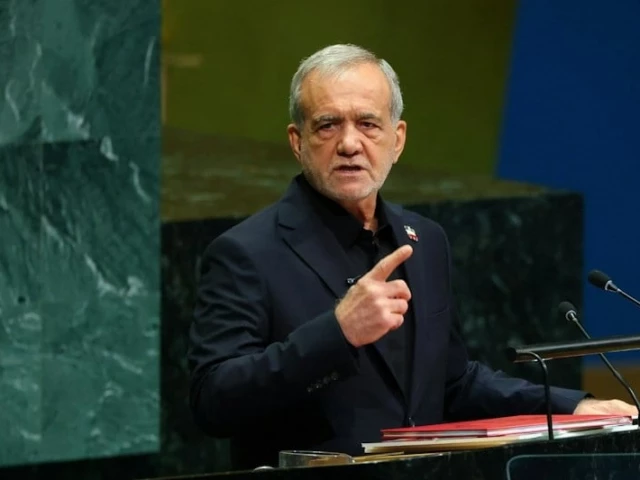
Photograph: Ada Derana (embedded from source)
What this story says
- Global temperatures are expected to surpass 1.5°C above pre-industrial levels within the next few years, according to a UN Environment Programme (UNEP) report.
- The report warns that exceeding this threshold increases the risk of more extreme weather events and pushes the planet closer to dangerous tipping points.
- UN Secretary-General António Guterres stated that it is still possible to bring warming back below 1.5°C by the end of the century.
- The UNEP assessment calls for rapid emissions cuts and carbon removal strategies to limit the duration and extent of any temperature overshoot.
Who covered it
Percentages are shares of the 224 outlets carrying a published leaning rating. 204 of the 428 outlets we know ran this story carry no rating and are not counted in them. Coverage measured .
Trust
88/100
Craft
78/100
Hype
25/100
428 sources · methodology
Global temperatures are set to exceed the 1.5°C limit agreed upon in the Paris Agreement within the next few years, according to a report released by the United Nations Environment Programme (UNEP) on 2 September 2026. The world has already warmed by approximately 1.4°C since the mid-19th century, primarily due to the burning of fossil fuels.
The UNEP report, the first of its kind to address temperature overshoot, states that the challenge has shifted from avoiding exceeding the 1.5°C threshold to managing it. Scientists warn that any overshoot threatens more extreme weather and brings the planet closer to irreversible tipping points, such as the collapse of ice sheets and the loss of coral reefs. However, UN Secretary-General António Guterres indicated that bringing warming back below 1.5°C by the end of the century remains possible.
To limit the damage from any overshoot, the report calls for rapid reductions in greenhouse gas emissions and the implementation of carbon dioxide removal strategies. Some climate activists have expressed dismay at the report's language, with one stating that overshoot should not be a reason to abandon the 1.5°C target. Others have criticised the report's emphasis on carbon removal as a speculative techno-fix.
Disagreement on the reversibility of warming
While the UNEP report suggests that bringing temperatures back below 1.5°C by the end of the century is possible, some outlets framed this as a concession of failure. OKDIARIO reported that the UN sees warming as reversible, despite the planet being on the verge of exceeding the 1.5°C threshold. Conversely, Clarin stated the UN warns the world will not reach its climate goal and that warming needs to be reversed, implying a more urgent and difficult task.
What the coverage left out
None of the left, centre, or right-rated reports mention the specific figure of 2.6 degrees warming that the world is currently heading towards, as stated by Deutsche Welle. Additionally, the specific criticism from Greenpeace International that overshoot is not a reason to give up and surrender 1.5°C, as reported by Ada Derana, was not mentioned in the centre or right-rated reports.
Coverage settled. We checked this 303 times and stopped on 7 Sept 2026, 18:30. The figures above are what it finished at.
How each side covered it
Our own reading of the reporting listed below, written from the outlets’ articles rather than quoted from them. The reasoning is set out on our methodology page.
Left
93 rated outlets
- Left-rated reports led on the UN's warning that global temperatures will exceed 1.5°C within years and the associated risks. Several reports highlighted the "gloomy" nature of the UNEP assessment and the confirmation that the 1.5°C target is "dead". The potential for increased disaster risk and the planet being "near a tipping point" were also prominent. Some left-rated outlets noted the criticism from climate activists regarding the report's focus on carbon removal and the risk of "apathy".
Centre
78 rated outlets
- Centre-rated reports focused on the UN's acknowledgement that the world will miss its climate target and the need to reverse warming. The prospect of exceeding the 1.5°C threshold and the subsequent risks, including potentially "uninsurable or even uninhabitable" places, were highlighted. The reports also mentioned the UN's proposed path to get back below the danger zone and the need to keep any overshoot as brief and contained as possible.
Right
53 rated outlets
- Right-rated reports highlighted the UN's warning that the 1.5°C target will not be met and that global warming is likely to exceed this limit within a few years. Some reports noted that the UN still sees the crossing of the threshold as potentially reversible. The call for rapid emissions cuts to limit overshoot and the potential for consequences such as food shortages in Pacific islands were also mentioned.
Questions about this coverage
- How did the left and right cover UN report: Global temperatures to exceed 1.5°C within years?
- Of the 224 outlets on this story carrying a published leaning rating, 42% are rated left, 34% are rated centre, 24% are rated right. Those percentages are shares of the rated outlets, not of every outlet that ran it, which was 428. The sections above set out what each side emphasised, in its own terms.
- Is UN report: Global temperatures to exceed 1.5°C within years left or right?
- Neither side dominates it. Of the 224 rated outlets on this story, 42% are rated left, 34% are rated centre, 24% are rated right, and no side holds the 70% this site would want before calling a field one-sided. A story is not left or right in any case; the outlets that carried it are what carry ratings.
- Is the coverage of UN report: Global temperatures to exceed 1.5°C within years biased?
- UN report: Global temperatures to exceed 1.5°C within years is one event reported by 428 outlets, and this page does not rate the story as biased or unbiased. What it publishes is the spread: which outlets ran it, where named rating organisations place each of them on the spectrum, and what each side chose to lead with. A leaning rating describes an outlet's record over time, not this article, and the two should not be run together.
- Which outlets covered UN report: Global temperatures to exceed 1.5°C within years?
- 428 that we know of, every one of them listed further up this page with a link to its own report and to what we hold on the publisher. Nothing here is a summary of somebody else's summary: the outlets are named so the original reporting can be read.
- When will global temperatures exceed 1.5°C?
- According to a UN Environment Programme (UNEP) report published on 2 September 2026, global temperatures are expected to exceed the 1.5°C threshold above pre-industrial levels within the next few years. The world has already warmed by approximately 1.4°C since the mid-19th century.
- What are the consequences of exceeding 1.5°C?
- Exceeding the 1.5°C warming limit threatens more extreme weather events and pushes the planet closer to dangerous tipping points, such as the collapse of ice sheets and the loss of coral reefs. The UNEP report warns of increased disaster and health risks.
- Is it still possible to return below 1.5°C?
- UN Secretary-General António Guterres stated that it is still possible to bring global warming back below 1.5°C by the end of the century. The UNEP report calls for rapid emissions cuts and carbon removal strategies to limit the duration and extent of any temperature overshoot.
Read it at the source
428 outlets, grouped by the leaning a published rating gives them. Every headline links to the original; an underlined outlet name opens our profile of that publisher.
Left
93- Global warming will exceed 1.5-degree limit, UN says in report that maps path back below danger zone (opens PBS NewsHour in a new tab)
PBS NewsHour — is PBS NewsHour biased? Our profile of this outlet
- Global warming will exceed limit, UN says in a report that maps path to get back below danger zone (opens abc30 News in a new tab)
abc30 News — is abc30 News biased? Our profile of this outlet
- Global warming will exceed limit, UN says in a report that maps path to get back below danger zone (opens ABC 7 News in a new tab)
ABC 7 News — is ABC 7 News biased? Our profile of this outlet
- Global warming will exceed limit, UN says in a report that maps path to get back below danger zone (opens ABC 13 Houston in a new tab)
ABC 13 Houston — is ABC 13 Houston biased? Our profile of this outlet
- In the Case of the UN, the 1.5°C Is Inevitable. (opens Il Post in a new tab)
- UNEP: World will Exceed 1.5º C., Bringing Catastrophes and Unknowable Risks (opens scheerpost.com in a new tab)
scheerpost.com — is scheerpost.com biased? Our profile of this outlet
- A landmark UN report says the world will overshoot the 1.5° climate target. But hope is not lost (opens Good Good Good in a new tab)
Good Good Good — is Good Good Good biased? Our profile of this outlet
- UN: Global Warming Will Exceed 1.5 Degrees, but Can Still Be Reversed with Urgent Policies (opens teleSUR in a new tab)
Show 85 more
- The world is expected to overshoot a critical climate target. But there's still hope (opens SBS News in a new tab)
- UNEP: World will Exceed 1.5º C., Bringing Catastrophes and Unknowable Risks (opens Informed Comment in a new tab)
Informed Comment — is Informed Comment biased? Our profile of this outlet
- UN: We Are on the Verge of Leaving the Climate Safe Zone (opens Sveriges Radio in a new tab)
Sveriges Radio — is Sveriges Radio biased? Our profile of this outlet
- UN Report Warns Global 1.5°C Warming Limit Will Be Breached 'Within the Next Few Years' (opens IBTimes UK in a new tab)
IBTimes UK — is IBTimes UK biased? Our profile of this outlet
- The Best-Case Scenario for Climate Change Just Got a Whole Lot Worse (opens Gizmodo in a new tab)
- The world is whiffing on its biggest climate goal (opens Vox in a new tab)
- UN report says global warming will surpass the goal of 1.5 degrees Celsius (opens Engadget in a new tab)
- U.N. admits exceeding Paris Agreement’s 1.5-degree-C warming target is ‘unavoidable’ (opens Scientific American in a new tab)
Scientific American — is Scientific American biased? Our profile of this outlet
- Earth Will Soon Exceed Safe Temperature Limit (opens unn.ua in a new tab)
- UN Overshoot Report is a Rallying Cry, Not a Death Knell (opens NRDC in a new tab)
- Facing the Reality of Warming Beyond 1.5°C (opens Radio-Canada in a new tab)
Radio-Canada — is Radio-Canada biased? Our profile of this outlet
- UN Report Says Earth Will Overshoot 1.5C Warming, Emission Cuts Can Limit Damage (opens Truthout in a new tab)
- Climate Brief:Global heating will hit at least 1.8C, UN warns, and there are ‘no good outcomes’-Guardian UK (opens Daily Kos in a new tab)
- UN Issues Dire Warning On Climate Change (opens Joe.My.God. in a new tab)
Joe.My.God. — is Joe.My.God. biased? Our profile of this outlet
- A landmark UN report says the world will overshoot the 1.5°C climate target. What happens now? (opens NationofChange in a new tab)
NationofChange — is NationofChange biased? Our profile of this outlet
- U.S. bombs Iranian wedding; Netanyahu visits Gaza, vows no withdrawal; UN admits global warming will exceed 1.5 C (opens Drop Site News in a new tab)
Drop Site News — is Drop Site News biased? Our profile of this outlet
- Global warming will exceed limit, UN says in a report that maps path to get back below danger zone (opens Sentinel Colorado in a new tab)
Sentinel Colorado — is Sentinel Colorado biased? Our profile of this outlet
- For the first time, a key UN report says the 1.5 C global warming threshold is lost (opens CBC News in a new tab)
- Climate ‘Overshoot’ Is Coming—Are We Ready? (opens Truthdig in a new tab)
- UN Lays Out the 'Best Remaining Option' on Climate (opens Newser in a new tab)
- The U.N. warns the world is close to crossing a dangerous climate change threshold (opens NPR in a new tab)
- Global warming will exceed limit, UN says in a report that maps path to get back below danger zone (opens The Mercury news in a new tab)
The Mercury news — is The Mercury news biased? Our profile of this outlet
- UN climate report, ‘among the bleakest’, outlines a new plan for Earth’s climbing temps (opens Fast Company in a new tab)
Fast Company — is Fast Company biased? Our profile of this outlet
- UNEP urges sustained action to cap global warming, avert climate breakdown (opens CGTN in a new tab)
- Global Warming: First Stop and Then Return (opens nd-aktuell.de in a new tab)
nd-aktuell.de — is nd-aktuell.de biased? Our profile of this outlet
- Global Heating over 1.5 Degrees: Alarm in the New UNEP Report (opens Il Fatto Quotidiano in a new tab)
Il Fatto Quotidiano — is Il Fatto Quotidiano biased? Our profile of this outlet
- A Gloomy Report Warns that the Global Temperature Will only Exceed the Critical Threshold of +1,5 °C in a Few Years: "There Are No Good Scenarios - HotNews.ro (opens Hot News in a new tab)
- Earth set to exceed global warming threshold, UN report warns. What happens now? (opens NBC Philadelphia in a new tab)
NBC Philadelphia — is NBC Philadelphia biased? Our profile of this outlet
- Earth set to exceed global warming threshold, UN report warns. What happens now? (opens NBC New York in a new tab)
NBC New York — is NBC New York biased? Our profile of this outlet
- Earth set to exceed global warming threshold, UN report warns. What happens now? (opens NBC Miami in a new tab)
- Earth set to exceed global warming threshold, UN report warns. What happens now? (opens NBC Connecticut in a new tab)
NBC Connecticut — is NBC Connecticut biased? Our profile of this outlet
- Earth set to exceed global warming threshold, UN report warns. What happens now? (opens NBC Boston in a new tab)
NBC Boston — is NBC Boston biased? Our profile of this outlet
- Global warming will exceed limit, UN says in a report that maps the path to get back below danger zone (opens National Observer in a new tab)
National Observer — is National Observer biased? Our profile of this outlet
- 350.org responds to UN report confirming world set to breach 1.5°C: ‘Every fraction of a degree’ still worth fighting for (opens Common Dreams in a new tab)
Common Dreams — is Common Dreams biased? Our profile of this outlet
- The 1.5 Degree Climate Target Is Dead, the UN Confirms - The Planet Is "Near a Tipping Point" (opens in.gr in a new tab)
- UN Warns of Higher Disaster Risk as Global Temperatures Exceed 1.5C (opens tempo.co in a new tab)
- Earth set to exceed global warming threshold, UN report warns. What happens now? (opens NBC Dallas-Fort Worth in a new tab)
NBC Dallas-Fort Worth — is NBC Dallas-Fort Worth biased? Our profile of this outlet
- Global Warming Will Exceed 1.5 oC: the UN Warns that Every Tenth Will Count (opens ecoticias.com in a new tab)
ecoticias.com — is ecoticias.com biased? Our profile of this outlet
- UN Acknowledges for the First Time “Temperature Rise Within 1.5°C Impossible”… “Most Gloomy Report” (opens Unknown in a new tab)
Unknown
- World must navigate 'reality' of 1.5C overshoot: UN (opens rthk.hk in a new tab)
rthk.hk — is rthk.hk biased? Our profile of this outletOpinion
- Global warming will exceed limit, U.N. says in a report that maps path to get back below danger zone (opens NBC News in a new tab)
- UN says world must navigate 'reality' of 1.5°C overshoot (opens Ada Derana in a new tab)
Ada Derana — is Ada Derana biased? Our profile of this outlet
- Uno Sees 1.5 Degree Mark Soon Torn and Sets New Target (opens Spiegel in a new tab)
- The UN Calls on the World to Face the "Reality" of Global Warming Beyond 1.5°C (opens Liberation in a new tab)
Liberation — is Liberation biased? Our profile of this outlet
- Earth set to exceed global warming threshold, UN report warns. What happens now? (opens NBC San Diego in a new tab)
NBC San Diego — is NBC San Diego biased? Our profile of this outlet
- Earth set to exceed global warming threshold, UN report warns. What happens now? (opens NBC Bay Area in a new tab)
NBC Bay Area — is NBC Bay Area biased? Our profile of this outlet
- Earth set to exceed global warming threshold, UN report warns. What happens now? (opens NBC LA in a new tab)
- Global temperatures on track to break 1.5°C but it's not too late to bring them back down, UN says (opens The Journal in a new tab)
The Journal — is The Journal biased? Our profile of this outlet
- Global warming will exceed limit, UN says in a report that maps path to get back below danger zone (opens The Hindu in a new tab)
- Australia called out as world hurtles past 1.5-degree warming goal (opens The Age in a new tab)
- Australia called out as world hurtles past 1.5-degree warming goal (opens Sydney Morning Herald in a new tab)
Sydney Morning Herald — is Sydney Morning Herald biased? Our profile of this outlet
- Australia called out as world hurtles past 1.5-degree warming goal (opens Brisbane Times in a new tab)
Brisbane Times — is Brisbane Times biased? Our profile of this outlet
- Global Warming - UN: The World Will Miss the 1.5-Degree Target (opens Schweizer Radio und Fernsehen (SRF) in a new tab)
- 1.5 degree Celsius breach inevitable now, says new UNEP report (opens Indian Express in a new tab)
Indian Express — is Indian Express biased? Our profile of this outlet
- Global warming will exceed limit, UN says in a report that maps path to get back below danger zone (opens The Times-Tribune in a new tab)
The Times-Tribune — is The Times-Tribune biased? Our profile of this outlet
- Global warming will exceed limit, UN says in a report that maps path to get back below danger zone (opens McAlester News-Capital in a new tab)
McAlester News-Capital — is McAlester News-Capital biased? Our profile of this outlet
- Global warming will exceed limit, UN says in a report that maps path to get back below danger zone (opens goSkagit in a new tab)
- Global warming will exceed limit, UN says in a report that maps path to get back below danger zone (opens Richmond Register in a new tab)
Richmond Register — is Richmond Register biased? Our profile of this outlet
- Global warming will exceed limit, UN says in a report that maps path to get back below danger zone (opens Oskaloosa Herald in a new tab)
Oskaloosa Herald — is Oskaloosa Herald biased? Our profile of this outlet
- The Limit of 1.5 Degrees of Global Warming May Be Exceeded, but According to the UN Environment Agency, There Is Still a Way Back. (opens De Morgen in a new tab)
- "The Challenge Is No Longer to Avoid Exceedance, but to Manage It": the UN Calls for the "Reality" of Global Warming Beyond 1.5°C (opens franceinfo.fr in a new tab)
franceinfo.fr — is franceinfo.fr biased? Our profile of this outlet
- World set to breach 1.5°C as UN urges faster energy transition (opens Energy Live News in a new tab)
Energy Live News — is Energy Live News biased? Our profile of this outlet
- Global warming will exceed limit, UN says in report that maps path to get back below danger zone (opens The Korea Times in a new tab)
The Korea Times — is The Korea Times biased? Our profile of this outlet
- World set to blow past crucial 1.5C climate limit within years, UN admits (opens Stuff in a new tab)
- The world is certain to overshoot a critical climate threshold, U.N ... (opens The Washington Post in a new tab)
The Washington Post — is The Washington Post biased? Our profile of this outlet
- Global warming will exceed limit, UN says in a report that maps path to get back below danger zone (opens The Seattle Times in a new tab)
The Seattle Times — is The Seattle Times biased? Our profile of this outlet
- Global warming will exceed limit, UN says in a report that maps path to get back below danger zone (opens The Toronto Star in a new tab)
The Toronto Star — is The Toronto Star biased? Our profile of this outlet
- The UN Warns that the Temperature of the Planet Will Soon Exceed the Safety Limit of 1.5 Degrees: "It Is Inevitable" (opens Eldiario.es in a new tab)
Eldiario.es — is Eldiario.es biased? Our profile of this outlet
- Global warming will exceed limit, UN says in a report that maps path to get back below danger zone (opens The Independent (US) in a new tab)
The Independent (US) — is The Independent (US) biased? Our profile of this outlet
- Global warming will exceed limit, UN says in a report that maps path to get back below danger zone (opens The Independent in a new tab)
The Independent — is The Independent biased? Our profile of this outlet
- Global warming will exceed limit, UN says in a report that maps path to get back below danger zone (opens Associated Press News in a new tab)
Associated Press News — is Associated Press News biased? Our profile of this outlet
- Global warming will exceed limit, UN says in a report that maps path to get back below danger zone (opens ABC News in a new tab)
- Climate ‘Overshoot’ Is Coming—Are We Ready? (opens Inside Climate News in a new tab)
Inside Climate News — is Inside Climate News biased? Our profile of this outlet
- Limiting Climate Exceedance: "The Best of the Options Left" (opens La Presse in a new tab)
La Presse — is La Presse biased? Our profile of this outletOpinion
- Climate Crisis: UN: Keeping up to 1.5 Degrees as Short as Possible (opens Zeit Online in a new tab)
Zeit Online — is Zeit Online biased? Our profile of this outlet
- UN Report: 1.5 Degree Target Exceeded – but Progress Can Be Slowed Down (opens svt Nyheter in a new tab)
svt Nyheter — is svt Nyheter biased? Our profile of this outlet
- The World Will Have to Do Everything to Get Back Below the 1.5°C Warming Threshold After Exceeding It, Warns the UN (opens Le Monde in a new tab)
- UN Report Predicts Temperatures Will Rise by More than 1.5 Degrees Celsius Within a Few Years, Presents a Scenario of Reversal: Asahi Shimbun (opens Asahi in a new tab)
- UN: 1.5 Degree Threshold Is Exceeded (opens Sueddeutsche Zeitung in a new tab)
Sueddeutsche Zeitung — is Sueddeutsche Zeitung biased? Our profile of this outlet
- Battle lost to limit global heating to 1.5 degrees after UN says breach ‘unavoidable’ (opens Irish Times in a new tab)
Irish Times — is Irish Times biased? Our profile of this outlet
- UN warns of ‘irreversible damage’, even if global warming peaks at 1.5C (opens EU Observer in a new tab)
EU Observer — is EU Observer biased? Our profile of this outlet
- Global warming will exceed limit, UN says in a report that maps path to get back below danger zone (opens The Record in a new tab)
The Record — is The Record biased? Our profile of this outlet
- Global warming will exceed limit, UN says in a report that maps path to get back below danger zone (opens The Hamilton Spectator in a new tab)
The Hamilton Spectator — is The Hamilton Spectator biased? Our profile of this outlet
- Global warming will exceed limit, UN says in a report that maps path to get back below danger zone (opens St Catharines Standard in a new tab)
St Catharines Standard — is St Catharines Standard biased? Our profile of this outlet
- Global warming will exceed limit, UN says in a report that maps path to get back below danger zone (opens Durango Herald in a new tab)
Durango Herald — is Durango Herald biased? Our profile of this outlet
Centre
78- The UN's new assessment says global temperatures could be pulled back below 1.5C late this century, but the sea cannot be pulled back with them, because warm water expands and ice sheets keep shedding mass for centuries after the air above them has cooled (opens Space Daily in a new tab)
Space Daily — is Space Daily biased? Our profile of this outlet
- Global warming will exceed limit, UN says in a report that maps path to get back below danger zone (opens abc11 Raleigh in a new tab)
abc11 Raleigh — is abc11 Raleigh biased? Our profile of this outlet
- Global warming will exceed limit, UN says in a report that maps path to get back below danger zone (opens ABC 7 NY in a new tab)
- Global warming will exceed limit, UN says in a report that maps path to get back below danger zone (opens ABC 7 LA in a new tab)
- Global warming will exceed limit, UN says in a report that maps path to get back below danger zone (opens ABC 6 Philadelphia in a new tab)
ABC 6 Philadelphia — is ABC 6 Philadelphia biased? Our profile of this outlet
- Global warming will exceed limit, UN says in a report that maps path to get back below danger zone (opens ABC 7 Chicago in a new tab)
ABC 7 Chicago — is ABC 7 Chicago biased? Our profile of this outlet
- Keeping Global Warming Below 1.5°C Is No Longer Possible. We Must Now Remove Carbon, United Nations Says (opens ZME Science in a new tab)
ZME Science — is ZME Science biased? Our profile of this outlet
- UN Report Paints Catastrophic Climate Change Picture, Says Critical Threshold Will be Passed (opens IBTimes in a new tab)
Show 70 more
- Africa: UN Warns World Is Heading Past 1.5°c, but Window to Reverse Warming Remains (opens allAfrica in a new tab)
- UN Report Declares 1.5°C Climate Target Dead: Now Comes the Hard Part of Limiting Damage and Reversing Course (opens WebProNews in a new tab)
WebProNews — is WebProNews biased? Our profile of this outlet
- Global warming will exceed limit, UN says in a report that maps path to get back below danger zone (opens Santa New Mexican in a new tab)
Santa New Mexican — is Santa New Mexican biased? Our profile of this outlet
- The World Will Overshoot 1.5°C and Must Now Remove Carbon, United Nations Says (opens Eos in a new tab)
- World must prepare for ‘reality’ of missing 1.5C goal: UN (opens CP24 in a new tab)
- World must prepare for ‘reality’ of missing 1.5C goal: UN (opens CTV News in a new tab)
CTV News — is CTV News biased? Our profile of this outletOpinion
- UN to the Climate - 1.5 Degree Limit Is Torn - at Least Temporarily (opens Deutschlandfunk in a new tab)
Deutschlandfunk — is Deutschlandfunk biased? Our profile of this outlet
- Global warming will exceed limit, UN says in a report that maps path to get back below danger zone (opens Anchorage Daily News in a new tab)
Anchorage Daily News — is Anchorage Daily News biased? Our profile of this outlet
- Global warming will exceed limit, UN says in a report that maps path to get back below danger zone (opens The Record in a new tab)
The Record
- World to surpass 1.5-degree climate goal ‘in the next few years,’ UN warns (opens Fortune in a new tab)
- The UN Calls on the World to Face the "Reality" of an Exceedance of the... (opens Le Devoir in a new tab)
- Global warming will exceed limit, U.N. says in a report that maps path to get back below danger zone (opens The Columbian in a new tab)
The Columbian — is The Columbian biased? Our profile of this outlet
- UN Warns Against Significantly Higher Global Warming (opens Tagesschau in a new tab)
Tagesschau — is Tagesschau biased? Our profile of this outlet
- Global warming will exceed limit, UN says in a report that maps path to get back below danger zone (opens KLTV in a new tab)
- Global warming will exceed limit, UN says in a report that maps path to get back below danger zone (opens WSMV Nashville in a new tab)
WSMV Nashville — is WSMV Nashville biased? Our profile of this outlet
- Global warming will exceed limit, UN says in a report that maps path to get back below danger zone (opens My Mother Lode in a new tab)
My Mother Lode — is My Mother Lode biased? Our profile of this outlet
- Global warming will exceed limit, UN says in a report that maps path to get back below danger zone (opens Herald-Banner in a new tab)
Herald-Banner — is Herald-Banner biased? Our profile of this outlet
- UN Warns Global Warming Will Top 1.5C Within Years (opens Oil Price in a new tab)
- UN says world will miss its climate target, warming must be reversed (opens West Hawaii Today in a new tab)
West Hawaii Today — is West Hawaii Today biased? Our profile of this outlet
- Crude in Nepal: "The Risk Increases" to See Others, Warns the Author of a UN Report (opens France24 in a new tab)
- U.N. climate report shows global temperatures rising too fast (opens UPI in a new tab)
- UN Report: Goal of 1.5 Degrees Global Warming Not to Keep (opens Deutsche Welle in a new tab)
Deutsche Welle — is Deutsche Welle biased? Our profile of this outlet
- UN, 'Global Warming Above 1.5°C in the Coming Years' (opens ANSA in a new tab)
- Earth set to exceed global warming threshold, UN report warns. What happens now? (opens NBC Chicago in a new tab)
NBC Chicago — is NBC Chicago biased? Our profile of this outlet
- Climate Change: UN Calls for Addressing the "Reality" of a World Beyond 1.5°C (opens TF1 INFO in a new tab)
- Overshooting the 1.5°C warming threshold is now INEVITABLE, UN warns (opens dailymail.com in a new tab)
dailymail.com — is dailymail.com biased? Our profile of this outlet
- UN Appeal to the World: Accept "the Reality that Global Warming Will Exceed the 1.5°C Threshold. "It's a Heartbreaking Moment. (opens Digi 24 in a new tab)
- U N World: U.N. Says World Will Miss Its Climate Target (opens cedarnews.net in a new tab)
cedarnews.net — is cedarnews.net biased? Our profile of this outlet
- Global temp rise set to cross 1.5°C threshold by end of decade: UN report (opens Hindustan Times in a new tab)
Hindustan Times — is Hindustan Times biased? Our profile of this outlet
- Global warming will exceed limit, UN says in a report that maps path to get back below danger zone (opens Phys.org in a new tab)
- "The Challenge Is No Longer to Avoid Overtaking": the UN Is Preparing for a World at +1.5°C (opens La Libre in a new tab)
- World must navigate 'reality' of 1.5C overshoot, says UN (opens RTÉ in a new tab)
- Global temperature rises to exceed 1.5 Celsius 'within a few years', UNEP says (opens Reuters in a new tab)
- UN: Global Warming Will Overcome the 1.5 °C Barrier, but It Can Still Be Limited (opens Hola News in a new tab)
- Global temperature rises to exceed 1.5 Celsius ‘within a few years’, UNEP says (opens WTVB in a new tab)
- Australia called out as world hurtles past 1.5-degree warming goal (opens WA today in a new tab)
- A Dire Report Has Arrived: Extreme Weather Is Approaching, Global Warming Could Be Much Worse than We Hoped (opens Portfolio in a new tab)
- Global warming will exceed limit, UN says in a report that maps path to get back below danger zone (opens Yuma Sun in a new tab)
- Global warming will exceed limit, UN says in a report that maps path to get back below danger zone (opens The Northern Virginia Daily in a new tab)
The Northern Virginia Daily — is The Northern Virginia Daily biased? Our profile of this outlet
- Global warming will exceed limit, UN says in a report that maps path to get back below danger zone (opens Yankton Press & Dakotan in a new tab)
Yankton Press & Dakotan — is Yankton Press & Dakotan biased? Our profile of this outlet
- Global warming will exceed limit, UN says in a report that maps path to get back below danger zone (opens WV News in a new tab)
- Global warming will exceed limit, UN says in a report that maps path to get back below danger zone (opens The Herald Journal in a new tab)
The Herald Journal — is The Herald Journal biased? Our profile of this outlet
- Global warming will exceed limit, UN says in a report that maps path to get back below danger zone (opens The Daily Advance in a new tab)
The Daily Advance — is The Daily Advance biased? Our profile of this outlet
- Global warming will exceed limit, UN says in a report that maps path to get back below danger zone (opens Star Beacon in a new tab)
Star Beacon — is Star Beacon biased? Our profile of this outlet
- Global warming will exceed limit, UN says in a report that maps path to get back below danger zone (opens Idaho State Journal in a new tab)
Idaho State Journal — is Idaho State Journal biased? Our profile of this outlet
- Global warming will exceed limit, UN says in a report that maps path to get back below danger zone (opens Hometown News LP in a new tab)
Hometown News LP — is Hometown News LP biased? Our profile of this outlet
- Global warming will exceed limit, UN says in a report that maps path to get back below danger zone (opens The Virgin Islands Daily News in a new tab)
The Virgin Islands Daily News — is The Virgin Islands Daily News biased? Our profile of this outlet
- Climate Change: the 1.5°C Threshold Will Be Exceeded, but Reversing It Remains Possible, According to the UN (opens Radio France Internationale in a new tab)
Radio France Internationale — is Radio France Internationale biased? Our profile of this outlet
- Climate: UN Calls for Managing the "Reality" of Exceedance Beyond 1.5°C (opens Sud Ouest in a new tab)
- UN says world must navigate 'reality' of 1.5°C overshoot (opens Channel News Asia in a new tab)
Channel News Asia — is Channel News Asia biased? Our profile of this outlet
- Global warming will exceed 1.5-degree limit, UN says (opens The Globe & Mail in a new tab)
The Globe & Mail — is The Globe & Mail biased? Our profile of this outlet
- UN says world must navigate 'reality' of 1.5C overshoot (opens The Economic Times in a new tab)
The Economic Times — is The Economic Times biased? Our profile of this outlet
- U.N. Says World Will Miss Its 1.5 Degree Climate Target (opens INTELLINEWS in a new tab)
INTELLINEWS — is INTELLINEWS biased? Our profile of this outlet
- UN Says Global Warming Will Cross 1.5C Soon, Hit at Least 1.8C (opens Bloomberg in a new tab)
- Global warming will inevitably overshoot 1.5°C Paris Agreement target (opens RNZ in a new tab)
- Global warming will exceed limit, UN says in a report that maps path t (opens WBAL in a new tab)
- 'Bloody dangerous': world to exceed 1.5-degree warming (opens PerthNow in a new tab)
PerthNow — is PerthNow biased? Our profile of this outletOpinion
- A landmark UN report says the world will overshoot the 1.5°C climate target. What happens now? (opens The Conversation in a new tab)
The Conversation — is The Conversation biased? Our profile of this outlet
- The world is on track to overshoot 1.5°C – but there’s a pathway out (opens Euronews in a new tab)
- Global warming will exceed limit, UN says in a report that maps path to get back below danger zone (opens WFMZ in a new tab)
- Global warming will exceed limit, UN says in a report that maps path to get back below danger zone (opens GazetteXtra in a new tab)
GazetteXtra — is GazetteXtra biased? Our profile of this outlet
- Global warming will exceed limit, UN says in a report that maps path to get back below danger zone (opens Cherokee Tribune Ledger News in a new tab)
Cherokee Tribune Ledger News — is Cherokee Tribune Ledger News biased? Our profile of this outlet
- Global warming will exceed limit, UN says in a report that maps path to get back below danger zone (opens Bozeman Daily Chronicle in a new tab)
Bozeman Daily Chronicle — is Bozeman Daily Chronicle biased? Our profile of this outlet
- Global warming will exceed limit, UN says in a report that maps path to get back below danger zone (opens KSAT 12 in a new tab)
- Global warming will exceed limit, UN says in a report that maps path to get back below danger zone (opens WPLG in a new tab)
- Global warming will exceed limit, UN says in a report that maps path to get back below danger zone (opens WKMG in a new tab)
- Climate Crisis: UN: Keeping up to 1.5 Degrees as Short as Possible (opens volksfreund.de in a new tab)
volksfreund.de — is volksfreund.de biased? Our profile of this outlet
- Climate Crisis: UN: Keeping up to 1.5 Degrees as Short as Possible (opens saarbruecker-zeitung.de in a new tab)
saarbruecker-zeitung.de — is saarbruecker-zeitung.de biased? Our profile of this outlet
- UN finally admits global warming will shoot past 1.5 ºC climate limit (opens Nature in a new tab)
- Global warming will exceed limit, UN says in a report that maps path to get back below danger zone (opens Winnipeg Free Press in a new tab)
Winnipeg Free Press — is Winnipeg Free Press biased? Our profile of this outlet
Right
53- Climate Policy: the Disastrous Consequences of the 1.5 Degree Target (opens Welt in a new tab)
- Celebrate! UN admits UN climate pacts worthless! UN declares Earth has ‘exceeded the safe temperature threshold agreed upon’ at ‘2015 Paris climate accord’! UN Sec-Gen: ‘Humanity is speeding past the limit to avoid climate catastrophe’ (opens Climate Depot in a new tab)
Climate Depot — is Climate Depot biased? Our profile of this outletOpinion
- UN Concedes 1.5-Degree Climate Limit Will Be Breached While Pushing $1.3 Trillion Annual Finance Goal (opens [your]NEWS in a new tab)
[your]NEWS — is [your]NEWS biased? Our profile of this outlet
- World must navigate dangerous climate overshoot: UN report (opens Daily Sabah in a new tab)
Daily Sabah — is Daily Sabah biased? Our profile of this outlet
- UN Admits that There Is No Longer Any Way to Stop Global Warming Below 1.5 °C (opens Sapo in a new tab)
- World likely to cross 1.5 degree Celsius warming mark in next few years: UN report (opens CNBC-TV18 in a new tab)
- “Even with Best Efforts, Temperatures Will Rise to 1.8 Degrees”… UN Officially Declares Exceeding 1.5 Degrees Inevitable (opens 조선일보 in a new tab)
조선일보
- ‘Extreme Climate Phenomena’: This Will Happen if Global Warming Exceeds the 1.5 °C Barrier (opens El Financiero in a new tab)
El Financiero — is El Financiero biased? Our profile of this outlet
Show 45 more
- Global warming will pass 1.5C. What are you going to do about it? (opens Newsroom in a new tab)
Newsroom — is Newsroom biased? Our profile of this outletOpinion
- UN: Global Warming Above 1.5°C in the Coming Years but You Can Reverse the Course. Here's What You Have to Do (opens Il Sole 24 Ore in a new tab)
Il Sole 24 Ore — is Il Sole 24 Ore biased? Our profile of this outletOpinion
- Climate: UN Prepares the World for a Temporary Exceedance Beyond 1.5°C of Warming (opens Le Figaro in a new tab)
- Nolte: U.N. Claims No Chance to Stop Global Warming, Still Wants $1.3 Trillion per Year (opens Breitbart in a new tab)
- Global warming will exceed limit, UN says in a report that maps path to get back below danger zone (opens Daily Press in a new tab)
Daily Press — is Daily Press biased? Our profile of this outlet
- “Every Fraction of Grade Will Cost Lives”: the UN Admitted that We Are Close to Overcoming the Limit Increase of 1.5 °C Set by the Paris Agreement (opens la Nacion in a new tab)
- UN warns global warming likely to exceed 1.5C within next few years (opens Anadolu Ajansı in a new tab)
Anadolu Ajansı — is Anadolu Ajansı biased? Our profile of this outlet
- UN Overshoot Report Is a Lustkiller for Climate Policy (opens Frankfurter Allgemeine in a new tab)
Frankfurter Allgemeine — is Frankfurter Allgemeine biased? Our profile of this outlet
- UN Report: Earth Is Heading for 2.6 Degrees of Warming (opens Kurier in a new tab)
- The UN Warns that the World Will Not Reach Its Climate Goal and that Global Warming Needs to Be Reversed (opens Clarin in a new tab)
- Pacific islands to face food shortages over global warming: scientists (opens ARY News in a new tab)
- UN, Alarm on the Climate Crisis: "We Need to Act Urgently" (opens Il Tempo in a new tab)
- 1.5 Degrees Celsius... a Message From Gutierrez to the World. (opens aletihad.ae in a new tab)
aletihad.ae — is aletihad.ae biased? Our profile of this outlet
- UN: Paris Climate Agreement Target Will Not Be Met (opens BNR Nieuwsradio in a new tab)
BNR Nieuwsradio — is BNR Nieuwsradio biased? Our profile of this outlet
- The Planet Is About to Exceed 1.5°C of Warming Even Though the UN Sees It Reversible. (opens OKDIARIO in a new tab)
- Global Warming Will Exceed 1.5 Degrees but Can Still Be Contained, Warn UN (opens Observador in a new tab)
Observador — is Observador biased? Our profile of this outlet
- UN Report on Global Warming: This Extreme Summer Is "a Warning of What Is Ahead" (opens n-tv in a new tab)
- NYT: The World Failed the Main Climate Target (opens vz.ru in a new tab)
- Ny Climate Report Fra FN: På Kurs Mot 2.6 Grader (opens Aftenposten in a new tab)
Aftenposten — is Aftenposten biased? Our profile of this outlet
- UN Report: We Will Miss the 1.5 Degree Target (opens Dagens Nyheter in a new tab)
Dagens Nyheter — is Dagens Nyheter biased? Our profile of this outlet
- What Happens if the 1.5 Degree Limit Falls Soon? (opens focus.de in a new tab)
- Global temperature rises to exceed 1.5 Celsius 'within a few years', UNEP says (opens The Hindu Business Line in a new tab)
The Hindu Business Line — is The Hindu Business Line biased? Our profile of this outlet
- The UN Warns that Global Temperatures Are Poised to Rise by 1.5 Degrees Celsius in the Next Few Years, but Indicates There Are Still Ways to Lower Them Back Down. (opens thairath.co.th in a new tab)
thairath.co.th — is thairath.co.th biased? Our profile of this outlet
- Extremes of This Summer Show What's at Stake (opens Kronen Zeitung in a new tab)
Kronen Zeitung — is Kronen Zeitung biased? Our profile of this outlet
- More extreme weather as global temperature rises to exceed key threshold of 1.5 Celsius ‘within a few years’, says UN (opens Irish Independent in a new tab)
Irish Independent — is Irish Independent biased? Our profile of this outlet
- UN Pulls a New Alarm Signal: the 1.5°C Threshold Could Be Exceeded in Just a Few Years. (opens REALITATEA.NET in a new tab)
REALITATEA.NET — is REALITATEA.NET biased? Our profile of this outlet
- UN Report: We Will Miss the 1.5 Degree Target (opens Svenska Dagbladet in a new tab)
Svenska Dagbladet — is Svenska Dagbladet biased? Our profile of this outlet
- UN Admits '1.5°C Temperature Rise' Climate Goal Impossible (opens 연합뉴스-Yonhap News Agency in a new tab)
연합뉴스-Yonhap News Agency — is 연합뉴스-Yonhap News Agency biased? Our profile of this outlet
- The UN Warns: the World Is About to Exceed 1.5 °C and the Margin for Action Is Exhausted (opens La Razón in a new tab)
- UN says world likely to breach 1.5C warming limit within years (opens India Today in a new tab)
India Today — is India Today biased? Our profile of this outlet
- Global warming will exceed limit, UN says in a report that maps path to get back below danger zone - Regional Media News (opens regionalmedianews.com in a new tab)
regionalmedianews.com — is regionalmedianews.com biased? Our profile of this outlet
- UN says global warming will cross 1.5 deg C soon, hit at least 1.8 deg C (opens Business Times in a new tab)
Business Times — is Business Times biased? Our profile of this outlet
- Global warming will exceed limit, UN says in a report that maps path to get back below danger zone (opens Marietta Daily Journal in a new tab)
Marietta Daily Journal — is Marietta Daily Journal biased? Our profile of this outlet
- Global warming will exceed limit, UN says in a report that maps path to get back below danger zone (opens Daily Jefferson County Union in a new tab)
Daily Jefferson County Union — is Daily Jefferson County Union biased? Our profile of this outlet
- UN says world must navigate ‘reality’ of 1.5C overshoot (opens Free Malaysia Today News in a new tab)
Free Malaysia Today News — is Free Malaysia Today News biased? Our profile of this outlet
- UN says world must navigate ‘reality’ of 1.5 deg C overshoot (opens The Straits Times in a new tab)
The Straits Times — is The Straits Times biased? Our profile of this outlet
- UN says world must navigate 'reality' of 1.5C overshoot (opens Times of India in a new tab)
Times of India — is Times of India biased? Our profile of this outlet
- UN: CO2 Removal Techniques Will Not Help Reverse the Temperature Target if Emissions Do Not Fall (opens Globo in a new tab)
- 'Bloody dangerous': world to exceed 1.5-degree warming (opens The West Australian in a new tab)
The West Australian — is The West Australian biased? Our profile of this outlet
- Earth Set To Overshoot Paris Agreement's 1.5 Degree Threshold Of Warming: UN (opens NDTV in a new tab)
- In the Best-Case Scenario, Global Warming Is Limited to 1.8 Degrees (opens berlingske.dk in a new tab)
berlingske.dk — is berlingske.dk biased? Our profile of this outlet
- In the Best-Case Scenario, Global Warming Is Limited to 1.8 Degrees (opens BT in a new tab)
- Global warming will exceed limit, UN says in a report that maps path to get back below danger zone (opens plaindealerin.com in a new tab)
plaindealerin.com — is plaindealerin.com biased? Our profile of this outlet
- Global warming will exceed limit, UN says in a report that maps path to get back below danger zone (opens Madison Courier in a new tab)
Madison Courier — is Madison Courier biased? Our profile of this outlet
- Climate Crisis: UN: Keeping up to 1.5 Degrees as Short as Possible (opens Handelsblatt in a new tab)
Handelsblatt — is Handelsblatt biased? Our profile of this outlet
Not rated
204- Global warming will exceed 1.5-degree limit, UN says in report that maps path back below danger zone (opens Phil's Stock World in a new tab)
Phil's Stock World — is Phil's Stock World biased? Our profile of this outlet
- UNEP Warns Global Warming May Overshoot 1.5°C, Calls for Faster Emissions Cuts and Carbon Removal (opens Carbon Credits in a new tab)
Carbon Credits — is Carbon Credits biased? Our profile of this outlet
- A landmark UN report says the world will overshoot the 1.5°C climate target. What happens now? (opens Other News in a new tab)
Other News — is Other News biased? Our profile of this outlet
- The World has broken the 1.5°C promise: Small States should not have to pay the bill (opens Caribbean News Global in a new tab)
Caribbean News Global — is Caribbean News Global biased? Our profile of this outletOpinion
- Have We Lost Hope to Stay Below 1.5°C? (opens Scienza in rete in a new tab)
Scienza in rete — is Scienza in rete biased? Our profile of this outletOpinion
- Extreme Heat: UN Predicts Earth's Temperature Will Reach 1.5 Degrees Celsius (opens Technologue in a new tab)
Technologue — is Technologue biased? Our profile of this outlet
- Pacific warns of 1.5°C overshoot (opens islandsbusiness.com in a new tab)
islandsbusiness.com
- UN Warns: Global Warming Will Exceed 1.5 Degrees Celsius in the Next Few Years (opens دیجیاتو in a new tab)
دیجیاتو
Show 196 more
- UNEP report: ‘Govt is driving us off a cliff’ on climate crisis – Greenpeace (opens thedailyblog.co.nz in a new tab)
thedailyblog.co.nz — is thedailyblog.co.nz biased? Our profile of this outlet
- Heating Beyond 1.5°C Threatens Health, Agriculture and the Economy (opens Portal GMC Online in a new tab)
Portal GMC Online — is Portal GMC Online biased? Our profile of this outlet
- The UN Warns that the Planet Will Exceed 1.5 Degrees, Although It Can Still Be Reversed with Immediate Action (opens telepinar.cu in a new tab)
telepinar.cu — is telepinar.cu biased? Our profile of this outlet
- RIP, Paris Climate Accord (opens metafilter.com in a new tab)
metafilter.com — is metafilter.com biased? Our profile of this outletOpinion
- The UN Warns that the Planet Will Exceed 1.5 Degrees, Although It Can Still Be Reversed with Immediate Action (opens Cubadebate in a new tab)
Cubadebate — is Cubadebate biased? Our profile of this outlet
- Ukrainians Warned of Imminent Warming of More than 1.5°C: Scientists Sound the Alarm (opens znaj.ua in a new tab)
- Climate: the Trajectory Envisaged by UNEP to Return Below 1.5°C (opens Actu-Environnement in a new tab)
Actu-Environnement — is Actu-Environnement biased? Our profile of this outlet
- Shadow Panorama: Earth Will Soon Rise Above the Key Limit of Global Warming, According to the UN (opens Telemundo Tampa (49) in a new tab)
Telemundo Tampa (49) — is Telemundo Tampa (49) biased? Our profile of this outlet
- Shadow Panorama: Earth Will Soon Rise Above the Key Limit of Global Warming, According to the UN (opens Telemundo de Puerto Rico in a new tab)
Telemundo de Puerto Rico — is Telemundo de Puerto Rico biased? Our profile of this outlet
- Shadow Panorama: Earth Will Soon Rise Above the Key Limit of Global Warming, According to the UN (opens Telemundo Orlando (31) in a new tab)
Telemundo Orlando (31) — is Telemundo Orlando (31) biased? Our profile of this outlet
- Shadow Panorama: Earth Will Soon Rise Above the Key Limit of Global Warming, According to the UN (opens Telemundo New York (47) in a new tab)
Telemundo New York (47) — is Telemundo New York (47) biased? Our profile of this outlet
- Shadow Panorama: Earth Will Soon Rise Above the Key Limit of Global Warming, According to the UN (opens Telemundo 62 in a new tab)
Telemundo 62 — is Telemundo 62 biased? Our profile of this outlet
- Shadow Panorama: Earth Will Soon Rise Above the Key Limit of Global Warming, According to the UN (opens Telemundo Miami (51) in a new tab)
Telemundo Miami (51) — is Telemundo Miami (51) biased? Our profile of this outlet
- Shadow Panorama: Earth Will Soon Rise Above the Key Limit of Global Warming, According to the UN (opens Telemundo Nueva Inglaterra in a new tab)
Telemundo Nueva Inglaterra — is Telemundo Nueva Inglaterra biased? Our profile of this outlet
- Shadow Panorama: Earth Will Soon Rise Above the Key Limit of Global Warming, According to the UN (opens Telemundo 44 Washington DC in a new tab)
Telemundo 44 Washington DC — is Telemundo 44 Washington DC biased? Our profile of this outlet
- They Warn that the World Could Exceed 1.5 Degrees of Global Warming (opens elciudadanoweb.com in a new tab)
elciudadanoweb.com — is elciudadanoweb.com biased? Our profile of this outlet
- They Warn that the World Could Exceed 1.5 Degrees of Global Warming (opens Noticias Argentinas in a new tab)
Noticias Argentinas — is Noticias Argentinas biased? Our profile of this outlet
- UN Climate Report: The 1.5 Degree Target Is Likely to Be Missed Soon (opens winfuture.de in a new tab)
winfuture.de — is winfuture.de biased? Our profile of this outlet
- Temperature of the Planet Should Rise 1.5°C in the Coming Years; Losses Add up to 2% of Global GDP (opens monitordomercado.com.br in a new tab)
monitordomercado.com.br — is monitordomercado.com.br biased? Our profile of this outletOpinion
- Shadow Panorama: Earth Will Soon Rise Above the Key Limit of Global Warming, According to the UN (opens Telemundo Dallas (39) in a new tab)
Telemundo Dallas (39) — is Telemundo Dallas (39) biased? Our profile of this outlet
- Shadow Panorama: Earth Will Soon Rise Above the Key Limit of Global Warming, According to the UN (opens Telemundo McAllen (40) in a new tab)
Telemundo McAllen (40) — is Telemundo McAllen (40) biased? Our profile of this outlet
- Shadow Panorama: Earth Will Soon Rise Above the Key Limit of Global Warming, According to the UN (opens Telemundo San Antonio (60) in a new tab)
Telemundo San Antonio (60) — is Telemundo San Antonio (60) biased? Our profile of this outlet
- Shadow Panorama: Earth Will Soon Rise Above the Key Limit of Global Warming, According to the UN (opens Telemundo Houston in a new tab)
Telemundo Houston — is Telemundo Houston biased? Our profile of this outlet
- Shadow Panorama: Earth Will Soon Rise Above the Key Limit of Global Warming, According to the UN (opens Telemundo Chicago in a new tab)
Telemundo Chicago — is Telemundo Chicago biased? Our profile of this outlet
- Global Warming of 1.5 °C. UN Calls for Reducing the Time to Exceed the Temperature Limit (opens Новое Время in a new tab)
Новое Время
- The 1.5 Degree Threshold Is Exceeded, but We Can Still Act. (opens LifeGate in a new tab)
- Shadow Panorama: Earth Will Soon Rise Above the Key Limit of Global Warming, According to the UN (opens Telemundo Denver in a new tab)
Telemundo Denver — is Telemundo Denver biased? Our profile of this outlet
- Shadow Panorama: Earth Will Soon Rise Above the Key Limit of Global Warming, According to the UN (opens Telemundo Nuevo México in a new tab)
Telemundo Nuevo México — is Telemundo Nuevo México biased? Our profile of this outlet
- Shadow Panorama: Earth Will Soon Rise Above the Key Limit of Global Warming, According to the UN (opens Telemundo Utah in a new tab)
Telemundo Utah — is Telemundo Utah biased? Our profile of this outlet
- UNEP: WORLD SET TO CROSS 1.5°C GLOBAL WARMING, BUT CAN STILL LIMIT, ADAPT TO AND RETURN FROM HIGHER TEMPERATURES (opens LMD in a new tab)
- Global warming to cross 1.5 degrees Celsius limit: UN (opens Sunday World in a new tab)
Sunday World — is Sunday World biased? Our profile of this outlet
- It Is Now Inevitable: We Will Exceed the Threshold of 1.5°C No Matter What, the Earth Will Inexorably Warm Up (opens Presse-citron in a new tab)
Presse-citron — is Presse-citron biased? Our profile of this outletOpinion
- Shadow Panorama: Earth Will Soon Rise Above the Key Limit of Global Warming, According to the UN (opens Telemundo Fresno in a new tab)
Telemundo Fresno — is Telemundo Fresno biased? Our profile of this outlet
- Shadow Panorama: Earth Will Soon Rise Above the Key Limit of Global Warming, According to the UN (opens Telemundo Phoenix/Tucson in a new tab)
Telemundo Phoenix/Tucson — is Telemundo Phoenix/Tucson biased? Our profile of this outlet
- Shadow Panorama: Earth Will Soon Rise Above the Key Limit of Global Warming, According to the UN (opens Telemundo Las Vegas in a new tab)
Telemundo Las Vegas — is Telemundo Las Vegas biased? Our profile of this outlet
- Shadow Panorama: Earth Will Soon Rise Above the Key Limit of Global Warming, According to the UN (opens Telemundo 20 in a new tab)
Telemundo 20 — is Telemundo 20 biased? Our profile of this outlet
- Shadow Panorama: Earth Will Soon Rise Above the Key Limit of Global Warming, According to the UN (opens Telemundo Area de la Bahía 48 in a new tab)
Telemundo Area de la Bahía 48 — is Telemundo Area de la Bahía 48 biased? Our profile of this outlet
- The UN Finally Admitted that Global Warming Will Inevitably Exceed the Climate Limit of 1.5 oC. (opens lescienze.it in a new tab)
lescienze.it — is lescienze.it biased? Our profile of this outlet
- The United Nations Has for the First Time Confirmed that the World Will Surpass the 1.5°C Warming Threshold. (opens TUOI TRE ONLINE in a new tab)
TUOI TRE ONLINE — is TUOI TRE ONLINE biased? Our profile of this outlet
- The United Nations Warns that Global Warming Will Reach 1.8 Degrees Celsius. (opens sameway.com.au in a new tab)
sameway.com.au — is sameway.com.au biased? Our profile of this outlet
- Scientists Say It Is No Longer Possible to Keep Global Warming Below 1.5 Degrees Celsius (opens Heti Világgazdaság in a new tab)
Heti Világgazdaság — is Heti Világgazdaság biased? Our profile of this outlet
- "Good Consequences Are Not expected." The UN Stated that the Global Temperature Would Continue to Rise - Onlíner Technology (opens onliner.by in a new tab)
onliner.by — is onliner.by biased? Our profile of this outlet
- Global Warming Is Expected to Exceed the 1.5 Degree Celsius Limit (opens Malay News- Malaysian newspapers from Kuala Lumpur in a new tab)
- World Must Prepare For ‘Reality’ Of Missing 1.5C Goal: UN (opens SRI in a new tab)
- Izvještaj UN-a Navodi Da ćE Globalno Zagrijavanje Premašiti Cilj Od 1.5 Stepeni (opens Klix in a new tab)
- One Admits Defeat on the Climate. 11 Years After the Paris Agreements, Exceeded the Values of Global Warming (opens Giornale Radio in a new tab)
Giornale Radio — is Giornale Radio biased? Our profile of this outlet
- The UN Warns that the Planet Will Exceed 1.5 °C of Global Warming (opens Junior Report in a new tab)
Junior Report — is Junior Report biased? Our profile of this outlet
- UN Study: Global Climate Will Warm by at Least 1.8 Degrees. If We're Lucky Deník Alarm (opens denikalarm.cz in a new tab)
denikalarm.cz — is denikalarm.cz biased? Our profile of this outlet
- Global Heating Will Hit At Least 1.8C, UN Warns, and There Are 'No Good Outcomes' (opens Slashdot in a new tab)
- Global Heating Will Hit At Least 1.8C, UN Warns, and There Are 'No Good Outcomes' (opens technewstube.com in a new tab)
technewstube.com — is technewstube.com biased? Our profile of this outlet
- Planet Must Exceed 1.5°C, but Can Recover, Says UNEP (opens ClimaInfo in a new tab)
- The world will overshoot 1.5°C. That is not a reason to give up (opens pearlsandirritations.com in a new tab)
pearlsandirritations.com — is pearlsandirritations.com biased? Our profile of this outletOpinion
- The United Nations Has for the First Time Acknowledged that the World Cannot Achieve the "1.5°C Target". (opens vietnamplus.vn in a new tab)
vietnamplus.vn — is vietnamplus.vn biased? Our profile of this outlet
- Climate, UN Performance: 'Objective 1.5 Degrees Will Not Be Respected' (opens Agi.it in a new tab)
- Global Warming Will Exceed 1.5°C — UN Forecast (opens ГОЛОВНА in a new tab)
ГОЛОВНА
- Global Warming Should Exceed 1.5°C, UN Alert (opens SpaceMoney in a new tab)
SpaceMoney — is SpaceMoney biased? Our profile of this outletOpinion
- Heating Beyond 1.5°C Threatens Health, Agriculture and the Economy (opens EBC in a new tab)
- 1.5°C Climate Target Is Dead: UN Says World Will Blow Past Limit Within Years (opens abovethenormnews.com in a new tab)
abovethenormnews.com — is abovethenormnews.com biased? Our profile of this outlet
- U.N. Report: Planet Set To Overshoot 1.5 Degree C Threshold, Emissions Must Be Cut Rapidly | The Ashland Chronicle-Oregon (opens theashlandchronicle.com in a new tab)
theashlandchronicle.com — is theashlandchronicle.com biased? Our profile of this outlet
- Global Warming Is About to Exceed the Limit Set by the Paris Agreement (opens BAE Negocios in a new tab)
BAE Negocios — is BAE Negocios biased? Our profile of this outlet
- Greenpeace: Why the 1.5°C overshoot report must be an urgent call to action on climate change (opens thestandard.nz in a new tab)
thestandard.nzOpinion
- The UN Warns that the Planet Will Soon Exceed 1.5 °C of Global Warming (opens MisionesOnline in a new tab)
MisionesOnline — is MisionesOnline biased? Our profile of this outlet
- Humanity Enters a New Stage of the Climate Crisis (opens B1TV.ro in a new tab)
- Global temperature rise to cross 1.5°C threshold: UN (opens navhindtimes.in in a new tab)
navhindtimes.in — is navhindtimes.in biased? Our profile of this outlet
- Exceeding 1.5°C Will Be Inevitable, Points Out New UN Report (opens CicloVivo in a new tab)
- Health Community Responds to UNEP Overshoot Report on Exceeding 1.5°C of Global Heating (opens The Global Climate and Health Alliance in a new tab)
The Global Climate and Health Alliance
- Overshoot explained: Five things to understand about a world beyond 1.5°C - EnviroNews - latest environment news, climate change, renewable energy (opens EnviroNews Nigeria in a new tab)
EnviroNews Nigeria — is EnviroNews Nigeria biased? Our profile of this outlet
- UN Warns: Global Warming Will Soon Exceed the Agreed Limit (opens Noticias al Día y a la Hora in a new tab)
Noticias al Día y a la Hora — is Noticias al Día y a la Hora biased? Our profile of this outlet
- The Earth Is Approaching the 1.5 °C of Warming: the UN Assures that It Is Still Possible to Reverse It (opens informacion.es in a new tab)
informacion.es — is informacion.es biased? Our profile of this outlet
- The Earth Is Approaching the 1.5 °C of Warming: the UN Assures that It Is Still Possible to Reverse It (opens elcorreogallego.es in a new tab)
elcorreogallego.es — is elcorreogallego.es biased? Our profile of this outlet
- The Earth Is Approaching the 1.5 °C of Warming: the UN Assures that It Is Still Possible to Reverse It (opens laprovincia.es in a new tab)
laprovincia.es — is laprovincia.es biased? Our profile of this outlet
- Global Warming, the UN Warns: Exceeding 1.5 Degrees Is Inevitable and Risks Increase (opens Bigodino in a new tab)
- Global Warming Will Soon Exceed the Agreed Limit, UN Alerts (opens Independent Español in a new tab)
Independent Español — is Independent Español biased? Our profile of this outlet
- The World Will Exceed 1.5 Degrees of Global Warming, but It Can Still Be Reversed with Urgent Policies. (opens Global Diaspora News in a new tab)
Global Diaspora News — is Global Diaspora News biased? Our profile of this outlet
- The UN Calls on the World to Accept that Global Warming Will Exceed the Critical Limit of 1.5 °C (opens expreso.ec in a new tab)
expreso.ec — is expreso.ec biased? Our profile of this outlet
- Climate: UN Acts the Inevitable Exceedance of 1.5°C, without Giving up "Managing" It (opens La Croix in a new tab)
- World Has No Realistic Path To Meet 1.5ºC Warming Target, UN Declares (opens Health Policy Watch in a new tab)
Health Policy Watch — is Health Policy Watch biased? Our profile of this outlet
- UN on Climate: The Limit Was 1.5 Degrees – It Is Now Too Late (opens Dagbladet Information in a new tab)
Dagbladet Information — is Dagbladet Information biased? Our profile of this outlet
- Climate, Global Temperature Increase over 1.5 Degrees in a Few Years: but You Can Intervene (opens teleborsa.it in a new tab)
teleborsa.it — is teleborsa.it biased? Our profile of this outlet
- Global Warming Will Cross the 1.5 °C Border Barrier: the UN Warns of the Consequences - The Sun of Mexico (opens oem.com.mx in a new tab)
oem.com.mx — is oem.com.mx biased? Our profile of this outlet
- Limiting overshoot - Navigating exceedance of 1.5°C and pathways towards return (opens preventionweb.net in a new tab)
preventionweb.net — is preventionweb.net biased? Our profile of this outlet
- The UN Announces that the World Has Missed Its Climate Target. Temperatures Will Exceed the Safety Threshold: "Humanity Is Moving Rapidly Towards Disaster. (opens antena3.ro in a new tab)
antena3.ro — is antena3.ro biased? Our profile of this outlet
- The Hot Summer Is Just a Warning: the Excess of 1.5°C Is Inevitable (opens Domani in a new tab)
Domani — is Domani biased? Our profile of this outletOpinion
- Scientists Warn: Climate Targets Have Failed and the Situation Can Get Worse (opens SIC Notícias in a new tab)
SIC Notícias — is SIC Notícias biased? Our profile of this outlet
- Global Warming, UN Admits: We Are over 1.5°C (opens FuturoProssimo in a new tab)
FuturoProssimo — is FuturoProssimo biased? Our profile of this outlet
- "There Is No Positive Scenario": The UN's Dramatic Warning About Climate Collapse | Pandora's Box (opens koutipandoras.gr in a new tab)
koutipandoras.gr — is koutipandoras.gr biased? Our profile of this outlet
- Guterres - Double Efforts to Limit the Increase in Temperatures (opens Sassuolo 2000 in a new tab)
Sassuolo 2000 — is Sassuolo 2000 biased? Our profile of this outlet
- UN Admits that Global Warming Will Exceed +1.5°C (opens Courrier international in a new tab)
Courrier international — is Courrier international biased? Our profile of this outlet
- U.N. lays out path for climate world beyond 1.5C - Rwanda Dispatch (opens rwandadispatch.com in a new tab)
rwandadispatch.com — is rwandadispatch.com biased? Our profile of this outlet
- According to Scientists, Global Warming Is Still Reversible. The Question Is When. (opens Duurzaamnieuws in a new tab)
Duurzaamnieuws — is Duurzaamnieuws biased? Our profile of this outlet
- "Excess, Peak and Decline": the New UN Plan Aims to Bring Temperatures Below the 1.5°C Threshold by 2100 (opens L'Opinion in a new tab)
L'Opinion — is L'Opinion biased? Our profile of this outletOpinion
- Global warming will exceed heat limit, UN report says, but can be brought back down (opens Social News XYZ in a new tab)
Social News XYZ — is Social News XYZ biased? Our profile of this outlet
- UNEP: The World Will Exceed the 1.5 Degree Limit of Global Warming - Solar Side - Ecological Communication with Franz Alt (opens sonnenseite.com in a new tab)
sonnenseite.com — is sonnenseite.com biased? Our profile of this outlet
- Global Warming UN Reboots Alerts (opens 24 Horas Quintana Roo in a new tab)
24 Horas Quintana Roo — is 24 Horas Quintana Roo biased? Our profile of this outlet
- Small Island States Demand Urgent Action on 1.5°C Overshoot Risk (opens stvincenttimes.com in a new tab)
stvincenttimes.com — is stvincenttimes.com biased? Our profile of this outlet
- Climate: UN Calls for More than 1.5 Degrees (opens RTS in a new tab)
- UN Recognizes Failure in 1.5°C Climate Target and Uncertain Route Trace to Reverse Warming (opens Portal Mix Vale in a new tab)
Portal Mix Vale — is Portal Mix Vale biased? Our profile of this outlet
- UN Proposes Carbon Capture After Losing the 1.5 °C Target (opens elfinancierocr.com in a new tab)
elfinancierocr.com — is elfinancierocr.com biased? Our profile of this outlet
- Global Temperature Will Exceed 1.5° C in a Few Years: The Consequences Could Be Irreversible (opens glasistre.hr in a new tab)
glasistre.hr — is glasistre.hr biased? Our profile of this outlet
- Guterres - Double Efforts to Limit the Increase in Temperatures (opens Il Quotidiano del Sud in a new tab)
Il Quotidiano del Sud — is Il Quotidiano del Sud biased? Our profile of this outlet
- Guterres - Double Efforts to Limit the Increase in Temperatures (opens newsbiella.it in a new tab)
newsbiella.it — is newsbiella.it biased? Our profile of this outlet
- Guterres "Doubling Efforts to Limit Rising Temperatures" (opens italpress.com in a new tab)
italpress.com — is italpress.com biased? Our profile of this outlet
- #Climate ‘Overshoot’ Is Coming—Are We Ready?: If global warming remains above 1.5 degrees Celsius, a new U.N. report says “there are no good outcomes” — Bob Berwyn (InsideClimateNews.org) (opens Coyote Gulch in a new tab)
Coyote Gulch
- Global Warming Will Reach at Least 1.8°C, Warns the UN, and No Positive Results Await Us (opens Britské listy in a new tab)
Britské listy — is Britské listy biased? Our profile of this outlet
- The UN Acknowledges for the First Time the Impending Breach of the Symbolic +1.5°C Threshold. (opens Reporterre, le quotidien de l'écologie… in a new tab)
- UN Warns that Global Warming Will Exceed 1.5 Degrees and Calls for Urgent Action (opens Diário de Coimbra in a new tab)
Diário de Coimbra — is Diário de Coimbra biased? Our profile of this outlet
- UNEP Report on the 1.5-Degree Target: Federal Government Relies on Triad of Emission Reduction, Natural Sinks and Technical CO < Sub>2 (opens bundesumweltministerium.de in a new tab)
bundesumweltministerium.de — is bundesumweltministerium.de biased? Our profile of this outlet
- UN Warns that Global Warming Will Exceed 1.5 Degrees and Calls for Urgent Action (opens diarioaveiro.pt in a new tab)
diarioaveiro.pt — is diarioaveiro.pt biased? Our profile of this outlet
- In a Few Years, the Global Temperature Will Exceed the Crucial Threshold of 1.5 °C (opens poslovni.hr in a new tab)
poslovni.hr — is poslovni.hr biased? Our profile of this outlet
- UN warns world is heading past 1.5°C, but window to reverse warming remains (opens capitalfm.africa in a new tab)
capitalfm.africa — is capitalfm.africa biased? Our profile of this outlet
- "We Are Not Prepared for This": the UN Admits that the 1.5°C Warming Threshold Will Be crossed... (opens midilibre.fr in a new tab)
midilibre.fr — is midilibre.fr biased? Our profile of this outlet
- Global warming will exceed limit as UN report maps path to get back below danger zone (opens GBC Ghana Online in a new tab)
GBC Ghana Online — is GBC Ghana Online biased? Our profile of this outlet
- UN Issues Critical Climate Warning: 1.5 Degree Limit Will Be Exceeded. (opens ekonomim.com in a new tab)
ekonomim.com — is ekonomim.com biased? Our profile of this outlet
- The Path Beyond 1.5°C: Is a Turnaround Possible This Century? (opens frognews.bg in a new tab)
frognews.bg — is frognews.bg biased? Our profile of this outlet
- Goal to Limit Climate Change to 1.5°C Out of Reach: UN Report (opens ESG Today in a new tab)
- The UN Confirms that the Warming at 1.5°C Is over, Here Is the New Plan (opens Génération-NT in a new tab)
Génération-NT — is Génération-NT biased? Our profile of this outlet
- The UN Calls on the World to Face the "Reality" of Exceeding Warming Beyond 1.5°C (opens Radio France in a new tab)
Radio France — is Radio France biased? Our profile of this outlet
- Target to Keep Global Warming at 1.5°C Will Not Be Met, Says UN (opens Poder360 in a new tab)
- First-of-its-kind assessment: UN says world must navigate 'reality' of 1.5C overshoot (opens rtl.lu in a new tab)
- The UN Says Earth Is in Increasingly Critical Condition (opens viva.co.id in a new tab)
viva.co.id — is viva.co.id biased? Our profile of this outlet
- The 1.5°C Exceedance Is Programmed, the UN Is Turning to Warming Management (opens Le Singulier in a new tab)
Le Singulier — is Le Singulier biased? Our profile of this outlet
- Climate Change, the UN Admits: "Global Warming Will Exceed 1.5 Degrees" . Failed the Goal Set in Paris in 2015 (opens Quotidiano Nazionale in a new tab)
Quotidiano Nazionale — is Quotidiano Nazionale biased? Our profile of this outlet
- The UN Warns of the Impending 1.5 °C ‘Sorpasso’ without Abandoning the Hope of Driving the Climate (opens El Salto in a new tab)
- UN Warns: Global Warming Is Expected to Exceed the 1.5 Degree Threshold Next Year (opens Gazeta Shqiptare Online in a new tab)
Gazeta Shqiptare Online — is Gazeta Shqiptare Online biased? Our profile of this outlet
- UN Warns: Global Warming Is Expected to Exceed the 1.5 Degree Threshold Next Year (opens albeu.com in a new tab)
- The UN Warns: the World Is About to Exceed the 1.5oC Limit (opens Expansión in a new tab)
- The UN Calls on the World to Face the "Reality" of Exceeding Warming Beyond 1.5°C (opens LaProvence.com in a new tab)
LaProvence.com — is LaProvence.com biased? Our profile of this outlet
- Climate, the UN Launches Alarm: the World Is About to Exceed 1.5 Degrees of Global Warming (opens Lapresse in a new tab)
- 1.5°C: UN Calls for Face-to-Face Reality (opens sciencesetavenir.fr in a new tab)
sciencesetavenir.fr — is sciencesetavenir.fr biased? Our profile of this outlet
- New UN Report: the 1.5 Degree Warming Limit Is No Longer Attainable (opens scientias.nl in a new tab)
scientias.nl — is scientias.nl biased? Our profile of this outlet
- UN Warns that Planet Above 1.5°C Will Leave Irreversible Losses Even with Future Temperature Drop (opens Agenda do Poder in a new tab)
Agenda do Poder — is Agenda do Poder biased? Our profile of this outlet
- UN Recognizes Failure to Limit Warming to 1.5 °C and Outlines a Plan B (opens lamarea.com in a new tab)
lamarea.com — is lamarea.com biased? Our profile of this outlet
- Global Warming Will Exceed 1.5 °C in a Few Years, but the UN Sees a Viable Reversal of the Thermal Peak (opens noticiasdegipuzkoa.eus in a new tab)
noticiasdegipuzkoa.eus — is noticiasdegipuzkoa.eus biased? Our profile of this outlet
- Global Warming Will Exceed 1.5 °C in a Few Years, but the UN Sees a Viable Reversal of the Thermal Peak (opens Deia in a new tab)
- Global Warming Will Exceed 1.5 °C in a Few Years, but the UN Sees a Viable Reversal of the Thermal Peak (opens Noticias de Navarra in a new tab)
Noticias de Navarra — is Noticias de Navarra biased? Our profile of this outlet
- Global Warming Will Exceed 1.5 °C in a Few Years, but the UN Sees a Viable Reversal of the Thermal Peak (opens noticiasdealava.eus in a new tab)
noticiasdealava.eus — is noticiasdealava.eus biased? Our profile of this outlet
- Climate: the 1.5°C Threshold Soon to Be Exceeded, Warns the UN (opens L'Humanité in a new tab)
L'Humanité — is L'Humanité biased? Our profile of this outlet
- The UN Calls on the World to Accept that Global Warming Will Exceed +1.5 °C (opens udgtv in a new tab)
- The UN Has Warned that Immediate Action Is Needed to Prevent Global Warming From Reaching 2 Degrees Celsius. (opens argia.eus in a new tab)
- UN says global warming likely to exceed 1.5C within a few years (opens CDE News in a new tab)
- Global Warming, Unep Warns: Towards Climate Peak at 1.8°C (opens Eco dalle città in a new tab)
Eco dalle città — is Eco dalle città biased? Our profile of this outlet
- The UN Has Declared the Paris Agreement's Goal of Limiting Global Temperature Rise to 1.5 Degrees Impossible. (opens berria.eus in a new tab)
berria.eus — is berria.eus biased? Our profile of this outlet
- Global Warming About to Exceed 1.5 Degrees. UN Says There's Still a Way Out. (opens IOL Portugal in a new tab)
IOL Portugal — is IOL Portugal biased? Our profile of this outlet
- Chronicle of an Announced Warning: the World Will Exceed 1.5°C Before 2030 (opens Catalunyapress in a new tab)
Catalunyapress — is Catalunyapress biased? Our profile of this outlet
- The UN Warns that the Temperature of the Planet Will Soon Exceed the Safety Limit: “It’s Inevitable” (opens elDiarioAR in a new tab)
elDiarioAR — is elDiarioAR biased? Our profile of this outlet
- Global Temperature Rise Could Surpass 1.5 Degrees, Increasing Disaster Risk (opens Harianjogja.com in a new tab)
Harianjogja.com — is Harianjogja.com biased? Our profile of this outlet
- Global Warming Will Exceed 1.5 Degrees but Can Still Be Contained (opens Correio da Manhã in a new tab)
Correio da Manhã — is Correio da Manhã biased? Our profile of this outlet
- World is set to cross 1.5°C global warming threshold (opens geographical.co.uk in a new tab)
geographical.co.uk — is geographical.co.uk biased? Our profile of this outlet
- Chronicle of an Announced Announcement: the World Will Exceed 1.5 °C by 2030 (opens Catalunyapress in a new tab)
Catalunyapress
- UN Report: 1.5-Degree Target Is Cracking (opens Dagens industri in a new tab)
Dagens industri — is Dagens industri biased? Our profile of this outlet
- The Problem Is Getting Worse, Humanity Has Received Another Serious Warning About Global Warming (opens Liner.hu in a new tab)
Liner.hu — is Liner.hu biased? Our profile of this outletOpinion
- Nepal-Like Disasters Will Continue for Decades! UN Warns of Climate Crisis, Temperature Safety - India TV Hindi (opens India TV Hindi Hindi in a new tab)
India TV Hindi Hindi — is India TV Hindi Hindi biased? Our profile of this outlet
- Global Warming Will Exceed 1.5°C, but It Can Still Be Contained (opens Noticias ao Minuto in a new tab)
Noticias ao Minuto — is Noticias ao Minuto biased? Our profile of this outlet
- Climate, Wwf: Unep Report Shows that Urgent Action Is Imperative (opens Askanews in a new tab)
- Temperature Rise: Emphasis on New Strategy to Maintain 1.5 Degree Target: RajdhaniDaily.com (opens Rajdhani Daily News in a new tab)
Rajdhani Daily News — is Rajdhani Daily News biased? Our profile of this outlet
- Ny Climate Report – 1.5 Grader Ryker (opens smp.no in a new tab)
- UN Sounds Alarm: 1.5 Degree Target Is Being Missed (opens Nettavisen in a new tab)
Nettavisen — is Nettavisen biased? Our profile of this outlet
- The 1.5°C climate breach is inevitable, claims new UN report (opens Marksmen Daily in a new tab)
Marksmen Daily — is Marksmen Daily biased? Our profile of this outlet
- UN Report: Exceeding 1.5 Degrees Inevitable – and Now? (opens wissenschaft.de in a new tab)
wissenschaft.de — is wissenschaft.de biased? Our profile of this outlet
- The Bitter Truth Is Officially Declared: It's Too Late Now! (opens haberglobal.com in a new tab)
haberglobal.com — is haberglobal.com biased? Our profile of this outletOpinion
- UN Warns! The 1.5°C Plague Could Be Exceeded in Just a Few Years. Global Temperatures Continue to Grow (opens Mediafax in a new tab)
- UN Report: We Will Miss the 1.5 Degree Target (opens st.nu in a new tab)
- UN Report: We Will Miss the 1.5 Degree Target (opens vlt.se in a new tab)
- UN Report: We Will Miss the 1.5 Degree Target (opens na.se in a new tab)
- UN Report: We Will Miss the 1.5 Degree Target (opens Skånska Dagbladet in a new tab)
Skånska Dagbladet — is Skånska Dagbladet biased? Our profile of this outlet
- UN Report: We Will Miss the 1.5 Degree Target (opens HD in a new tab)
- UN says global warming will cross 1.5C soon and hit at least 1.8C (opens luxtimes.lu in a new tab)
luxtimes.lu — is luxtimes.lu biased? Our profile of this outlet
- UN: Earth's Temperature Will Exceed 1.5 Degrees in a Few Years (opens SALAM WATANDAR in a new tab)
SALAM WATANDAR — is SALAM WATANDAR biased? Our profile of this outlet
- Earth Will Exceed the 1.5°C Limit “Within the Next Few Years” – UN Warns (opens Reporter.gr in a new tab)
Reporter.gr — is Reporter.gr biased? Our profile of this outlet
- UN Predicts Heating Above 1.5°C and Higher Risks in Agriculture (opens CNN Brasil in a new tab)
CNN Brasil — is CNN Brasil biased? Our profile of this outlet
- Overheating Beyond 1.5 Degrees: in the Face of the Risk of More Extreme Weather Events, the United Nations Calls for Addressing "Reality" (opens nicematin.com in a new tab)
nicematin.com — is nicematin.com biased? Our profile of this outlet
- Limiting Overshoot: Navigating Exceedance of 1.5 °C and Pathways Towards Return (opens QualEnergia.it in a new tab)
QualEnergia.it — is QualEnergia.it biased? Our profile of this outlet
- Landmark UN report says world will overshoot 1.5°C climate target - Australian Geographic (opens australiangeographic.com.au in a new tab)
australiangeographic.com.au — is australiangeographic.com.au biased? Our profile of this outlet
- World Overshoots 1.5 Degrees; Climate Risks Will 'Rise to Dangerous New Heights' (opens rtl.nl in a new tab)
- Climate: "The Threshold of 1.5°C Probably Crossed but Still Possible to Reverse the Steam" (opens RTL Info in a new tab)
- The UN Assumes that 1.5ºC of Global Warming Will Be Exceeded and Sets a New Climate Target (opens 3cat.cat in a new tab)
- The UN Calls on the World to Face the "Reality" of Exceeding Warming Beyond 1.5°C (opens ouest-france.fr in a new tab)
ouest-france.fr — is ouest-france.fr biased? Our profile of this outlet
- UN: Strengthening Climate Protection to Reach 1.5 Degree Target (opens vienna.at in a new tab)
- UN says world must navigate ‘reality’ of 1.5°C overshoot (opens PressNewsAgency in a new tab)
PressNewsAgency — is PressNewsAgency biased? Our profile of this outlet
- Global warming will exceed 1.5-degree limit, UN says (opens BizToc in a new tab)
- expert reaction to UNEP report on overshooting 1.5C (opens Science Media Centre in a new tab)
Science Media Centre — is Science Media Centre biased? Our profile of this outlet
- ‘Bloody dangerous’: world to exceed 1.5-degree warming (opens The Queenslander in a new tab)
The Queenslander — is The Queenslander biased? Our profile of this outlet
- UN: Keep Rising Above 1.5 Degrees as Short as Possible (opens bbv-net.de in a new tab)
bbv-net.de — is bbv-net.de biased? Our profile of this outlet
- UN: Keep Rising Above 1.5 Degrees as Short as Possible (opens RN in a new tab)
- UN: Keep Rising Above 1.5 Degrees as Short as Possible (opens onetz.de in a new tab)
onetz.de — is onetz.de biased? Our profile of this outletOpinion
- UN: Keep Rising Above 1.5 Degrees as Short as Possible (opens nordbayern.de in a new tab)
nordbayern.de — is nordbayern.de biased? Our profile of this outlet
- UN Recognizes for the First Time that It Is Inevitable to Miss the Paris Agreement Goal (opens Publico in a new tab)
- Our 'best remaining' climate strategy - Expert Reaction - Science Media Centre (opens sciencemediacentre.co.nz in a new tab)
sciencemediacentre.co.nz — is sciencemediacentre.co.nz biased? Our profile of this outlet
- UN: Keep Rising Above 1.5 Degrees as Short as Possible (opens inFranken.de in a new tab)
inFranken.de — is inFranken.de biased? Our profile of this outletOpinion
- Climate Crisis: UN: Keeping up to 1.5 Degrees as Short as Possible (opens geo in a new tab)
- The UN Assumes that It Will Exceed 1.5 Degrees of Warming, but Believes It Is Still Reversible. (opens efeverde.com in a new tab)
efeverde.com — is efeverde.com biased? Our profile of this outlet
- Global warming is killing biodiversity and our ability to smell – New Mexico News Port (opens newmexiconewsport.com in a new tab)
newmexiconewsport.com — is newmexiconewsport.com biased? Our profile of this outlet
- Global Warming Will Reach at Least 1.8°C, UN Alert (opens Metrópoles in a new tab)
Metrópoles — is Metrópoles biased? Our profile of this outlet
- Global temperature rises to exceed 1.5 Celsius 'within a few years', UNEP says (opens Blue Water Healthy Living in a new tab)
Blue Water Healthy Living — is Blue Water Healthy Living biased? Our profile of this outlet
- UN Admits that the Paris Agreement Goal Will Not Be Met and Proposes New Climate Plan (opens Terra in a new tab)
- Planet Will Exceed 1.5°C Limit and Task Will Now Be Back to It, Says UN - 02/09/2026 - Environment (opens Folha de S.Paulo in a new tab)
Folha de S.Paulo — is Folha de S.Paulo biased? Our profile of this outlet
How did this read?
About the coverage, not about the story. We do not ask whether you agree with what happened — we have no honest use for that answer.