Greenland and Antarctica lost 11.3 trillion tons of ice since 1979
Study shows ice loss contributed to 3.14cm global sea level rise, driven by faster glacier flow.
AI-assisted coverage comparison, editor-supervised · How this was made
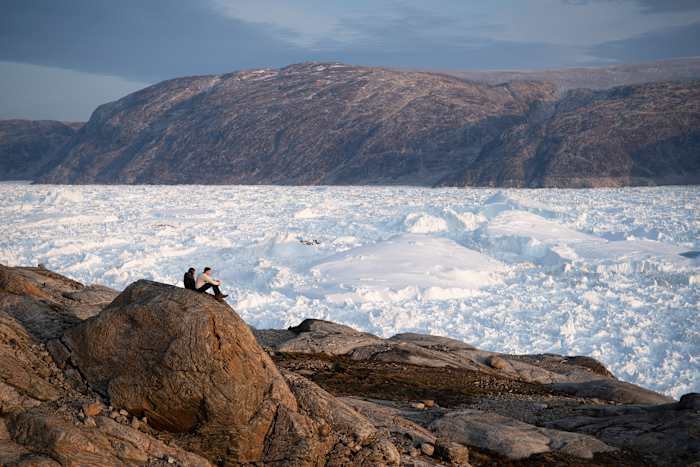
FILE - NYU student researchers sit on top of a rock overlooking the Helheim glacier in Greenland, Aug. 16, 2019. (AP Photo/Felipe Dana, File)
Photograph: News 4 JAX (embedded from source)
What this story says
- Greenland and Antarctica have lost between 11.3 and 12.5 trillion tons of ice since 1979.
- This ice loss has contributed to a global sea level rise of approximately 3 to 3.14 centimeters.
- The primary driver of ice loss is the acceleration of glaciers flowing into the ocean, rather than surface melting.
- The study used data from European and NASA satellites, extending records back to 1972 for Greenland and 1979 for Antarctica.
Who covered it
Percentages are shares of the 9 outlets carrying a published leaning rating. 6 of the 15 outlets we know ran this story carry no rating and are not counted in them. Coverage measured .
Trust
60/100
Craft
60/100
Hype
20/100
15 sources · methodology
Between 11.3 and 12.5 trillion tons of ice have been lost from Greenland and Antarctica since 1979, according to a major scientific report. This ice loss has contributed to a global sea level rise of approximately 3 to 3.14 centimeters. The primary driver of this loss is the acceleration of glaciers flowing into the ocean, rather than surface melting, the study found. Data from European and NASA satellites were incorporated, extending the ice sheet volume record back to 1972 for Greenland and 1979 for Antarctica.
Eric Rignot, an ice scientist at the University of California, Irvine, stated that ice sheets are melting away fast and sea level is rising worldwide. The study, published in the journal Scientific Data, indicates that approximately 84% of the combined ice loss was due to accelerated glacier flow, with only 16% attributed to surface melting. Scientists noted that while there was a pause in the accelerating trend between 2020 and 2023, this was likely due to short-term weather variations, not a reversal of the long-term pattern.
Disagreement on total ice loss
Reports vary on the precise total amount of ice lost. News 4 JAX, The Toronto Star, The Independent, The WBAL, and Winnipeg Free Press state that 12.5 trillion tons of ice were lost. La Vanguardia, corren.se, vrt, and Svenska Dagbladet report 11.3 trillion tons of ice lost. Klix and Gizmodo report more than 11 trillion tons of ice lost. WFMZ and srpskainfo.com report 11.3 billion metric tons of glacier ice lost. Dailymail.com reports 11.3 trillion tonnes of ice lost.
What the coverage left out
None of the left-rated digests mention the specific figure of 11.3 trillion metric tons of ice loss reported by some outlets. None of the centre-rated digests mention the specific figure of 11.3 billion metric tons of ice loss reported by WFMZ. None of the right-rated digests mention the specific figure of 11.3 billion metric tons of ice loss reported by WFMZ.
Still developing. We have re-checked which outlets are covering this 1 time, most recently on 16 Sept 2026, 10:15, and will add the sides that appear.
How other outlets pictured it
Which photograph to run is each newsroom’s own choice. The leaning beside a name is that outlet’s published rating, not a claim that the pictures divide along it. Every picture is shown from the outlet’s own server and links to the article it ran in.

Una imagen del hielo de la Antartida en una imagen de archivoLVE
La Vanguardia — embedded from source
How each side covered it
Our own reading of the reporting listed below, written from the outlets’ articles rather than quoted from them. The reasoning is set out on our methodology page.
Left
4 rated outlets
- The left-rated reports led on the scale of ice loss and its contribution to sea level rise. La Vanguardia highlighted that the melting of Greenland and Antarctica has raised sea levels by more than 3 cm in 50 years, with 84% of the loss attributed to accelerated glacier flow. The Toronto Star and The Independent reported that 12.5 trillion tons of ice were lost, with The Independent noting this was a major report. Gizmodo's headline focused on the 11 trillion tons of ice lost and stated that 'speeding' glaciers are driving the loss, with the digest noting the main driver is not surface melting.
Centre
4 rated outlets
- Centre-rated reports focused on the total amount of ice lost and the resulting sea level rise. News 4 JAX and WBAL reported that 12.5 trillion tons of ice were lost, enough to stack ice five feet deep across the continental United States. vrt noted that 11 trillion tons of ice were lost over 50 years, causing sea levels to rise by more than 3 centimeters, and that the main cause is glaciers flowing into the ocean at an increasing rate. Dailymail.com reported 11.3 trillion tonnes of ice lost over 50 years, raising sea levels by more than 1.1 inches (3cm). WFMZ reported 11.3 billion metric tons of glacier ice melted since 1979. Winnipeg Free Press also reported 12.5 trillion tons of ice lost.
Right
1 rated outlet
- The single right-rated report, Svenska Dagbladet, stated that Greenland and Antarctica have lost 11.3 trillion tons of ice since the 1970s, raising global sea levels by more than three centimeters, according to a new study. The headline focused on glaciers melting and oceans rising three centimeters.
Questions about this coverage
- How did the left and right cover Greenland and Antarctica lost 11.3 trillion tons of ice since 1979?
- Of the 9 outlets on this story carrying a published leaning rating, 44% are rated left, 45% are rated centre, 11% are rated right. Those percentages are shares of the rated outlets, not of every outlet that ran it, which was 15. The sections above set out what each side emphasised, in its own terms.
- Is Greenland and Antarctica lost 11.3 trillion tons of ice since 1979 left or right?
- Too few of the outlets on this story carry a published leaning rating to say. 9 of them do, and this site does not characterise a field under 12: at that size one newsroom filing moves the share by ten points. The percentages above are the count as it stands.
- Is the coverage of Greenland and Antarctica lost 11.3 trillion tons of ice since 1979 biased?
- Greenland and Antarctica lost 11.3 trillion tons of ice since 1979 is one event reported by 15 outlets, and this page does not rate the story as biased or unbiased. What it publishes is the spread: which outlets ran it, where named rating organisations place each of them on the spectrum, and what each side chose to lead with. A leaning rating describes an outlet's record over time, not this article, and the two should not be run together.
- Which outlets covered Greenland and Antarctica lost 11.3 trillion tons of ice since 1979?
- 15 that we know of, every one of them listed further up this page with a link to its own report and to what we hold on the publisher. Nothing here is a summary of somebody else's summary: the outlets are named so the original reporting can be read.
- How much ice have Greenland and Antarctica lost?
- Greenland and Antarctica have lost between 11.3 and 12.5 trillion tons of ice since 1979. This significant loss is primarily driven by glaciers accelerating their flow into the ocean, rather than surface melting.
- How has this ice loss affected global sea levels?
- The loss of ice from Greenland and Antarctica has contributed to a global sea level rise of approximately 3 to 3.14 centimeters. This rise can increase the risk of coastal flooding and erosion for millions of people.
- What is the main cause of the accelerated ice loss?
- The primary driver identified by the study is the acceleration of glaciers flowing into the ocean. Warmer ocean waters are thought to be contributing to this process, leading to a faster discharge of ice.
Read it at the source
15 outlets, grouped by the leaning a published rating gives them. Every headline links to the original; an underlined outlet name opens our profile of that publisher.
Left
4- Satellites show Earth lost more than 12 trillion tons of ice from Greenland, Antarctica in 47 years (opens The Toronto Star in a new tab)
The Toronto Star — is The Toronto Star biased? Our profile of this outlet
- Satellites show Earth lost more than 12 trillion tons of ice from Greenland, Antarctica in 47 years (opens The Independent in a new tab)
The Independent — is The Independent biased? Our profile of this outlet
- Polar Ice Sheets Have Lost 11 Trillion Tons of Ice—and 'Speeding' Glaciers Are Driving the Loss (opens Gizmodo in a new tab)
- The Melting of Greenland and Antarctica Accelerates: They Have Raised Sea Level by More than 3 Cm in 50 Years (opens La Vanguardia in a new tab)
La Vanguardia — is La Vanguardia biased? Our profile of this outlet
Centre
4- Satellite Images Show that Earth Lost 11 Billion Tons of Ice in 47 Years (opens WFMZ in a new tab)
- Ice Caps on Greenland and Antarctica Lost 11 Trillion Tons of Ice in 50 Years: Sea Level Rose over 3 Centimeters. (opens vrt in a new tab)
- Satellites show Earth lost more than 12 trillion tons of ice from Greenland, Antarctica in 47 years (opens News 4 JAX in a new tab)
News 4 JAX — is News 4 JAX biased? Our profile of this outlet
- Satellites show Earth lost more than 12 trillion tons of ice from Greenland, Antarctica in 47 years (opens Winnipeg Free Press in a new tab)
Winnipeg Free Press — is Winnipeg Free Press biased? Our profile of this outlet
Right
1Not rated
6- Earth Has Lost 11.3 Trillion Ice From Glaciers in Half a Century (opens srpskainfo.com in a new tab)
srpskainfo.com — is srpskainfo.com biased? Our profile of this outlet
- Satellite Data Showed that Greenland and Antarctica Lost More than 12 Billion Tons of Ice (opens Klix in a new tab)
- Glaciers Are Melting — the Oceans Have Risen Three Centimeters (opens corren.se in a new tab)
- Satellites show Earth lost more than 12 trillion tons of ice from Gree (opens WBAL in a new tab)
- Polar Ice Loss Is Mainly Due to Accelerated Glacier Flow (opens scinexx.de in a new tab)
scinexx.de — is scinexx.de biased? Our profile of this outlet
- Greenland and Antarctica lost 11.3 trillion tonnes of ice in 50 years (opens dailymail.com in a new tab)
dailymail.com — is dailymail.com biased? Our profile of this outlet
How did this read?
About the coverage, not about the story. We do not ask whether you agree with what happened — we have no honest use for that answer.
More in Climate
All Climate →


Elsewhere on the site
 Politics•3 min readSupreme Court rejects Trump administration's mail ballot rules
 Business & Economy•3 min readGovernment introduces UPI fee on merchant payments over ₹2,000
 Business & Economy•2 min readIndian Stock Market Snaps Losing Streak